

Places to Visit in Jaipur in 1 Day: Itinerary, Entry Fees & Timings (2026)
Jaipur does not fit neatly into one day. Amer’s hilltop palace complex sits north of the old city, while Hawa Mahal, Jantar Mantar and City Palace are packed into the busy walled centre. Add security queues, parking, heat and lunch, and an ambitious list of ten attractions quickly becomes a tour of car windows.
This Jaipur itinerary for 1 day begins at Amer Fort, adds Panna Meena and Jal Mahal, then explores the old-city cluster on foot. It suits first-time visitors, couples, families with school-age children and weekend travellers.
You will find current entry fees, official timings, realistic visit durations, travel buffers, transport choices, an estimated budget and slower alternatives below. This is a practical Jaipur sightseeing itinerary for one day—not a claim that every fort, palace, museum and market can be covered properly before sunset.
Jaipur in One Day: Quick Answers
Can Jaipur be covered in one day? Yes—start early, visit Amer first and group Hawa Mahal, Jantar Mantar and City Palace together. One day is not enough for every major fort and museum.
What should a first-time visitor prioritise? Amer Fort, Hawa Mahal, Jantar Mantar and City Palace are the four priority interiors. Add Panna Meena ka Kund and Jal Mahal as short, free photo stops, then finish in a walled-city market.
What is the best route for Jaipur sightseeing in one day? Amer Fort → Panna Meena ka Kund → Jal Mahal → Hawa Mahal → Jantar Mantar → lunch → City Palace → Bapu or Johari Bazaar. It avoids returning to the hills.
What time should the tour begin? Leave a central Jaipur hotel around 6:30–6:45 a.m. and aim to enter Amer Fort by 7:30 a.m. Travellers staying near the airport or Malviya Nagar should leave 15–30 minutes earlier.
How much does one day in Jaipur cost? For an Indian adult, allow roughly ₹1,450–₹2,600 using public transport or autos, ₹3,500–₹5,800 with a shared private cab and mid-range meals, or more for a private guide, premium dining and shopping.
At-a-Glance Jaipur 1-Day Itinerary
The state monument fees below reflect the Rajasthan revision effective from 1 January 2026. The official Rajasthan booking portal should be your final same-day check.
| Time | Stop | Duration | Travel/buffer from previous stop | Entry fee (adult) | Main reason to visit |
|---|---|---|---|---|---|
| 6:30–7:30 a.m. | Hotel to Amer Fort | — | 30–60 min, including parking | — | Reach before heat and large groups |
| 7:30–9:30 a.m. | Amer Fort | 2 hr | — | Indian ₹200; foreign ₹1,000 | Jaipur’s essential fort-palace experience |
| 9:40–10:05 a.m. | Panna Meena ka Kund | 25 min | 5–10 min by car; about 1 km | Free | Geometric stepwell near Amer |
| 10:20–10:40 a.m. | Jal Mahal viewpoint | 20 min | 15–20 min | Free from lakeside | Classic water-palace photograph |
| 11:05–11:45 a.m. | Hawa Mahal | 40 min | 20–25 min with traffic/parking | Indian ₹100; foreign ₹600 | Iconic façade and old-city view |
| 11:55 a.m.–12:45 p.m. | Jantar Mantar | 50 min | 8–12 min walk | Indian ₹100; foreign ₹600 | UNESCO-listed astronomical instruments |
| 12:45–1:45 p.m. | Lunch near City Palace | 1 hr | 5–10 min walk | About ₹250–₹1,200+ | Rest, water and shade |
| 2:00–3:30 p.m. | City Palace Museum | 1.5 hr | 5–10 min walk/security | Indian ₹400; concessions available | Royal courtyards, galleries and Peacock Gate |
| 3:45–5:15 p.m. | Bapu Bazaar or Johari Bazaar | 1.5 hr | 10–20 min walk/short auto | Free; shopping extra | Crafts, textiles, jewellery and street life |
Keep 30–45 minutes unassigned. Use it for a longer queue, a delayed lunch, a tired child or old-city traffic. If you fall behind, shorten the market stop—not Amer Fort or City Palace.
The Best Places to Visit in Jaipur in 1 Day, Stop by Stop
1. Amer Fort: 7:30–9:30 a.m.
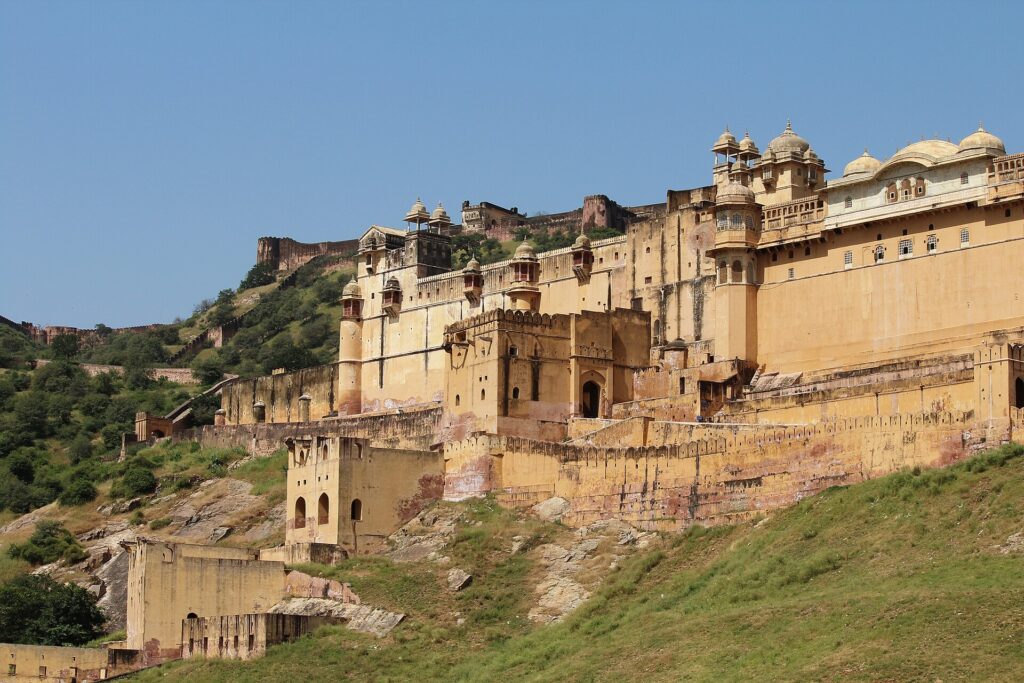
Amer Fort, also written as Amber Fort, deserves the longest slot. Its courtyards, gateways, mirror work and Maota Lake views provide a rich introduction to Jaipur’s royal history. The palace is about 11 km from the main city, so complete it before moving south.
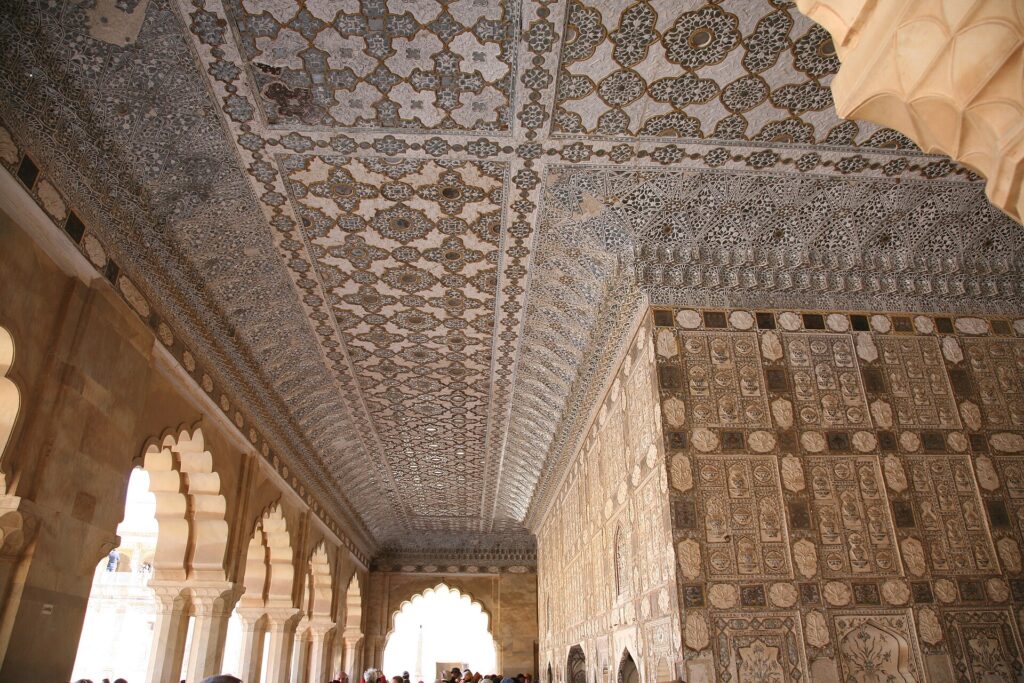
Focus on Jaleb Chowk, Ganesh Pol, Diwan-i-Aam, Sukh Niwas and the Sheesh Mahal area. Two hours is enough for a purposeful first visit; architecture enthusiasts should allow 2.5 hours and remove Panna Meena or the market from their day.
- Official timing: The Rajasthan OBMS listing for Amer Fort currently shows 7:00 a.m.–8:00 p.m. Older official and commercial pages may show shorter daytime hours, so check the live portal.
- 2026 entry fee: ₹200 for Indian adults and ₹1,000 for foreign adults, following the January 2026 revision. Student categories were also revised; carry a valid current ID and confirm the rate at checkout.
- Photo viewpoint: Photograph Ganesh Pol from its courtyard, then use the upper ramparts for the Maota Lake view. Do not block doorways or restricted passages for a long shoot.
- Practical tip: Build in 15 minutes for parking, ticketing and the climb. A vehicle or authorised transfer to the upper entrance may help travellers who cannot manage the steep approach.
- Accessibility and restrictions: Access is partial. The complex has steep ramps, uneven stone and steps, and not every chamber is wheelchair reachable. Ask staff about the most accessible route before buying a ticket. Follow signs on photography and closed rooms; commercial shoots require separate permission.
- Guide: Use a government-approved guide, check ID and agree on price and duration first. A January 2026 visitor report cited ₹400 for one to four people, but this is indicative, not guaranteed.
- Next stop: Panna Meena ka Kund is roughly 1 km away—about 5–10 minutes by car or 10–20 minutes on foot depending on the exit and heat.
This itinerary does not recommend an elephant ride. It adds time and cost, and travellers may prefer a jeep, car transfer or walk because of animal-welfare concerns.
2. Panna Meena ka Kund: 9:40–10:05 a.m.
Panna Meena ka Kund is a compact Amer-area stop. Its criss-cross steps create a striking composition, and its proximity to Amer makes it efficient.

- Timing and fee: The Government of India’s Incredible India page for Panna Meena ka Kund lists sunrise to sunset. General viewing is free.
- Photo viewpoint: Use the upper perimeter to frame the symmetrical staircases.
- Restriction: Do not descend onto the steps. Guards commonly restrict access for safety and conservation; a photograph seen online is not evidence that present-day access is permitted.
- Accessibility: The upper viewing edge is the realistic objective for visitors with limited mobility. Surfaces and approaches can be uneven.
- Next stop: Allow 15–20 minutes to reach the Jal Mahal promenade. If Amer ran late, skip this stop rather than rushing the fort.
3. Jal Mahal: 10:20–10:40 a.m.
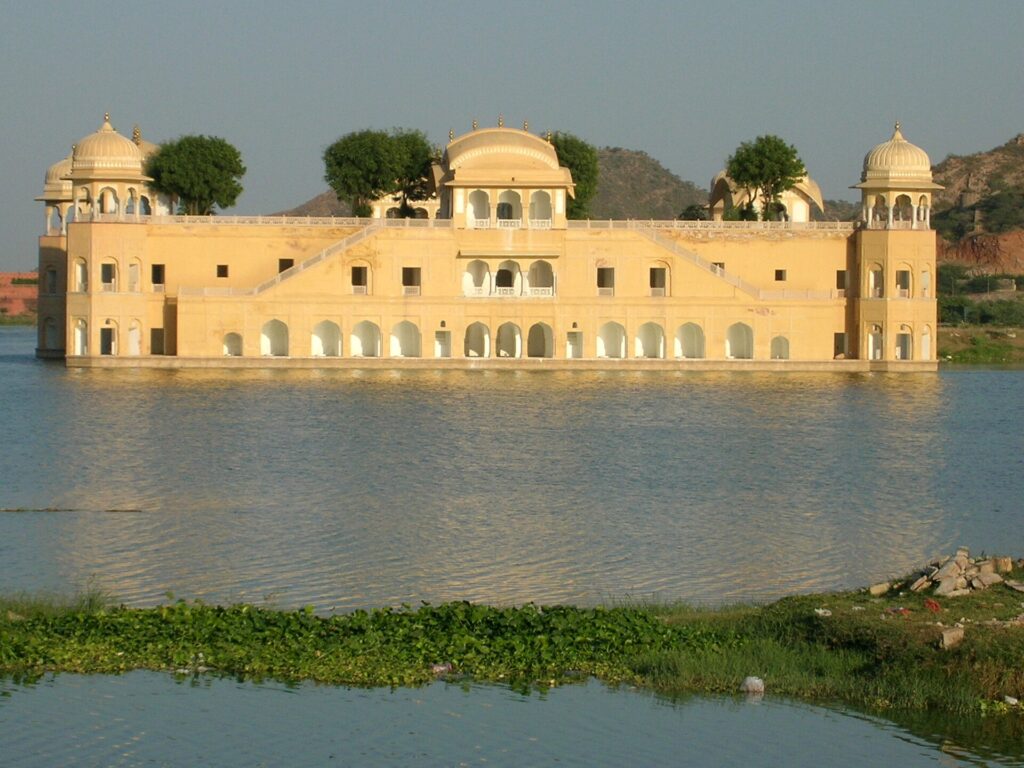
Jal Mahal is a viewpoint, not a palace tour. Its sandstone pavilion appears to float in Man Sagar Lake on the road from Amer to central Jaipur.
Rajasthan Tourism states that the palace is not open to most of the public and that visitors view it from the lake bank. There is no normal public palace-entry ticket or standard boat transfer. Use the official Jal Mahal visitor page rather than buying an unofficial “inside” experience from a tout.
- Duration and fee: 15–20 minutes; free from the public lakeside.
- Photo viewpoint: Stand on the main promenade and use a moderate zoom so the palace is prominent without entering the road.
- Practical tip: Expect vendors; secure valuables and cross only at a safe point.
- Accessibility: The roadside promenade is easier than the forts, but surfaces, traffic and crowding may still create obstacles.
- Next stop: Jal Mahal to Hawa Mahal is roughly 5–8 km. Allow 20–25 minutes and additional time on weekends, holidays or during processions.
4. Hawa Mahal: 11:05–11:45 a.m.
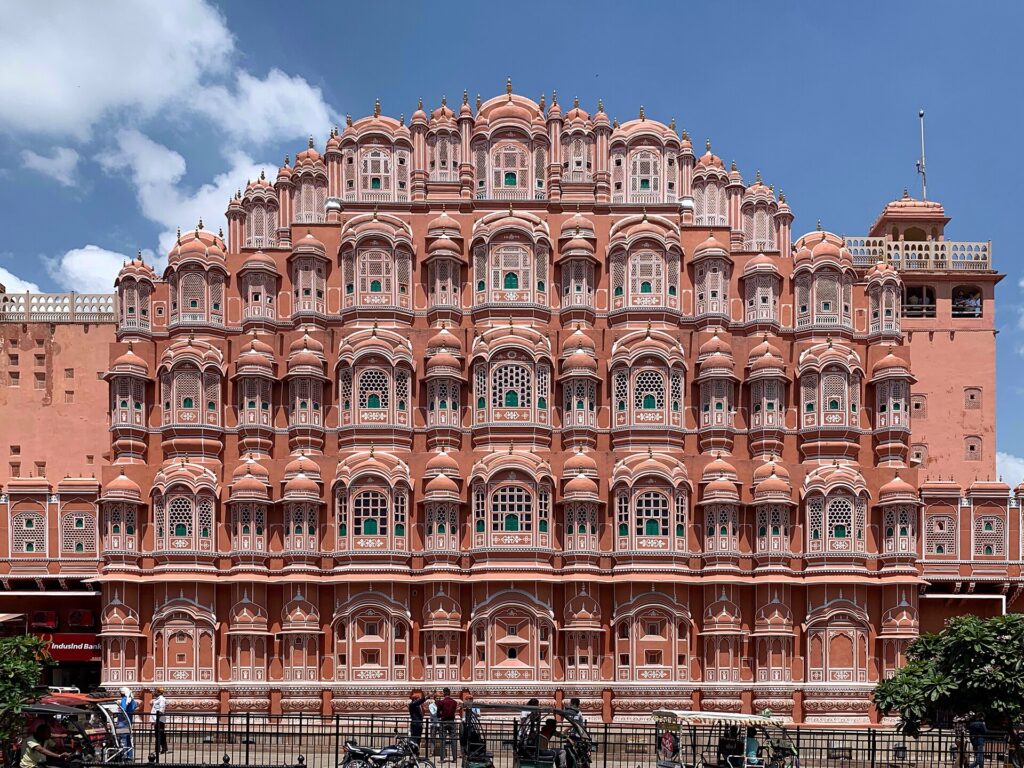
The east-facing façade is Jaipur’s signature image. Inside, narrow passages and upper openings show how royal life connected to the street below. Enter from the rear; the honeycomb façade faces the main road.
- Official timing: The OBMS Hawa Mahal page currently lists 9:00 a.m.–6:30 p.m.
- 2026 entry fee: ₹100 for Indian adults and ₹600 for foreign adults under the January 2026 state revision. Confirm student concessions on the booking portal.
- Photo viewpoint: Shoot the complete façade from a safe, permitted spot opposite. An elevated café can offer a cleaner angle; follow its policy.
- Practical tip: If the schedule is slipping or someone struggles with stairs and ramps, take the exterior photograph and continue to Jantar Mantar. That saves 25–30 minutes.
- Accessibility and restrictions: Upper levels involve inclines, narrow spaces and congestion. Assistance may be required and some viewpoints may not suit wheelchairs. Follow any current camera restrictions inside.
- Next stop: Jantar Mantar is about 700 metres away. Walk through the old-city area in roughly 8–12 minutes instead of moving the car again.
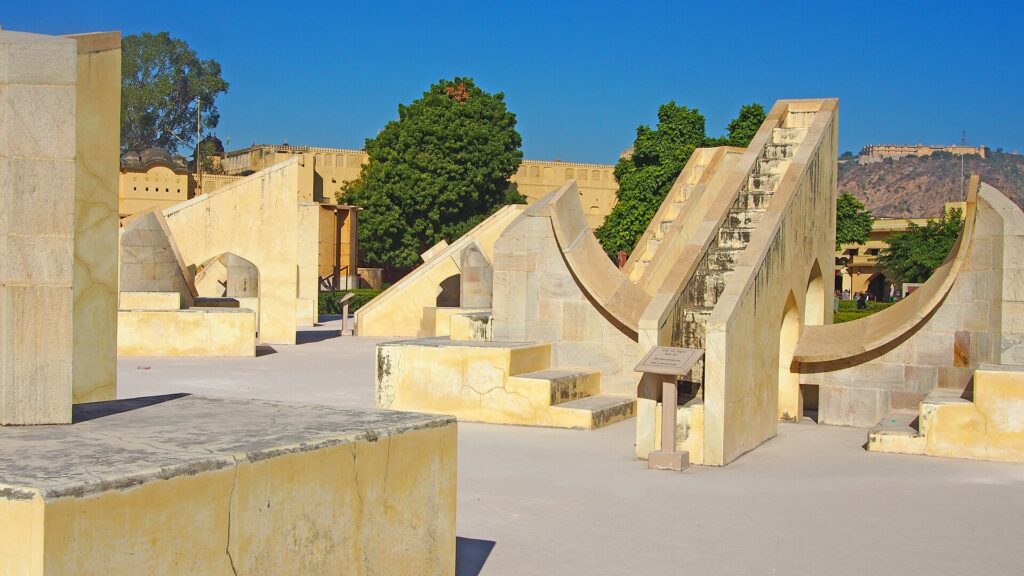
5. Jantar Mantar: 11:55 a.m.–12:45 p.m.
Jantar Mantar’s monumental instruments were designed for naked-eye astronomical observation. UNESCO describes Jaipur’s collection as the most significant and best preserved of its kind. A guide or audio explanation helps decode the geometry.
- Official timing: Rajasthan Tourism’s Jantar Mantar page and the current booking listing show 9:00 a.m.–7:00 p.m., with the last ticket indicated at 6:30 p.m.
- 2026 entry fee: ₹100 for Indian adults and ₹600 for foreign adults after the state revision. The ₹50/₹200 figures still visible on some official or older pages are outdated.
- Photo viewpoint: Frame the Samrat Yantra from far enough back to show its scale, ideally with a person kept small in the composition.
- Practical tip: Midday light helps cast clear shadows but can be hot. Use a hat and listen from shade when possible.
- Accessibility: Much of the site is open and comparatively level, although paving may be uneven. Do not climb instruments or cross barriers.
- Next stop: City Palace is adjacent. Take lunch before entering so you can enjoy the museum without watching the clock.
Lunch: 12:45–1:45 p.m.
Eat near City Palace, Jaleb Chowk, Johari Bazaar or Hawa Mahal rather than driving elsewhere. Allow an hour to order, eat, use the washroom and refill water; a snack-only lunch can cause fatigue later.
6. City Palace Museum: 2:00–3:30 p.m.
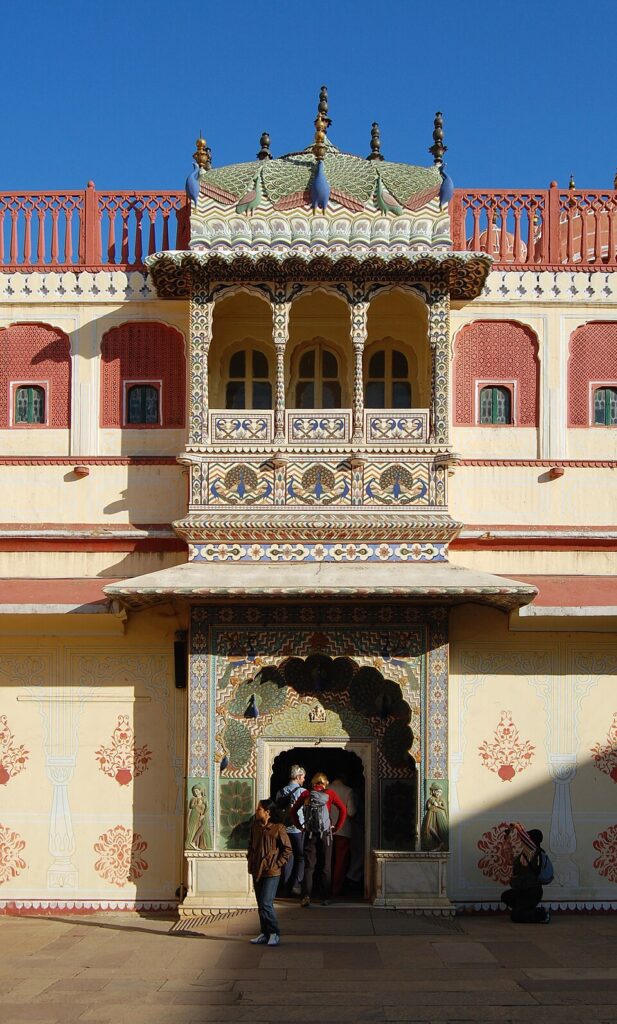
City Palace combines royal courtyards, arms, art and Pritam Niwas Chowk’s painted gates. The standard ticket does not provide unrestricted access to the occupied Chandra Mahal; that requires the Royal Tour.
- Official timing: The City Palace Museum visitor page lists 9:30 a.m.–6:30 p.m., with last tickets at 6:00 p.m. It closes on Dhulandi, the second day of Holi.
- Current Indian ticket: ₹400 adult; ₹200 for a student or child below 12; ₹200 for eligible senior-citizen or defence concessions. The ₹500 composite also includes Jaigarh and Royal Cenotaphs, which do not fit this route.
- International ticket: The official page uses a separate “International Resident” selector. Check that live tab for the current amount rather than relying on older third-party prices.
- 2026 operational note: The Textile Gallery has been temporarily closed for restoration since 27 March 2026, and Museum at Night is temporarily closed. Check for reopening.
- Photo viewpoint: Pritam Niwas Chowk’s Peacock Gate is the standout standard-tour image. Queue patiently and avoid occupying the doorway for a prolonged personal shoot.
- Accessibility: Major entrances and accessible restrooms have wheelchair access, with ramps where possible. Wheelchairs and a shared golf cart are available subject to conditions; the cart is ₹150 per person, with children below five free.
- Practical tip: Parking is officially available at Gate 2 near Jaleb Chowk. Security and large weekend groups can add 10–20 minutes.
- Next stop: Johari Bazaar is nearby; Bapu Bazaar is about 1–1.5 km away. Walk if the weather is comfortable or use a short auto/e-rickshaw ride.
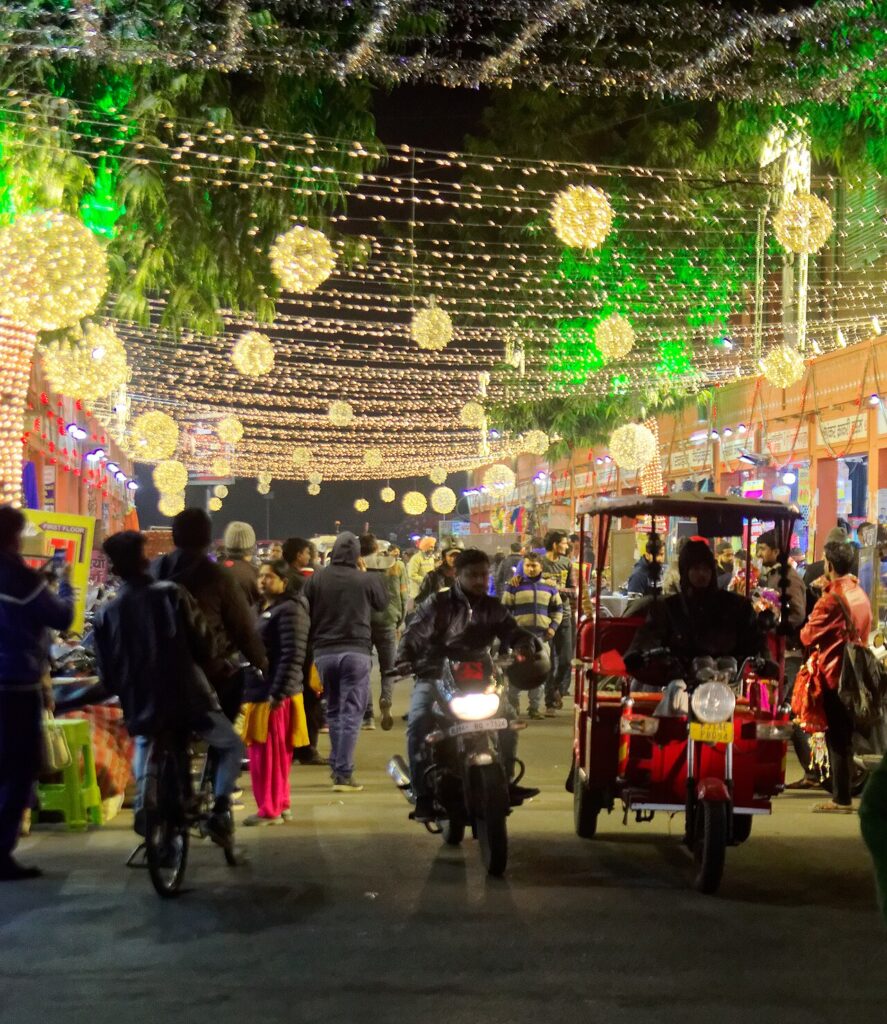
7. Bapu Bazaar or Johari Bazaar: 3:45–5:15 p.m.
Choose Johari Bazaar for jewellery and old-city atmosphere, or Bapu Bazaar for textiles, footwear and souvenirs. Shop hours vary, especially around festivals.
Agree on the price, inspect precious jewellery and request certification plus a bill for high-value purchases. Otherwise, use this time for tea or an old-city walk.
How to Get Around Jaipur for One Day
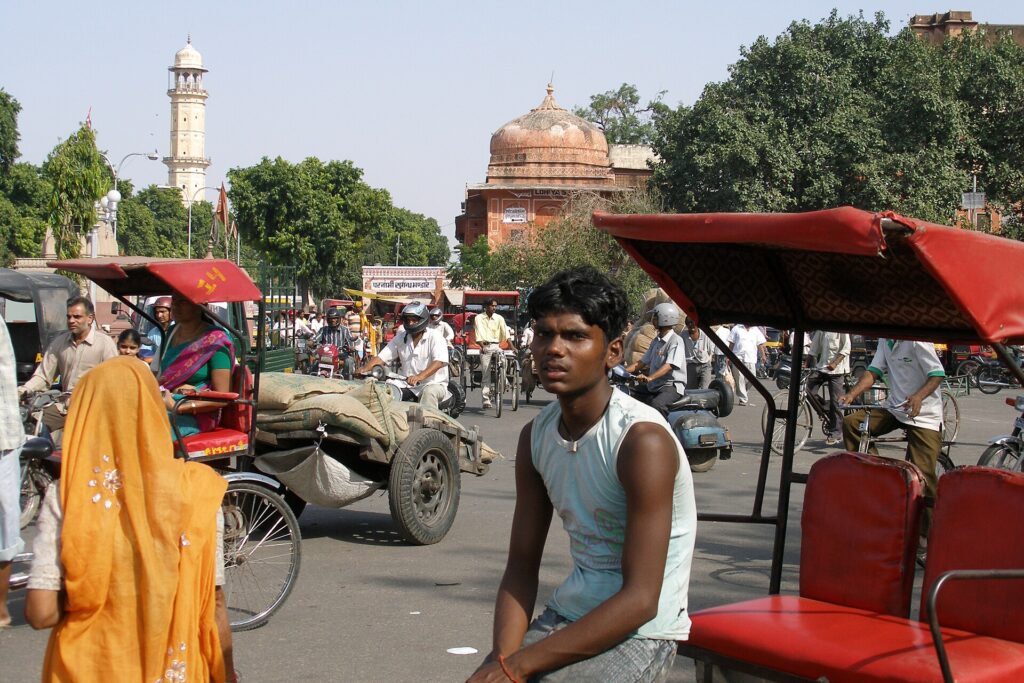
A hired AC car with driver is easiest, especially for families, senior citizens or hot weather. Current 8-hour/80-km sedan quotes range roughly from ₹2,200 to ₹3,050 before some extras. Confirm overtime, fuel, parking and waiting in writing.
Autos and app cabs cost less but require coordination. They suit solo travellers and couples. Agree on an auto fare before starting if the meter is not used; app fares and pickup times vary with demand.
Public transport is cheapest but least efficient. Buses serve Amer Road, while the Jaipur Metro reaches Badi Chaupar for the old-city cluster. Transfers and walking make the full route tiring.
Where to start:
- Walled City, MI Road, C-Scheme or Jaipur Junction: leave around 6:30–6:45 a.m.
- Bani Park or north Jaipur: allow about 30–45 minutes to Amer.
- Airport, Tonk Road, Jagatpura or Malviya Nagar: leave around 6:00–6:15 a.m.; cross-city traffic can make the trip substantially longer.
- Arriving by train that morning: store luggage first. Do not take large bags through every security check.
Jaipur One-Day Trip Cost: Estimated 2026 Budget
These estimates are per Indian adult, assume the standard itinerary and, where relevant, two adults sharing a car. Accommodation, airport transfers and premium City Palace access are excluded.
| Cost item | Budget style | Mid-range style | Comfortable style |
| Standard monument tickets | ₹800 | ₹800 | ₹800 |
| Local transport | ₹250–₹600 | ₹1,100–₹1,600 shared cab | ₹2,200–₹3,200 private car/extra time |
| Meals, water and snacks | ₹400–₹700 | ₹900–₹1,400 | ₹1,800–₹3,000 |
| Guide | ₹0 | ₹200–₹500 share of one monument guide | ₹1,500–₹2,500 indicative private/full-day quote |
| Optional shopping | ₹0–₹500 | ₹500–₹1,500 | ₹2,000+ |
| Estimated total | ₹1,450–₹2,600 | ₹3,500–₹5,800 | ₹8,300–₹11,500+ |
The standard Indian tickets total ₹800: Amer ₹200, Hawa Mahal ₹100, Jantar Mantar ₹100 and City Palace ₹400. Panna Meena, Jal Mahal’s lakeside and the markets are free to enter. The 2026 statewide composite costs ₹1,300 for Indians and ₹5,500 for foreigners for up to ten days; it is not economical for this route alone because City Palace is separate and the three state monuments total ₹400.
Foreign visitors should budget the confirmed state rates of ₹1,000 at Amer plus ₹600 each at Hawa Mahal and Jantar Mantar, then check the current international City Palace price on its official page.
Practical Jaipur Sightseeing Tips
- Wear breathable, modest clothing and grippy shoes. Amer’s stone, Hawa Mahal’s inclines and market lanes are not suited to slippery sandals.
- Carry water, sunscreen, a hat and medicines. Rajasthan Tourism says April–June temperatures can reach about 45°C. Shorten outdoor stops in extreme heat.
- Check the IMD forecast and warnings. During monsoon rain, stone steps can be slick and traffic slower. The IMD Jaipur centre provides official forecasts and alerts.
- Keep both UPI/card and some cash. Online monument tickets reduce queue risk, but small vendors, tips and some autos may still be easier with cash.
- Download tickets and maps before leaving. Do not depend on signal at the gate.
- Expect security checks. Avoid large luggage, drones, tripods and professional equipment unless you have verified written permission.
- Use authorised guides. Check ID, define the sites included and agree on the total fee before the tour starts.
- Plan washroom stops. Use facilities at Amer, your lunch venue and City Palace rather than assuming a clean public washroom will appear in the market.
- Weekends and holidays need extra buffer. Peak periods and processions can alter traffic and access.
- Do not add Nahargarh casually. It requires another hill drive and can consume 1.5–2.5 hours with traffic, parking and the visit. Save it for a two-day Jaipur itinerary or replace the entire old-city market block with it.
Alternative One-Day Jaipur Itineraries
For families with children: Keep Amer to 90 minutes, make Panna Meena optional, spend 45–60 minutes at Jantar Mantar and use City Palace’s family/access facilities. Skip the market if children tire.
For senior citizens or a slower pace: Visit Amer only if mobility permits, then do Jal Mahal, Hawa Mahal outside, Jantar Mantar and City Palace. Use a car and the palace golf cart; remove Panna Meena and the market.
For architecture and history lovers: Give Amer 2.5 hours, Jantar Mantar one hour and City Palace two hours. Drop Panna Meena and shopping; hire a guide rather than adding sites.
For shopping and food: Visit Amer for 90 minutes, photograph Jal Mahal and Hawa Mahal outside, choose Jantar Mantar or City Palace, then reserve three hours for lunch and markets.
If you arrive after 10:00 a.m.: Go to Amer, stop at Jal Mahal, then prioritise Jantar Mantar and City Palace. See Hawa Mahal outside; skip Panna Meena and the market if queues are long.
During very hot or rainy weather: Enter Amer early, skip the stepwell when wet, pause briefly at Jal Mahal and focus the afternoon on City Palace. Do not force the schedule during an IMD warning.
FAQs About Places to Visit in Jaipur in One Day
Is one day enough to visit Jaipur?
One day is enough for Jaipur’s core first-time highlights, not the whole city. Start at Amer, stop at Jal Mahal and then explore Hawa Mahal, Jantar Mantar and City Palace in the compact old-city cluster. To add Nahargarh, Jaigarh, Albert Hall or a long food tour without rushing, stay for a second day.
What are the best places to visit in Jaipur in one day?
Prioritise Amer Fort, Hawa Mahal, Jantar Mantar and City Palace. Panna Meena ka Kund and Jal Mahal fit naturally between Amer and the old city as short free stops. End at Johari Bazaar or Bapu Bazaar only if the monuments remain on schedule and your group still has energy.
How much does Jaipur sightseeing cost for one day?
An Indian adult should budget about ₹1,450–₹2,600 for the standard tickets, simple meals and low-cost transport. With a shared private cab and mid-range meals, ₹3,500–₹5,800 per person is more realistic. Shopping, premium City Palace rooms, a private guide and a solo car can raise the total considerably.
Which Jaipur monuments are closed on particular days?
The main state-run stops in this itinerary are generally listed daily on the current booking portal. City Palace states that it closes on Dhulandi, the second day of Holi, and temporary gallery closures can occur for restoration or events. Always check official pages the evening before, especially around festivals, VIP movement or severe weather.
Is it better to hire a cab or use auto-rickshaws in Jaipur?
A hired car is best for a family, senior citizen or first-time visitor because Amer is outside the old city and the driver can wait between stops. Autos and app cabs cost less for one or two people but require repeated booking or negotiation. Once you reach Hawa Mahal, walk between the old-city monuments where practical.
Conclusion
The most practical places to visit in Jaipur in 1 day follow one clear line: Amer Fort, Panna Meena ka Kund, Jal Mahal, Hawa Mahal, Jantar Mantar, City Palace and one evening market. Begin early, protect the lunch break and remove a stop when traffic or queues grow rather than turning the day into a race.
Save this itinerary, check the official ticket portal and weather forecast the evening before, and use a related Jaipur guide to personalise food, family activities or your second day. For trusted local options around the city, continue to MagickGuide’s Jaipur discovery pages.



Pingback: 25 Best Jaipur Tourist Places to Visit in 2026