
25 Best Places to Visit in Jaipur : Forts, Palaces, Markets & Hidden Gems
Jaipur looks simple on a map and surprisingly tiring on the ground. Its star sights are spread between the walkable Old City, the Amer hills, central Jaipur and the airport side of town. Add queues, traffic, steep fort paths and summer heat, and a “see everything” plan can unravel before lunch.
This Jaipur travel guide fixes that problem. It brings together 25 of the best Places to Visit in Jaipur, but it also tells you what each stop is best for, how long it deserves and which Jaipur tourist attractions fit naturally into the same route. You will find realistic Jaipur itineraries for one, two and three days, current 2026 ticket guidance, family and couple ideas, places to visit in the evening, food, shopping and worthwhile escapes near Jaipur.
Jaipur is more than a collection of photogenic palaces. Its walled city is a UNESCO World Heritage Site recognised for its planned urban form, bazaars, craft traditions and architecture. Treat the city as a living place rather than a backdrop, and the trip becomes far more rewarding.
Quick answer: First-time visitors should prioritise Amer Fort, Hawa Mahal, City Palace, Jantar Mantar, Jal Mahal and one market. Two full days are enough for these highlights without rushing. Add a third day for museums, crafts, gardens, wildlife or a slower family pace.
Jaipur tourist places list at a glance
| # | Place | Best for | Allow |
|---|---|---|---|
| 1 | Amer Fort | Architecture | 2–3 hours |
| 2 | Jaigarh Fort | Military history | 1–1.5 hours |
| 3 | Nahargarh Fort | Panorama | 1.5–2 hours |
| 4 | Hawa Mahal | Iconic facade | 45–60 minutes |
| 5 | City Palace | Royal collections | 1.5–2.5 hours |
| 6 | Jantar Mantar | Astronomy | 45–60 minutes |
| 7 | Jal Mahal | Lake view | 15–30 minutes |
| 8 | Albert Hall Museum | Art and history | 1–1.5 hours |
| 9 | Gaitore Ki Chhatriyan | Quiet architecture | 45–60 minutes |
| 10 | Panna Meena ka Kund | Stepwell | 20–30 minutes |
| 11 | Galtaji Temple | Pilgrimage site | 1–1.5 hours |
| 12 | Govind Dev Ji Temple | Devotional culture | 30–60 minutes |
| 13 | Birla Mandir | Evening visit | 30–45 minutes |
| 14 | Sisodia Rani Garden | Gardens and murals | 45–60 minutes |
| 15 | Kanak Vrindavan | Green break | 30–60 minutes |
| 16 | Patrika Gate and Jawahar Circle | Colour and strolls | 30–60 minutes |
| 17 | Jawahar Kala Kendra | Contemporary culture | 1–2 hours |
| 18 | Anokhi Museum of Hand Printing | Textile craft | 1–1.5 hours |
| 19 | Johari Bazaar | Jewellery | 1–2 hours |
| 20 | Bapu Bazaar | Souvenirs | 1–1.5 hours |
| 21 | Masala Chowk | Local food | 1–1.5 hours |
| 22 | Raj Mandir Cinema | Classic cinema | About 3 hours |
| 23 | Kishan Bagh Sand Dune Park | Desert ecology | 1–1.5 hours |
| 24 | Jhalana Leopard Reserve | Wildlife | 2.5–3 hours |
| 25 | Chokhi Dhani | Culture and dinner | 3–4 hours |
Read a Jaipur tourist places map as four clusters: Amer corridor; Hawa Mahal–City Palace Old City; central and southern Jaipur; and outer experiences such as Jhalana, Kishan Bagh and Chokhi Dhani. This prevents unnecessary cross-city travel.
25 best places to visit in Jaipur
1. Amer Fort Jaipur
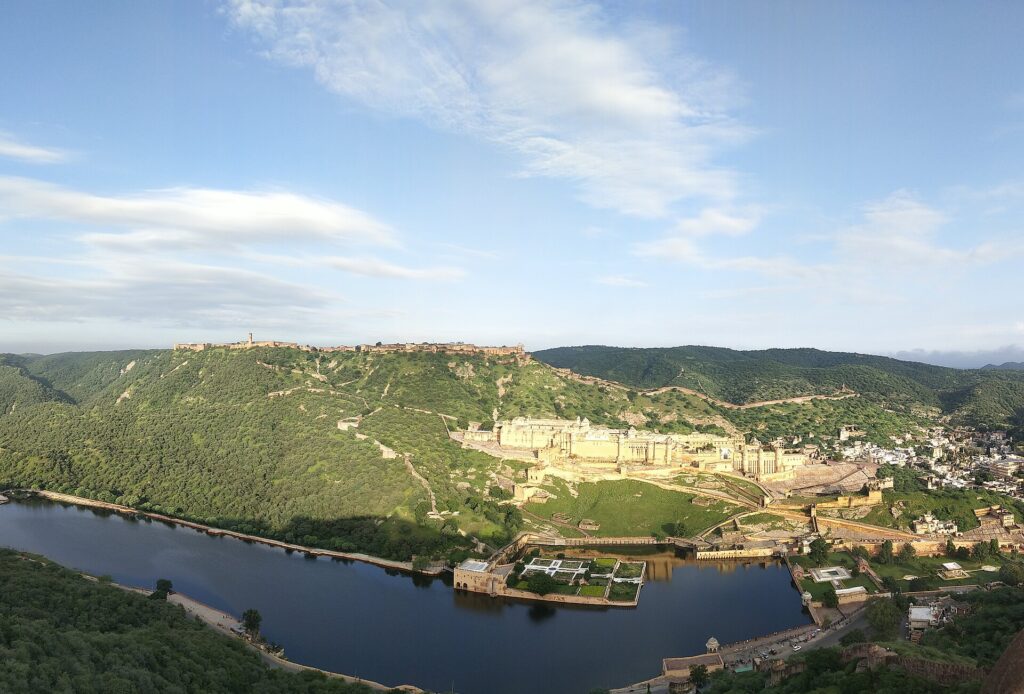
If you visit only one fort, make it Amer. Above Maota Lake, gateways and courtyards lead from defensive walls to delicate mirror work in Sheesh Mahal. Amer is part of UNESCO’s Hill Forts of Rajasthan.
Arrive near opening time and allow two to three hours. The official portal lists 7:00 AM–8:00 PM, though last-entry times can differ. Reported 2026 admission is ₹200 for Indian adults and ₹1,000 for international adults; confirm it on the government booking page. The approach is steep, so walk only if comfortable or use an authorised vehicle. Do not make an animal ride essential to the visit.
2. Jaigarh Fort Jaipur
Jaigarh sits above Amer and tells Jaipur’s military story through ramparts, water storage, an armoury and the Jaivana cannon. Pair it with Amer only if your group still has energy; driving between them is simpler than relying on the tunnel connection. The current City Palace composite ticket includes City Palace, Jaigarh and Royal Gaitor, so compare it if visiting all three.
3. Nahargarh Fort Jaipur
Nahargarh’s ramparts overlook Jaipur’s grid, while Madhavendra Palace adds painted apartments and courtyards. Sunset is atmospheric but brings traffic and a slow drive back; morning or pre-sunset is calmer. On a one-day trip, choose Nahargarh for the panorama or Jaigarh for military history, not both after Amer. Reported 2026 admission is ₹100 for Indian adults and ₹600 for international adults; verify it on the official portal.
4. Hawa Mahal Jaipur
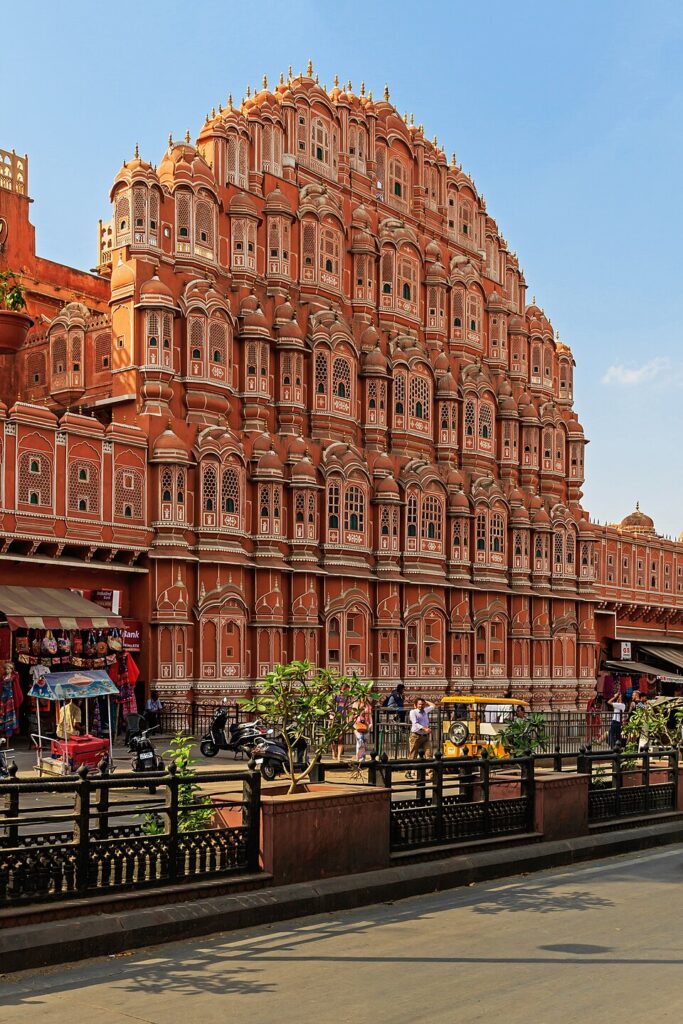
Hawa Mahal is Jaipur’s signature building. Go inside for its narrow passages, screened windows and Old City views, or make it a 15-minute exterior stop if time is tight. The east-facing facade is best lit in the morning, and entry is from the rear. Cross only at a safe point and never stand in traffic for a photograph. The official page lists 9:00 AM–6:30 PM; reported 2026 admission is ₹100 for Indian adults and ₹600 for international adults.
5. City Palace Jaipur
City Palace is a strong introduction to Jaipur’s royal history, with galleries, courtyards and Pritam Niwas Chowk’s painted gates. The premium Royal Tour adds Chandra Mahal rooms, but standard entry suits most first visits.
The official visitor page lists 9:30 AM–6:30 PM, with last tickets at 6:00 PM. Indian/resident standard admission is ₹400; a ₹500 composite option includes City Palace, Jaigarh and Royal Gaitor. The Textile Gallery has been temporarily closed for restoration since 27 March 2026, and “Museum at Night” is marked temporarily closed. Published facilities include wheelchairs, accessible toilets, a nursing room, ramps where possible and paid golf carts.
6. Jantar Mantar Jaipur
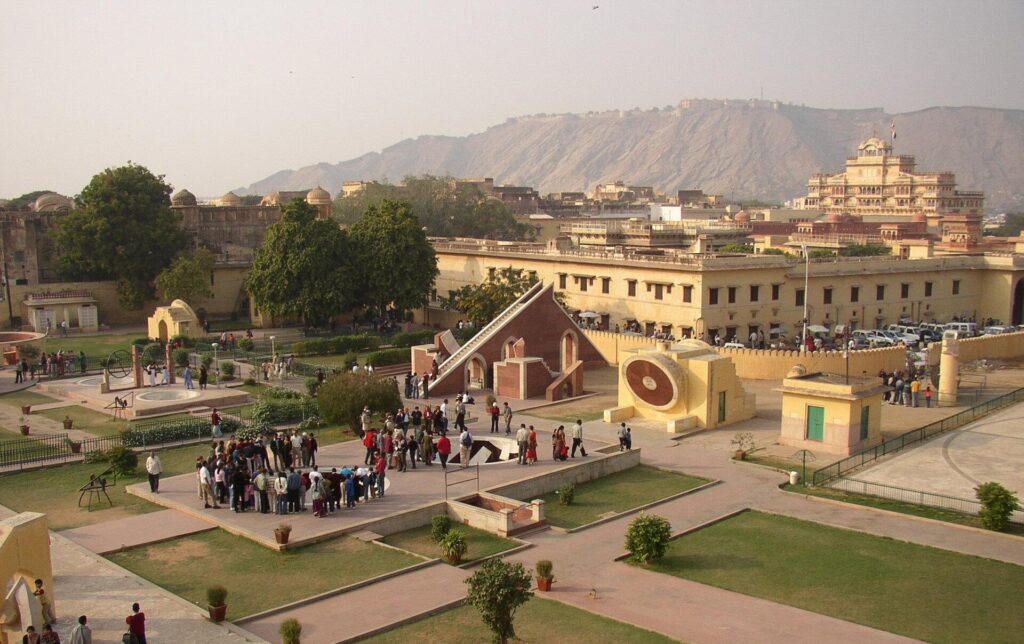
Jantar Mantar becomes far more interesting with a guide or audio explanation. Its monumental instruments observe astronomical positions with the naked eye; UNESCO identifies roughly 20 principal fixed instruments.
Visit while the sun is visible and allow 45–60 minutes. The official tourism page lists 9:00 AM–7:00 PM, with last tickets at 6:30 PM. Reported 2026 admission is ₹100 for Indian adults and ₹600 for international adults.
7. Jal Mahal Jaipur
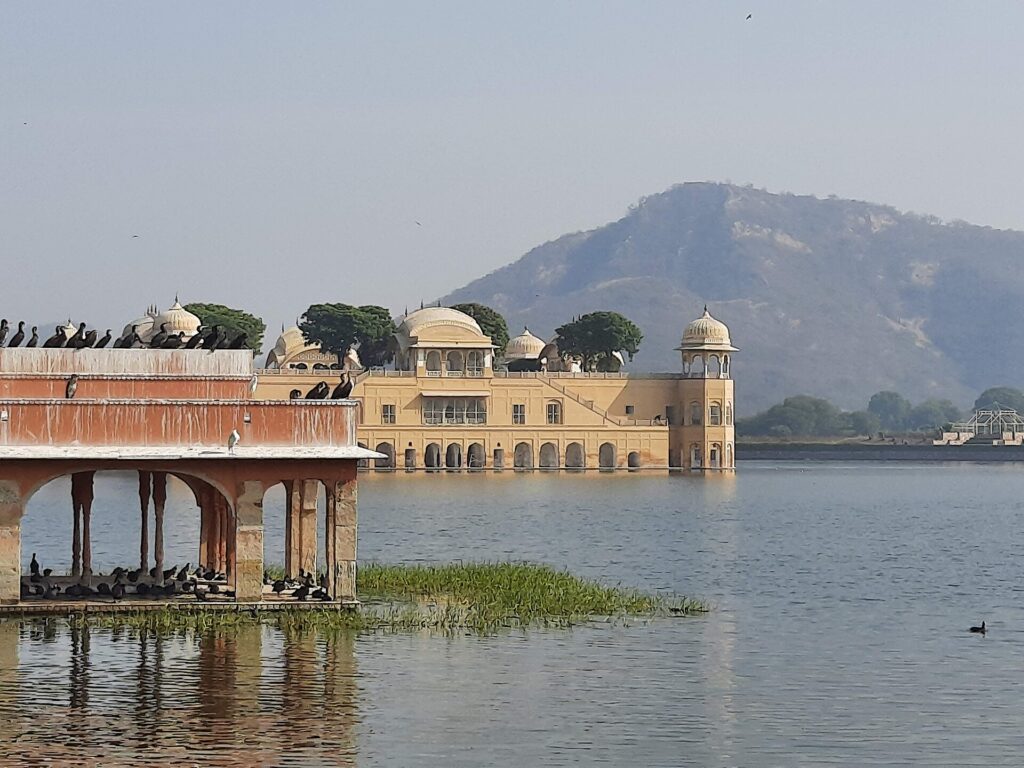
Jal Mahal appears to float in Man Sagar Lake between the Old City and Amer. It is normally an exterior viewpoint, not a palace tour; Rajasthan Tourism says the building is not open to most of the public. Allow 15–30 minutes for the view and birds. Morning is calmer; do not feed wildlife or leave waste.
8. Albert Hall Museum Jaipur
Albert Hall is a useful counterpoint to Jaipur’s palaces. Inside are collections spanning decorative arts, arms, textiles, paintings and historical objects; outside, the Indo-Saracenic building becomes especially photogenic after dark. It is also one of the better midday choices during hot or rainy weather.
Allow 60–90 minutes, more if you read museum labels closely. Reported 2026 admission is ₹100 for Indian adults and ₹600 for international adults. Check the official Rajasthan booking portal for current hours, concessions and any gallery closures.
9. Gaitore Ki Chhatriyan
Also called the Royal Gaitor or Royal Cenotaphs, this foothill complex commemorates Jaipur’s former rulers through carved stone pavilions. It is quieter than the major palaces and rewards anyone who likes architectural detail without a large crowd.
Allow about 45 minutes and combine it with the Amer road or Nahargarh side of town. The site is included in the City Palace Museum’s published composite ticket with City Palace and Jaigarh. Be respectful: this is a memorial complex, not simply a photo set.
10. Panna Meena ka Kund
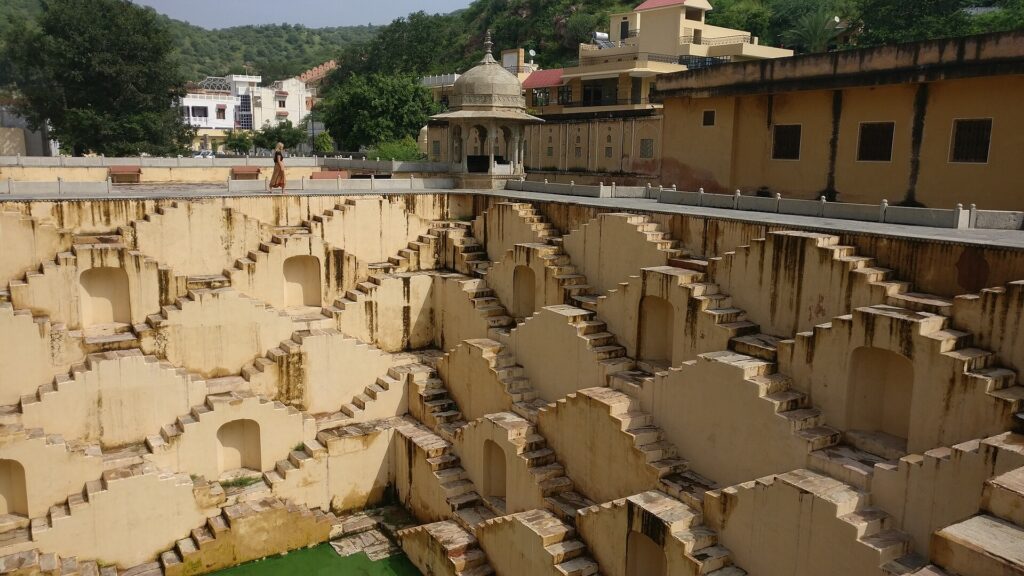
This compact stepwell near Amer adds only 20–30 minutes to a fort morning. Its criss-cross geometry is striking, but visitors may be prevented from descending, so follow the guard rather than copying older photographs. Go early for softer light; the narrow lane favours a small vehicle or short walk.
11. Galtaji Temple Jaipur
Galtaji is a living temple complex set in a rocky valley east of Jaipur. Water tanks, shrines and surrounding hills give it a strong sense of place, but this is not a controlled museum visit. Monkeys are common, surfaces can be wet and worship takes priority over sightseeing.
Use the road entrance if you want the simpler approach; the hill path requires more effort and should not be treated casually in heat. Keep food hidden, secure loose items, dress modestly and ask before photographing people. Families with toddlers or anyone uneasy around monkeys may prefer Birla Mandir or Govind Dev Ji.
12. Govind Dev Ji Temple
Inside the City Palace precinct, Govind Dev Ji is one of Jaipur’s most important Krishna temples. The experience is shaped by scheduled darshan and aarti periods rather than all-day museum-style access. Crowds can swell quickly around major worship times and festivals.
Check the temple’s same-day schedule, arrive early and keep footwear and valuables organised. A visit pairs naturally with City Palace, but give it its own respectful pace. Entry is generally free; donations are voluntary.
13. Birla Mandir Jaipur
This white-marble Lakshmi Narayan temple below Moti Dungri is especially attractive after sunset, when the illuminated exterior stands out against the dark hill. It is one of the easiest religious places in Jaipur to add after daytime sightseeing.
Entry is generally free. Cover shoulders and knees, remove shoes where instructed and avoid intrusive photography during worship. Thirty to forty-five minutes is usually enough unless you plan to stay for a prayer ceremony.
14. Sisodia Rani Garden and Palace
This tiered garden on Agra Road combines fountains, pavilions and Radha–Krishna murals. Visit in cool weather or late afternoon, and pair it with Galtaji by car. Maintenance and water flow are seasonal, so check entry and hours on the government portal.
15. Kanak Vrindavan
Kanak Vrindavan is a green break on the Amer route, with gardens, temple architecture and hill views. Allow 30–60 minutes, preferably in the cooler morning. Weekends can be busy; keep food packed away from animals and leave no litter.
16. Patrika Gate and Jawahar Circle
Patrika Gate’s painted corridors make it one of Jaipur’s most Instagrammable places, while Jawahar Circle adds paths and lawns. The gate is generally free but busy with photo shoots. Go early, keep passages clear and use it as an arrival- or departure-day stop near the airport corridor.
17. Jawahar Kala Kendra
JKK presents exhibitions, theatre, music, fairs and workshops in striking courtyards. The best visit matches a live programme, so check the Rajasthan Art and Culture Department calendar. General entry is often free, while events may be ticketed. It is a useful hot- or wet-weather option.
18. Anokhi Museum of Hand Printing
Set in a restored haveli near Amer, the Anokhi Museum makes Jaipur’s textile reputation tangible. Displays explain block carving, printing and dyeing, and live demonstrations turn it into one of the best places to visit in Jaipur with curious children.
The museum publishes Tuesday–Saturday hours of 10:30 AM–5:00 PM and Sunday hours of 11:00 AM–4:30 PM; it is closed on Mondays. Demonstrations pause around lunch, and the museum has an annual summer closure. It reopened on 15 July in 2026, but future dates may differ, so check the official opening-times page.
19. Johari Bazaar
Johari Bazaar is the classic Old City street for jewellery, gemstones, lac work and clothing; its pink facades and active trade are part of Jaipur’s World Heritage character. For precious purchases, set a budget and request an invoice, stone disclosure and appropriate hallmarking or certification. Visit after the nearby Hawa Mahal–City Palace cluster.
20. Bapu Bazaar
Bapu Bazaar is easier for lower-cost souvenirs such as printed textiles, bags, juttis and everyday gift items. Quality varies, so inspect stitching, colourfastness and material instead of assuming every product is locally handmade.
Bargaining is common in independent shops, but keep it friendly. If you want fixed-price craft shopping, add a government emporium and compare quality. Nearby Nehru Bazaar is another option for footwear and textiles.
21. Masala Chowk
Masala Chowk brings multiple Jaipur food vendors into one open-air venue near Ram Niwas Garden. Go in the evening, share portions and choose busy stalls serving freshly cooked food. Entry and vendors can change; check Rajasthan Tourism’s Jaipur page.
22. Raj Mandir Cinema
Raj Mandir’s sweeping 1970s interiors and single-screen atmosphere turn a film into a Jaipur night out. Book weekends in advance and allow roughly three hours with arrival and interval. It is a full evening plan, not a quick architecture stop.
23. Kishan Bagh Sand Dune Park
Kishan Bagh is one of Jaipur’s best offbeat places: a restored desert landscape that interprets native sand, grasses, rocks and ecology at the foot of the Nahargarh hills. It is quieter and more educational than a conventional city garden.
The official booking portal lists ₹50 entry and an 8:30 AM–5:30 PM visiting window. Morning and winter are most comfortable. After heavy monsoon rain, the park or approach roads can close temporarily, so confirm status before travelling. See the official Kishan Bagh listing.
24. Jhalana Leopard Reserve
Jhalana offers a real wildlife safari within Jaipur, although leopard sightings are never guaranteed. Seasonal morning and afternoon shifts must be booked through the Rajasthan Forest Department or official state system; a gypsy generally seats six. Carry matching ID, stay quiet and never pressure a driver to crowd an animal. With transfers, allow half a day.
25. Chokhi Dhani Jaipur
Chokhi Dhani packages folk performances, activities and dinner into a tourist-friendly cultural evening. The official page lists a 5:00 PM onward start; prices depend on the dining option, and some rides or extras cost more. Because it is south of the sightseeing core, do not combine it with a late Nahargarh sunset.
Jaipur itinerary: what to cover in 1, 2 or 3 days
Jaipur itinerary for 1 day
A one-day Jaipur sightseeing plan should show you the city, not trap you in a car between ten photo stops.
- 7:30–10:15 AM: Amer Fort
- 10:30–10:50 AM: Jal Mahal viewpoint
- 11:15 AM–12:00 PM: Hawa Mahal interior, or exterior only if behind schedule
- 12:10–1:00 PM: Jantar Mantar
- 1:00–2:15 PM: Lunch and a proper rest
- 2:15–4:15 PM: City Palace
- 4:30–6:00 PM: Johari Bazaar or Bapu Bazaar
- Evening: Birla Mandir or Albert Hall exterior
With young children, seniors or a hot-weather visit, choose either City Palace or Jantar Mantar and extend lunch. Nahargarh does not fit comfortably unless you drop a major Old City interior.
Jaipur itinerary for 2 days
Day 1: Amer and the hills. Start at Amer Fort. Add Panna Meena ka Kund and choose Anokhi Museum if it is open. Stop at Jal Mahal on the return. Finish at either Jaigarh for military history or Nahargarh for the view—not automatically both.
Day 2: Old City and central Jaipur. Begin at Hawa Mahal, then walk or take a short e-rickshaw between Jantar Mantar, City Palace and Govind Dev Ji. Have lunch, browse Johari or Bapu Bazaar, and visit Albert Hall. End with Birla Mandir, Masala Chowk or a pre-booked film at Raj Mandir.
This is the best Jaipur weekend itinerary for most first-time visitors because each day stays geographically coherent.
Jaipur itinerary for 3 days
Use the first two days above, then build Day 3 around one interest:
- Family and learning: Jhalana morning safari, rest, Patrika Gate and Jawahar Circle.
- Art and craft: Jawahar Kala Kendra, a block-printing workshop or Sanganer/Bagru craft visit, then Raj Mandir.
- Quiet and offbeat: Kishan Bagh, Gaitore Ki Chhatriyan and Sisodia Rani Garden.
- Cultural evening: Keep the afternoon light and spend 3–4 hours at Chokhi Dhani.
Choose Jaipur sightseeing places by travel style
Best places to visit in Jaipur with family and kids
Amer Fort, Jantar Mantar with a good explainer, Anokhi Museum, Albert Hall and Jhalana are the strongest family-friendly attractions in Jaipur. For younger children, alternate an enclosed attraction with a garden, pool or hotel break. Three palace interiors in a row feel repetitive even to adults.
Fort paths have slopes, uneven surfaces and stairs, so a stroller will not solve every mobility problem. City Palace is the clearest option for visitors who need published accessibility support, including wheelchairs, accessible restrooms, a nursing room and ramps where possible. Confirm arrangements directly before arrival.
Romantic places to visit in Jaipur for couples
Choose atmosphere over a packed checklist: Hawa Mahal in morning light, the painted City Palace gates, Gaitore’s quieter pavilions, a walk at Kishan Bagh and one panoramic fort view. Nahargarh at sunset is popular, but a pre-sunset visit followed by dinner often feels more relaxed than joining the departure jam.
For photographs, early weekday mornings are better than asking crowds to move. Drones, professional equipment and commercial shoots may require permission; never assume an entry ticket covers them.
Free places to visit in Jaipur
Good no- or low-cost choices include the Jal Mahal public viewpoint, Patrika Gate, Birla Mandir, Govind Dev Ji Temple, Old City bazaars and the public areas of Jawahar Kala Kendra. Religious sites may accept donations, parking can cost extra and special events may be ticketed.
Things to do in Jaipur at night
Jaipur’s best evening options are the illuminated Hawa Mahal and Albert Hall exteriors, Birla Mandir, a film at Raj Mandir, dinner at Masala Chowk and the Chokhi Dhani programme. Amer’s sound-and-light show is another possibility; Rajasthan Tourism publishes seasonal show timings, so verify the language and start time for your date.
Plan a Jaipur trip in 2026
Jaipur tourist places timings and entry fees
Rajasthan revised government-monument prices on 1 January 2026. Reported adult admission is ₹200/₹1,000 at Amer and ₹100/₹600 at Hawa Mahal, Jantar Mantar, Albert Hall and Nahargarh for Indian/international visitors. The five-site total is therefore about ₹600 or ₹3,400 before concessions.
A broader ten-day state pass was reported at ₹1,300/₹5,500, but it is not automatically cheapest for Jaipur alone. Compare its live scope on the official OBMS portal. City Palace separately advertises a ₹500 Indian/resident pass covering City Palace, Jaigarh and Royal Gaitor. Last entry can precede closing, and festivals, restoration or weather can change access; recheck official pages the evening before visiting.
Best time to visit Jaipur
October to March is most comfortable for forts and markets. December and January are busy and mornings can feel cold, so carry a light layer.
April to June is very hot. Start outdoors at opening time and use Albert Hall, City Palace, JKK or a hotel rest around midday.
July to September turns the hills greener, but rain means slippery stone and occasional closures. Keep an indoor alternative and check road and park conditions.
How to reach Jaipur and get around
Jaipur is connected by air, rail and road. The airport is in Sanganer, about 13 km from the centre; Jaipur Junction is the main rail arrival point.
For sightseeing, use the right mode for the route:
- Old City: Metro to Badi Chaupar or Chandpole, then walk or use an e-rickshaw. Hawa Mahal, City Palace and Jantar Mantar are close together.
- Amer, Jaigarh and Nahargarh: Use a car. Agree on waiting time, parking and fort coverage first.
- Airport/Jawahar Circle/Chokhi Dhani: Use a cab; these places do not combine efficiently with an Old City walking day.
- Budget organised option: RTDC lists a full-day tour with monument and Amer vehicle fees extra. Check its current page and minimum-seat condition.
Build a 20–30 minute traffic buffer before timed tickets, safaris, trains and flights.
Where to stay in Jaipur
- Old City: Best for atmosphere and early access; expect noise and tight roads.
- Bani Park: Good for heritage-style stays, railway access and a quieter base.
- C-Scheme or MI Road: Central for dining and mixed sightseeing.
- Amer or Kukas: Resort space and family downtime, but longer city transfers.
- Tonk Road or Jawahar Circle: Convenient for the airport, but farther from the Old City.
Choose locality before choosing decor. Saving ₹500 on a room can be false economy if it adds two long cab journeys every day.
Jaipur trip cost: a realistic two-day estimate
For two adults sharing a room, a sensible budget trip is roughly ₹4,500–₹8,000 per person for two nights, excluding travel to Jaipur, shopping, Jhalana and Chokhi Dhani. A comfortable mid-range trip is more often ₹8,000–₹15,000 per person.
The estimate assumes ₹1,500–₹3,500 per room per night, ₹800–₹1,500 per person per day for meals, shared local transport, and about ₹1,000–₹1,500 for a core set of Indian-adult monument tickets including City Palace. Solo travellers pay more for rooms and cars; families can reduce per-person transport costs by sharing one vehicle. Treat these as planning ranges, not quoted package prices.
Food, shopping, nearby places and practical Jaipur travel tips
Famous food in Jaipur
Try pyaaz kachori, dal baati churma, ker sangri, gatte ki sabzi, ghewar, rabri and lassi, but do not force every famous dish into one day. Mix rich Rajasthani meals with simpler food and water breaks. Choose busy, clean outlets; ask about spice and allergies; and prefer food cooked hot in front of you.
Jaipur shopping guide
Use Johari Bazaar for jewellery and gems, Bapu and Nehru bazaars for textiles and juttis, Tripolia for lac bangles, and Chandpole or Khazane Walon Ka Rasta for crafts and marble work. Bagru and Sanganer are better for travellers interested in how block-printed textiles are made.
Ask whether an item is handmade, hand-block printed or machine printed; these are not the same product. Get bills for costly purchases, check return and shipping terms, and never let a driver’s “government shop” claim replace your own comparison.
Tourist places near Jaipur
The best places to visit near Jaipur need a separate day. If you have one, choose a single excursion:
- Abhaneri and Chand Baori: A practical heritage day trip, often combined with Bhangarh.
- Sambhar Lake: A landscape and salt-town excursion best done with current local guidance and suitable weather.
- Bagru or Sanganer: A closer craft-focused trip for block printing and textiles.
- Ajmer and Pushkar: A long but popular religious and cultural day; an overnight stay is more relaxed.
- Ranthambore: Better as a one- or two-night extension than a same-day Jaipur outing.
RTDC currently lists same-day bus excursions from Jaipur to Sambhar and to Bhangarh–Abhaneri. Confirm running dates and inclusions on its official page. For natural places near Jaipur, avoid walking onto uncertain salt crusts, entering closed forest tracks or treating wildlife sightings as guaranteed.
Jaipur travel tips that prevent common problems
- Start forts and exposed monuments early, particularly from March to September.
- Group nearby attractions; do not cross Jaipur repeatedly to follow a random list order.
- Keep small cash, but use traceable digital payment for expensive shopping and retain invoices.
- Hire licensed guides at official counters or verify credentials and total fees in advance.
- Wear shoes with grip. Polished palace floors, old steps and monsoon stone can be slippery.
- Ask before photographing worshippers, artisans, guards or children.
- Decline unsolicited shopping detours firmly. A “special exhibition today” is not a reason to abandon your itinerary.
- Carry valid ID for student tickets and wildlife bookings.
- Recheck prices, closures and weather 24 hours before the trip.
Frequently asked questions about Jaipur tourist places
Which are the five best places to visit in Jaipur for a first trip?
Amer Fort, Hawa Mahal, City Palace, Jantar Mantar and Jal Mahal give the clearest first-time overview. Add Johari Bazaar if you want shopping or Nahargarh if a panoramic view matters more than another palace interior.
How many days are enough for Jaipur sightseeing?
Two full days are enough for Jaipur’s essential forts, palaces, observatory and bazaars. Three days are better for families, photographers and travellers who want crafts, museums, wildlife or rest time. One day works only with firm priorities.
Can I cover Jaipur tourist places in one day?
You can cover the main highlights, not all 25. Start with Amer Fort, stop briefly at Jal Mahal, then visit Hawa Mahal, Jantar Mantar, City Palace and one Old City market. Drop one paid interior if traffic, heat or queues put you behind schedule.
What is the best month to visit Jaipur?
November to February offers the most comfortable daytime sightseeing weather. October and March are also good and may be slightly less crowded. Summer requires early starts and long midday breaks; monsoon visitors need an indoor backup plan.
How much does a two-day Jaipur trip cost?
A budget two-night trip typically costs about ₹4,500–₹8,000 per person for two adults sharing, excluding travel to Jaipur and premium activities. A comfortable mid-range plan is roughly ₹8,000–₹15,000 per person. Your hotel location, private-car use, City Palace ticket choice and shopping make the biggest difference.
Jaipur rewards selection, not speed. Give Amer a real morning, explore the Old City as one walkable cluster, and choose your extra day around what your group actually enjoys—craft, wildlife, food, gardens or quiet architecture. Before leaving, compare live tickets on the official portals and save your route offline. Then use the detailed Jaipur itinerary for 1, 2, 3 or 4 days to turn this list into a day-by-day plan that fits your pace.