
12 Places to Visit in Sariska and Nearby: Safari, Temples & a 1–2 Day Plan
Sariska is often planned around one question: will we see a tiger? That is part of the excitement, but it is a narrow way to judge the whole trip. There are forest drives, temple visits, old stone ruins and a lake stop to consider, with Alwar’s heritage sights available if you have another day.
The main places to visit in Sariska include Sariska Tiger Reserve, Pandupol Hanuman Temple, Kankwari Fort and the Neelkanth temple area. Nearby additions include Bhartrihari Temple, Siliserh Lake, Bhangarh Fort and Alwar’s City Palace, museum and Moosi Maharani Ki Chhatri. Choose your stops around the safari gate and the time you actually have.
A one-day visit works best with one booked safari and one additional attraction. For families, an overnight stay makes an early safari easier and leaves room for meals, rest and sightseeing. You do not need to fit every place into a single weekend.
This guide explains which attractions need forest-access planning, which belong to the wider Sariska–Alwar trip, and how to put them together without spending most of the holiday in a car.
Visitor information checked on 1 October 2026 against the linked official tourism and booking resources. Visit durations below are suggested planning allowances, not official operating hours. Recheck access for your travel date.
1. Sariska sightseeing at a glance
Sariska Tiger Reserve lies in the Alwar region of Rajasthan, among the Aravalli hills. The reserve is the main wildlife attraction, while several places commonly included in Sariska sightseeing lists are outside the safari area. Rajasthan Tourism’s Sariska guide is a useful starting point for understanding the destination.
That distinction matters. A forest safari permit does not automatically include every temple or fort, and a hotel advertised as being in Sariska may be much more convenient for one gate than another.
| Place | Where it fits | Suggested time to allow | Best suited to | Main planning point |
|---|---|---|---|---|
| Sariska Tiger Reserve | Booked forest visit | Reserve half a day, including reporting and transfers | Wildlife and nature lovers | Use the gate, shift and reporting instructions on your permit |
| Pandupol Hanuman Temple | Restricted forest-access pilgrimage | Allow a separate half-day window if visiting independently | Devotees and families interested in local traditions | Confirm permitted entry arrangements for the date |
| Kankwari Fort | Authorised forest-route excursion | Ask for the complete excursion duration | Heritage and wildlife enthusiasts | A standard safari may not include it |
| Neelkanth Mahadev Temple | Sariska buffer-area heritage excursion | Allow half a day with road travel | Architecture and temple enthusiasts | Check the approach road and vehicle requirements |
| Bhartrihari Temple | Wider Sariska-area temple stop | About 45–60 minutes on site | Pilgrimage and cultural interest | Account for queues and travel from your base |
| Siliserh Lake | Alwar-side excursion | About 1–2 hours on site | Families and relaxed sightseeing | Boating is an optional activity; check availability |
| Bhangarh Fort | Separate heritage excursion | About 2–3 hours on site | Ruins, photography and history | Visit during permitted daylight hours |
| Alwar City Palace | Alwar town | About 30–45 minutes for accessible exterior areas | Architecture enthusiasts | Government offices occupy parts of the complex |
| Alwar Government Museum | Alwar palace-area visit | About 60–90 minutes | History, art and older children | Check museum opening days and ticket arrangements |
| Moosi Maharani Ki Chhatri | Alwar palace-area visit | About 30–45 minutes | Architecture and photography | Combine with the palace area |
| Garbhaji Falls | Optional Alwar-area nature excursion | Allow 1–2 hours plus road travel | Nature lovers when conditions are suitable | Check current water flow and approach conditions |
| Astroport Sariska | Booked property experience | An evening session or overnight stay | Families interested in astronomy | Confirm the dated programme and inclusions |
These allowances are deliberately generous. Add your hotel-to-attraction journeys separately; the time at a monument is not the total time needed to visit it.
How many places should you choose?
For a first trip, start with the reserve and one attraction that interests everyone. A family that enjoys water views might choose Siliserh Lake. Someone interested in stone carving may prefer Neelkanth. A heritage-focused traveller could spend the second day in Alwar.
2. The reserve and its temple and heritage excursions
1. Sariska Tiger Reserve: make the forest the main attraction
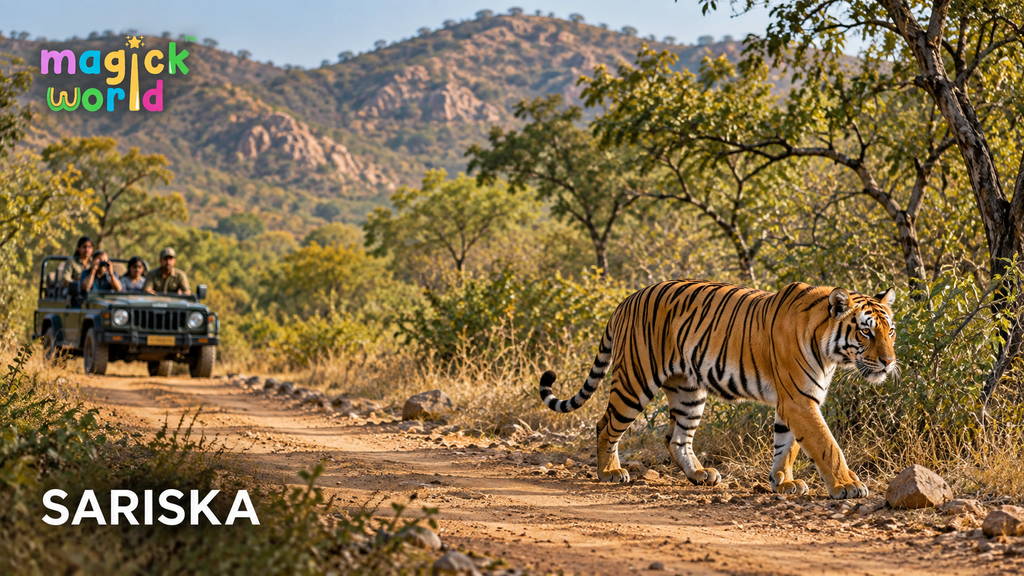
Sariska Tiger Reserve is the place to prioritise if wildlife brought you here. Rajasthan Tourism describes a landscape of dry deciduous forest, hills and grasslands, with animals including tigers, sambar and chital. Birdwatching is another reason to pay attention throughout the drive, rather than waiting only for a large cat to appear.
Treat a tiger sighting as a possibility. A booking gives you an authorised forest visit; it does not promise a particular animal. For children, it helps to explain this before departure, so a morning with deer, birds and forest sounds still feels worthwhile.
Give the safari a proper space in the day. Reporting, document checks and the journey from your hotel all happen before the experience starts. If you have an afternoon slot, avoid placing a distant temple excursion immediately before it. If you have a morning slot, protect breakfast and rest afterwards.
Use the Rajasthan Forest Department’s safari-booking page to reach the booking service, or check the official Sariska booking page. Follow the dated permit for boarding, identification and reporting requirements.
2. Pandupol Hanuman Temple: plan around pilgrimage access
Pandupol Hanuman Temple is a religious attraction reached through the reserve. Its association with the Pandavas belongs to local religious tradition, and is best understood as part of the temple’s cultural significance rather than as a verified historical event.
Rajasthan Tourism’s Alwar page lists Tuesday, Saturday and the monthly full-moon day for Pandupol entry. This does not establish unrestricted private-car access on every listed date. Confirm the current vehicle rules, entry point and reporting arrangements with the forest authorities before setting out.
For a temple-focused trip, make Pandupol the main outing. Do not assume that the journey can be inserted between a tiger safari and lunch simply because both involve Sariska. The route, permissions and purpose of the visit need to align.
Allow extra time if you are travelling with grandparents or young children. Ask about the distance from the vehicle drop-off to the temple, steps, footwear arrangements and where toilets are available. These details are more useful than a general claim that the visit is easy for everyone.
3. Kankwari Fort: a heritage visit that needs advance confirmation
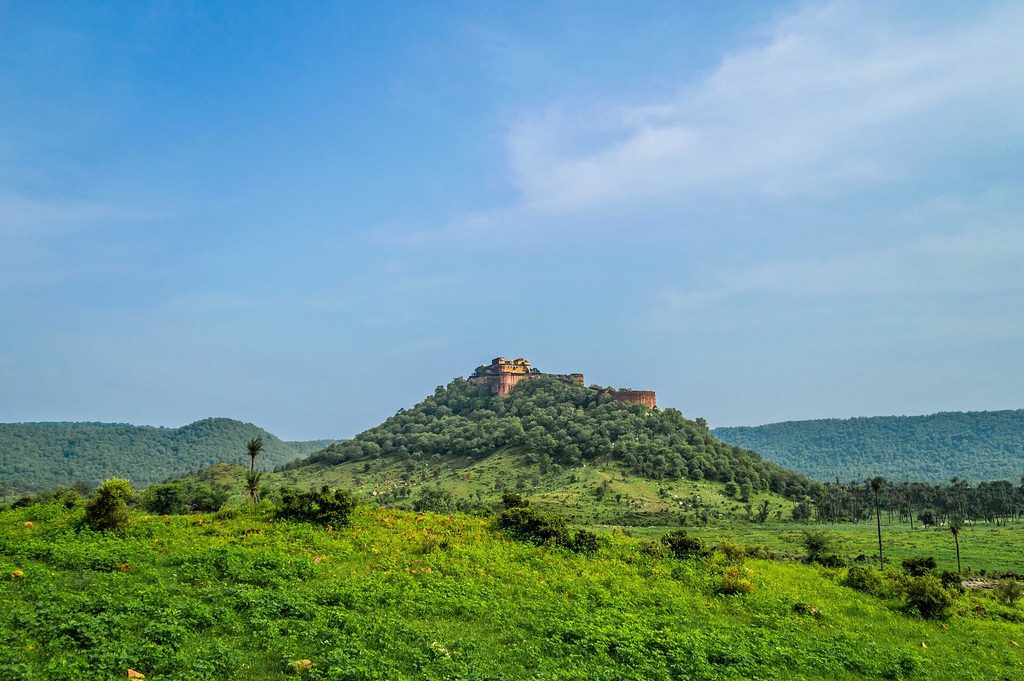
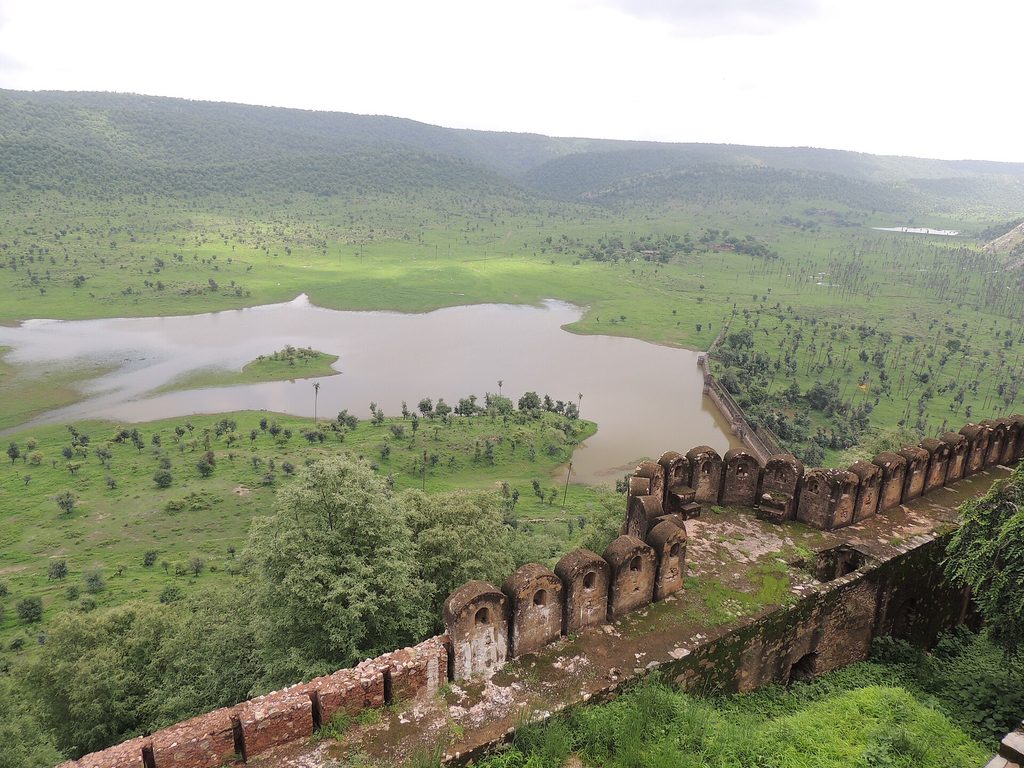
Kankwari Fort, also written as Kankwadi Fort, is one of the heritage sites associated with Sariska’s forest landscape. Rajasthan Tourism’s reserve guide describes access by jeep safari. The fort should therefore be planned as an authorised forest excursion, rather than a monument you can casually drive to after lunch.
The important question is whether your confirmed route actually includes it. A general safari booking is not the same as a written confirmation for a fort visit. Ask the booking office or authorised operator about the route, duration and whether visitors can leave the vehicle at the permitted site.
4. Neelkanth Mahadev Temple: allow time for the approach
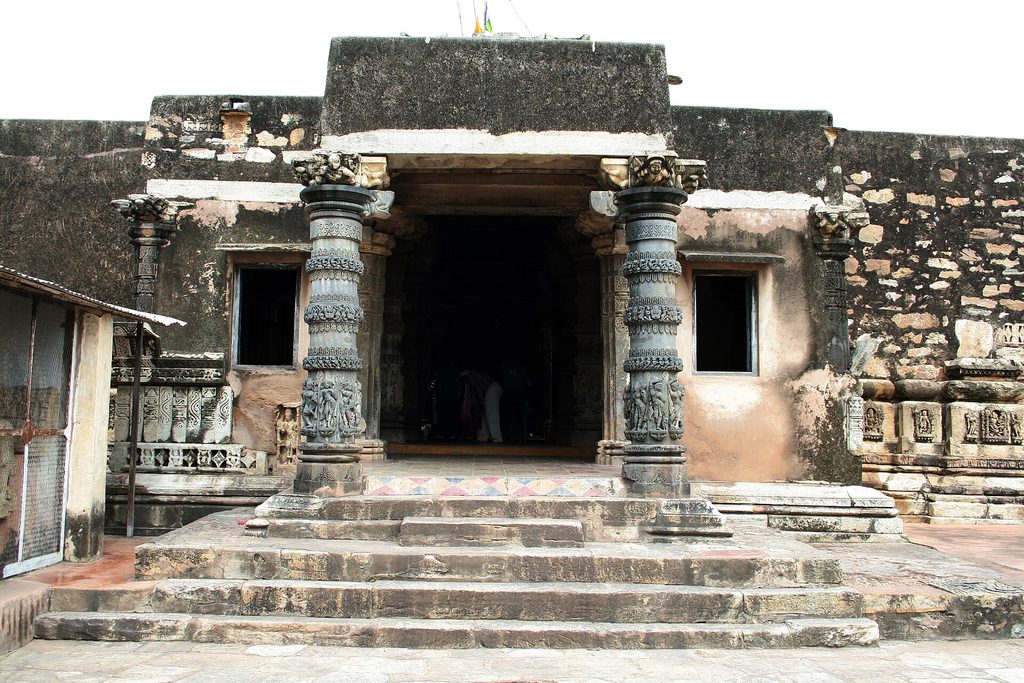
Neelkanth is especially appealing if you enjoy carved stone architecture. Incredible India’s Neelkanth guide places the temple in Sariska’s buffer zone and describes its hill setting, carved pillars and a steep approach. It also records an inscription dating to 961 CE.
Those details make it a rewarding heritage excursion, but also explain why the drive deserves attention. A short distance on a map does not establish that the final approach will be quick or suitable for your vehicle.
Ask a local driver who knows the route about current road conditions, parking and the remaining walk. For a first visit, prefer daylight and leave enough time to return without rushing. If there has been heavy rain, recheck the approach rather than relying on a route description written in another season.
Once there, give yourself time to look closely. Instead of treating the temple as a single photo stop, notice the shapes of the pillars and the remaining sculpture. With children, a simple activity works well: ask them to find three different carved details without touching the stonework.
3. Places near Sariska for a fuller weekend
5. Bhartrihari Temple: a separate pilgrimage stop
Bhartrihari Temple is another cultural addition to a Sariska-area trip. Rajasthan Tourism identifies it as a pilgrimage centre associated with the legend of King Bhartrihari spending his later years in the hills.
Choose the temple because it interests your group, rather than because a sightseeing list says it must be included. A traveller who wants a cultural visit may find it more meaningful than adding another long forest drive. Someone with only a few hours after a safari may prefer to return to the hotel instead.
For planning, allow roughly 45–60 minutes at the site, plus travel and any queue. That is an editorial allowance, not a fixed visit duration. Religious occasions can change the pace of a visit, so ask locally if you are travelling on an important festival date.
Do not confuse Bhartrihari Temple with the Raja Bhartrihari Panorama in Alwar. They are different attractions. Check the exact destination pin before the driver sets off, particularly if you have found several similarly named results on a map.
6. Siliserh Lake: an Alwar-side break from sightseeing
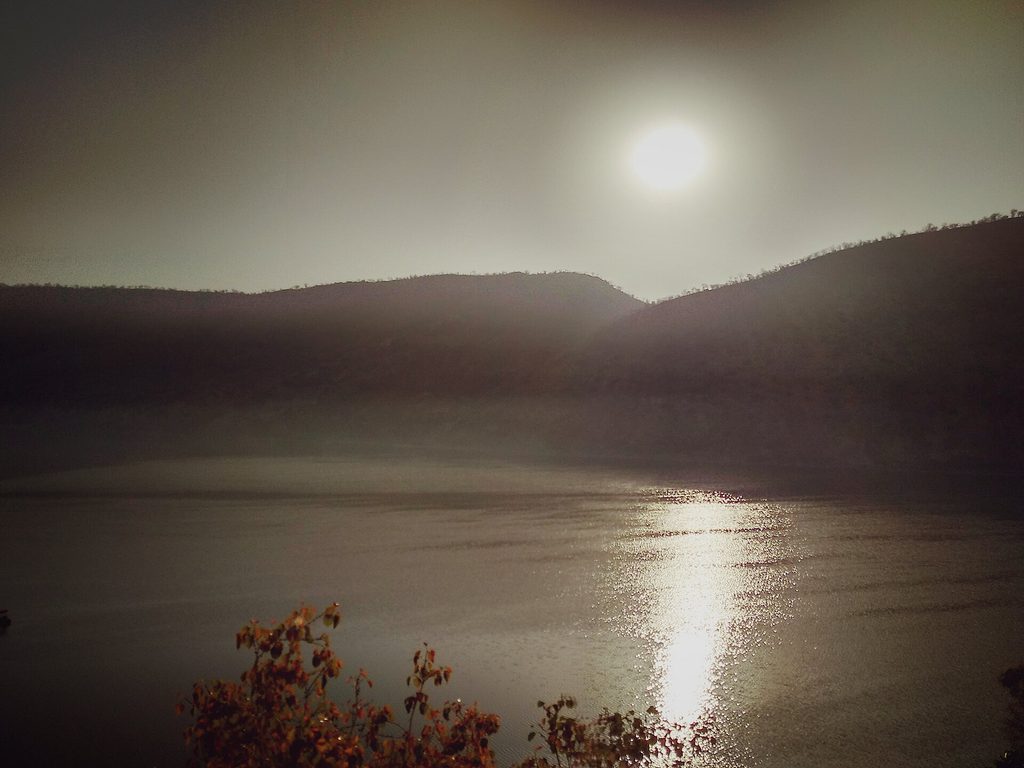
Siliserh Lake offers a different pace from a safari or a temple visit. Rajasthan Tourism lists boating among its activities and describes the lake’s palace as an RTDC hotel. It is an Alwar-side attraction, outside the reserve safari itinerary.
Allow about one to two hours on site if you want time for views and an optional boat ride. You may need less time if you only stop briefly, or more if you arrange a meal. Check opening arrangements, parking and boating availability before making the lake the centre of your afternoon.
For families, keep boating optional. Children may be tired after an early safari, and there is no need to turn every stop into another activity. A quieter visit can fit better after lunch than a second long drive through the forest.
The lake is particularly convenient when your itinerary already includes Alwar. If you are staying elsewhere around Sariska, calculate the hotel-to-lake transfer before adding it. A lake described as “near Sariska” may still require a meaningful drive from your chosen base.
7. Bhangarh Fort: visit the ruins in daylight
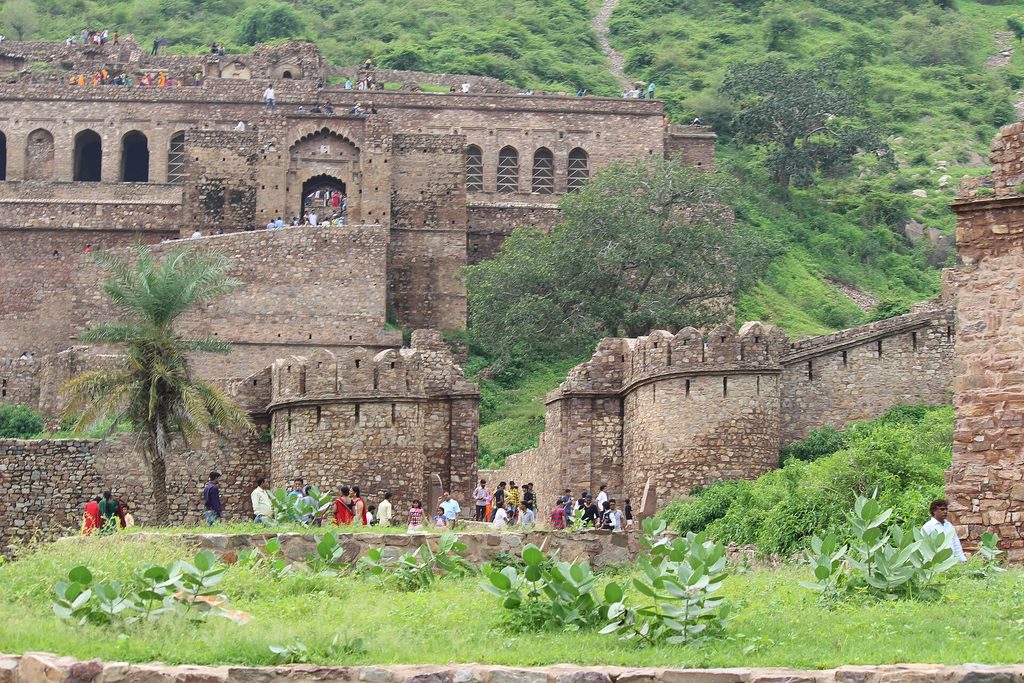
The inner fortifications and palace ruins at Bhangarh Fort. Photographed in August 2016. Photo: © Rakami Art Studio / Wikimedia Commons / CC BY-SA 4.0.
Bhangarh Fort is one of the better-known places to visit near Sariska. Rajasthan Tourism’s Bhangarh page describes the ruined town’s temples, markets and palace remains. It also states that visitors cannot enter before sunrise or after sunset.
The haunted reputation is folklore. You can enjoy the legends while keeping the distinction clear: stories about a curse are not evidence of paranormal activity. The ruins themselves provide enough architectural interest for a worthwhile visit.
Plan two to three hours on site if you want an unhurried look around, then add the road journey separately. Go earlier in the day when possible, especially if you are travelling in a warm month or want to continue towards Jaipur afterwards.
This is not a quick addition to every safari itinerary. Its practicality depends on your hotel location, chosen gate and onward route. If reaching Bhangarh requires backtracking after a morning safari, put it on the following day or leave it for a separate trip.
Carry water, wear shoes suitable for uneven ground and keep children out of damaged structures. With younger children, there is no need to build the whole visit around frightening ghost stories. Looking for old doorways, market rows and temple details gives them another way to engage.
8. Alwar City Palace: begin a heritage walk here
Alwar City Palace belongs to the town portion of a Sariska–Alwar weekend. Rajasthan Tourism notes that parts of the palace now house government offices, which is important when setting expectations for the visit.
Do not arrive expecting every room of a former royal residence to be open as a museum. Begin with the areas available to visitors and follow signs and staff instructions around working offices.
The palace works best as one part of a compact heritage outing. Pair it with the Government Museum and Moosi Maharani Ki Chhatri, rather than returning from a distant hotel for each attraction separately. Keeping the visit within one area reduces the number of parking and transport arrangements you need to make.
Allow approximately 30–45 minutes for accessible exterior areas, but adjust to the actual access on the day. If you plan photography, check where it is permitted. Keep any museum visit as a separate part of the schedule, with its own admission and opening arrangements.
9. Alwar Government Museum: give the collections their own time
The Government Museum is listed by Rajasthan Tourism for its manuscripts, paintings and armoury displays. Although it belongs naturally with a palace-area visit, it deserves a separate place in the itinerary if anyone in your group enjoys history or art.
Allow around 60–90 minutes rather than walking through simply to say you have covered it. Check the opening day, ticket arrangements and photography rules before travelling into town specifically for the museum.
With children, choose a small focus. Ask an older child to find an object that tells them something about how people travelled, fought or recorded information. A younger child might prefer looking for colours and shapes in a painting. Neither needs to study every label.
10. Moosi Maharani Ki Chhatri: combine it with the palace area
Moosi Maharani Ki Chhatri is a cenotaph in Alwar, identified by Rajasthan Tourism for its marble upper structure and red-sandstone lower portion. It adds a different architectural form to the palace-area visit without requiring another major excursion.
Allow about 30–45 minutes for a brief look and photographs. It is a useful choice when the group wants to continue sightseeing but does not have the energy for a long museum visit or another drive.
Treat it as a memorial, with the same consideration you would show at any heritage site. Avoid climbing on architectural elements or positioning children on edges for photographs. If access to an area is restricted, photograph it from the permitted route.
11. Garbhaji Falls: an optional stop after checking conditions
Garbhaji Falls, also written as Garbha Ji or Garbhaji Water Falls, appears in Rajasthan Tourism’s Alwar attractions. It is a nature excursion to consider when local conditions make the visit worthwhile.
Do not plan around a photograph alone. Ask about current water flow, the approach route and whether the site is accessible on your date. A recent local update is more useful than an attractive image taken in another season.
This is an optional addition, particularly for families. If the group already has a safari, a lake visit and an Alwar heritage outing, the falls may introduce more travel than enjoyment. Add it only when nature is a clear priority and the route fits.
Avoid scrambling onto wet rocks or taking children close to flowing water for a photograph. If there has been heavy rain or the approach looks unsafe, choose another activity. Keep the decision flexible rather than making the waterfall a compulsory part of the weekend.
12. Astroport Sariska: a booked astronomy experience
Astroport Sariska gives families an alternative to filling every evening with another road trip. The property’s tourism and activities page describes astronomy and space experiences alongside farm-related activities. These are property programmes, not public reserve attractions.
Before booking, ask what will operate on your exact dates. Is a telescope session included? Is it guided? Does the activity need a separate reservation or payment? Check the age suitability, session length and what happens if conditions prevent sky viewing.
The appeal is participation. Children can look at a sky chart, ask questions and compare what they see with what they expected. No visit can promise a particular view of a planet or a perfectly clear sky; cloud cover, the moon and the dated programme all matter.
MagickWorld’s Sariska: Where the Forest Meets the Stars is a related family option. Ask for the final dated inclusions, particularly astronomy charges, transfers and whether a safari is included.
What about Bala Quila and Sariska Palace?
Bala Quila is often recommended in Alwar guides, but Rajasthan Tourism currently carries a temporary closure notice for tourist entry to the fort. Treat it as a conditional addition. Confirm fort access separately from any buffer-safari availability; one does not establish the other.
Likewise, a heritage property such as Sariska Palace should not be treated as an unrestricted public monument. Check current visitor, meal or stay arrangements before making a special journey. A shorter, confirmed list is more useful than adding attractions whose access you have not established.
4. Best time, travel, stays and trip costs
Choose the season for the trip you want
For a family sightseeing trip, the cooler months are the most comfortable starting point. A November-to-February visit usually lets you combine outdoor sights with fewer midday heat concerns, while October and March require more attention to the forecast. This is a comfort-based planning recommendation, not a promise of wildlife sightings.
In April, May and June, plan exposed sightseeing cautiously and leave a substantial rest period between activities. Do not describe the whole October-to-June period as equally pleasant just because safari dates may be offered during parts of it.
For monsoon travel, check what is actually operating. Reserve routes, a temple visit, a hotel programme and an Alwar monument are different services. An available hotel room does not prove a forest route is open, and a closed safari route does not necessarily close every attraction in the wider region.
Check closure days and reporting requirements
Rajasthan Tourism’s Alwar page currently states that forest entry at Sariska is closed on Wednesdays. Check the booking service and forest notices for your exact date rather than relying only on a general season description.
Safari start times, reporting times and hotel pickup times are separate. Confirm all three. A driver who knows when your safari begins still needs to know the reporting deadline and assigned boarding point.
How to reach Sariska from Jaipur, Delhi or Alwar
Start with the exact gate or hotel pin. “Sariska” covers a broader area than one arrival point, so a city-to-destination distance cannot tell you how long the last transfer will take.
From Jaipur, MagickWorld’s Jaipur to Sariska distance guide uses approximately 110–120 km and 2.5–3 hours from central Jaipur to the main gate as planning ranges. Your pickup locality, road conditions and gate can change the journey.
From Delhi NCR, calculate the route from your actual starting address. Do not use one travel time for Delhi, Gurugram and Noida. If you want an early safari, compare the cost of an overnight stay with the fatigue of a very early departure and a long return drive.
If travelling by train, Alwar can be a useful arrival base, but you still need an onward road transfer. Check current train services and arrange the hotel or gate journey separately. Do not assume station taxis will automatically know your specific safari boarding point.
Where to stay: let the gate guide the decision
Choose accommodation after deciding the safari gate, or confirm that the hotel can realistically support the gate you book. A property described as being near Sariska may still involve a substantial transfer to your assigned entry point.
Ask for travel time to the gate in ordinary conditions, early departure arrangements and breakfast options after returning. For a family, room layout, meal timings and a place to rest can matter more than an extra advertised activity.
An Alwar stay can suit travellers who want town sightseeing and transport connections. A property closer to the relevant gate can suit a safari-focused visit. Neither is automatically better; compare the actual journeys involved.
Build the budget from confirmed components
There is no single Sariska entry fee that covers this whole sightseeing list. Safari charges, transport, accommodation, monument admission, boating and property activities belong to different bookings.
Use this budget worksheet before committing:
| Cost | What to establish |
|---|---|
| Safari | Seat or vehicle booking; permit, guide and vehicle inclusions; any additional charges |
| Transport | Return city transfer, local excursions, waiting, tolls and parking |
| Stay | Final room price, occupancy, taxes and extra-bed terms |
| Meals | Which meals are included and what a packed breakfast involves |
| Sightseeing | Individual admission, camera or activity charges where applicable |
| Optional experiences | Boating, astronomy or other property activities on the dated programme |
For illustration only, suppose a family receives quotes of ₹5,000 for a room, ₹4,000 for transport and ₹2,000 for meals. The subtotal is ₹11,000 before safari and optional activities. Those figures demonstrate the calculation; they are not current Sariska market rates.
5. A realistic Sariska itinerary for one or two days
One day: a safari and one additional stop
If you have one day in Sariska, make a confirmed safari the main activity and add only one attraction that fits the route. The best choice depends on your entry point, travel time and what the group wants to do.
For a morning safari, arrive by the permit’s reporting deadline. Afterwards, allow a proper meal and a break before deciding whether to continue sightseeing. If everyone still has energy, choose a confirmed nearby stop and leave enough daylight for the return journey.
For an afternoon safari, travel to the area without overloading the morning. Have lunch with time to spare, organise documents and reach the correct boarding point early. After the safari, an uncomplicated dinner or return journey may be enough.
Do not put Pandupol or Kankwari into the schedule unless their access is confirmed. Do not add Siliserh simply because it appears in the same destination list. Check the transfer and the direction of your journey first.
Two days: safari plus the Alwar side
This version suits families who want wildlife, a lake and some heritage without changing hotels.
| Part of the trip | Suggested plan |
|---|---|
| Day 1, morning | Travel to your base; if already staying nearby, use a confirmed morning safari slot |
| Day 1, afternoon | Lunch, rest and the booked safari if you selected an afternoon slot |
| Day 1, evening | Dinner and a confirmed property activity, or simply an early night |
| Day 2, morning | Alwar City Palace area and the Government Museum, if open |
| Day 2, afternoon | Moosi Maharani Ki Chhatri and/or Siliserh Lake, depending on time and route |
| Day 2, later | Begin the return journey with a comfortable travel allowance |
Two days: safari plus Neelkanth or Bhangarh
Choose this version if temple architecture or ruined settlements matter more to your group than town sightseeing. Confirm the safari first, then check which heritage excursion works from the hotel and gate you will use.
Spend one day on the safari and recovery time. On the other, choose Neelkanth or Bhangarh as the main excursion. Leave room for the approach drive, walking, lunch and your onward journey.
Combining both heritage sites may work for some routes, but do not assume it is necessary or easy. Ask a local driver to explain the actual sequence. If the plan requires repeated backtracking, choose one place and enjoy it properly.
When a third day helps
A third day is useful if you want two safaris, a forest heritage excursion or a more relaxed astronomy programme. It lets you separate wildlife, sightseeing and property time rather than compressing them.
For example, arrive and settle in on Day 1, take a safari on Day 2, and use Day 3 for one heritage excursion before leaving. If you arrange a second safari, remove another activity instead of simply adding it.
6. Visiting Sariska with children and older family members
Decide what the group can comfortably manage
Before booking, consider the combination of an early start, an open vehicle, uneven roads and time away from convenient toilets. Ask the operator specific questions about the vehicle and route. A generic “family-friendly” label does not answer them.
For someone who has difficulty sitting through a bumpy journey or walking on uneven ground, a shorter sightseeing programme may be more suitable. Check the practical access to each chosen attraction rather than assuming all temples, museums or heritage properties have the same facilities.
With babies and toddlers, organise meal and sleep timing first. For older children, explain the length of the safari and the need to stay seated and quiet. Knowing what to expect often makes the experience easier for everyone.
Make wildlife observation interesting beyond tigers
Give children a simple task before the drive: look for three different birds, compare two types of leaves visible from the vehicle, or remember one sound to describe later. Keep the activity observational and follow the guide’s instructions.
Avoid promising a tiger beforehand. If a sighting happens, it is exciting; if it does not, the child still has something to talk about. Ask the guide questions when appropriate, but do not encourage shouting to get an animal’s attention.
Pack for the actual outing
Carry drinking water, weather-appropriate layers, a hat, comfortable shoes and essential personal medication. Bring the permit and required identification. A charged phone is useful, but save important documents offline in case connectivity is limited.
Leave room for the holiday to feel like a holiday
If a booked activity runs late or the group is tired, remove the optional stop. If a child enjoys the museum more than expected, stay longer and shorten the next visit. The itinerary should support the family’s experience, not dictate it.
For broader preparation, MagickWorld’s jungle safari guide covers choosing and planning a wildlife trip. Use destination-specific official instructions for the final Sariska booking.
7. Frequently asked questions about places to visit in Sariska
What are the best places to visit in Sariska?
For a first visit, prioritise Sariska Tiger Reserve. Pandupol Hanuman Temple, Kankwari Fort and Neelkanth are options when the required access and route are confirmed. For a wider weekend, choose Siliserh Lake, Bhangarh Fort or Alwar’s palace-area attractions according to your interests and hotel location.
Is one day enough for Sariska?
One day can cover a booked safari and one suitable additional stop. It is not a comfortable allowance for every reserve attraction, Bhangarh and Alwar. An overnight stay makes an early safari easier and gives families more time for rest, meals and a second sightseeing outing.
Can you visit Pandupol Temple without booking a safari?
Pandupol has specific pilgrimage-entry arrangements. Rajasthan Tourism lists Tuesday, Saturday and the monthly full-moon day, but visitors should confirm current vehicle permission, entry point and reporting rules with the forest authorities. Do not assume a private car can enter on any date or that every safari includes the temple.
What is the best time to visit Sariska with family?
For comfortable outdoor sightseeing, start with the cooler months, particularly November to February, and check the forecast for your dates. Safari availability depends on the dated booking calendar and closure notices. October and March can also work, but plan around the actual weather and your family’s tolerance for heat.
Is Sariska worth visiting if you do not see a tiger?
Yes, if you enjoy the wider forest experience. A safari can be worthwhile for birds, other wildlife and the landscape, while the surrounding region offers temples, heritage sites and lake views. Set expectations around observing nature rather than buying a guaranteed sighting, and choose an additional activity that your group genuinely enjoys.
For your first Sariska trip, begin with the safari gate and one place you would like to explore beyond the forest. Give both enough time, then use an overnight stay to make the journey more comfortable. If you are planning with children, explore MagickWorld’s Sariska family experience and ask for the dated activity, transfer and safari inclusions before booking.


