

Nandi Hills Travel Guide: Sunrise, Timings, Entry Fee & Things to Do
The hardest part of a Nandi Hills trip is surprisingly simple: working out whether you can actually reach the top before sunrise. Many itineraries tell you to stand at a viewpoint before dawn, while the published opening time is 6 am. Add a queue, a winding final drive and a short walk from parking, and a beautifully timed alarm may still leave you watching the sun from the road.
This Nandi Hills travel guide covers published timings and fees, routes from Bengaluru, sights beyond sunrise, the walking routes and family planning. It also includes a one-day itinerary and a trip cost calculation.
Nandi Hills, or Nandidurga, is in Karnataka’s Chikkaballapur district, about 60 km north of central Bengaluru. At roughly 1,478 metres above sea level, the old hill fortress combines wide views, temples, gardens and traces of Tipu Sultan’s period. The hilltop is manageable in a few hours; adding the temple in Nandi village makes for a fuller day. Those basic location and historical details come from the Chikkaballapur district administration and Karnataka Tourism.

Nandi Hills timings, entry fee and tickets: what to check first
Here is the short answer for someone planning to go tomorrow. The detailed Karnataka Tourism attraction page lists 6 am to 6 pm, an approximate entry fee of ₹10–₹20 per person, and separate vehicle parking charges. However, another Karnataka Tourism experience page says 6 am to 8 pm, while the national Incredible India page says 6 am to 7 pm. These are genuine conflicts between official pages. Plan to be off the hill by 6 pm until you have confirmed the applicable hours locally; do not build an evening plan around the later figures.
| Planning detail | Best working information |
|---|---|
| Location | Nandi Hills, Chikkaballapur district, Karnataka |
| Distance from Bengaluru | About 60 km from the city; your actual trip depends on your starting point |
| Published opening time | 6 am across the official pages reviewed |
| Published closing time | Conflicting official figures: 6 pm, 7 pm and 8 pm; use 6 pm for planning |
| Published entry fee | Approximately ₹10–₹20 per person on Karnataka Tourism’s attraction page |
| Two-wheeler parking | ₹30 on weekdays; ₹50 on weekends, according to that page |
| Car parking | ₹60 on weekdays; ₹100 on weekends, according to that page |
| Best straightforward visit | Early morning, with two to three hours on the hilltop |
| Standard advance ticket | No official general-entry booking link was shown on the government pages reviewed; check again before departure |
What does the Nandi Hills entry fee cover? Treat the quoted ₹10–₹20 as a guide to the individual entrance charge, not the total price of a trip. Parking is listed separately. Vehicle type and weekday versus weekend change the parking figure. Published amounts may lag behind the ticket counter, so carry a little extra and retain your receipt.
Do you need to book Nandi Hills tickets online? The government destination page gives gate prices but did not provide a verified online checkout for an ordinary hilltop visit when this guide was checked. Listings for a guided sunrise trek, day tour or nearby attraction are separate products; buying one does not automatically establish that it is a mandatory hill-entry pass. If a new official system launches, use the link published by the district administration or Karnataka Tourism, and confirm what the ticket includes. This is especially useful before a holiday or a crowded Sunday.
Crowding, road conditions or an administrative order can change access. Before a long drive or sunrise attempt, check the district’s tourism pages and the Karnataka Tourism listing. Old posts cannot confirm today’s instructions.
The 6 am opening time matters even more than the closing-time dispute. It is the published entry time, not a promise that you can stand at the best viewpoint at 6 am. On a busy morning, you still need to pass the gate, travel the last stretch, park and walk. Arriving at 5 am may help your position in a vehicle queue; it does not give you permission to enter before the gate opens.
If you are travelling from outside Bengaluru, note that Nandi Hills is closer to Kempegowda International Airport than to many southern and eastern neighbourhoods of the city. The district site puts the airport at roughly 38 km; Karnataka Tourism gives approximately 35 km. Those numbers are approximate and do not account for the exact road route or time of day. Check your own map pin for the hill entrance, not simply the place label for Nandi village.
Nandi Hills sunrise: build the trip around the gate, not a photograph
What time is sunrise at Nandi Hills? There is no single year-round sunrise time. It changes with the date. For example, the Nandi Hills sunrise table shows 6:08 am on 23 September 2026. With a published 6 am gate opening, that leaves only eight minutes until the calculated sunrise. You may see the changing sky from the approach or reach a viewpoint later, but you cannot reasonably assume a clear, unobstructed sunrise from the summit that morning.
Check the astronomical sunrise time for your actual travel date, then work backwards. Allow for the drive across Bengaluru, the highway, the turn towards Nandi Hills, the uphill road, a possible gate queue, parking and the final walk. The city-to-hill journey often takes about 1½ to 2 hours according to Karnataka Tourism; your own start point, weather and weekend traffic can move that considerably. Set a departure window rather than promising yourself a precise arrival minute.
A realistic sunrise plan from Bengaluru
Suppose you are starting in central Bengaluru on a cool-season weekday. Look up sunrise for the date. If it is after the published 6 am opening, leave early enough to be at the gate before opening, then treat the sunrise as a possibility rather than a guaranteed result. On a weekend, leave more room for a queue and full parking. If the sun is due to rise at or soon after 6 am, expect that the first light may happen before you reach the top.
Once admitted, follow the marked pedestrian paths to an established viewpoint. Karnataka Tourism identifies the hilltop sunrise area and Tipu’s Drop among the best-known viewing spots. You do not need to crowd the edge of a cliff for a good photograph. The cliff at Tipu’s Drop is approximately 60 metres high, according to the district administration; stay behind barriers and give other visitors space.
There are two different things people mean when they ask for the “best time to visit Nandi Hills for sunrise.” One is the season: September through February is the broad period recommended by Karnataka Tourism for more comfortable early visits. The other is the morning itself: you need the exact date’s sunrise time, a forecast that gives you a reasonable chance of visibility, and enough allowance for the 6 am gate. A clear morning can provide a distant view; mist can be atmospheric but can also hide the horizon completely. A sea of clouds is never guaranteed.
It is worth having a second version of the morning in mind. If the horizon is blanked out by fog, walk the fort paths after the light improves, visit the temple at the top and spend more time at the Bhoga Nandeeshwara Temple below. If crowds are the bigger problem, spend less time at the main sunrise gathering point and explore the rest of the designated hilltop. The trip remains worthwhile without the one image you hoped to take.
Photography without risky shortcuts
Bring a charged phone or camera, a small lens cloth for mist, and a light layer for standing still in the early breeze. Keep the exposure a little lower when the bright sky meets a dark landscape; a second photograph after sunrise can capture detail that the dawn silhouette hides. Use an ordinary paved or signed viewpoint, and do not climb a parapet, cross a fence or walk to an unmarked ledge for a cleaner frame.
On a crowded morning, photograph your companions or the fort walls instead of competing for one cliff-edge spot. With children, agree on a meeting point and keep them beside you.
The sunrise data tells you when the sun is calculated to cross the horizon; it cannot tell you whether clouds, haze or a hilltop obstruction will let you see it. Check the India Meteorological Department’s Bengaluru service for weather and warnings before setting out, particularly during rain.
How to reach Nandi Hills from Bangalore and plan your trip cost
The usual road approach is north out of Bengaluru along the airport and Chikkaballapur corridor, then onto the Nandi Hills access road. Karnataka Tourism describes the trip via NH44 and the district administration describes the hill as roughly 60 km north of the city. Navigation may take you through a different junction depending on where you start; save the entrance pin in advance, especially if you are leaving before dawn.
By car or two-wheeler
Driving gives you the most control over departure and return times. It also puts the final uphill road, with its bends and slower traffic, in your hands. Check fuel, tyres, lights and brakes before an early start. In rain or fog, slow down and leave a generous gap; do not stop on a blind bend to take a photograph. If a passenger gets travel sick on winding roads, allow an extra pause before the ascent.
From areas such as Hebbal or Yelahanka, your approach can be shorter than it is from south Bengaluru. A family starting in Jayanagar or Electronic City should not copy an itinerary timed for a traveller already north of the airport road. Maps are helpful for the first leg, but their estimate at midnight will not predict the exact gate or parking queue at sunrise.
The attraction page lists ₹60 weekday / ₹100 weekend car parking, and ₹30 weekday / ₹50 weekend two-wheeler parking. These are published guide figures, not a guarantee that every vehicle category, holiday or special arrangement will cost exactly that. Ask at the official counter if a separate vehicle charge appears on your receipt.
By bus and local transport
The more dependable public-transport plan is Bengaluru to Chikkaballapur, then a local vehicle to the hill. The district travel instructions say buses run to Chikkaballapur, with onward travel by vehicle; Karnataka Tourism gives the same general connection. A Karnataka Tourism monsoon guide says there is no public bus to the summit, so do not assume a direct bus will take you all the way to a viewpoint.
Check the KSRTC booking and enquiry site for a usable service on your date, and confirm the last return option before travelling. An unreserved local bus may not appear like a long-distance booking. When you arrive in Chikkaballapur, agree on the onward and return journey before setting out; availability at the base and at the top can be different. A public-bus journey is usually easier for a daylight hill visit than for a strict 6 am sunrise attempt.
Old blogs quote fixed direct-bus times and fares from Majestic. Check a current departure, pickup point and onward transfer. With grandparents or young children, the extra connection matters.
By train and from the airport
Chikkaballapur is the nearest practical railway connection mentioned by Karnataka Tourism, at about 9 km from the hill in its visitor summary. A train does not take you to the summit: arrange the last road leg and check both directions of the timetable before relying on rail for a day trip. The airport is also a road transfer, not a walkable access point. From either arrival point, ask for the Nandi Hills entry gate and clarify whether the quoted fare includes waiting and the return journey.
A Nandi Hills trip cost you can actually calculate
The gate is only a small part of the expense. Your transport choice and group size matter much more. Here are illustrative gate-and-parking calculations using Karnataka Tourism’s approximate ₹10–₹20 individual fee; they exclude fuel, bus or train fares, a hired vehicle, food and any separately charged activity.
| Example group and vehicle | Weekday entrance plus published parking | Weekend entrance plus published parking |
|---|---|---|
| Two people on one two-wheeler | ₹50–₹70 | ₹70–₹90 |
| Four people in one car | ₹100–₹140 | ₹140–₹180 |
For four people in a car on a weekday, the arithmetic is 4 × ₹10–₹20 + ₹60 = ₹100–₹140. On a weekend, replace ₹60 with the listed ₹100 parking charge. For your full budget, add the round-trip distance from your starting point, the vehicle’s actual fuel use, tolls if your route has them, and the confirmed quote for any hired driver. If you are using public transport, calculate two bus or train legs and the Chikkaballapur-to-hill return transfer. This approach stays useful when petrol prices or cab quotes change.
Things to do in Nandi Hills and places to visit nearby
It is easy to think of Nandi Hills as one crowded sunrise point. A better visit gives the top two or three hours, then adds one carefully chosen stop at the base. These are distinct places; the Bhoga Nandeeshwara Temple is in Nandi village below, while the Yoga Nandeeshwara Temple is on the hill. That distinction saves a common navigation mistake.
Walk between the viewpoints and the old fort remains
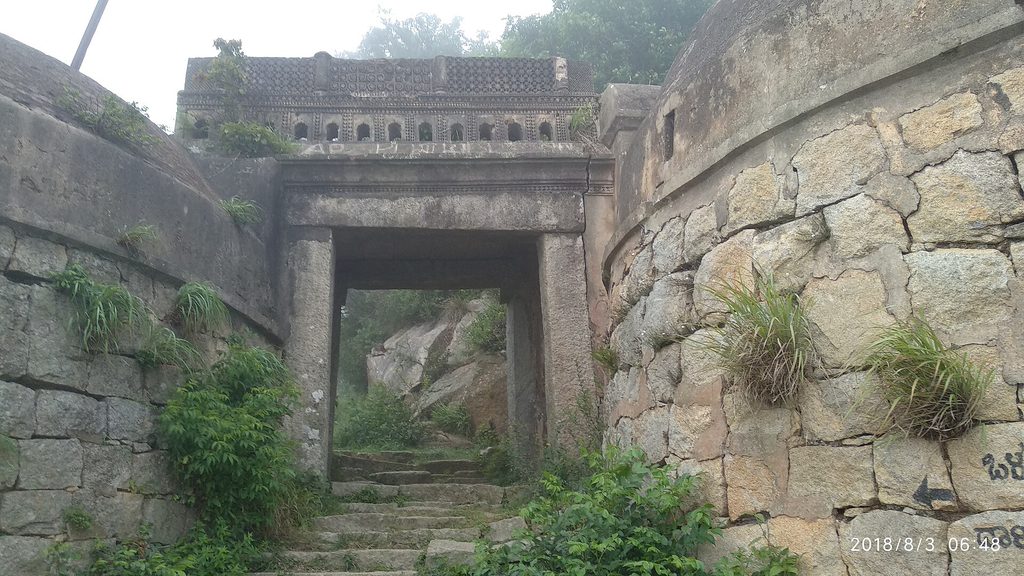
After the first rush at the viewpoint, take a slow walk past the old gateways, walls and garden paths. You do not need a specialist history tour to notice how the fort uses the shape of the hill. The district history says Tipu Sultan and Hyder Ali expanded existing fortifications, and that the hill later became a retreat during British rule. Keep to the paths open to visitors: some old structures are better appreciated from outside than by pushing through a restricted doorway.
Tipu’s Drop is the most dramatic named outlook. Go for the broad landscape and historical context, not for a daredevil photograph. In mist, visibility can collapse in a few steps; in a crowd, people often move backwards while looking at a screen. Choose a spot away from the edge, keep your feet on the path and let others pass.
Visit Yoga Nandeeshwara Temple and Amruth Sarovar
The Yoga Nandeeshwara Temple is on the summit. It gives the hill a quieter cultural stop after the viewpoint. The district’s religious places page describes its Dravidian and Chola architectural associations. Be respectful of worshippers, ask before photographing interiors, and check the day’s temple access separately from the hill gate hours.
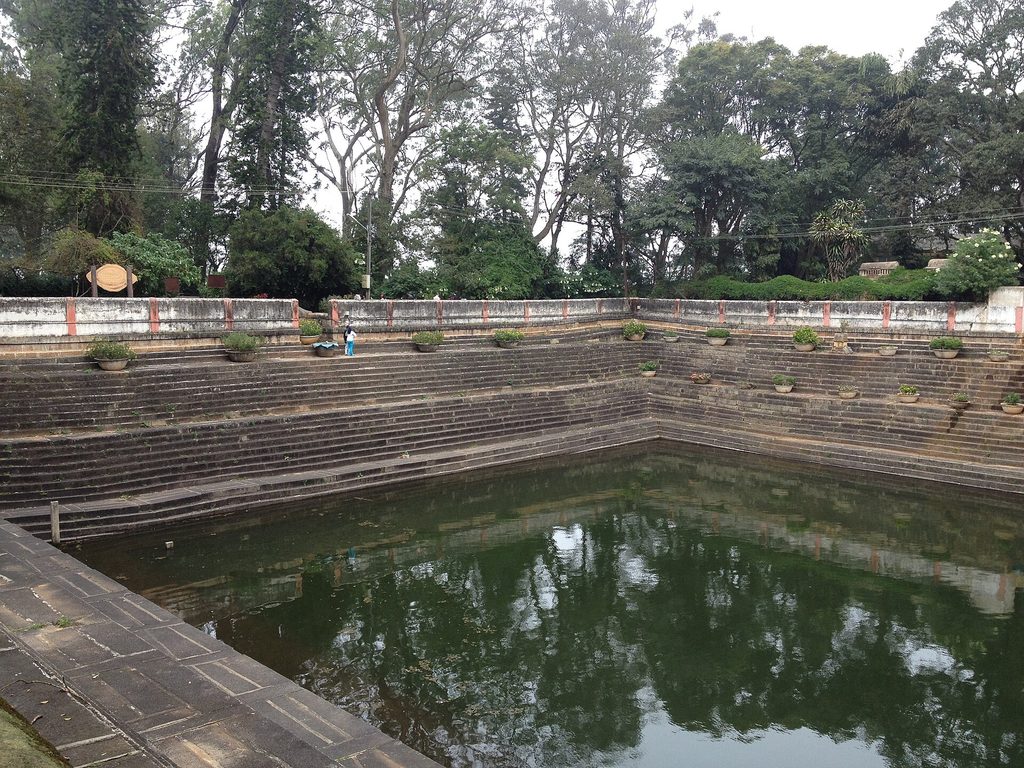
Amruth Sarovar, also written Amrita Sarovar, is the old reservoir area on the hill. Karnataka Tourism includes it among the historic places to see. The attraction is a short pause for the water, stonework and shade, rather than a boating activity to schedule automatically. Paths and access can change with maintenance or rain. If you have just spent an hour in the open at the viewpoints, this is a natural place to slow down.
Spend proper time at Bhoga Nandeeshwara Temple below the hill
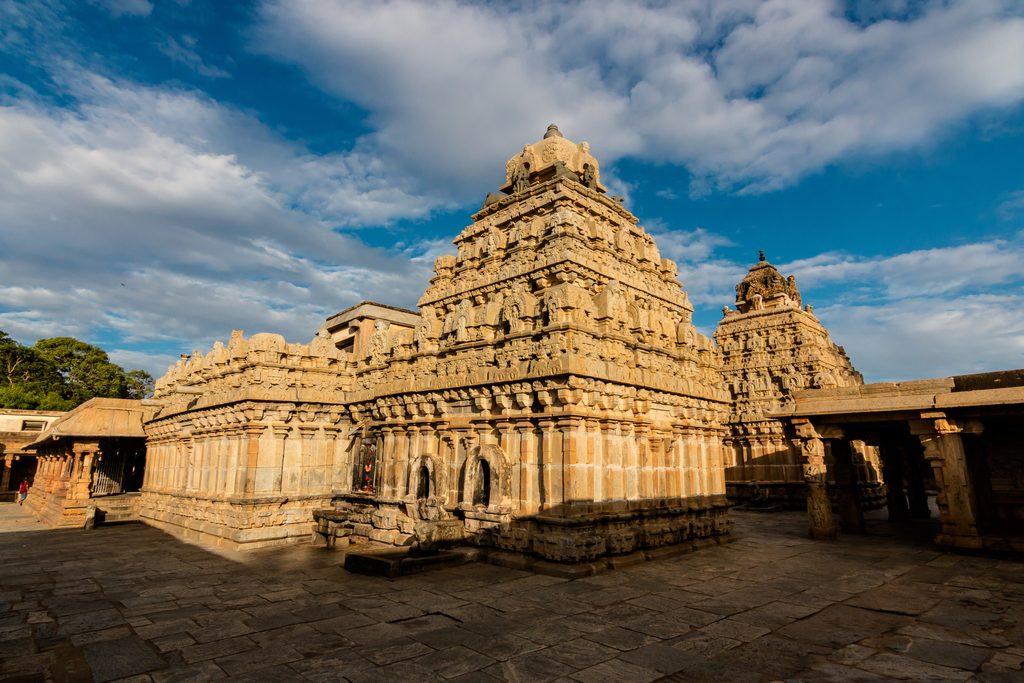
If you have time for one more substantial stop, make it the Bhoga Nandeeshwara Temple in Nandi village. The Chikkaballapur district administration dates the complex to around the early ninth century and highlights its layered architectural styles. Its courtyards, carved columns and temple tank reward an unhurried visit. Give yourself around 45–60 minutes as a planning allowance, longer if you enjoy architecture. This is a suggested pace, not an official visit duration.
Put the temple after the hilltop if sunrise is the priority. That way a queue on the ascent does not consume your time at the viewpoint, and you reach the village after the busiest first hour. If your family dislikes a dark departure, reverse the day: go to the temple and hill in daylight, with no sunrise pressure. Temple opening periods and worship practices can differ from the hill’s visitor hours, so check locally before making it the last stop of the day.
Choose a nearby add-on only if it fits your day
For a history-focused extension, Devanahalli Fort can be a separate stop on the wider Bengaluru corridor; check its exact route and visiting hours before adding it. Muddenahalli is another possible history stop in the Chikkaballapur area. For walkers, Skandagiri is an entirely different hill and a much more committed outing. The Karnataka Tourism Skandagiri guide says forest permission and booking are required for that trek. Do not treat a Nandi Hills entrance ticket as permission to start it, and check current trail availability before building a combined plan.
An early drive, two or three hilltop sights and the temple below make a satisfying one-day trip. Leave time for breaks or a change in weather.
Best time to visit Nandi Hills, weather and the real trekking route
For most visitors, September to February is the easiest planning window: Karnataka Tourism recommends these months for milder conditions. October through winter can suit a cool morning walk. March to May is still possible, but an early start helps you avoid the warmer middle of the day. During the monsoon, the landscape can be very green and atmospheric; rain, fog and slick stone can also make the view unreliable and the steps less forgiving.
There is no honest single Nandi Hills temperature to publish for every morning in a season. The summit feels different when it is windy, wet or sunny, and the temperature in Bengaluru does not tell you exactly how it will feel at the top. Check a fresh forecast and any IMD warnings. Pack a light extra layer for a cool dawn, rain protection when appropriate, drinking water and shoes with grip. On a sunny visit, carry a hat and sun protection even if the morning begins in mist.
Is Nandi Hills good in the monsoon? Yes, if the green scenery and cloud movement are your reasons for going and you are willing to lose the distant view. No one can promise sunrise visibility. If the forecast calls for heavy rain or a warning, postpone the stepped climb or the whole outing. Never use a cloud photograph from a previous season as evidence of what the viewpoint will look like on your date.
Hilltop stroll versus Sultanpet steps: which is the Nandi Hills trek?
For a casual visit, you travel up the road and walk around the summit. That is a short sightseeing walk with some uneven surfaces and small inclines; you can shorten it whenever you need. The Sultanpet steps are a separate climb from the base, with a sustained ascent on old stone steps. Indiahikes’ route documentation describes the stages, including a steeper middle section and slippery stone after rain.
Guides give different step counts and distances because they use different starts, end points and methods of counting. Rather than promising an exact number, budget about 1–2 hours uphill for a reasonably fit walker, and more if you are taking breaks, with additional time to descend and look around the top. This is a planning allowance, not a route guarantee. The uphill steps can feel harder than their relatively short map distance suggests, especially in heat. You will need water and closed shoes with reliable grip; do not assume you can buy water on the trail.
If sunrise is non-negotiable, do not confuse this walking route with a pre-dawn summit shortcut. The published visitor opening time is 6 am, and a one-hour-plus climb beginning after entry will reach the top after many sunrise times. Some commercial treks advertise a start in the middle of the night; verify that the route and time are actually authorised before paying or setting off. Do not step around a closed gate or start an unlit climb simply because an itinerary online suggests it.
For someone with limited mobility, a pushchair or a young child who will need carrying, the road-access hilltop visit is the simpler choice. Even there, stone paths, steps, crowds and viewpoints may make a full circuit uncomfortable. Set a short, flexible route and ask staff about the current access to particular sights. A fit older child may enjoy the steps in dry weather, but the climbing pace should be theirs, with an adult beside them throughout.
Is a permit needed for the Nandi Hills steps? Indiahikes says a separate trek permit was not required for the Sultanpet steps when its guide was published. That is different from the clearly stated permit requirement for nearby Skandagiri. Access rules can change; check the district or staff at the base before relying on an old trek post. The ordinary hill entry charge and any current local trail rules still apply.
Nandi Hills one-day itineraries for first-timers and families
The most useful itinerary is one that still works when a queue delays you by half an hour. These schedules are examples, not a promise that the sun will be visible or that every attraction will be open at the exact minute shown. Check sunrise, the forecast, the gate and temple access for your date; then move the blocks as needed.
Option A: Early start from Bengaluru, hilltop first
| Time window | Plan | Why it works |
|---|---|---|
| Before 6 am | Reach the Nandi Hills gate; wait for authorised opening | Leaves room for the last road section and ticket queue |
| Around opening to 7:15 am | Go to an established sunrise/viewing area | Allows for parking and the final walk; the sun may already be up |
| 7:15–9:00 am | Visit another viewpoint, the fort paths, Yoga Nandeeshwara Temple and Amruth Sarovar as access allows | Spreads visitors across more than one photo spot |
| 9:00–10:00 am | Descend and pause in Nandi village | Avoids forcing the temple into the busiest first minutes |
| 10:00–11:00 am | Explore Bhoga Nandeeshwara Temple, if open | Gives the architecture the time it deserves |
| After 11:00 am | Start the return or one deliberate nearby add-on | Keeps the day flexible for traffic or tired travellers |
An early start can mean leaving central Bengaluru well before dawn; calculate that from your own map and the chosen day’s sunrise time. If the climb up the road is delayed, skip a hilltop stop rather than rushing through the temple or driving too fast. Many people find the trip feels complete by late morning. You do not need to remain until closing time to get your money’s worth.
Option B: A family trip without the 4 am alarm
For a Nandi Hills family trip, start later and make fresh air, views and a temple visit the goals. Arrive after the initial sunrise rush, choose one easy viewpoint and a short walk, take a break, then visit Bhoga Nandeeshwara Temple below if everyone has energy. This removes the most tiring part for a toddler or an older relative: waking in darkness, waiting in a vehicle queue and standing in a packed dawn crowd.
Pack water, a few snacks, wipes, a light layer and any regular medicines in a small day bag. Check toilet availability before walking away from the main facilities. Keep food sealed and do not feed monkeys or leave scraps for wildlife. Ask children to stay within arm’s reach near steep drops and in dense crowds; photographs can wait. If a pushchair is important to your group, plan for the possibility that parts of the route involve steps or uneven ground and keep a shorter fallback walk.
Nandi Hills works with kids when the pace stays flexible. A young child may enjoy the clouds for an hour and be ready to leave; an older child may prefer the temple carvings to the viewpoint.
Option C: Steps climb and heritage visit
If the walk is the point, travel to the Sultanpet trail start after confirming current access. Begin in daylight when the permitted route opens, carry enough water, climb at a steady pace, and give the summit its own sightseeing time. Descend using an authorised route and plan the return transport before you start. Add the temple in Nandi village only if your legs and schedule allow it. This makes a rewarding active day but is a poor plan for anyone who must be back in Bengaluru by mid-morning.
The three versions are choices, not a way to fit everything into one outing. A car-based sunrise visit, a relaxed family visit and a step climb have different demands. Pick one anchor activity, then treat the rest as optional. If the hill is unexpectedly closed or conditions are poor, rearrange the day rather than trying to force a risky alternative trail.
Before you leave home
- Check the chosen day’s sunrise time and the weather warning.
- Recheck Karnataka Tourism’s Nandi Hills page and any district notice for access changes.
- Save the gate and, if walking, the correct Sultanpet trail start; they are different destinations.
- Check a return bus or driver arrangement if you are not using your own vehicle.
- Carry cash as a fallback for the entrance, water, suitable footwear and a layer for the morning.
These five checks do more for the trip than memorising a fixed “best sunrise time.” They also make the article usable next year if local fees or a bus timetable change.
Frequently asked questions about Nandi Hills
What are the Nandi Hills opening times today?
The official pages reviewed agree on a 6 am opening, but list different closing times: 6 pm, 7 pm and 8 pm. Use 6 pm as the safe planning cutoff and check current local instructions before going. A special closure or temporary access order can override ordinary hours.
Can I see sunrise at Nandi Hills if the gate opens at 6 am?
Sometimes, but there is no guarantee. It depends on that day’s sunrise time, visibility, the gate queue, parking and the walk to a viewpoint. On 23 September 2026, the published astronomical sunrise was 6:08 am, only eight minutes after the listed opening time. For dates like that, expect to see dawn colours or a later view rather than count on reaching the summit before sunrise.
How much is the Nandi Hills entry fee, and can I book a ticket online?
Karnataka Tourism lists an approximate ₹10–₹20 per-person fee, with separate parking charges. Its destination page did not show a verified general-entry checkout when this guide was checked. Confirm the current official ticket method before paying a third-party seller; an organised trek or transport booking is not necessarily the hill entrance ticket.
How do I get to Nandi Hills from Bangalore without a car?
Travel from Bengaluru to Chikkaballapur by bus or train, then arrange a local road transfer to the hill. Confirm the return connection in advance. Government visitor information does not give a reliable, routine public-bus trip all the way to the summit, so a car-free sunrise trip needs more coordination than a daylight visit.
Is Nandi Hills suitable for a one-day trip with children?
Yes. Choose a short hilltop walk and, if everyone still feels fresh, the temple in Nandi village. Supervise children near cliffs and crowds, and bring water, snacks and an extra layer. A later morning arrival is often more pleasant than making small children queue in the dark for sunrise.
A good Nandi Hills visit starts with a realistic plan
Nandi Hills makes an accessible outing from Bengaluru when you match your expectations to the gate, the weather and your group. Check the exact sunrise time, allow for the uphill approach, treat published fees as estimates, and give the fort and temples time beyond a single photograph. If a clouded-out sunrise would spoil the day, choose the relaxed family itinerary or a daylight walk instead.
Save this guide alongside the official Nandi Hills listing, then check both again before you leave. If you are building a longer family itinerary, a separate guide to day trips from Bengaluru with kids is a useful next read.


