

Tripolia Bazar Jaipur: Timings, Locations, Shopping, History & How to Reach
Tripolia Bazar is easy to find on a list of Jaipur markets and surprisingly easy to misunderstand once you start planning. Search results show different hours, maps mix up the market and Tripolia Gate, and several guides name an outdated metro choice. The key fact is simple: Tripolia is not a gated complex with one timetable. It is a working street of independent shops and specialist lanes.
This guide covers realistic timings, the closed day, map pins, metro and road directions, parking, what to buy, Maniharon Ka Rasta, the history of Tripolia Gate, photography etiquette and a simple walking plan. Both spellings – “Bazar” and “Bazaar” – refer to the same market.
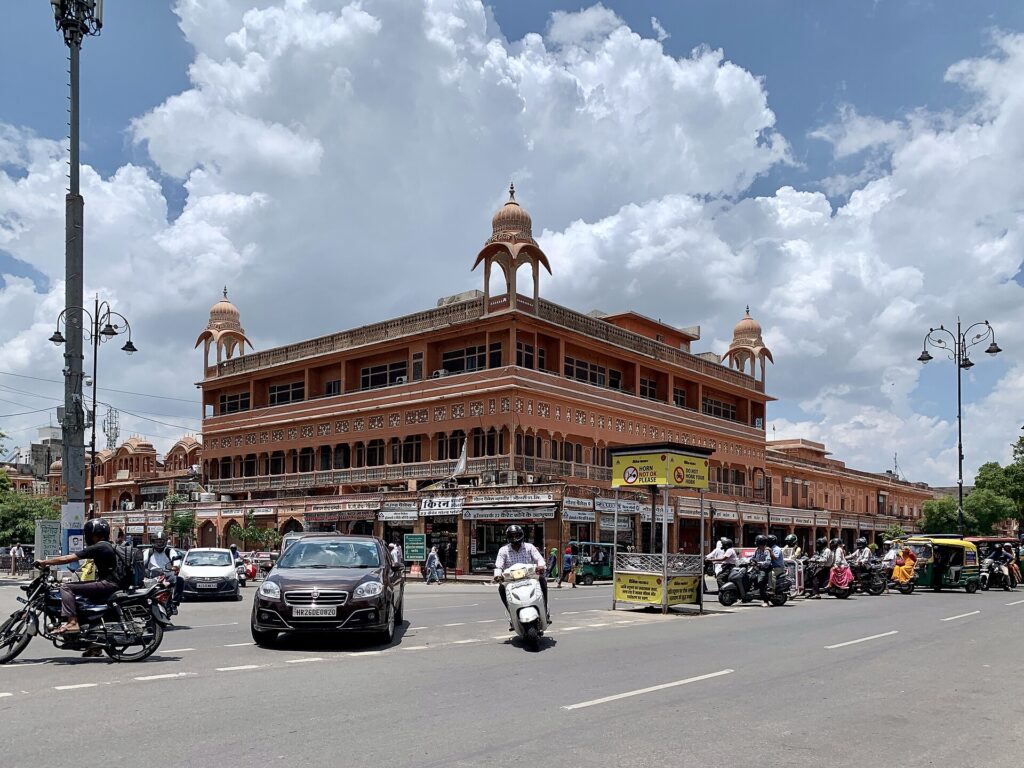
Quick answer: Plan your main shopping visit between 11:00 AM and 7:00 PM, Monday to Saturday. Many shops trade until about 8:00 PM, but hours vary. Sunday is the safest day to avoid because much of the market is closed, although a few independent shops may open. The nearest practical metro for the western end and Maniharon Ka Rasta is Chhoti Chaupar. Entry to the market is free.
Tripolia Bazar Jaipur Timings, Closed Day and Best Time to Visit
What time does Tripolia Bazaar open and close?
Most established shops open between 10:30 AM and 11:00 AM and close between 7:30 PM and 8:00 PM. Use 11:00 AM to 7:00 PM as the dependable planning window. Published hours differ because no management office controls every shop; a utensil wholesaler, hardware store and bangle workshop may follow different routines.
| Visit detail | Practical guidance |
| Typical opening time | 10:30-11:00 AM |
| Safe shopping window | 11:00 AM-7:00 PM |
| Typical closing time | 7:30-8:00 PM; some shops vary |
| Weekly closed day | Sunday is largely closed; a few shops may open |
| Entry fee | Free; this is a public market street |
| Time required | 90 minutes for focused shopping; 2-3 hours for browsing and photos |
| Best season | October to March for comfortable walking |
Is Tripolia Bazaar closed on Sunday?
Tripolia Bazaar is largely closed on Sunday. You may still find food sellers, convenience shops or individual businesses open, but do not plan a dedicated lac-bangle or metalware shopping trip around them. The road and exterior of Tripolia Gate remain visible because they are part of the public streetscape; the shopping experience, however, will be much quieter and incomplete.
If your only Jaipur market day is a Sunday, consider visiting a tourist-facing area after checking same-day hours, or move Tripolia to another morning. During public holidays, election days and major local observances, call a specific shop or check a recent map listing before travelling.
Best time to visit Tripolia Bazaar
For comfortable browsing, choose a weekday between 11:00 AM and 1:00 PM. Shops are open, the light is good for street photography and the post-work shopping rush has not begun. A second useful window is 4:00 PM to 6:30 PM, especially in winter, but traffic and pedestrian density rise toward evening.
Families with young children will generally find the late-morning window easier. The road is shared by pedestrians, two-wheelers, autos and delivery vehicles, so holding hands matters more here than it would in a pedestrian mall. In April-June, avoid the harsh middle of the day; arrive soon after shops open or go later, carry water and use sun protection. October-March is the most comfortable period for a longer old-city walk.
Festival days need separate planning. Rajasthan Tourism routes the Teej and Gangaur processions through Tripolia Bazaar, when diversions and no-parking rules may apply. Dhanteras and pre-Diwali shopping also bring exceptional crowds. Check traffic updates 24-48 hours before visiting.
Tripolia Bazar Jaipur Location, Map, How to Reach and Parking
Tripolia Bazaar address and the right map pin
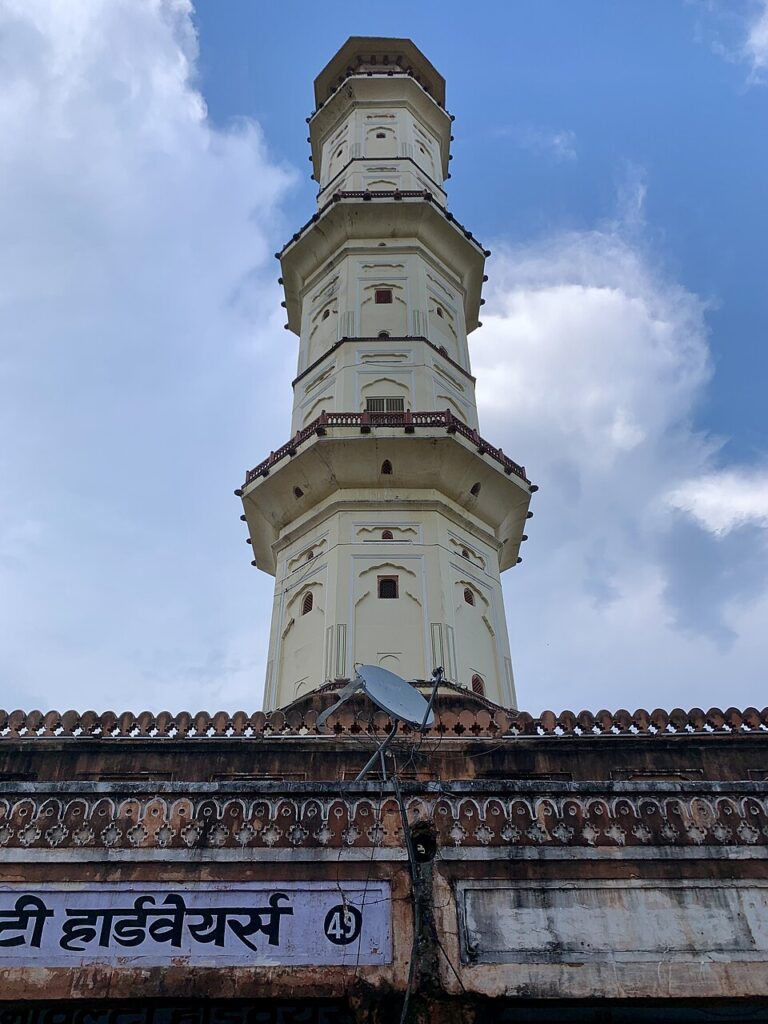
Tripolia Bazaar runs through Jaipur’s walled Pink City, broadly between Chhoti Chaupar and the Tripolia Gate/Manak Chowk side, near City Palace, Jantar Mantar and Isarlat (Sargasuli). A useful address is:
Tripolia Bazar Road, Pink City, Jaipur, Rajasthan 302002, India
Open Tripolia Bazar Jaipur in Google Maps
Treat that link as a starting point, not a single front door. Tripolia Bazaar is a street, and your ideal drop point depends on what you want to see. For lac bangles, search Maniharon Ka Rasta, Tripolia Bazar. For the historic gateway, search Tripolia Gate, Jaipur. If a cab pin lands in heavy traffic, ask to be dropped at Chhoti Chaupar and walk.
Nearest metro station to Tripolia Bazaar
Chhoti Chaupar Metro Station on Jaipur Metro’s Pink Line is the most practical station for Tripolia Bazaar, especially for Maniharon Ka Rasta and the western approach. The walk is roughly 400-700 metres depending on your destination within the market. Badi Chaupar is a workable alternative for travellers combining the bazaar with Hawa Mahal or the eastern side of the old city.
Some older pages name Chandpole as the nearest metro. That advice predates or overlooks the underground extension to Chhoti Chaupar and Badi Chaupar, which began commercial service in 2020. The official Jaipur Metro station list now shows Railway Station, Sindhi Camp, Chandpole, Chhoti Chaupar and Badi Chaupar in sequence.
How to reach Tripolia Bazaar from major Jaipur arrival points
From Jaipur Junction railway station: The road distance is about 4-5 km. For a predictable route, enter the metro at Railway Station, travel toward Badi Chaupar, alight at Chhoti Chaupar, then walk. The official fare matrix effective January 2025 lists ₹15; recheck before travel.
From Sindhi Camp bus stand: Use Sindhi Camp Metro Station, board toward Badi Chaupar and alight at Chhoti Chaupar after Chandpole. The official fare matrix lists Sindhi Camp-Chhoti Chaupar at ₹10. An auto is also possible, but the metro avoids surface congestion during busy hours.
From Jaipur International Airport: The market is roughly 12-13 km away. With no direct metro journey, use a prepaid taxi, app cab or auto and allow 35-60 minutes. Chhoti Chaupar is a sensible drop point in heavy traffic.
From City Palace: Walk roughly 300-700 metres, depending on the visitor exit. Tripolia Gate is not the normal ticketed visitor entrance; follow the palace’s designated public entrance and exit signs.
From Hawa Mahal or Badi Chaupar: Walk west through the old-city market axis. Depending on the exact starting point, allow around 10-15 minutes to Tripolia Gate and longer if you stop at shops.
By city bus: Routes and stop names can change. Use Chhoti Chaupar or Badi Chaupar as your landmark rather than relying on a generic “Tripolia Bazaar bus stop” result. Check a live transit app on the day and walk the final section.
Tripolia Bazaar parking: what drivers should know
Parking is the weak point of a Tripolia visit. There is no dependable, dedicated parking lot for every bazaar visitor, and curb space disappears quickly. Aatish Market parking is a known old-city option near Tripolia, but capacity, access and rates can change. Search Aatish Market Parking, Tripolia Bazar on a live map before driving and follow current signs. Do not confuse it with New Aatish Market Metro Station, which is in another part of Jaipur.
The easier plan is to leave your car at your hotel or a suitable metro station and use the Pink Line. If you must drive, arrive before noon, use an authorised paid facility, collect a parking slip and do not leave the vehicle in a no-parking stretch. Festival and procession days can bring complete access restrictions even when a parking location normally operates.
Accessibility and moving around with children
The road is level but not fully barrier-free: footpaths are interrupted, side lanes are tight and scooters pass close. A baby carrier is often easier than a stroller. Wheelchair users should start at the closest drop point with support and avoid peak crowds. Use facilities at the metro, a restaurant or a ticketed attraction before entering smaller lanes.
Tripolia Bazaar Jaipur Shopping: What to Buy and How to Buy Well
Tripolia is not only a souvenir market. It is a working trade district where lac bangles sit beside metal utensils, hardware, stationery and household stock. That mix makes it feel less staged than a tourist arcade.
1. Lac bangles in Maniharon Ka Rasta
For most visitors, Maniharon Ka Rasta is the signature stop. Its name refers to the lane of the Manihars, communities of bangle makers and sellers whose craft knowledge has been carried through generations. Small shops display stacks of colour: plain lac, mirror work, stones, beads, kundan-style decoration and elaborate bridal combinations.
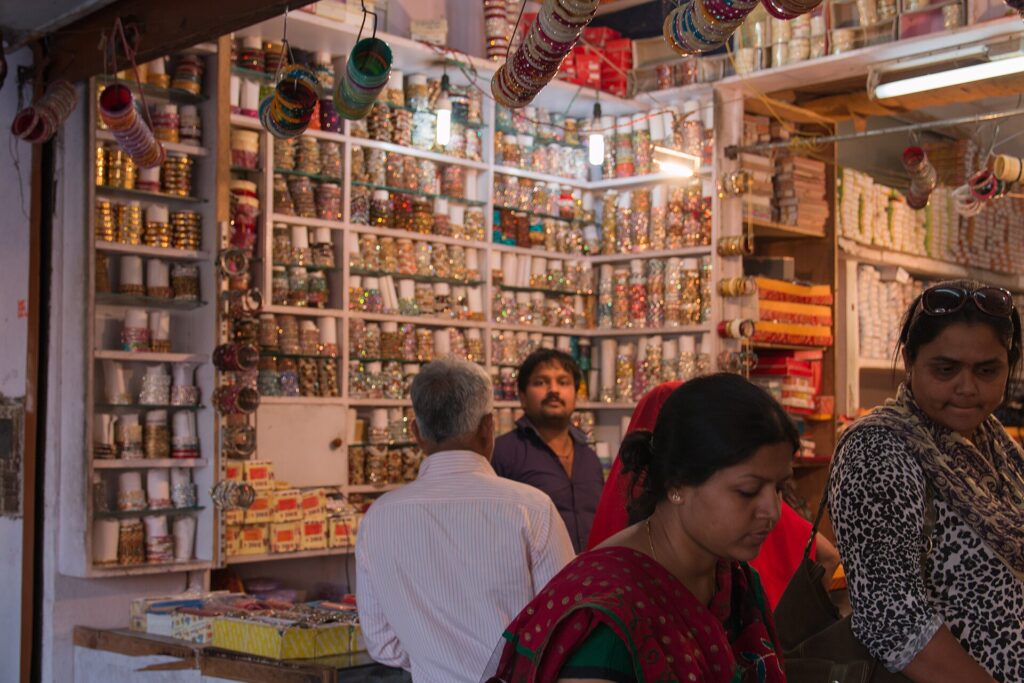
Bring an existing bangle that fits. Sizing uses the inner diameter, and wrist width alone can mislead because the bangle must pass over the knuckles. Ask whether resizing is included and try both pieces in a pair.
Indicative prices change with design and workmanship. Simple pairs or small sets may begin in the low hundreds of rupees, embellished designs often run into several hundred, and custom bridal sets can cost ₹1,000 or much more. Treat any online price table as a starting point rather than a promise. Confirm whether the quote is for one bangle, a pair, a set or a full hand combination before negotiating.
Look beyond sparkle: check the inner rim for cracks, make sure stones sit firmly and ask about the base material. “Lac look” and genuine lac are not always identical. No street test replaces a clear material description, so choose a workshop that answers questions and provides a bill for a higher-value order.
M A Bangle Store — Shop Nos. 124–125
Located in Maniharon Ka Rasta inside Tripolia Bazaar, M A Bangle Store is a popular stop for visitors searching for authentic Jaipuri bangles. The store offers traditional and contemporary designs suitable for weddings, festivals, everyday wear and gifting. Its colourful collection provides plenty of options for creating matching bangle sets, while the setting offers a more local shopping experience than a conventional jewellery showroom. Check the size, finishing and colour combination carefully before finalising your purchase.

New Nayyer Bangles Manufacturers — Shop No. 333
Situated opposite Sargasuli in Tripolia Bazaar, New Nayyer Bangles Manufacturers has been operating since 1998. The shop specialises in lac, acrylic, brass and stone-studded bangles, along with lac jewellery and selected handicraft gift items. It is worth visiting for its broad variety of traditional, festive and bridal designs, particularly if you want to compare different colours and styles or purchase several sets. Ask the staff about customised combinations and wholesale options before ordering.

Rajasthani Bangles — Shop No. 51
Shop No. 51 in Maniharon Ka Rasta is home to Ariz Mohammed Rajasthani Bangles, a dedicated bangle manufacturer established in 2014. The shop is especially known for colourful Rajasthani lac bangles and customised sets, making it a useful stop for shoppers who want colours matched to a saree, lehenga or festive outfit. Its handcrafted designs also make attractive and easy-to-carry souvenirs from Jaipur. Confirm the required size and final price before the bangles are altered or customised

2. Brass, copper, steel and traditional utensils
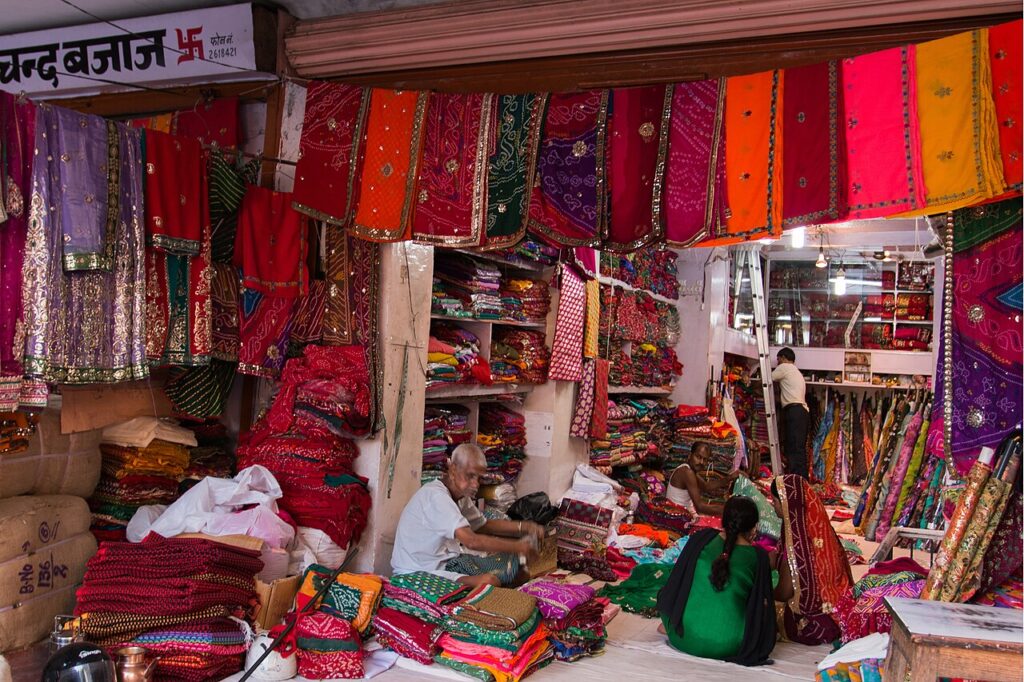
Tripolia Bazaar is strongly associated with metal goods. You will see practical cookware and puja articles alongside lamps, trays, boxes, decorative pieces and small idols. Local shoppers often come for function rather than souvenirs, so the range can be broader and less polished than a boutique display.
Ask the material, whether pricing is per piece or by weight, whether the item is food-safe and what care it needs. Inspect joins, edges, handles and the underside. Follow the maker’s instructions rather than treating every decorative item as kitchenware.
3. Textiles, carpets and durries
You can find Bandhani- and Leheriya-style textiles, fabrics, bedcovers, carpets and flat-woven durries in and around Tripolia. Selection varies widely, and textiles are not the market’s only or always its strongest category. Ask about fibre content, dimensions, colourfastness, washing instructions and whether an item is hand-made, hand-finished or machine-produced. Those terms are not interchangeable.
For an expensive textile, request an invoice stating size and material, photograph it before packing and check airline limits. Compare Kishanpole or Bapu Bazaar rather than assuming Tripolia is automatically cheapest.
4. Hardware, household goods and local-market finds
Hardware, stationery and household shops explain Tripolia’s local character. You may find account books, paper goods, trunks, fittings and practical objects absent from souvenir stores. Some outlets are trade-oriented, so ask whether retail quantities are available.
Is Tripolia Bazaar good for jewellery shopping?
It is excellent for lac and costume-style traditional jewellery, but it should not be presented as Jaipur’s default market for every kind of jewellery. For fine gold, silver or precious gemstones, use a specialist retailer, compare certification and insist on a detailed invoice. The Bureau of Indian Standards’ BIS Care app can verify the HUID on hallmarked jewellery. Johari Bazaar is better known for Jaipur’s fine jewellery trade, although the same buyer-care rules still apply there.
A fair way to bargain without spoiling the experience
Start by asking the price and what is included. Compare similar work at two or three shops, especially for bangles, rather than pushing the first seller to an arbitrary percentage. If buying several sets, ask for the best combined price. Stay polite, be ready to walk away and return if the first shop offered the best quality. Bargaining is normal in many independent outlets, but not every shop or product has a large margin.
Carry some cash as UPI backup, confirm the amount on screen and count packed pieces. For custom work, record the size, colours, quantity, completion time and final price.
Which Jaipur market should you choose?
| Your main goal | Best starting point |
| Lac bangles and bangle-making lanes | Tripolia Bazaar / Maniharon Ka Rasta |
| Metal utensils, brassware and practical household stock | Tripolia Bazaar |
| Fine jewellery and gemstones | Specialist BIS-compliant jewellers; Johari Bazaar is the traditional district |
| Juttis and tourist-friendly mixed souvenirs | Bapu Bazaar |
| Textiles and wooden goods | Compare Kishanpole with Tripolia and Bapu Bazaar |
| Marble carving and stone craft | Chandpole-area specialist lanes |
Tripolia Bazaar Jaipur History and the Story of Tripolia Gate
Tripolia makes more sense as part of Jaipur’s city plan. Sawai Jai Singh II established Jaipur in 1727 as a planned capital. UNESCO describes a trade-and-commerce city whose avenues became markets linked by formal squares called chaupars. Bazaar facades, craft streets, gates and shop-houses helped Jaipur City earn World Heritage status in 2019.
Tripolia Bazaar grew along that commercial and ceremonial urban framework beside the City Palace. Its shops were not arranged only for visitors; different trades clustered in recognisable streets and lanes, a pattern still legible in places such as Maniharon Ka Rasta.
Why is it called Tripolia?
The market takes its name from Tripolia Gate, the prominent three-arched gateway associated with the City Palace. “Pol” is a common regional word for a gate, and Tripolia refers to the group of three openings. Many heritage summaries date the gateway to around 1734, during Jaipur’s early palace-city development. Online descriptions sometimes attach contradictory architects and dates to it, so the dependable historical point is broader: the gate belongs to the 18th-century royal city and palace axis, not to a modern market entrance.
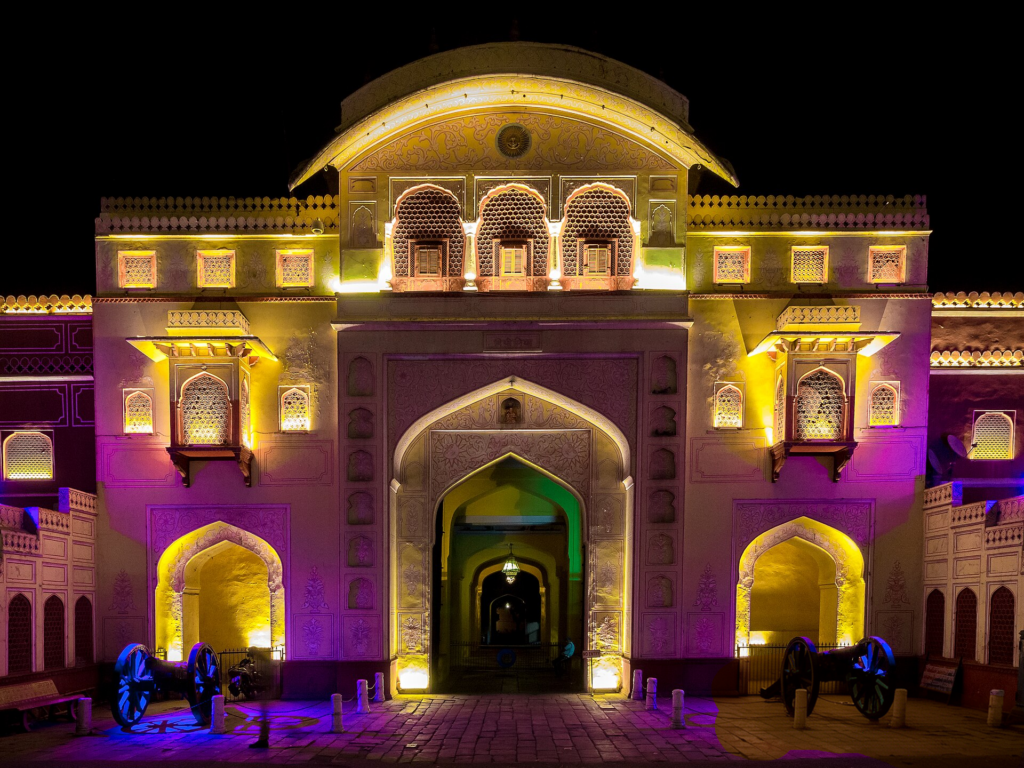
Can tourists enter City Palace through Tripolia Gate?
Normally, no. Tripolia Gate has historically been reserved for royal and ceremonial use. City Palace visitors should follow the current ticket-office signage and use the designated public entrance. You can view and photograph the gate from the bazaar road without a separate ticket, while entry to City Palace requires its own ticket.
The gate is not merely decorative. Teej and Gangaur processions still move from the City Palace area through Tripolia Bazaar, and Rajasthan Tourism identifies the route in official festival information.
A living heritage market, not a museum set
Tripolia’s history survives in ordinary work: a bangle being sized, a vessel weighed and family shops opening. Heritage here does not mean silence or controlled entry; it means the old market structure still participates in city life.
Visit with that expectation and the experience becomes richer. Notice the pink facades above modern signs, the relationship between Tripolia Gate and Chaura Rasta, and Isarlat rising near the market. Buy if something suits you, but leave time simply to observe how Jaipur’s planned commercial city still operates.
Tripolia Bazar Jaipur Images, Photography Tips and a Simple Visit Plan
A focused 90-minute route
Start at Chhoti Chaupar. Arrive around 11:00 AM and walk east toward Tripolia Bazaar.
Turn into Maniharon Ka Rasta. Compare a few bangle shops, watch work only where the artisan welcomes it and purchase after checking size and finish.
Return to the main bazaar. Browse metalware and local trade shops without trying to cover every lane.
Pause near Isarlat. The tower is a useful orientation landmark and a reminder that the market sits inside a dense heritage precinct.
Finish at Tripolia Gate. View the arches from the public road, then continue to City Palace, Jantar Mantar or Hawa Mahal if your schedule allows.
For a half-day plan, begin with City Palace or Jantar Mantar when they open, walk to Tripolia Gate and shop before lunch. Alternatively, shop first and continue toward Badi Chaupar and Hawa Mahal. Confirm current monument tickets and hours separately; market timings do not apply to the attractions.
Photography etiquette in Tripolia Bazaar
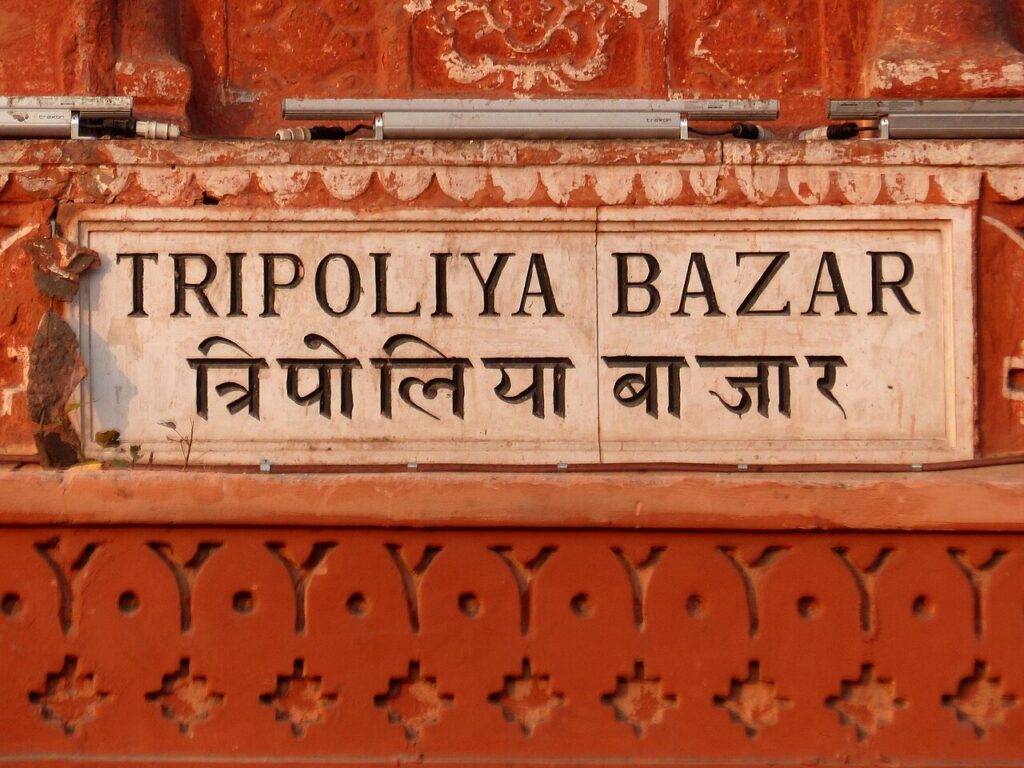
Tripolia Bazar Jaipur images work best with context: pink facades, hands arranging bangles, metal-shop textures or the gate within the street. A phone is easier than a large camera in narrow lanes.
Ask before taking close portraits or photographing artisans, and never photograph children without guardian permission. Avoid flash near workshops using heat. Stand aside before composing; stopping in the roadway is unsafe.
The three reusable photographs included in this article come from Wikimedia Commons and require visible attribution under their respective Creative Commons licences. Do not copy images from travel blogs or Google Images without checking ownership and reuse permission.
If you are making an image set, begin with one streetscape, then photograph shopfront details, bangles and directional landmarks. Note the lane while shooting; a caption should identify Tripolia Bazaar, Maniharon Ka Rasta or Tripolia Gate accurately rather than label every old-city photograph simply “Jaipur market.”
Nearby places to combine with Tripolia Bazaar
| Nearby place | Why combine it | Approximate walk |
| Tripolia Gate | Historic gateway and market namesake | On the bazaar route |
| Isarlat / Sargasuli | Historic tower and visual landmark | A few minutes |
| City Palace | Royal history and museum collections | About 5-10 minutes, depending on entrance |
| Jantar Mantar | UNESCO-listed astronomical observatory | Roughly 8-12 minutes |
| Hawa Mahal | Jaipur’s best-known facade and old-city landmark | Roughly 10-15 minutes |
| Badi Chaupar and Johari Bazaar | Continue an old-city market walk | Roughly 10-15 minutes |
Distances are intentionally approximate because the bazaar is a stretch of road and attraction entrances do not always match their map centre points.
Practical tips for a smoother family visit
Agree on a meeting point such as Chhoti Chaupar in case anyone gets separated.
Keep children on the building side of the road and hold hands in side lanes.
Carry water, tissues and a compact bag; bulky backpacks are awkward in small shops.
Wear closed, comfortable footwear rather than planning the walk in delicate sandals.
Photograph custom orders and receipts before leaving the shop.
Avoid the evening peak if anyone in the group is sensitive to horns, crowds or heat.
Pair the market with only one or two major attractions; trying to cover every old-city sight with young children turns a good outing into a long march.
Frequently Asked Questions About Tripolia Bazaar Jaipur
What are the Tripolia Bazar Jaipur timings?
Most shops open around 10:30-11:00 AM and close around 7:30-8:00 PM. For reliable shopping, visit between 11:00 AM and 7:00 PM, Monday to Saturday. Individual shop hours may vary.
Which day is Tripolia Bazaar closed?
Sunday is the market’s broadly observed weekly closed day. A few independent shops may open, but Sunday is not recommended for a dedicated shopping visit.
What is Tripolia Bazaar famous for?
Tripolia Bazaar is most famous for lac bangles at Maniharon Ka Rasta. It is also known for brass, copper and steel utensils, metal crafts, hardware, textiles, carpets, durries and practical household goods.
Which metro station is nearest to Tripolia Bazaar?
Chhoti Chaupar on Jaipur Metro’s Pink Line is the most useful station for the western end of Tripolia Bazaar and Maniharon Ka Rasta. The walk is roughly 400-700 metres depending on your exact destination. Badi Chaupar is a practical alternative for Hawa Mahal and the eastern approach.
Is parking available at Tripolia Bazaar?
Paid parking exists in the wider old-city area, including around Aatish Market, but spaces and access are limited and conditions change. Metro plus walking is usually easier. Check live directions and festival traffic restrictions before driving.
Final Word: Is Tripolia Bazaar Worth Visiting?
Tripolia Bazaar is worth visiting if you want more than a polished souvenir stop. Come for lac bangles, metalware and the colour of Maniharon Ka Rasta, but also look at the market as part of Jaipur’s planned heritage city. Visit Monday-Saturday, aim for 11:00 AM to early evening, use Chhoti Chaupar metro and avoid driving if you can. Once your route is fixed, pair the bazaar with City Palace, Jantar Mantar or Hawa Mahal rather than rushing through all three.
For the next step, read a Jaipur market comparison or build Tripolia into a family-friendly old-city itinerary.



Pingback: Chandpole Jaipur: Timings, Entry Fee, Shopping & History