15 Best Places to Visit in Ranthambore: Safari, Forts, Lakes & Hidden Attractions
Ranthambore is famous for tigers, but planning a trip here is more confusing than it first appears. Search results often mix public monuments, town attractions and landmarks deep inside the tiger reserve as though you can drive to all of them independently. You cannot. Padam Talao, Jogi Mahal, Raj Bagh Ruins, Malik Talao and Kachida Valley are normally seen only when an authorised safari follows the relevant route. Ranthambore Fort and the Trinetra Ganesh Temple, meanwhile, have a separate visitor approach controlled for wildlife safety.
This guide explains how the 15 best places to visit in Ranthambore are actually accessed, then builds practical one-, two- and three-day itineraries for different travellers.
The first local detail to understand is that Sawai Madhopur is the transport base, while “Ranthambore” commonly refers to the national park, adjoining villages and the long resort belt outside town. Rajasthan Tourism calls Sawai Madhopur the gateway to Ranthambore, and many attraction distances are more meaningful when measured from the railway station or town centre.
Important for 2026: Mobile-phone use is prohibited across Ranthambore’s designated safari routes. Do not assume you can use your phone for photographs, maps or calls inside the reserve. Check the current camera and deposit procedure before arrival, and keep a printed or offline copy of essential booking details.
Ranthambore at a glance: what to visit and how long to stay
How many days are enough for Ranthambore? Two nights and two full sightseeing days suit most first-time visitors. Stay three nights if you want two safaris plus the National Chambal Sanctuary without rushing.
| Experience | How you access it | Time to allow | Best for |
|---|---|---|---|
| National park safari | Pre-booked Gypsy or Canter permit | About 3–3.5 hours | Wildlife, landscapes, first visits |
| Fort and Trinetra Ganesh Temple | Separate authorised approach; no safari permit normally required | 2–3 hours | History, views, pilgrimage |
| Padam Talao, Jogi Mahal, Raj Bagh and Malik Talao | Only if your allotted safari route passes them; some views from the fort | Seen during safari | Photography, birds, scenery |
| Kachida Valley | Route-dependent safari sight | Seen during safari | Rugged landscape, wildlife |
| Surwal Lake | Road trip from Sawai Madhopur | 45–75 minutes | Winter birdwatching, quiet sunrise |
| Museum, art and crafts | Independent town/Ranthambore Road stops | 45–90 minutes each | Kids, culture, hot afternoons |
| National Chambal Sanctuary | Separate road transfer and authorised boat experience | Half day | Gharials, river birds, repeat visitors |
Tiger sightings are never guaranteed. A good Ranthambore trip works even without one: the dry deciduous forest, lakes, ruins, deer, crocodiles, raptors and changing animal calls are the experience. Treat a tiger sighting as a privilege, not a product you have purchased.
15 best places to visit in Ranthambore
1. Ranthambore National Park and tiger safari
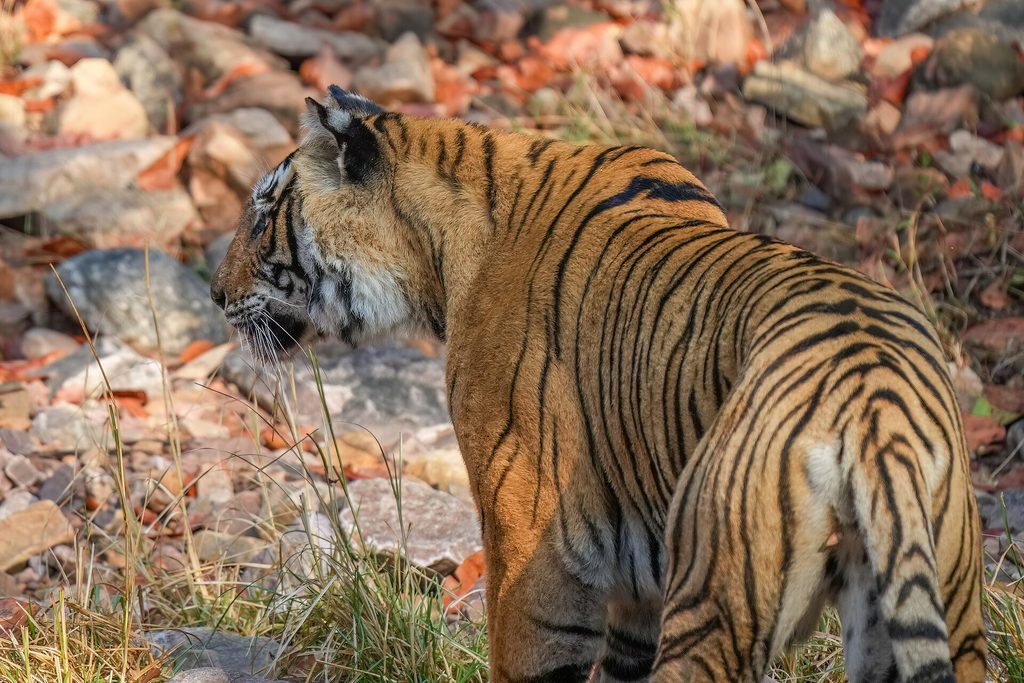
The Ranthambore jungle safari is the centrepiece of a first trip. Open vehicles travel through dry forest, rocky ridges, grassland, streams and old hunting landscapes. Tigers draw the crowds, but deer, nilgai, crocodiles, sloth bears, leopards and birdlife can make a drive memorable even when the striped cat stays hidden. Rajasthan Tourism describes hills, crags, meadows, lakes and rivulets dominated by the fort.
Ranthambore has multiple tourism zones, and your permit is tied to a date, shift, vehicle and allotted route. Do not choose a safari only because somebody online called one zone “best”. Tiger movement changes, vegetation changes with the season, and no route can promise a sighting. A naturalist who reads tracks, alarm calls and habitat often adds more value than chasing yesterday’s social-media report.
Book through the Rajasthan Forest Department’s safari-booking page, which links to the authorised portal. A Gypsy carries up to six visitors, while a Canter carries up to 20. Gypsies generally feel quieter and offer easier sightlines; Canters can be more economical and sociable. Both follow department-controlled routes and timings.
Access: Safari permit required.
Allow: Roughly 3–3.5 hours, plus pickup and entry formalities.
Best for: Everyone who can manage a bumpy open-vehicle ride and remain seated and quiet.
2. Ranthambore Fort
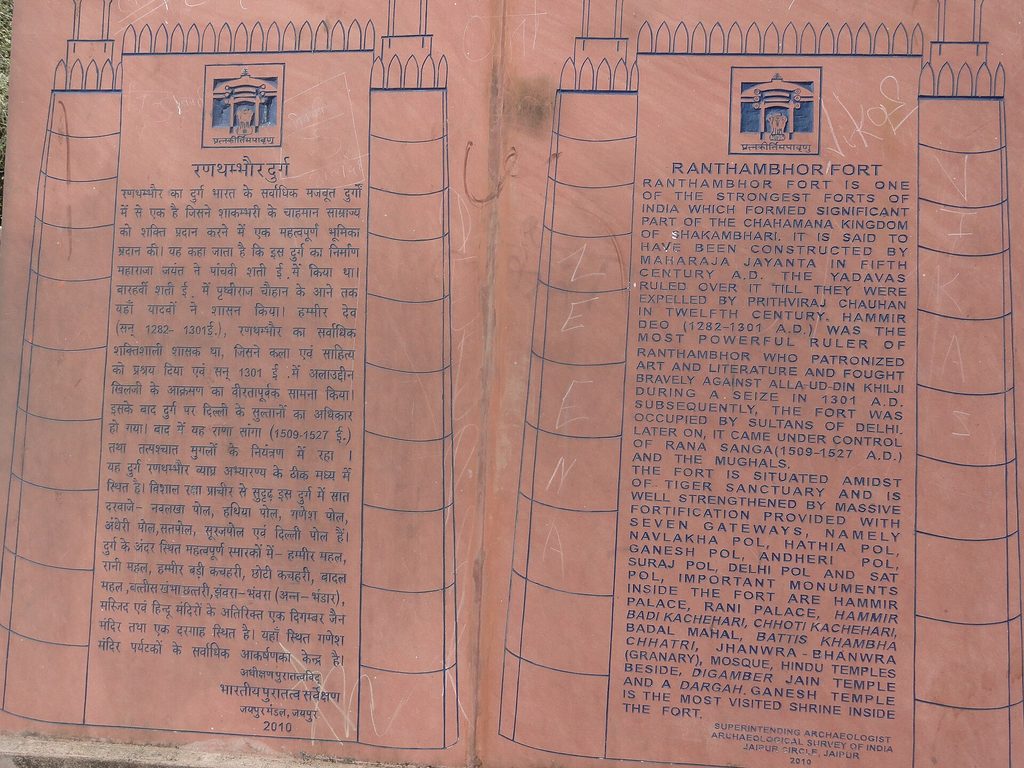
Rising above the forest, Ranthambore Fort is not merely a viewpoint added to a wildlife holiday. It is part of UNESCO’s serial Hill Forts of Rajasthan World Heritage property and an important example of a forest hill fort. UNESCO also notes that the remains of Hammir’s palace are among the oldest surviving structures of an Indian palace.
Inside are gateways, walls, tanks, pavilions, temples and weathered ruins. From the upper areas, you can look across forest and water bodies that seem enclosed from a safari vehicle.
The approach includes sloping, uneven stone surfaces and many steps. Allow more time for older relatives, avoid the harsh middle of the day, and wear footwear with grip. Monkeys occur around busy sections; keep food packed away and never feed them or any other animal.
Fort access can be interrupted when forest staff detect tiger movement near the approach. Temporary closures are a safety measure, not a sightseeing inconvenience; follow staff directions and never enter a restricted path.
Access: Separate from the regular safari, but locally controlled; reconfirm the permitted vehicle and current route.
Allow: 2–3 hours.
Best for: History lovers, photographers and active families; difficult for wheelchairs and some travellers with limited mobility.
3. Trinetra Ganesh Temple
The Trinetra Ganesh Temple lies within Ranthambore Fort and remains an active place of worship, not simply a monument. Rajasthan Tourism places it about 15 km from the district headquarters and notes that the annual Ganesh Chaturthi fair draws very large numbers of devotees.
Visit with the same respect you would bring to any busy temple: dress modestly, remove footwear where directed, give worshippers space and ask before photographing people or rituals. On festival days the fort route can be crowded, so a quick sightseeing stop may take much longer than expected.
It makes sense to combine the temple with the fort rather than list it as a separate cross-town journey. Families travelling with grandparents may want to prioritise the temple and viewpoints instead of attempting every ruin in the complex.
Access: Through the authorised fort approach; restrictions may change with wildlife movement.
Allow: 30–60 minutes in addition to the fort visit.
Best for: Pilgrims, families and travellers interested in living heritage.
4. Padam Talao
Padam Talao is one of Ranthambore’s signature lake landscapes. Jogi Mahal stands near its edge, while forest, open banks and the fort create a distinctly Ranthambore backdrop. Animals may approach the water, and the margins attract both resident and seasonal birdlife.
The planning point most listicles miss is that Padam Talao is inside the reserve. It is not a picnic lake or an independent stop where a taxi can wait. You see it only if the authorised route assigned to your safari passes the lake, although distant views are possible from parts of the fort.
Do not pressure a driver to leave the allotted route or remain after the permitted time. Final access rests with the Forest Department.
Access: Route-dependent safari sight.
Allow: Part of the safari, not a separate visit.
Best for: Landscape photography, waterbirds and patient wildlife watching.
5. Jogi Mahal
The red-painted Jogi Mahal beside Padam Talao is one of the park’s most recognisable buildings. It served historically as a royal hunting lodge and later as forest accommodation, but travellers should not mistake it for a hotel or freely accessible palace today.
In practical terms, Jogi Mahal is a viewing landmark, not an interior tour. You may see it from a safari route or from elevated points around the fort; access to the building itself is restricted. The large banyan nearby and the lake setting make the wider scene more interesting than the structure alone.
Access: Seen from permitted safari or fort viewpoints; do not plan an independent entry.
Allow: Part of the safari or fort visit.
Best for: Heritage landscapes and first-time visitors.
6. Raj Bagh Talao
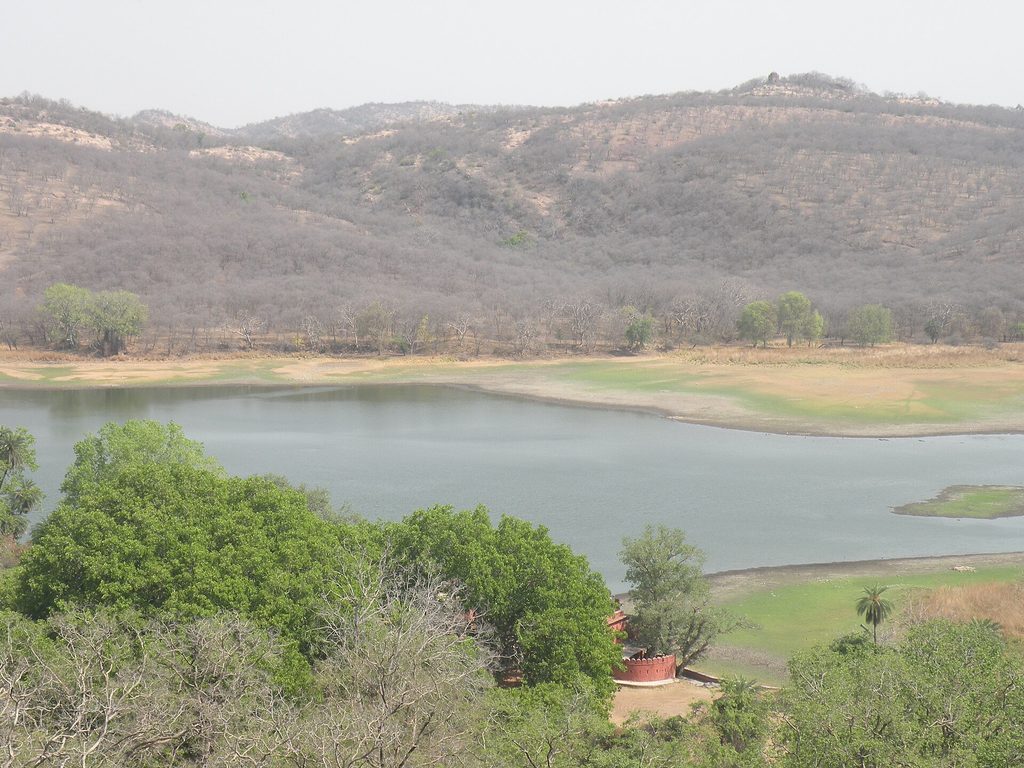
Raj Bagh Talao is another celebrated water body within the reserve. Its mix of open water, grasses, forest edge and stone ruins gives animals several types of cover and makes the area visually dramatic. Sambar, deer, crocodiles and birds may be more dependable subjects than tigers.
Like Padam Talao, Raj Bagh Talao is not reached by a separate ticket. It is associated with particular safari routing—commonly the Zone 3 landscape—and allotments can change.
Access: Route-dependent safari sight.
Allow: Within the safari.
Best for: Wildlife behaviour, birds and layered landscape photographs.
7. Raj Bagh Ruins
The Raj Bagh Ruins are old arches, walls and stone structures standing within the forest near the lake. Their appeal comes from context: architecture is being slowly absorbed into a living tiger habitat. Seen through grass or morning haze, the ruins explain why Ranthambore feels different from a park made only of woodland.
Visitors cannot leave the vehicle and explore on foot. The ruins are viewed from the permitted track if the day’s route includes them.
Access: Safari-view only; no walking through the ruins.
Allow: Within the safari.
Best for: History-and-nature imagery.
8. Malik Talao
Malik Talao is smaller and often feels quieter than the better-known lakes. It can be rewarding for birdwatching and for observing the ordinary rhythm of the park—waterfowl, deer at the edge, crocodiles basking and raptors watching from bare branches.
UNESCO places Padam Talav, Malik Talav and Raj Bagh within the landscape surrounding the fort. Malik Talao remains a route-dependent reserve sight.
Access: Route-dependent safari sight.
Allow: Within the safari.
Best for: Birders and travellers who value quiet observation over a checklist.
9. Kachida Valley
Kachida Valley shows a rougher side of Ranthambore, with rocky slopes, dry forest and winding tracks. It is often associated with the Zone 5 circuit, although the Forest Department can alter tourism routes. Sloth bears, leopards and other wildlife use this broader habitat, but no species should be advertised as likely on a particular drive.
It is part of the controlled safari landscape, not a same-day taxi add-on if your allotted route goes elsewhere.
Access: Authorised safari route only.
Allow: Within the safari.
Best for: Rugged scenery, geology and habitat variety.
10. Surwal Lake, also written Soorwal Lake
Surwal Lake is the best-known independent birdwatching stop near Sawai Madhopur. Rajasthan Tourism places it roughly 15 km from the district headquarters and highlights winter migratory birds. The shallow seasonal setting can be beautiful around sunrise, especially when there is enough water and little disturbance.
This is not a manicured promenade. Water levels, road conditions and bird numbers vary. Check the approach locally, carry binoculars and take all waste back with you. Avoid recorded bird calls or walking into wetland habitat for a closer image.
Surwal Lake suits travellers who have an afternoon safari and want a calm early-morning outing. It is also one of the better nature places near Ranthambore for families whose children are old enough to watch quietly.
Access: Independent road visit; conditions are seasonal.
Allow: 45–75 minutes, plus travel.
Best for: Winter birdwatching, couples, families and slow travel.
11. Rajiv Gandhi Regional Museum of Natural History
The Rajiv Gandhi Regional Museum of Natural History in Ramsinghpura is one of the most useful family attractions in Ranthambore. Its exhibits introduce the biodiversity, geology and ecosystems of western India, giving children context for the animals they may have seen—or missed—on safari. Rajasthan Tourism places the museum around 6 km from central Sawai Madhopur.
It works well on a hot afternoon or when rain changes outdoor plans. Published hours differ, with Mondays and national holidays commonly listed as closures, so check locally that day.
Access: Independent road visit.
Allow: 60–90 minutes.
Best for: Families with kids, school groups and first-time wildlife travellers.
12. Ranthambore School of Art
Ranthambore School of Art is a small local art stop known for wildlife paintings, particularly tiger portraits. It offers a very different encounter from a museum: visitors can see how local artists interpret the animals and landscapes that shape the region’s identity.
Treat it as a studio visit rather than a major gallery. Hours and artist availability may be informal, so check before going. If buying, ask who made the work and how the sale supports the artist.
Access: Independent local visit; confirm before going.
Allow: 30–60 minutes.
Best for: Art lovers, older children, gifts and rainy-day flexibility.
13. Dastkar Ranthambore
Dastkar Ranthambore is a thoughtful stop for travellers who want their shopping to connect with local livelihoods. The initiative grew from work with communities around the tiger reserve and supports traditional craftspeople, many of them women. Its textiles and home products often use block printing, embroidery, patchwork and motifs drawn from the area’s trees, birds and tigers.
Look at stitching, print variation and maker information; handmade pieces will not always be identical. Confirm current shop hours.
Access: Independent road visit in the wider Ranthambore/Sawai Madhopur area.
Allow: 45–75 minutes.
Best for: Responsible shopping, design lovers, families and meaningful souvenirs.
14. Amreshwar Mahadev Temple
Amreshwar Mahadev Temple sits among hills on the road toward Ranthambore. Rajasthan Tourism describes a large Shivling and representations of the 12 Jyotirlingas at the site. The shaded, rocky setting gives it a quieter atmosphere than the fort temple on ordinary days.
The approach can change after rain and stone may be slippery. Wear secure footwear, avoid unsafe sections, dress respectfully and do not squeeze the stop immediately before a fixed safari time.
Access: Independent road visit; check seasonal approach conditions.
Allow: 45–75 minutes.
Best for: Temple visits, quiet scenery and repeat travellers.
15. National Chambal Sanctuary at Palighat
The Palighat side of the National Chambal Sanctuary makes a strong half-day extension to Ranthambore. Rajasthan Tourism places the sanctuary about 45 km from Sawai Madhopur. An authorised boat outing shifts the focus from tigers to river ecology, with opportunities to see gharials, marsh crocodiles, turtles and waterbirds. Wildlife is seasonal and never guaranteed here either.
Arrange the outing through a recognised provider, wear the supplied life jacket and follow instructions. River conditions and boat operations change with water level and weather.
Choose this over a second safari for variety, or add it on a third day; it will not fit safely between two safari shifts.
Access: Separate road transfer and authorised boat arrangement.
Allow: 4–5 hours door to door.
Best for: Birders, older children, couples, friends and repeat wildlife travellers.
Things to do in Ranthambore besides safari
A fort-and-temple morning followed by the museum and Dastkar fills a day without entering the park. In winter, substitute Surwal Lake for the museum. Choose Chambal if you want wildlife without another forest drive.
| Traveller | Best-fit plan | What to consider |
|---|---|---|
| Families | One safari, fort or temple, museum, Dastkar | Avoid stacking two long drives with young children |
| Kids | Museum, short craft stop, one well-prepared safari | Open vehicles can be cold, hot, dusty and bumpy; children must stay seated and quiet |
| Couples | Safari, fort views, Surwal sunrise, craft shopping | Choose a relaxed schedule rather than racing between photo spots |
| Friends | Safari, fort and Chambal extension | Fix transport in advance; late returns should not depend on informal rides |
| Older travellers | Safari if boarding is manageable, museum, Dastkar | Fort steps and uneven paving may be difficult; confirm vehicle access and pickup |
For a better wildlife experience, bring curiosity beyond tigers. Ask the naturalist about alarm calls, tracks, dhok trees, water availability and the relationship between old ruins and present-day habitat. That turns a “no tiger” drive from a disappointment into a real safari.
Ranthambore itineraries for 1, 2 or 3 days
Places to visit in Ranthambore in 1 day
If you are already staying in Sawai Madhopur, choose one major anchor, not two.
Option A: Morning safari day
- Early morning: safari
- Late morning: breakfast and rest
- Afternoon: Rajiv Gandhi Regional Museum or Dastkar
- Late afternoon: relaxed local meal or resort time
Option B: Fort plus afternoon safari
- Early morning: Ranthambore Fort and Trinetra Ganesh Temple
- Midday: lunch and rest
- Afternoon: safari
A one-day Ranthambore itinerary from Jaipur is fragile because road travel takes several hours each way and safari entry is fixed. A traffic delay cannot move your permit. If safari is the priority, arrive the previous evening.
Places to visit in Ranthambore in 2 days
Day 1: Arrive, settle in and visit the fort with the Trinetra Ganesh Temple when current access and weather permit. Stop at the Ranthambore School of Art or Dastkar only if time remains.
Day 2: Take a morning safari. Rest after breakfast, then choose Surwal Lake, the museum or an afternoon safari.
This Ranthambore 2-day itinerary gives first-time visitors the best balance. Two safaris improve your opportunity to experience different habitats, but they still do not guarantee a tiger. Families may enjoy one safari more than two back-to-back drives.
Places to visit in Ranthambore in 3 days
Day 1: Fort, temple and local art or crafts.
Day 2: Morning safari, long rest, then a second safari or museum.
Day 3: National Chambal Sanctuary at Palighat; return for a relaxed evening.
In winter, keen birders can visit Surwal Lake early on Day 3 and schedule Chambal later only if a reliable operator confirms that the timing works. Do not turn a three-day nature trip into a continuous transfer schedule.
Plan your Ranthambore sightseeing trip
Best time to visit Ranthambore
The main park season runs from October to June, according to Rajasthan Tourism. Limited outer-zone operations may sometimes be announced during the monsoon, but routes are weather-dependent; verify the live government portal instead of assuming year-round access.
| Period | What it is like | Best for |
|---|---|---|
| October–February | Cooler sightseeing; cold open-vehicle mornings in December and January | Families, fort visits, birding, first trips |
| March–April | Warmer days, thinning vegetation, manageable early mornings | Wildlife-focused travellers |
| May–June | Very hot and dusty; animals may concentrate near remaining water | Experienced wildlife visitors comfortable with heat |
| July–September | Monsoon; core-zone access is generally closed and other routes can change | Fort, town and craft plans only after checking local conditions |
There is no single “best” month for everybody. Winter is most comfortable; late spring can reward patient wildlife watchers but is hard on small children and heat-sensitive travellers.
Ranthambore safari timings
Safari shifts move with sunrise and sunset. The commonly published schedule below is a planning guide, not a substitute for the time printed on your permit.
| Dates | Typical morning shift | Typical afternoon shift |
|---|---|---|
| 1–31 October | 6:30–10:00 am | 2:30–6:00 pm |
| 1 November–31 January | 7:00–10:30 am | 2:00–5:30 pm |
| 1 February–31 March | 6:30–10:00 am | 2:30–6:00 pm |
| 1 April–15 May | 6:00–9:30 am | 3:00–6:30 pm |
| 16 May–30 June | 6:00–9:30 am | 3:30–7:00 pm |
Report at the time and place stated by the current operator or permit. Pickup, vehicle allocation and gate transfer can add time, particularly for distant zones.
How to book a Ranthambore safari safely
- Start at the Rajasthan Forest Department’s official safari-ticket page and follow its current Ranthambore link.
- Enter every visitor’s name and identity details exactly as shown on the accepted ID.
- Select the date, shift and available vehicle category; read what is and is not included before payment.
- Save the permit and payment record offline. Carry the same original ID used for booking.
- Reconfirm reporting instructions, phone-deposit rules and permitted camera equipment shortly before travel.
Search results contain many private sites using official-sounding park names. Some are legitimate tour operators, but their service fee, cancellation terms and role should be clearly disclosed. A private confirmation is not a substitute for a valid Forest Department permit.
Getting to Ranthambore and moving around
By train: Sawai Madhopur Junction is the most practical arrival point. It has connections with major cities, and taxis or autos serve the town and Ranthambore Road.
By air: Jaipur is the usual airport, roughly 150–170 km away depending on the route and starting point.
By road: Jaipur is roughly 160–170 km from Sawai Madhopur. Keep a buffer for traffic, food stops and road variation.
For early safaris, stay on Ranthambore Road or around Sherpur/Khilchipur if the property provides confirmed pickup for your allotted zone. A town hotel can be convenient for the station, museum and market but may add pre-dawn transfer time. “Near the national park” is not precise enough—ask the property which gates and pickup points it commonly serves.
Practical safety and comfort tips
- Wear muted, comfortable layers. Winter mornings in an open vehicle can feel much colder than the afternoon forecast.
- Carry water, sun protection and a dust covering where permitted, but avoid single-use litter.
- Never get out of a safari vehicle unless staff explicitly direct you at an authorised point.
- Do not feed monkeys, deer or any wildlife around the fort and temple. Food attracts animals and can increase conflict.
- Expect temporary route changes. Wildlife movement, rain, maintenance and conservation needs outrank an itinerary.
- Ask before promising wheelchair access. Safari boarding, fort steps and uneven rural approaches create real limitations.
- Keep the afternoon after a morning safari light; pre-dawn starts and rough tracks tire children and older adults.
Places to visit near Ranthambore within 50 km and 100 km
Distances below are approximate road distances from central Sawai Madhopur, not from every resort. Recheck the route before leaving, especially in the monsoon.
| Range | Place | Why visit | Planning note |
|---|---|---|---|
| Within about 25 km | Chauth Mata Temple, Chauth Ka Barwara | Hilltop pilgrimage and local views | Festival days can be extremely busy |
| Within about 45 km | Khandar Fort | Quieter historical fort and broad views | Remote, uneven site; go in daylight with reliable transport |
| Within about 45 km | National Chambal Sanctuary, Palighat | Gharials, crocodiles and river birds | Pre-arrange an authorised boat and life jacket |
| Within about 40–50 km | Ghushmeshwar Temple, Siwar | Important Shiva pilgrimage near Isarda | Confirm road time and temple schedule |
| Within about 65 km | Rameshwaram Ghat | River confluence and religious setting | Road and river conditions vary; do not enter the water |
Rajasthan Tourism specifically lists Khandar Fort at about 45 km, Chauth Mata Temple at about 25 km, the Chambal sanctuary at about 45 km and Surwal Lake at about 15 km from Sawai Madhopur. For most weekend trips, choose just one excursion. Jaipur, Kota and Bundi are onward destinations rather than quick Ranthambore sightseeing stops.
FAQs about places to visit in Ranthambore
Which are the best places to visit in Ranthambore for a first trip?
Prioritise one Ranthambore tiger safari, Ranthambore Fort, the Trinetra Ganesh Temple and one local stop such as Surwal Lake, the natural-history museum or Dastkar. Add a second safari or the National Chambal Sanctuary if you have a third day.
How many days are enough for Ranthambore?
Two nights and two full days are enough for most visitors. Three nights are better if you want two safaris, the fort and a half-day Chambal excursion without rushing. A single day works only if you are already staying near Sawai Madhopur.
What can I do in Ranthambore besides safari?
Visit Ranthambore Fort and the Trinetra Ganesh Temple, watch winter birds at Surwal Lake, explore the Rajiv Gandhi Regional Museum of Natural History, meet local artists, shop at Dastkar Ranthambore or take an authorised Chambal boat trip.
Can I visit Padam Talao and Jogi Mahal without a safari?
Not as independent ground-level attractions. They lie inside the controlled reserve and are normally seen only when an allotted safari route passes them. You may get distant views of the lake landscape and Jogi Mahal from parts of Ranthambore Fort.
Is Ranthambore suitable for children?
Yes, if the schedule matches the child. One safari, the museum and a short craft stop usually work better than two long safaris in one day. Children must remain seated and quiet in the vehicle, and adults should prepare for dust, bumps, winter cold or summer heat.
Ranthambore rewards travellers who plan around access rather than a long attraction checklist. Book the safari through the government route, keep the fort visit flexible, and pair wildlife with one cultural or birding experience. For the next step, compare the official permit availability with a realistic two-day itinerary, then choose a stay that confirms pickup for your allotted safari zone.