
Jim Corbett Safari Booking (2026): Official Permits, Jeep Prices, Zones and Dhikala Canter
You have picked a date for Jim Corbett. Then the booking pages start multiplying. One sells a “Dhikala jeep safari” to day visitors, another quotes a low permit fee that leaves out the vehicle, and a third looks like a government websiete but is a travel agency. Which ticket actually gets you through the gate?
This guide takes you from the first decision—jeep or canter—through the official permit, the right zone, the real cost and the documents to carry. It is written for people staying in or travelling through Ramnagar, Uttarakhand, the usual base for the reserve’s southern entry gates. It also covers the different route for Sonanadi and Pakhro on the Kotdwar side.
Information checked on 26 September 2026. Corbett Tiger Reserve has recently changed its booking portal and ID procedure. Always reread its current notices, pricing page and the live availability shown by the official booking website before paying. The reserve, not this article or an agent’s listing, controls the final rules and inventory.
First, choose the safari you are actually booking
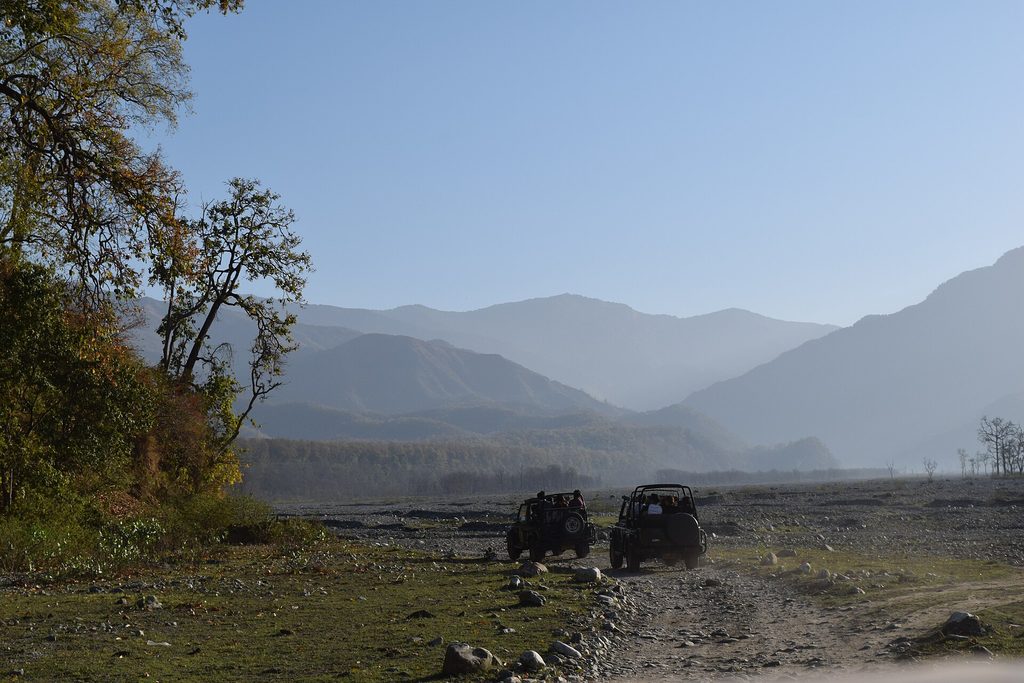
For a day visit, book a registered jeep (often called a Gypsy) in an available jeep zone, or book a seat on the shared canter for Dhikala. Dhikala does not sell ordinary day-visit jeep permits. This distinction is the fastest way to avoid choosing the wrong product. The reserve’s booking instructions distinguish jeep permits from Dhikala canter tickets and forest rest house stays.
| What you want | What to book | How the charge works | Good to know |
|---|---|---|---|
| A private-feeling drive for your own small group | One registered jeep in an available zone such as Bijrani, Jhirna or Dhela | Permit, registered vehicle and mandatory guide components | Your group occupies the jeep; your chosen zone and shift appear on the permit. |
| A day visit to Dhikala | Seats on the shared Dhikala canter | Per seat, with tax and any booking-specific charges | The canter is a 16-seat vehicle; boarding is from Ramnagar or Dhangarhi as printed on your ticket. |
| A stay inside a forest tourism zone | Forest rest house booking | Room and associated permit, vehicle and guide charges according to the booking summary | Different inventory, schedules and occupancy rules apply; check the stay details separately. |
“Private jeep safari in Jim Corbett” usually means an authorised vehicle occupied by your booked party. It does not mean you can bring your own SUV, pick any forest road or change zones at the gate. A registered driver and nature guide operate within the assigned route and time. The permit is tied to the visitors named on it.
Consider a couple staying near Ramnagar for two nights in November. If they mainly want an unhurried three-hour forest drive, a Bijrani or Jhirna jeep may fit. If Dhikala’s grasslands are the reason for the trip, they should check canter seats first and make room for the longer journey. A family visiting in August may find Jhirna or Dhela on the calendar, but should allow for weather-related cancellation. None of those choices implies a tiger sighting: animals move freely and encounters are never guaranteed.
The National Tiger Conservation Authority and the Nainital district administration both link to corbettgov.org as the reserve’s website. Start there, even if you plan to ask a travel company for help. The reserve also warns about sites presenting themselves as official. An agency can offer transport or assistance, but ask it to identify its own fee and provide a verifiable reserve-issued permit. Never mistake an enquiry form or a payment receipt for the forest ticket.
Is a jeep or a canter better for a family?
A jeep gives a small group more control over stops within its authorised route and avoids sharing the vehicle with other parties. If a child needs a break, you can discuss it with the guide, subject to forest rules. The canter is shared and has a fixed departure and return; its advantage is straightforward day access to Dhikala. It is a longer outing, so a child who struggles with early starts, dust or long drives may enjoy a shorter jeep safari more.
Check occupancy carefully. The official pricing page describes a jeep permit as allowing a maximum of six individuals, inclusive of two children under 12, while the booking instructions say children under 12 do not need a separate permit. Those statements are easy to misread as permission for six adults plus two children. Enter your exact group in the live booking flow, and ask reserve support if the displayed capacity is unclear. For the canter, a child who needs a separate seat needs a separate ticket, according to the published tariff.
How to book Jim Corbett safari online without a permit mistake
The basic process is simple; the details are where people lose money. A zone must be operating on your date, seats or jeeps must still be available for your shift, and the ID information must match what you present at the gate. Work through these steps before booking a non-refundable hotel room around one particular safari.
1. Start at the reserve’s website and read today’s notices
Open corbettgov.org directly, then read the notice board. Use the site’s Jeep Safari or Canter Safari button to reach its booking system. This matters in September and October 2026 because the reserve is moving some day-safari inventory to an upgraded portal. A link saved from an older article may take you to the wrong flow.
As of the check date, the notice says Bijrani advance day-safari bookings started on the upgraded portal on 10 September. It says Dhela, Jhirna and Garjia day-safari bookings moved there from 12 September; a newer homepage alert specifies that bookings for visits on 1 October 2026 opened at 5:30 am on 25 September and that visits dated 2–14 October would also be booked there. Other zones with a seven-day release had remained on the older portal until further notice. These are dated operational notices, not permanent rules. Follow the current button and calendar shown on the official site.
2. Check availability for the right product, date, zone and shift
Choose jeep or canter first. For a jeep, select a zone and visit date; then look at the morning and afternoon options that the system actually offers. If you cannot see Bijrani for a day in July, that is a seasonal access problem, not a search-engine problem. If a date is inside the operating season but shows no permits, that particular release may be sold out or not yet open.
The official how-to-book page describes jeep and canter windows opening progressively up to 45 days in advance. The September 2026 notice also refers to seven-day windows for some other day-safari zones. Do not apply one blanket “book 45 days ahead” rule to every zone. Work backward from your travel date, check that zone’s release pattern on the live calendar, and watch the notice page for a revised release time. A forest rest house has a separate schedule; do not confuse its release with a day-safari opening.
Availability is live. An agent saying “we can get you a permit” is not the same as a confirmed, reserve-issued QR ticket. If your first choice is full, change the date, shift or suitable zone rather than buying an unverified promise. A different zone can still be a rewarding forest visit, but its permit does not grant access to the original zone.
3. Prepare names and original IDs before opening the form
Enter each traveller’s name, age, nationality and valid ID number exactly as shown on their document. Do not shorten a name to a nickname or enter a number from an expired document. Foreign visitors should check the nationality and accepted document choices displayed in the current booking flow; passports are the sensible documents to have ready for identity checks.
The ID notice effective 22 September 2026 makes the group leader responsible for uploading clear images of the front and back of their own valid ID. For other group members, it says to enter the valid ID numbers and to bring every member’s original, valid ID for verification at entry. The leader is responsible for collecting and checking the group’s IDs. An earlier general announcement speaks of front-and-back uploads for ID proof; follow the newer, specific group-leader instructions and whatever the live form requires. If your document has information only on one side, use the portal’s prompts or the reserve’s support channel rather than guessing.
Before you pay, ask everyone to read back the details on the review screen. A transposed digit can matter more than a difference in hotel plans. Permits are person-specific and the terms of use do not allow you to substitute a friend later because one traveller drops out.
4. Review the complete amount and save the QR ticket
Check zone, visit date, shift, visitor list, nationality, seat or vehicle count, boarding point and every line of the payment summary. The official booking guide says a registered Gypsy is allocated with a jeep permit and describes an option to change or select a specific vehicle within eight hours. It also says guide and driver charges may be paid separately, as stated on the issued permit. Do not assume an amount collected at checkout covers every service unless the screen explicitly says so.
After successful payment, save the CTR ticket with QR code, the order reference and the applicable terms. Keep a locally accessible copy in case your signal is weak near a gate, and carry the original IDs. If money leaves your account but no ticket is generated, use the refund-status and support instructions linked on the official booking guide; do not immediately pay a second website claiming to “recover” the permit. The reserve’s terms say payment-processing charges may be non-refundable in such cases.
Plan for the mandatory 180-second wait on the visitor-details page announced by the reserve. That pause is part of the official process, so have the traveller information ready and allow a few extra minutes. Avoid browser automation or shortcuts: the reserve’s notices warn that permits obtained through prohibited methods can be invalidated.
5. Recheck your permit before travelling to the gate
Your QR ticket, rather than a hotel voucher, determines the safari. Read the named entry gate and report time. The day-visit terms instruct visitors to arrive at least 45 minutes before the scheduled gate opening; late entry may be refused. Tell your hotel or driver the actual gate, not simply “Jim Corbett entrance.” Revisit the notice page the evening before travel, especially during monsoon or a portal transition.
Which Corbett safari zone should you choose?
There is no honest answer to “best zone for a tiger” on a given morning. The useful choice is a zone that is open and bookable on your date, reachable from your accommodation, and suited to what you want to see. The reserve’s zone list and pricing table are better starting points than last year’s sighting reports.
| Zone | Published gate or boarding area | Standard day-visit format | Published operating period; verify live status | Why a traveller might choose it |
|---|---|---|---|---|
| Bijrani | Amdanda/Aamdanda, Ramnagar side | Jeep | 15 Oct–30 Jun on the pricing page | Forest and grassland close to a Ramnagar base; popular for a first jeep safari. |
| Jhirna | Dhela Gate, Ramnagar side | Jeep | Throughout the year, subject to conditions | Year-round calendar and a mix of forest and open areas. |
| Dhela | Dhela Gate, Ramnagar side | Jeep | Throughout the year, subject to conditions | Birds, forest habitat and another year-round option. |
| Garjia/Garjiya | Garjiya Gate, Ramnagar side | Jeep | Conflicting official displays: homepage says year-round; tariff lists 15 Oct–30 Jun | Check the live calendar and notice before building your trip around it. |
| Durgadevi | Durgadevi Gate | Jeep | 15 Nov–15 Jun | Forested, river-influenced landscape and birdwatching; allow for a different gate transfer. |
| Dhikala | Ramnagar or Dhangarhi boarding for canter | Shared canter for day visitors; forest stay is separate | 15 Nov–15 Jun | Grassland and Ramganga landscape, with a longer day outing. |
| Sonanadi / Pakhro | Vatanvasa / Pakhro, Kotdwar side | Check the specific jeep itinerary | 15 Nov–15 Jun in the tariff | Suitable when your route or stay is on the Kotdwar side, rather than an automatic add-on from Ramnagar. |
This table intentionally flags an inconsistency. The reserve’s homepage labels Garjia “throughout year,” while its published pricing page gives Garjia a 15 October–30 June window. Bijrani’s descriptive page also mentions a later post-monsoon opening than the homepage and tariff. The live booking calendar and latest notices should decide what you can book, and the reserve can change access for weather or management reasons. Avoid repeating a static “all zones open November to June” claim: Jhirna and Dhela are listed for year-round day visits, though rain can close roads at short notice.
Bijrani safari booking versus Jhirna and Dhela
If you are staying in Ramnagar and Bijrani is available, its Amdanda entry and varied scenery make it a practical first choice. You should still confirm your hotel-to-gate travel time; “near Ramnagar” does not mean a late hotel pickup will work. If Bijrani’s slots have sold out, Jhirna and Dhela use Dhela Gate and may fit the same base. A second safari in a different zone can broaden the trip, but it requires its own permit.
For a monsoon-period visit, start with Jhirna or Dhela because their published calendars are year-round. “Year-round” is not a promise that a particular wet day’s road is safe or open. The reserve’s terms say rainy-season day visits can be cancelled at short notice and set out restrictive refund conditions. Check the weather and your booking status before setting off.
Should you choose a zone by last week’s tiger sightings?
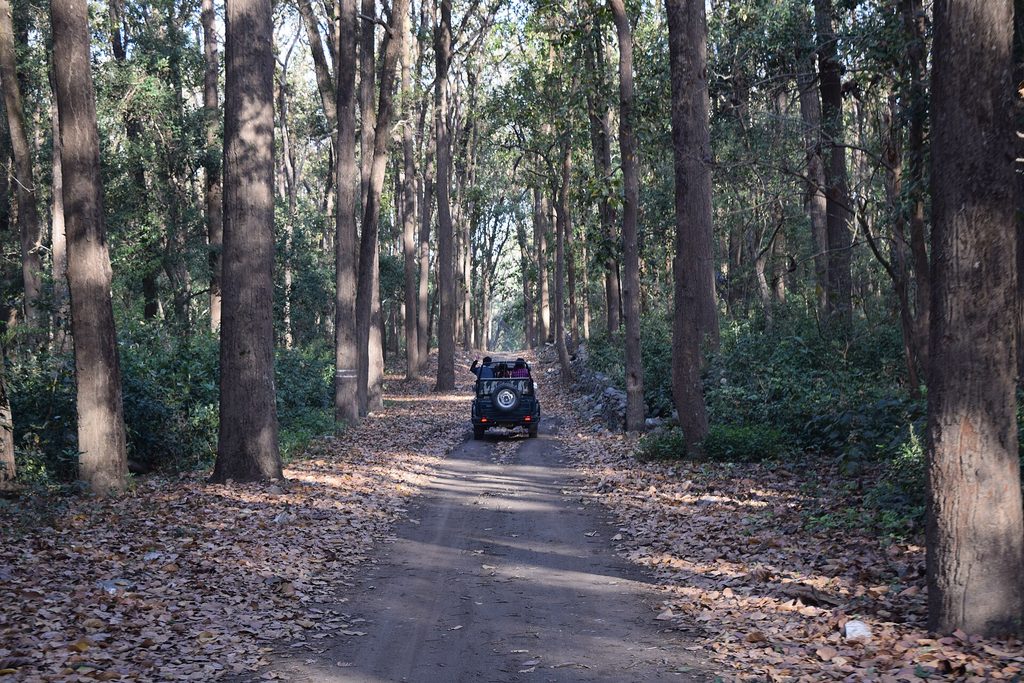
Use sightings as interesting context, not a booking guarantee. The guide cannot steer a vehicle off the prescribed route to reach an animal reported in another zone. A season, a vehicle queue, visibility and plain chance all influence what you see. A traveller who treats elephants, deer, birds, the forest and the river as part of the trip is more likely to value the experience even without a tiger.
Do not conflate nearby forest drives with a Corbett Tiger Reserve permit. Private sellers may group places such as Sitabani or Phato with “Jim Corbett safari” products. The access authority, zone rules and ticket can differ. Ask exactly which gate and managing authority appear on the proposed booking, and compare that with the reserve’s own zone list. This is particularly relevant when a seller advertises a last-minute drive after official CTR inventory has sold out.
Jim Corbett safari booking price: what you actually pay
A low permit number is not the whole cost of a jeep. For a typical day drive, compare the reserve permit, the registered vehicle, the compulsory guide, taxes or portal charges and any private service fees. A jeep quote is generally for the vehicle and its booked group; a Dhikala canter quote is generally for each seat. They are not comparable until you know the group size and inclusions.
The following are the reserve’s published component figures, checked on 26 September 2026. They are planning figures, not a live checkout quotation. The page’s day-jeep table lists the Indian and foreign permit amounts, vehicle charge and ₹1,000 guide charge; its notes describe components and concessions. If the live form or a newer notice disagrees, use the current official checkout and ask support before paying.
| Jeep zone | Published Indian permit | Published foreign permit | Vehicle | Guide | Illustrative Indian total for one jeep* |
|---|---|---|---|---|---|
| Bijrani | ₹3,380 | ₹6,680 | ₹2,700 | ₹1,000 | ₹7,080 |
| Jhirna, Dhela or Garjia | ₹3,380 | ₹6,680 | ₹3,000 | ₹1,000 | ₹7,380 |
| Durgadevi | ₹3,380 | ₹6,680 | ₹3,000 | ₹1,000 | ₹7,380 |
| Pakhro | ₹3,380 | ₹6,680 | ₹2,800 | ₹1,000 | ₹7,180 |
| Sonanadi | ₹3,380 | ₹6,680 | ₹2,800–₹4,500 | ₹1,000 | ₹7,180–₹8,880 |
Simple addition of the displayed components; actual payable amount and when each item is collected depend on the booking screen and permit. Hotel transport, accommodation, extra services and private operator fees are outside this example. The reserve states that a permit containing any foreign national attracts foreign rates for all passengers; it also lists treatment for OCI cardholders and SAARC nationals and ID-based student/senior concessions. Read those conditions rather than estimating a mixed group at an Indian rate.
Here is why the breakdown matters. Suppose three Indian adults book Bijrani. The table shows ₹3,380 for the published permit component, ₹2,700 for the vehicle and ₹1,000 for the guide: ₹7,080 as an illustrative base total, not ₹3,380 per person and not an automatically all-inclusive checkout payment. If only one adult goes in that same jeep, most vehicle costs do not disappear. If a six-person group shares it, dividing an illustrative base total by six gives roughly ₹1,180 each, before any additional items. Your group’s actual rate must come from the live booking and permit.
The reserve’s published Dhikala canter price is ₹1,500 + 18% GST per Indian seat (₹1,770 by simple calculation) or ₹3,000 + 18% GST per foreign seat (₹3,540). The pricing notes say vehicle, guide and safari permit are included in the canter price, while solid-waste-management and portal fees are extra as applicable. That is why an agency quote of ₹2,500 or ₹3,000 for an Indian canter seat may reflect a package or assistance charge rather than the reserve’s base tariff. Ask for a written split.
Use this five-question check before accepting any quote:
- Who issues the forest ticket? Ask for the reserve-issued QR permit and reference, not only an agency receipt.
- Is the amount per jeep, per person or per canter seat? The difference is substantial for couples and families.
- Does it include the vehicle, driver and mandatory guide? If a charge is paid at the gate, request the exact amount in advance.
- Which zone, gate, date and shift are confirmed? “Subject to availability” is an enquiry, not a confirmed safari.
- What private extras are included? Hotel pickup, transfers, breakfast, accommodation and a booking-assistance fee should be stated separately.
The reserve’s day-visit terms generally make confirmed bookings non-refundable and non-transferable. They also distinguish a failed payment from a confirmed ticket and say that, in some disruption cases, a refund may be considered at the authority’s discretion. Read the current terms for your transaction before treating an agent’s cancellation promise as a forest-department policy. Booking the wrong date can be expensive.
A cost comparison that helps you decide
For one traveller whose priority is Dhikala, a canter seat may be a sensible way to make the trip without paying for a whole jeep elsewhere. For a group of four that wants a shorter, more flexible drive, the jeep total may compare well once divided among them. But the canter and jeep go to different places: the cheaper arithmetic does not make them interchangeable. Choose the landscape and day length first; compare complete costs second.
Dhikala canter safari booking: the separate route for day visitors
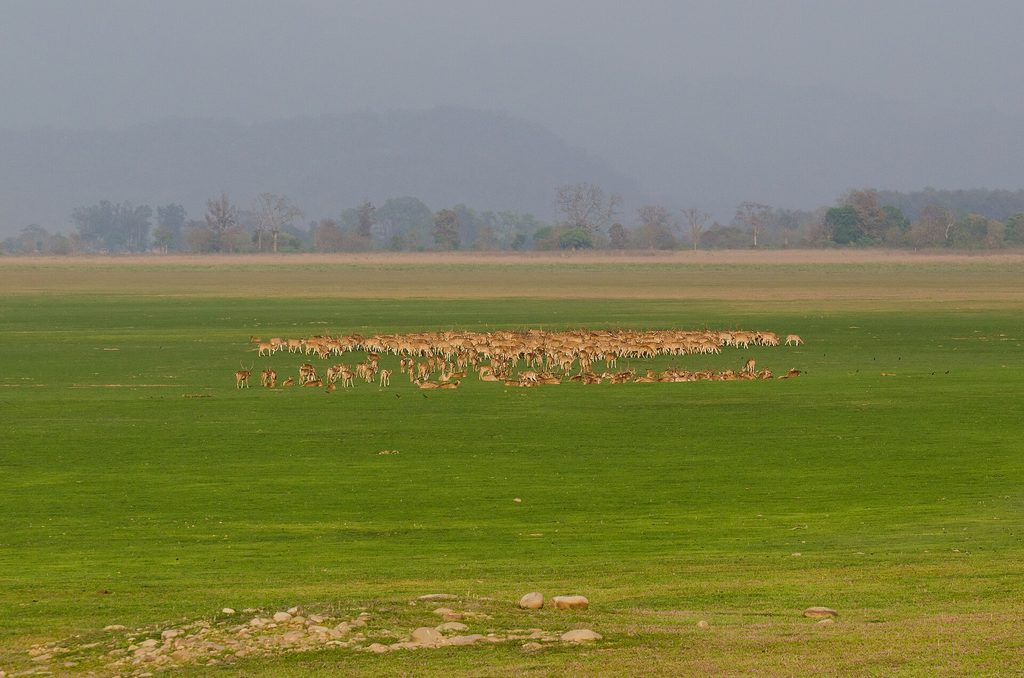
Dhikala is often the name that sends people into a confusing search for “Dhikala jeep booking.” For day visitors, the reserve instructs you to book a canter seat. Its tariff explicitly says Dhikala has no ordinary day-safari jeep permit. Jeep access associated with an authorised overnight forest rest house stay is a different booking. A private vehicle cannot simply enter Dhikala because you have a room at an outside resort.
The official canter instructions describe a 16-seat shared bus, morning and afternoon options, selection by date and booking details for each visitor. The tariff says a maximum of four people can be booked together, while a different sentence in the process page mentions a six-person maximum. Because those official pages disagree, treat four as the safer single-transaction limit and confirm the live form or ask official support for a larger party. Do not assume children can stand or sit on laps when a seat is needed.
Canter boarding is listed at Ramnagar Corbett Office and Dhangarhi. Your confirmed ticket should decide your boarding point and reporting time; they are not interchangeable if the operator has assigned one. Allow more time than you would for a nearby jeep gate: Dhikala is a longer excursion through a larger landscape, and the canter will not wait for late passengers. The reserve’s pricing page says canter permits cannot be adjusted or rescheduled after a late arrival.
The published Dhikala season is 15 November to 15 June. As checked on 26 September, the canter booking button currently leads to a monsoon closure notice. That does not tell us precisely when every future date will go on sale; use the official notices and live calendar for reopening and availability. If you intend to visit in October, do not pay a third party for a “confirmed Dhikala day jeep” that conflicts with the official product and published season.
What if you want to stay inside Dhikala instead?
Look at the official Night Stay or forest rest house inventory separately. An inside-park stay, a hotel outside the reserve and a canter seat are three distinct purchases. The booking guide describes associated jeep drives for a forest rest house reservation, but room category, guest capacity, vehicle and guide payment should be checked in the specific booking summary. Forest rest house inventory has its own release notices and can be highly limited. Do not copy the day-safari 45-day rule onto an overnight booking without reading today’s notice; the reserve’s homepage has posted nationality-specific stay releases.
If a Dhikala canter date is unavailable, a legitimate alternative is an available jeep zone on another day. Another possibility is to change travel dates to Dhikala’s operating season. No guide can make a sold-out canter ticket appear, and a Bijrani permit does not open the Dhikala gate.
Timings, seasons and Ramnagar logistics that affect your booking
Most jeep day visits run as morning and afternoon shifts. The exact gate time changes with the season and sometimes by zone; use the time printed on your CTR ticket rather than an older article’s “6 am to 9 am” timetable. For example, the reserve’s Dhela information page illustrates a 6:30–9:30 am morning and a 3–6 pm afternoon, but those page times should not override a current booking notice or permit. A Dhikala canter takes considerably longer than a typical jeep outing, including its approach to the zone.
Morning or afternoon safari in Jim Corbett?
Pick the shift you can reach rested and on time. Morning can be cooler and pleasant for bird activity; afternoon can offer changing light and a more relaxed hotel departure. Wildlife behaviour varies with temperature, season, rain and chance. There is no reliable “morning guarantees a tiger” rule. In winter, fog may reduce early visibility; in hot weather, the open vehicle can be uncomfortable late in the day. For photography, think about the light direction, dust and your ability to hold still in a moving jeep as well as animal activity.
If you arrive by a late-night train or drive from Delhi, an afternoon slot might be the more responsible first-day plan than a dawn safari on no sleep. If your hotel is close to Dhela Gate, a morning Jhirna or Dhela safari can work smoothly with an early pickup. If you choose Dhikala canter, plan your whole morning or afternoon around the designated boarding point. Avoid scheduling a tight train departure immediately after any forest excursion.
When do zones open, and what about the monsoon?
The reserve’s published calendar places Jhirna and Dhela in the year-round category, Bijrani from 15 October to 30 June, and Dhikala canter, Durgadevi, Sonanadi and Pakhro from 15 November to 15 June. Garjia has conflicting official displays, so check actual inventory. Dates are planning guides, not an unconditional right of entry. Heavy rain, road damage, animal-management decisions or a new notice can affect a specific shift.
For a trip during the wet season, keep a flexible day in Ramnagar if a safari is the main purpose. Check the reserve’s cancellation terms before paying: it says some rainy-season bookings are provisional and can be cancelled at short notice without a refund. This is more useful to know before booking than after a rainy morning at the gate.
Where should you stay for an early safari?
Choose accommodation after you know your gate. A room marketed “near Jim Corbett” could still require a significant early transfer. Ask the hotel for a realistic pre-dawn drive time to Amdanda, Dhela, Garjiya, Durgadevi or your canter boarding point as applicable. If you are booking Sonanadi or Pakhro, note the reserve’s Kotdwar-side location rather than assuming the same Ramnagar pickup. Keep enough time for gate verification, which the reserve says should begin at least 45 minutes before opening.
A helpful one-night pattern is to arrive in Ramnagar the previous afternoon, check your QR permit and original IDs, confirm the vehicle arrangement and route to your gate, then sleep early. For a two-safari visit, consider different available zones or shifts. Book each separately and leave enough rest between them, particularly with children or older travellers.
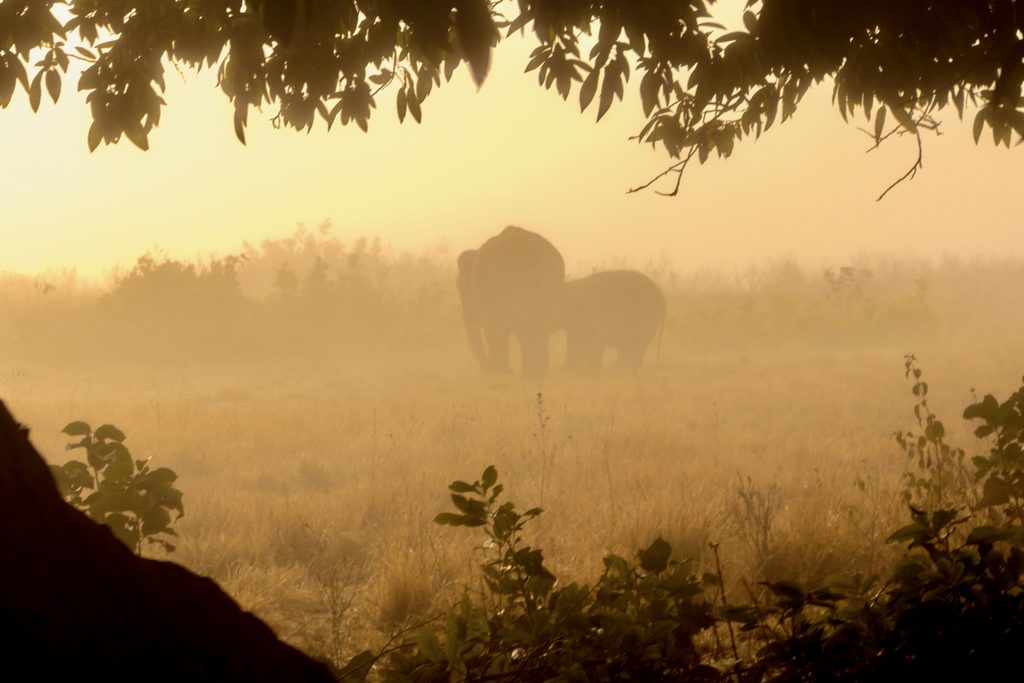
Jhirna elephant photograph by Samarchauhan01, CC BY-SA 4.0; unmodified.
What to carry and how to behave inside the reserve
Keep your QR permit, all original IDs, a modest water supply and weather-appropriate clothing ready. Neutral clothing and a light layer help on cool early drives; a hat and sun protection help later in the day. Binoculars are worthwhile even when no big cat appears. Pack lightly so you can move and sit comfortably in the assigned vehicle. Follow the gate staff’s current rules about food, plastics, cameras and mobile phones; a reserve notice states that mobile-phone use is not permitted within tourism zones of the core habitat under the applicable Supreme Court order.
Stay seated unless your guide instructs otherwise. Do not ask the driver to leave a designated track, crowd an animal, play music, feed wildlife or use flash close to an animal. The reserve’s terms require registered guides and vehicles, prohibit disruptive behaviour and require visitors to take waste back out. These rules make a safari better for both wildlife and the next group travelling the route.
Jim Corbett safari booking FAQs
How can I check Corbett safari permit availability?
Go to the reserve’s website, follow the Jeep Safari or Canter Safari button, and select the product, zone, visit date and shift. The live calendar shows what can be booked; a search result or an agent’s “availability” badge may not. If you see no inventory, check the latest notices for the release window and whether the zone is operating.
Which ID do I need for a Jim Corbett safari booking?
Use a valid identity document accepted by the current portal and enter its number and name accurately. Under the notice effective 22 September 2026, the group leader uploads clear front-and-back images of their ID, enters valid ID numbers for the other members and presents all members’ original valid IDs at the gate. Follow additional document prompts in the live booking flow.
What does the quoted safari price include?
Ask whether it is per jeep or per canter seat and get an itemised answer covering the reserve permit, registered vehicle, driver, mandatory guide, taxes or portal charges, hotel transfer and any agent service fee. The published jeep table has separate permit, vehicle and guide figures; the canter table gives a per-seat base plus GST and notes possible additional portal and waste charges. Your final payable amount is the official checkout or itemised written quote.
How far ahead should I book a Jim Corbett jeep or Dhikala canter safari?
Check as soon as your dates are firm. The reserve’s booking guide describes progressive availability up to 45 days ahead for jeep and canter; its September notice refers to seven-day releases for some other jeep zones. Popular dates can fill quickly, but the exact opening depends on zone, current portal arrangements and season. Do not assume a universal 90-day day-safari window from an older private guide.
Can I change the visitor, zone or date after I pay?
Do not count on it. The official day-visit terms say named visitors cannot be substituted and confirmed bookings are generally non-transferable and non-refundable. Verify every detail before payment. If there is a technical pafyment problem or a forest-ordered change, use the official support and refund instructions for that specific case.
Before you book: choose jeep or Dhikala canter, check the latest zone-specific release and price on corbettgov.org, enter IDs exactly, and confirm the gate and full amount before paying. Once your QR ticket arrives, plan your stay around its reporting point. If you are still choosing dates, read a Jim Corbett zones or Ramnagar itinerary guide next and keep a second suitable zone in mind.


