
Jaipur Itinerary for 2 Days: A Realistic 48-Hour Plan with Timings & Costs (2026)
Jaipur looks compact on a map, but its headline attractions sit in two very different clusters. The City Palace, Hawa Mahal and bazaars are packed into the historic centre; Amer, Jaigarh and Nahargarh rise north of the city in the Aravalli Hills. Try to jump between both areas all day and you will spend too much of your short break in traffic.
This Jaipur itinerary for 2 days fixes that problem. Day 1 is a mostly walkable tour of the UNESCO-listed Walled City. Day 2 follows the northern fort route by car. The plan includes realistic visit lengths, meal breaks, current opening-hour guidance, ticket advice, family-friendly alternatives and a practical Pune-to-Jaipur weekend option.
It is designed for two full sightseeing days. Ideally, arrive the previous evening and leave after 7:00 pm on Day 2 or the following morning. If your “two days” include a late arrival and early departure, use the priority list below and skip one hill fort.
Jaipur 2-Day Itinerary at a Glance
Are two days enough for Jaipur? Yes. Two full days are enough to see Jaipur’s essential palaces, observatory, bazaars and major forts without racing continuously. Three days are better if you also want museums, craft workshops, temples, a cultural evening or a nearby day trip.
Here is the most efficient Jaipur tour plan for 2 days for a first visit:
| Day | Suggested time | Route | Best for |
|---|---|---|---|
| Day 1 | 7:30 am–7:00 pm | Hawa Mahal facade → Hawa Mahal interior → Jantar Mantar → City Palace → Johari/Bapu Bazaar → Albert Hall or Masala Chowk | Architecture, astronomy, food and street life |
| Day 2 | 7:00 am–5:30 pm | Amer Fort → Panna Meena ka Kund → Jaigarh Fort → lunch in Amer → Jal Mahal viewpoint → optional Nahargarh Fort | Forts, hill views and royal history |
This route groups nearby Jaipur tourist attractions instead of following a generic “top ten” list. The Walled City sights are largely walkable; Amer and the hill forts need a car or organised tour.
What to prioritise if you are short on time
Keep these five experiences: the Hawa Mahal facade, Jantar Mantar, City Palace, Amer Fort and an old-bazaar walk. Jal Mahal is a short viewpoint, not a palace visit; Rajasthan Tourism says the palace is not open to most visitors.
If energy runs low, choose either Jaigarh or Nahargarh. Jaigarh extends Amer’s military story and may be included in a City Palace composite ticket. Nahargarh has broader city views, but the state portal currently lists 10:00 am–5:00 pm. Do not plan a sunset inside unless the official closing time changes.
Before following the timings
Opening hours, galleries and ticket prices can change for restoration, festivals, VIP movement and public holidays. Check the Rajasthan government’s official booking portal and the City Palace visitor page one or two days before travel. The timetable below includes a modest traffic buffer, but add more on long weekends, during the Jaipur Literature Festival, around Diwali and on public holidays.
Day 1: Walled City Palaces, Jantar Mantar, Bazaars and Local Food
Day 1 is the heart of this Pink City itinerary for 2 days. Wear comfortable shoes, carry a light scarf or hat and start before the tour groups arrive. The old city is busy, noisy and visually intense, but the main sights are close enough that walking is usually faster than repeatedly waiting for a cab.
7:30–8:30 am: See the Hawa Mahal facade in soft morning light
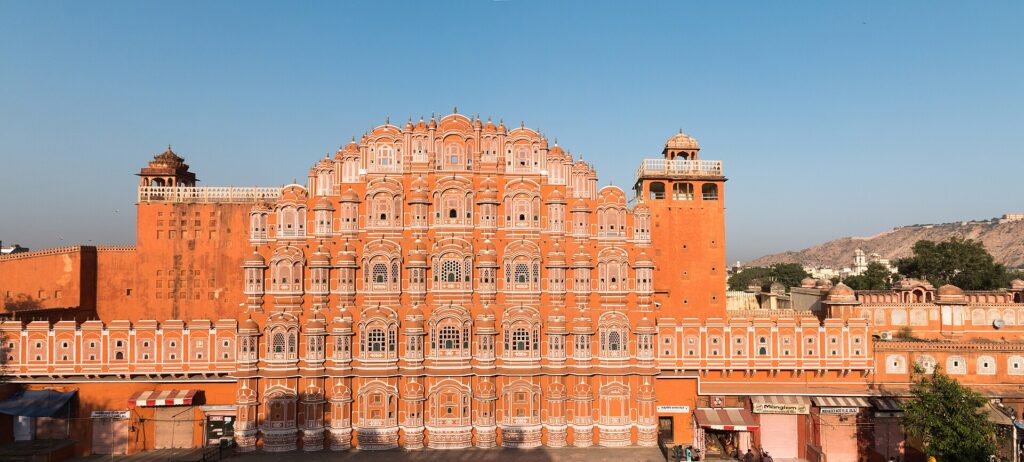
Begin on Hawa Mahal Road. The famous eastern facade receives attractive morning light, and traffic is easier before shops fully open. Spend 20–30 minutes taking in the honeycomb-like rows of jharokhas, then have breakfast nearby.
A Jaipur breakfast might include pyaaz kachori, poha or lassi. Choose a busy, clean shop where food is cooked in batches. If you have a sensitive stomach, eat lightly and drink sealed water.
The visitor entrance is behind the facade, reached through the lanes around Tripolia Bazaar.
9:00–9:50 am: Go inside Hawa Mahal
The official state portal lists Hawa Mahal from 9:00 am to 7:00 pm. Inside, narrow passages and ramps lead to old-city views. The rooms are modest; the value is understanding how the facade functioned.
Allow 45–50 minutes. Historic surfaces and inclines can challenge limited mobility; ask staff for the most accessible route. A baby carrier may be easier than a stroller.
If you only want the signature photograph, you may skip the interior and use the extra time at City Palace. That is a better trade for travellers who prefer museum collections to architecture.
10:00–11:10 am: Understand the sky at Jantar Mantar
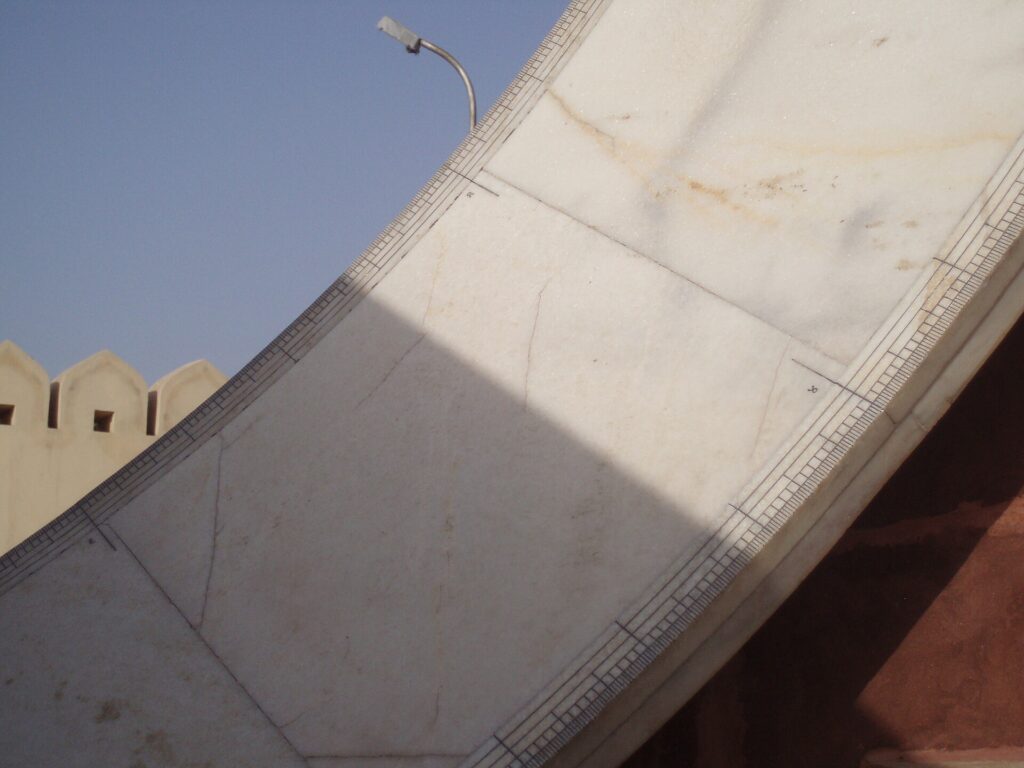
Walk roughly five to ten minutes towards Jantar Mantar. This is not a garden filled with decorative sculptures; it is an 18th-century astronomical observation site built around monumental instruments. UNESCO describes it as a group of fixed masonry instruments designed for naked-eye observation of astronomical positions.
The geometry is more interesting with an authorised guide. Ask how the Samrat Yantra uses a shadow to indicate local solar time, then compare it with your phone. Clear late-morning light normally gives stronger shadows.
Allow 60–70 minutes. Rajasthan Tourism lists 9:00 am–7:00 pm, with the last ticket at 6:30 pm. Because its page contains legacy prices and rates changed in 2026, use the live checkout price. See the official Jantar Mantar guide and UNESCO description.
11:15 am–1:20 pm: Explore City Palace without buying the wrong ticket
City Palace is next door. Its courtyards, gateways and galleries remain associated with Jaipur’s royal family. Focus on Mubarak Mahal, Sabha Niwas, Sarvato Bhadra and the seasonal gates of Pritam Niwas Chowk where accessible.
The standard museum takes 90 minutes to two hours. The premium Royal Tour enters additional parts of Chandra Mahal but is not essential. In September 2026, the official page lists ₹400 for an Indian adult museum ticket and ₹500 for a composite covering the palace, Jaigarh and Royal Cenotaphs. International prices differ.
This is where many Jaipur guides become confusing: the City Palace composite ticket is not the same as the Rajasthan state Jaipur composite ticket sold for state-run monuments. Decide which sites you will actually enter before buying either pass. For this itinerary, the ₹500 City Palace composite can be useful if you intend to visit Jaigarh on Day 2.
The official visitor page lists 9:30 am–6:30 pm, with the last ticket at 6:00 pm. It also reports the Textile Gallery and Museum at Night temporarily closed. Recheck these notices before visiting.
1:30–2:30 pm: Take a proper lunch break
Do not plan eight straight hours of monuments. Jaipur’s heat, stone courtyards and traffic are tiring even in winter. Stop for a seated lunch near the old city, MI Road or C-Scheme.
Look for dal baati churma, gatte ki sabzi, ker sangri or a Rajasthani thali. Laal maas suits meat eaters who enjoy a chilli-forward curry; ask about spice levels. A thali samples several flavours efficiently.
Leave 15 minutes for rest and hydration, then call a cab if you prefer Albert Hall to the bazaar walk.
2:45–4:30 pm: Walk Johari Bazaar and Bapu Bazaar with a buying plan
Johari Bazaar is known for jewellery and gemstone work; Bapu Bazaar is easier for textiles, juttis, bags and everyday souvenirs. Even if you buy nothing, the continuous pink facades and shopfront rhythm help explain why UNESCO recognised Jaipur City for its urban planning, craft traditions and architecture.
Compare quality. Ask whether a textile is hand-block or screen printed, inspect seams and request an invoice for valuable purchases. “Government approved” means little unless the institution is verifiable. Avoid unsolicited detours to commission-based showrooms.
Set a spending ceiling before bargaining; not every store has flexible prices. In crowds, keep your phone and wallet in a zipped, front-facing bag.
The UNESCO Jaipur City listing explains the grid, chaupars, bazaar facades and craft traditions you will see.
5:00–7:00 pm: Choose Albert Hall, Masala Chowk or a slower evening
Albert Hall suits travellers who still have museum energy. The state portal lists 9:00 am–8:00 pm. Allow 60–75 minutes inside, or see its exterior at dusk. It is a short drive from the bazaars.
For a slower evening, sample several vendors at Masala Chowk. Families may prefer this to another museum; couples can choose a rooftop near Hawa Mahal, while film lovers can check Raj Mandir’s programme.
Day 1 involves roughly 4–6 kilometres of walking. Use an auto between the market and Albert Hall if needed. A good Jaipur sightseeing itinerary for 2 days leaves space to absorb the city.
Day 2: Amer Fort, Panna Meena ka Kund, Jaigarh and Jal Mahal
Book a cab with a driver for Day 2 or join a clearly described local tour. App cabs are useful for point-to-point travel, but repeated pickups on hill roads can waste time. Confirm whether parking, tolls, waiting time and the return to your hotel are included in a quoted day rate.
7:00–7:30 am: Leave central Jaipur for Amer
Eat early or carry something simple. The drive from central Jaipur can take 25–45 minutes. The official portal lists Amer Fort from 7:00 am to 8:00 pm; arriving around 7:30 am is about avoiding crowds.
On the approach, look across Maota Lake for the classic rampart view. Use the pedestrian route or an authorised vehicle service. Elephant rides are unnecessary when lower-impact alternatives exist.
7:30–10:15 am: Give Amer Fort the largest time block
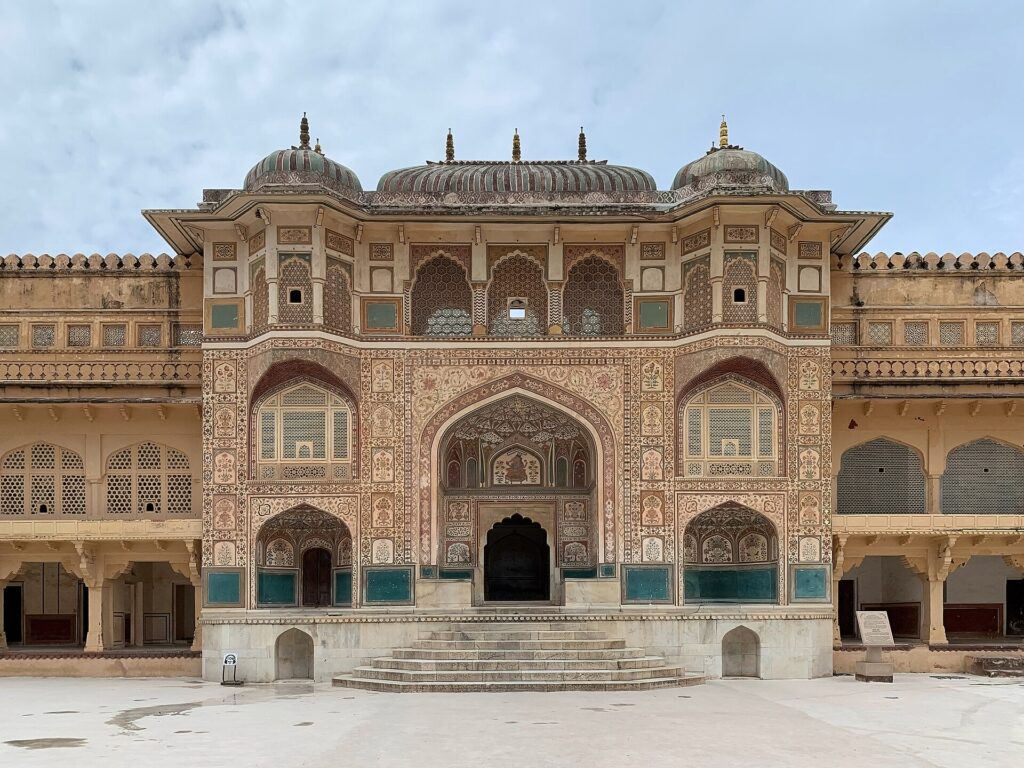
Amer is the anchor of Day 2 and deserves at least two hours. The complex unfolds through courtyards rather than a single grand room, so rushing straight to Sheesh Mahal misses the story.
Start at Jaleb Chowk and notice Ganesh Pol before entering the private palace areas. Prioritise Diwan-i-Aam, Ganesh Pol, Jai Mandir and Sheesh Mahal. A guide can connect the audience halls, royal apartments, water systems and terrain.
Photography, ticket queues and the walk back to parking take time, so keep ten minutes of slack.
10:25–10:55 am: Make a brief, respectful stop at Panna Meena ka Kund
Panna Meena ka Kund is a geometric stepwell near Amer Fort. Spend 20–30 minutes in permitted areas. Do not climb down or cross barriers because access rules can change.
Keep voices low, avoid blocking doorways and ask before photographing residents. If your morning begins late, protect the time at Amer.
11:10 am–12:40 pm: Visit Jaigarh Fort—or skip it for a gentler day
Jaigarh is the military counterpart to Amer’s palace. Its ramparts, water systems and Jaivana cannon justify 75–90 minutes plus transit.
If you purchased the City Palace composite ticket on Day 1, confirm at the counter that Jaigarh admission is included under the current terms. Keep the ticket or digital receipt accessible.
Families with small children, older travellers and summer visitors can skip Jaigarh for a relaxed lunch and early return.
12:50–1:50 pm: Lunch in Amer
Eat near Amer before driving back. A one-hour break prevents the afternoon from becoming a string of rushed photo stops. If you plan to visit Nahargarh, tell the driver before lunch so the route and parking are agreed in advance.
2:10–2:35 pm: Stop at the Jal Mahal viewpoint
Jal Mahal appears to float in Man Sagar Lake but is generally viewed from shore. Rajasthan Tourism says it is not open to most visitors. Ignore unofficial entry offers.
The viewpoint lies between Amer and central Jaipur. Twenty minutes is normally enough. Keep food away from birds and dispose of packaging properly.
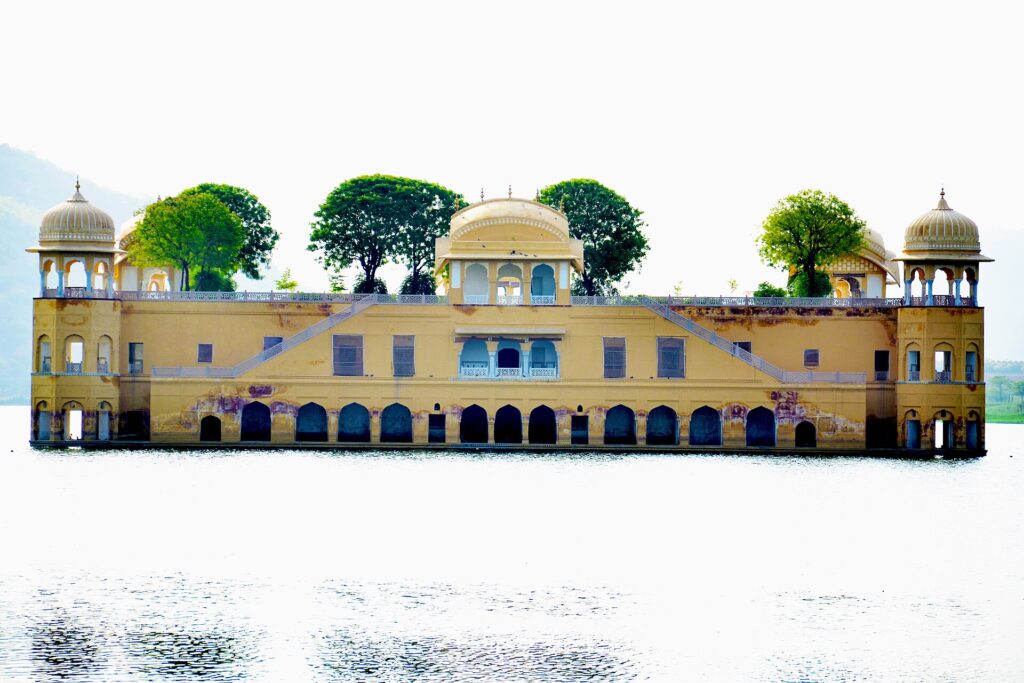
3:00–5:00 pm: Add Nahargarh only if the group still has energy
Nahargarh offers a wide city view but adds an uphill drive. The official portal lists 10:00 am–5:00 pm, so arrive well before last admission. Weekend traffic can slow the descent.
Choose it if panoramic views matter more than a relaxed evening. Otherwise consider the quieter Gaitore Ki Chhatriyan if access and your ticket permit.
For Chokhi Dhani, rest at the hotel first. It is south of the city and does not combine efficiently with the northern fort loop. Treat it as an evening programme, not a quick meal.
Adapt This Jaipur Trip Plan for Families, Couples, Solo Travel or a Budget
The best itinerary is not the one with the most pins. It is the one that matches the group’s walking capacity, interests and arrival time.
Jaipur itinerary for 2 days with family or kids
Keep Day 1 to Hawa Mahal, Jantar Mantar, City Palace and one market. At Jantar Mantar, choose a guide who demonstrates the instruments and lets children compare the sundial with a watch.
On Day 2, visit Amer, Panna Meena ka Kund and Jal Mahal. Add Jaigarh only for fort-loving children. Carry sun protection, snacks and medicines; historic sites have uneven flooring and limited shade.
For multigenerational families, arrange a car and ask about accessibility. City Palace provides access at major entrances and accessible restrooms, but not every historic area is step-free.
Jaipur itinerary for couples
Keep the core route but slow down at one or two visually rich places. An early Hawa Mahal photograph, the seasonal gates at City Palace, Ganesh Pol and a quiet lunch in a restored haveli create a better day than visiting three similar forts.
In the evening, choose a rooftop, heritage dinner or performance with published timings. Avoid isolated viewpoints after dark and pre-arrange the return.
Jaipur itinerary for solo travellers
Day 1 is straightforward alone because the main attractions are close to Badi Chaupar Metro Station. Walk in daylight, use verified app-based transport or prepaid services and share your Day 2 cab details with someone you trust. Do not disclose your hotel or next stop to persistent strangers.
A small-group heritage walk can add company. Check credentials, route, group size and cancellation terms, then leave time for everyday street scenes.
Budget Jaipur itinerary for 2 days
Use the metro to reach Badi Chaupar on Day 1, walk the historic cluster and choose individual state tickets only for places you genuinely want to enter. On Day 2, split a cab with other travellers or compare a government sightseeing bus.
RTDC currently advertises a full-day AC bus at ₹600 per person, excluding monument, camera and Amer transport extras; a minimum number of seats is required. It is quicker and less flexible than this route but can reduce cost. Check the official RTDC page.
Save money on meals by eating at clean, busy local restaurants rather than choosing every cafe for its view. Do not cut the accommodation budget so far that you lose time commuting from the edge of the city.
Jaipur itinerary for 2 days by car
A car is most valuable on Day 2. On Day 1, request a Hawa Mahal drop and post-bazaar pickup. Confirm vehicle type, air-conditioning, duty hours, parking, tolls and extra-kilometre charges in writing.
For a Jaipur local sightseeing package for 2 days, reject any schedule that promises 12–15 entries each day. Ask how long is actually allocated to Amer, City Palace and meals. A tour can be convenient, but “covering” a monument from the car is not the same as visiting it.
Jaipur Travel Planning: Best Time, Hotels, Transport and Two-Day Cost
Best time to visit Jaipur
October to March is most comfortable. Rajasthan Tourism gives broad ranges of 13–30°C for October–December and 10–27°C for January–March. Winter mornings can feel cold.
April to June can reach roughly 45°C. Start at opening time, take a midday break and hydrate. July to September is cooler than peak summer but brings humidity and rain.
Winter also means peak crowds and higher prices. Late September, October or March can balance conditions and demand. Check the forecast and the official climate guide.
Where to stay in Jaipur for 2 days
| Area | Best for | Main trade-off |
|---|---|---|
| MI Road or C-Scheme | First-time visitors, restaurants and balanced access | Busier and often more expensive than outer neighbourhoods |
| Bani Park | Families, railway arrivals and quieter guesthouses | Requires a short ride to the Walled City |
| Badi Chaupar or Walled City | Walking to Hawa Mahal, City Palace and bazaars | Noise, traffic restrictions and limited vehicle access |
| Amer Road | Heritage stays and an early fort start | Less convenient for southern Jaipur and the airport |
| Tonk Road or Malviya Nagar | Late airport arrivals and early departures | Long cross-city journey to Amer during traffic |
For two days, location matters more than resort facilities. An outer hotel can consume several prime hours. Check recent reviews for noise, hot water, lift access, parking and external windows.
How to get around Jaipur efficiently
Jaipur Metro’s Pink Line connects Mansarovar with Badi Chaupar via Railway Station, Sindhi Camp, Chandpole and Chhoti Chaupar. It helps on Day 1 but does not reach Amer or the airport. See the official station list.
Autos and app cabs cover other journeys. Use the meter where applicable or agree on the fare and destination first. Keep small notes or digital payment ready.
For hill forts, hire a day car and establish each meeting point because exits may differ.
Jaipur trip cost for 2 days
The table below is a planning estimate per person for two full days, excluding travel to Jaipur and major shopping. It assumes two people sharing a room and a cab where relevant.
| Expense | Budget style | Comfortable mid-range |
|---|---|---|
| Two nights’ stay | ₹1,600–₹3,600 | ₹4,000–₹8,000 |
| Food and water | ₹900–₹1,800 | ₹2,000–₹4,000 |
| Local transport | ₹700–₹1,500 using metro/shared rides | ₹2,000–₹3,500 share of a private car |
| Sight tickets | ₹900–₹1,800 depending on choices | ₹1,500–₹4,500 with premium entries or guides |
| Estimated total | ₹4,100–₹8,700 | ₹9,500–₹20,000 |
These are estimates, not quotes. International tickets, solo rooms, premium tours and guides raise the total. Selected concessions require valid ID.
State fees changed in 2026. Add your attractions on the official portal and compare the live total with the state composite ticket. City Palace tickets are separate.
Jaipur 2-day itinerary from Pune, Delhi or Mumbai
From Pune: A nonstop flight currently takes about 1 hour 45–55 minutes; a direct train takes roughly 21 hours. For a weekend, fly Friday evening, stay centrally and return late Sunday or Monday morning. Recheck schedules; Air India Express lists the route, while trains should be checked on IRCTC.
From Delhi: Arrive the previous evening by train, flight or road. Weekend traffic and winter fog require a delay buffer.
From Mumbai: A flight is most time-efficient. Overnight rail can work, but confirm the arrival station and travel date.
Whichever city you start from, protect the two full sightseeing days. A Jaipur 48-hour itinerary is about time on the ground, not 48 hours counted from leaving home.
What to carry
Bring photo ID, secure footwear, sunscreen, a hat, water and a power bank. Add a winter layer or monsoon umbrella when needed.
Dress respectfully in religious spaces, remove footwear when asked and seek permission before photographing people.
On a third day, add one coherent experience: block printing, Anokhi Museum when open, Galta Ji, a food walk or Abhaneri. Pushkar and Ajmer deserve more than a hurried add-on.
Frequently Asked Questions About a Jaipur Itinerary for 2 Days
How can I plan a two-day trip to Jaipur?
Spend Day 1 in the Walled City at Hawa Mahal, Jantar Mantar, City Palace and the bazaars. Use Day 2 for Amer Fort, Panna Meena ka Kund, Jaigarh and Jal Mahal. Arrive the night before, stay centrally and hire a car only for the hill-fort day.
What should I visit on Day 1 in Jaipur?
Start with the Hawa Mahal facade around 7:30 am, enter when it opens, then walk to Jantar Mantar and City Palace. After lunch, explore Johari or Bapu Bazaar and finish at Albert Hall Museum or a local food court. This route minimises backtracking.
What should I visit on Day 2 in Jaipur?
Reach Amer Fort around 7:30 am, then visit Panna Meena ka Kund and Jaigarh. Have lunch in Amer and stop at Jal Mahal on the return. Add Nahargarh only if everyone has energy and the official closing time leaves enough margin.
How much does a two-day Jaipur trip cost?
For an Indian traveller sharing accommodation, budget roughly ₹4,100–₹8,700 per person for two nights, meals, local transport and standard sightseeing, excluding travel to Jaipur and shopping. A comfortable mid-range trip may cost about ₹9,500–₹20,000 per person. Your hotel, vehicle and ticket choices make the largest difference.
How many days are ideal for a Jaipur trip?
Two full days cover the essential sights. Three days are ideal for a less hurried first visit because they leave time for a craft experience, another museum, Galta Ji, a cultural evening or rest between the Walled City and the forts. Four days work well if you want a nearby excursion.
Final Thoughts: How to Explore Jaipur in 2 Days Without Rushing
The smartest Jaipur travel itinerary is geographical: keep the Walled City together on Day 1 and the Amer–Jaigarh corridor together on Day 2. Begin early, protect the long time blocks at City Palace and Amer, and treat Jal Mahal as a viewpoint rather than a palace tour. If the group is tired, remove a fort instead of sacrificing lunch or turning every stop into a photograph from the car.
Before leaving, confirm live hours and ticket prices on the official booking pages, reserve a well-located stay and decide whether Jaigarh or Nahargarh matters more to you. Then save the route offline and enjoy Jaipur as a city, not a checklist.
For the next planning step, read a detailed Jaipur hotel-area guide or a Jaipur food guide and choose the one or two experiences that will make this 48-hour plan feel personal.