Gangtok to Darjeeling Distance, Fare, Time & How to Reach (2026 Travel Guide)
Ninety-eight kilometres does not sound like a long transfer. In the Eastern Himalayas, however, the number on the map tells only half the story. The road drops from Gangtok to the Teesta valley, follows a winding river corridor, then climbs again through tea country towards Ghoom and Darjeeling. A journey that looks like two hours on a flat-road calculation normally needs four to five hours in a hill vehicle—and sometimes longer in rain, traffic or roadworks.
This guide gives you a realistic answer to the questions travellers actually ask: the Gangtok to Darjeeling distance by car, the usual travel time, current planning ranges for private and shared taxis, whether a direct bus exists, where shared jeeps leave from, which route drivers normally use, and how to make the transfer easier with children or older family members.
Fares in the hills are seasonal and road conditions can change quickly. The prices below are therefore September 2026 planning ranges, not a fixed government tariff. Confirm the final vehicle, inclusions, pickup point and road status before paying.
Gangtok to Darjeeling distance, time and fare at a glance
The short answer: The normal Gangtok to Darjeeling road distance is about 96–100 km, with 97–98 km being a useful planning figure. A direct road transfer usually takes 4–5 hours without a long sightseeing stop. Shared jeeps commonly cost around ₹400–₹600 per seat, while a one-way private cab generally falls between ₹3,300 and ₹6,500, depending on vehicle type, season, pickup and booking channel.
| Trip detail | Practical planning answer |
| Road distance | About 96–100 km on the usual route; some apps show 93 km or 107 km depending on endpoints |
| Normal travel time | 4–5 hours; allow 5–6 hours in rain, peak traffic or with stops |
| Best overall option | Pre-booked private cab for door-to-door comfort and timing control |
| Cheapest direct option | Shared jeep/shared taxi at roughly ₹400–₹600 per seat |
| Private hatchback/small car | Roughly ₹3,300–₹5,000 one way |
| Private SUV/hard-top vehicle | Roughly ₹4,500–₹6,500 one way |
| Direct bus | No regular direct Gangtok–Darjeeling bus; the public-bus journey requires a Siliguri change |
| Shared-jeep departure point | Deorali Mainline Taxi Stand, below central Gangtok; confirm locally |
| Sensible departure | 7:00–9:00 a.m., especially for a shared vehicle or monsoon travel |
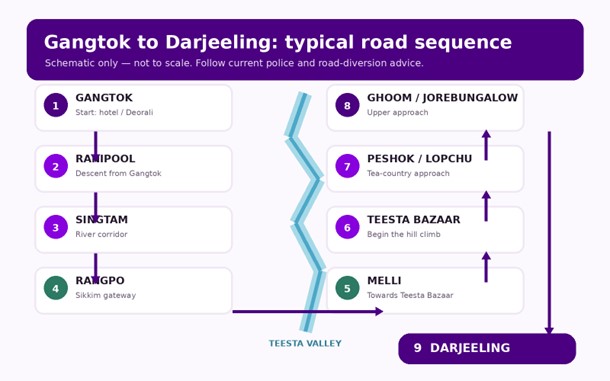
| Main route | Gangtok–Ranipool–Singtam–Rangpo–Melli–Teesta Bazaar–Peshok/Lopchu–Ghoom–Darjeeling |
Do not build a tight flight, train or toy-train connection around a four-hour estimate. A family leaving Gangtok at 8:00 a.m. should normally treat early afternoon—not noon—as the safe Darjeeling arrival window.
Gangtok to Darjeeling road distance, route and travel time
Why different websites show different distances
You will see figures ranging from roughly 93 km to 110 km online. That does not necessarily mean one map is entirely wrong. Distance changes according to the exact hotel pickup and drop, the road selected by the navigation service, temporary diversions, and whether the calculation uses town centres or administrative boundaries.
For trip planning, use about 98 km for the standard Gangtok to Darjeeling route. A hotel above MG Marg and a stay on the far side of Darjeeling can add several kilometres and a surprising amount of time because both towns have narrow, busy approaches. A diversion through Kalimpong, or a temporary route used during repairs, can take the journey to about 105–115 km or more.
The straight-line distance is irrelevant to a road itinerary. There is no direct valley-to-valley shortcut, and the elevation change matters more than the aerial gap.
The usual Gangtok to Darjeeling route
Most drivers descend from Gangtok through Ranipool and Singtam to Rangpo, continue towards Melli and the Teesta Bazaar area, then climb via Peshok/Lopchu towards Jorebungalow or Ghoom before entering Darjeeling.
Standard route sequence:
- Gangtok
- Ranipool
- Singtam
- Rangpo
- Melli
- Teesta Bazaar
- Peshok/Lopchu
- Jorebungalow or Ghoom
- Darjeeling
The exact turns may change with traffic-control orders and repairs. The broad logic does not: descend to the Teesta corridor, cross from Sikkim towards West Bengal, then make the long climb to Darjeeling.
Why 98 km takes four to five hours
Hill-road time is governed by average speed, not the speed limit shown for a short clear section. The route has bends, settlements, narrow stretches, slow vehicles, check posts, repair zones and two significant elevation changes. Fog can reduce visibility near the upper sections; rain can slow traffic throughout the valley. A meal or washroom stop adds another 20–40 minutes.
That is why a journey planner that predicts 1 hour 30 minutes should not drive your itinerary. Even a three-hour estimate assumes unusually smooth conditions and no meaningful stop. In ordinary travel, four to five hours is the honest answer. During monsoon disruption, holiday traffic or active roadwork, budget five to six hours and keep the rest of the day light.
Is the Kalimpong route better?
The alternative via Kalimpong and Lamahatta can be scenic, but it is usually longer—roughly 110–115 km and five to six-and-a-half hours when traffic is normal. Choose it if you deliberately want a Kalimpong or Lamahatta stop, or if local authorities and your driver are using it as a diversion. It is not the automatic “best route” for a simple hotel-to-hotel transfer.
Do not instruct a driver to follow a saved map during a closure. In the hills, police, transport operators and local drivers may have fresher information than an app. A diversion via Pakyong, Rorathang or NH717A may be used when a section around Rangpo–Singtam or NH10 is affected; whether it is suitable can change by the hour.
How to reach Darjeeling from Gangtok
For most travellers, the real choice is between a private taxi and a shared jeep. The bus-via-Siliguri option exists, but it goes downhill away from Darjeeling before coming back up, so it costs almost a full day.
Gangtok to Darjeeling by private taxi
A private cab is the best way to travel from Gangtok to Darjeeling for families, couples with luggage, older travellers and anyone who values a fixed departure. Pickup is normally from your hotel, and the driver drops you at the Darjeeling hotel or the nearest legal vehicle access point.
The last phrase matters. Some Darjeeling properties sit on pedestrian lanes or steep steps where a car cannot stop. Before booking, ask the hotel for its exact vehicle drop point. “Hotel drop” may mean the closest motorable road, not the lobby door.
A hatchback or compact car is economical for two adults with light bags. For four adults, a family with several suitcases, or anyone prone to motion sickness, a hard-top SUV gives more usable space. Do not book by seat count alone: a vehicle advertised for six passengers may have little luggage room once every seat is occupied.
Before paying an advance, get these details in writing:
- Vehicle type or a clear “or similar” category
- Total one-way price, including tolls, parking and driver allowance
- Hotel pickup and the exact Darjeeling drop point
- Whether the rate changes if the official route is diverted
- Luggage capacity and roof-carrier arrangements
- Cancellation or rescheduling terms during a road closure
- Driver and registration details, normally shared the evening before or on departure day
Online travel sites sometimes display lower headline fares, then add convenience charges, taxes or a different vehicle category at checkout. Local operators may quote an all-inclusive round number. Compare the final payable amount, not the first number on the screen.
Gangtok to Darjeeling by shared jeep
The cheapest direct way to reach Darjeeling from Gangtok is normally a shared jeep. Vehicles commonly leave from the Deorali Mainline Taxi Stand, roughly 2 km below the MG Marg area. A local taxi from an upper Gangtok hotel to Deorali is an additional cost, so include that in your budget.
Shared services often work on a fill-and-go system rather than a dependable minute-by-minute timetable. Morning is the safest window. Reach the stand around 7:00–9:00 a.m., ask for the Darjeeling counter or queue, confirm the fare, and expect the vehicle to leave when enough seats are sold. Departures can continue into the afternoon, but choice usually thins after lunch.
This option suits solo travellers and budget-conscious couples who can travel light. It is less comfortable for small children, tall passengers, older people with stiff joints, or anyone carrying large hard-shell bags. Jeeps may carry eight to ten passengers, luggage may go on the roof, and the middle or rear rows can feel cramped on bends.
If comfort matters but a private cab is outside the budget, ask whether you can buy an extra adjacent seat. It can provide breathing room, though luggage rules still apply. Keep medicines, documents, electronics and one warm layer in a small bag with you rather than on the roof.
Gangtok to Darjeeling taxi timings: There is no single universal timetable covering every shared operator. Treat published slots as a guide, not a promise. Confirm at Deorali or through your hotel the evening before, then arrive early.
Gangtok to Darjeeling by bus
There is no regular direct public bus between Gangtok and Darjeeling. The bus option requires two main legs:
- An SNT bus from Gangtok/Deorali to Siliguri
- An NBSTC bus or shared vehicle from Siliguri to Darjeeling
This is a major detour. Including the transfer between stands and waiting time, allow roughly 8–10 hours. The base fares can be low, but the route is usually a false economy for a one-day transfer because it consumes most of the day.
The official Sikkim Nationalised Transport schedule currently lists Gangtok–Siliguri non-AC services at ₹275 and AC services at ₹500, with several morning and midday departures. A published NBSTC route PDF lists multiple Siliguri–Darjeeling departures from early morning. Schedules can be revised, so verify with the operator or terminus on the day before travel.
For a rough budget, the two public-bus legs start at around ₹365–₹630 per person, before local taxis, meals and any waiting. A shared jeep direct from Gangtok can therefore be similarly priced while saving several hours.
Useful official checks: Sikkim Nationalised Transport bus schedules and the NBSTC published route schedule.
Can you go by train or flight?
No direct train or flight connects Gangtok and Darjeeling. Gangtok does not currently have an operational passenger railway station; the rail link towards Rangpo remains a separate infrastructure project. Travelling by road down to NJP or Siliguri and then back up to Darjeeling adds a long detour.
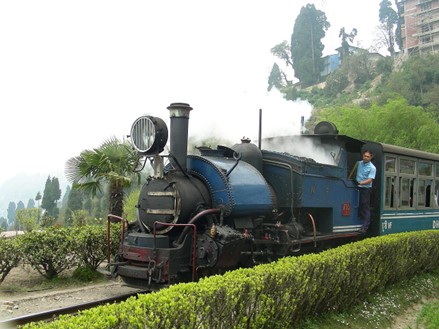
The Darjeeling Himalayan Railway is a memorable attraction, but it should not be confused with direct transport from Gangtok. If the toy train is important to your trip, reach Darjeeling by road and book a separate Darjeeling–Ghoom joy ride or another suitable DHR sector, subject to the current timetable.
Gangtok to Darjeeling taxi fare and total trip cost in 2026
The phrase “taxi fare” can refer to one seat in a shared jeep, an entire small car, or a large SUV. That is the main reason online prices appear to contradict one another. Season, vehicle availability, hotel access, booking commission and last-minute demand create further variation.
Use the following ranges to plan, then ask for a dated final quote.
| Travel option | Indicative one-way fare | Best for | Watch for |
| Shared jeep/shared taxi | ₹400–₹600 per seat | Solo travellers and light-budget trips | Local ride to Deorali, fixed seat, roof luggage, fill-and-go departure |
| Private hatchback/compact car | ₹3,300–₹5,000 per vehicle | One to three travellers with light luggage | Checkout fees, small boot, hotel access |
| Private SUV/hard-top vehicle | ₹4,500–₹6,500 per vehicle | Families, four or more travellers, extra luggage | Exact model, luggage space, peak-season surcharge |
| Bus via Siliguri | About ₹365–₹630 base fare per person | Travellers prioritising public transport over time | 8–10 hours, terminal transfer, local fares and schedule risk |
These are market-planning ranges assembled from current operator and online-booking quotes available in September 2026. For example, one Sikkim operator publishes ₹4,000 for a small vehicle, ₹4,500 for a standard eight-seater and ₹5,000 for a six-seat luxury category. Current online cab listings can show a small car below ₹3,000 before some fees, while other local or peak-date quotes sit above ₹5,000. There is no contradiction once vehicle class, inclusions and date are made explicit.
What should a one-way cab quote include?
Ask the operator to write “all inclusive” only after confirming what that means. A clean quote should address:
- Toll, parking and state or local entry charges
- Driver allowance
- GST or platform/convenience fees
- Hotel pickup and actual motorable drop
- Waiting charge for a planned meal stop
- Diversion or extra-kilometre policy
- Night or early-morning surcharge, if any
A very low quote deserves a calm follow-up, not immediate suspicion. It may be a genuine promotion, but it may also exclude taxes, use a smaller car, start from a taxi stand rather than your hotel, or apply only to an inconvenient slot.
What will the full trip cost for different groups?
Solo traveller: One shared-jeep seat at ₹400–₹600 plus a local taxi to Deorali and another short ride in Darjeeling if the drop is not near the hotel. A practical total is around ₹700–₹1,200, depending on both local connections.
Couple: Two shared seats may total ₹800–₹1,200 before local transfers. A private hatchback at ₹3,300–₹5,000 costs more but buys door-to-door convenience, flexible breaks and less waiting.
Family of four: Four shared seats cost about ₹1,600–₹2,400, plus stand transfers. A private vehicle becomes easier to justify, particularly with children and luggage. For four people, ₹4,500 spread across the group is ₹1,125 per person.
Group of five or six: Compare a genuine six-seat SUV quote with the cost of six shared seats. Check luggage space carefully. An “eight-seater” does not guarantee room for eight suitcases.
The cheapest way is not always the lowest trip cost. Losing half a day through Siliguri can mean an extra meal, more local transport and one less usable day in Darjeeling.
Darjeeling to Gangtok distance and fare
The reverse road distance and travel time are broadly the same: about 96–100 km and four to five hours in normal conditions. Shared jeeps generally leave from the Chowk Bazaar/Gandhi Road transport area in Darjeeling; exact counters and traffic arrangements can change, so ask your hotel a day ahead. Use the same ₹400–₹600 per-seat planning range and compare fresh private-car quotes rather than assuming the outward fare is guaranteed on the return date.
One practical difference is arrival in Gangtok. Confirm whether the vehicle can drop at your hotel or must stop at a designated stand based on current interstate taxi rules and local traffic restrictions. Old articles often repeat restrictions that have since changed, so a dated operator confirmation is more useful than a timeless claim.
Gangtok to Darjeeling road conditions and the best time to travel
There is no single permanent answer to “How is the road?” The route can be smooth on one date and slow a week later after heavy rain or emergency repairs. In 2026, Sikkim authorities issued updates and conducted inspections around NH10’s 20th Mile/Bardang stretch, illustrating why a current official notice is more valuable than an old blog saying the road is “open.”
Seasonal road expectations
| Period | What the journey is usually like | Planning advice |
| March–May | Popular season; generally pleasant, with holiday traffic and occasional rain | Start early and pre-book in peak weeks |
| June–September | Monsoon rain, fog, landslide risk, repair holds and diversions | Keep 1–2 hours of buffer and avoid a same-day critical connection |
| October–November | Often clearer views and good touring weather; festival demand can raise fares | Book the vehicle in advance and confirm pickup |
| December–February | Cooler, shorter daylight and possible fog or icy patches at higher points | Prefer a daylight departure and carry warm layers |
Weather cannot guarantee a good or bad road day. Even outside monsoon, construction, accidents or traffic management can create delays. During intense rain, a responsible driver may pause or reroute rather than chase the original arrival time.
A reliable 24-hour road-status check
Use a layered check because no single page captures every local hold:
- Ask your Gangtok hotel or registered driver about the route actually used that day.
- Review recent notices from the Sikkim Roads and Bridges Department and Sikkim government press releases.
- Check the IMD Meteorological Centre Gangtok forecast and warnings, not only a generic weather app.
- For the West Bengal side, check current traffic information from Kalimpong Police and ask the Darjeeling hotel for local access advice.
- Reconfirm on departure morning if there was heavy overnight rain.
If authorities announce a timed closure, leave according to the opening window your driver recommends. Do not stop for photographs in a rockfall zone, walk around a barrier or pressure the driver to overtake a queue.
Best departure time
For most trips, 7:00–9:00 a.m. is the sweet spot. You gain daylight, shared-jeep availability and a buffer for delays while still having time to check in and walk around Darjeeling in the afternoon.
Avoid a late-afternoon start unless your accommodation and driver have specifically planned it. Darkness, fog and fewer backup vehicles make an ordinary delay harder to manage. If your Gangtok sightseeing ends late, an extra night is often safer and more enjoyable than forcing the transfer.
Family trip, stops and a practical Gangtok–Darjeeling itinerary
Choosing a vehicle for children or older travellers
For a Gangtok to Darjeeling family trip, comfort depends more on space and driving style than on a luxury label. Choose a vehicle in which every passenger has a proper forward-facing seat and usable seat belt. Ask about child-seat compatibility before booking; do not assume a local operator supplies one. If you bring your own restraint, confirm its installation method and the vehicle’s belt arrangement.
Keep the most motion-sensitive passenger in a forward-facing seat with a view ahead. Start after a light breakfast, carry water, and avoid heavy fried food immediately before departure. Any anti-motion-sickness medicine should be used only as directed by a doctor or pharmacist, especially for children, pregnancy or existing medical conditions.
Plan one proper stop rather than many roadside pauses. A 15–20-minute break near a safe, established café or settlement can help without turning the transfer into a tiring sightseeing day. Older travellers may prefer a higher vehicle, but check the step-in height; an SUV is not automatically easier for limited mobility.
Luggage and documents
Pack a small in-cabin bag with identification, booking details, medicines, water, tissues, a light rain layer and one warm layer. Keep electronics and valuables off a shared jeep’s roof rack. Waterproof outer luggage or use an internal liner in monsoon.
Domestic Indian travellers should carry a government photo ID; foreign nationals should keep passport, visa and any immigration or permit records available. The transfer between Gangtok and Darjeeling normally does not require the special high-altitude permits used for places such as Nathula or North Sikkim, but travellers should retain documents related to their Sikkim stay and follow any current entry formalities.
Places to visit between Gangtok and Darjeeling
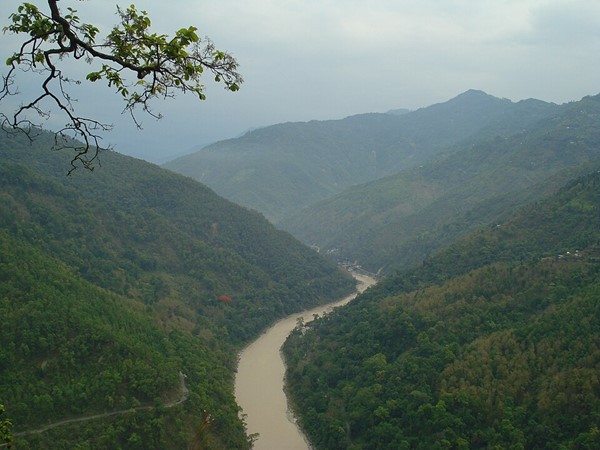
The most convenient journey views come from the Teesta valley, roadside tea landscapes and the upper approach around Ghoom. These can be enjoyed without converting the transfer into a full tour, provided the driver stops only at a legal, safe place.
Be realistic about attractions described as “on the way.” Kalimpong and Lamahatta require the longer route or a deliberate detour. Batasia Loop is near Darjeeling, but timing a toy train there is a separate activity. Mahananda Wildlife Sanctuary is not a quick standard-route stop on this transfer. A long attraction list can mislead families into planning eight hours of sightseeing on top of a four-to-five-hour drive.
If you want a relaxed transfer day, choose one of these approaches:
- Direct transfer: Breakfast in Gangtok, one comfort stop, Darjeeling check-in and an easy Mall Road evening.
- Scenic route day: Pre-arrange Kalimpong or Lamahatta, accept the longer drive, and skip major Darjeeling sightseeing on arrival.
- Child-friendly day: Leave early, keep stops brief, have lunch after hotel check-in, and save the toy train or Batasia Loop for the next morning.
A sensible transfer-day schedule
| Time | Plan |
| 6:30–7:00 a.m. | Light breakfast, check road update and settle hotel bill |
| 7:30–8:00 a.m. | Leave Gangtok by pre-booked cab, or reach Deorali earlier for a shared jeep |
| 10:00–11:00 a.m. | Short washroom/tea break if traffic and road safety allow |
| 12:30–2:00 p.m. | Typical Darjeeling arrival window, depending on conditions |
| Afternoon | Check in, lunch and rest |
| Evening | Easy walk around Chowrasta/Mall Road; avoid a packed sightseeing list |
Sample Gangtok and Darjeeling itinerary
A comfortable first-time circuit needs at least five nights once arrival and departure travel are considered:
- Day 1: Arrive in Gangtok; easy MG Marg evening
- Day 2: Gangtok local sightseeing
- Day 3: Tsomgo Lake/Nathula sector if permits, weather and health allow, or a relaxed local day
- Day 4: Morning Gangtok-to-Darjeeling transfer; Darjeeling evening
- Day 5: Tiger Hill area, Ghoom/Batasia and selected local sights without overloading the day
- Day 6: Tea estate, zoo/HMI or toy-train activity; depart later or add another night
Families with toddlers, older parents or a long journey to Bagdogra/NJP should add a sixth night. Gangtok to Darjeeling is a transfer day, not a spare half-day to absorb every attraction on the route.
Frequently asked questions
What is the exact Gangtok to Darjeeling distance by car?
The usual road distance is approximately 96–100 km, and 97–98 km is a sound planning figure. Your final distance may be shorter or longer depending on the hotels, traffic route and any official diversion. Do not use the aerial distance to estimate road time.
How much time does it take from Gangtok to Darjeeling?
Allow four to five hours in normal conditions. Budget five to six hours during heavy rain, holiday traffic, repair work or when taking a meal stop. Very short online estimates of around 90 minutes are not realistic for an ordinary hill-road transfer.
What is the Gangtok to Darjeeling shared taxi fare?
Plan on roughly ₹400–₹600 per person in 2026, then confirm the current counter fare at Deorali. The local ride from your Gangtok hotel to the shared-taxi stand and any Darjeeling last-mile ride are normally extra.
Is there a direct bus from Gangtok to Darjeeling?
No regular direct public bus operates on this route. The public-bus option goes from Gangtok to Siliguri and then Siliguri to Darjeeling, taking roughly eight to ten hours with the change. A direct shared jeep is usually the better low-cost choice.
Which is the best way to travel from Gangtok to Darjeeling?
A pre-booked private cab is best for families, luggage and schedule control. A shared jeep is best for a solo traveller or couple prioritising price. Leave in the morning, verify road conditions, and keep the arrival day flexible whichever option you choose.
Final advice: plan for the hills, not the map
For a smooth trip, remember four numbers: about 98 km, four to five hours, ₹400–₹600 per shared seat, and roughly ₹3,300–₹6,500 for a private vehicle. Treat them as planning ranges, not promises. Your most useful action is to confirm the vehicle, final fare, luggage space, pickup/drop point and live road status the day before departure.
Choose a private cab if comfort and control matter; choose an early shared jeep if budget comes first. Skip the Siliguri bus detour unless public transport is a personal priority. Then give the transfer the time it deserves—the Teesta valley and the climb towards Darjeeling are part of the journey, not a delay between attractions.