
Jaipur Tour Package for Family for 3 Days: Itinerary, Costs & Tips
A practical Jaipur tour package for family for 3 days should include two nights in one place, clearly defined transfers, and sightseeing grouped by area. For a first visit, spend one day around City Palace, Jantar Mantar and Hawa Mahal, another at Amer Fort with a Jal Mahal viewpoint stop, and the final morning on a shorter activity before departure.
The catch is that three calendar days rarely mean three full sightseeing days. A late train, an afternoon check-in or a child who needs a nap can change what fits. The right itinerary leaves room for those ordinary family realities.
This guide helps you choose a manageable route, compare package inclusions, calculate the full family cost and adapt each day for children or grandparents. You will also find booking questions, seasonal advice and options for reducing the schedule without losing the highlights.
Before comparing prices: Write down your actual arrival and departure times. The plan below assumes you can begin sightseeing by late morning on day one and have time for a short outing on day three.
What should a Jaipur family tour package for 3 days include?
Look for two nights of accommodation, transport suited to your family, a written sightseeing plan and exact pickup and drop-off arrangements. Breakfast, guides, monument tickets and other meals need separate confirmation. The word “package” does not tell you which of those services you are buying.
Check what the three days actually cover
A Jaipur 2 nights 3 days package describes the booking duration. It does not guarantee that the first and last days are available for touring.
For example, a family arriving at 4 pm on Friday and leaving at 11 am on Sunday has Saturday as its only substantial sightseeing day. That can still be an enjoyable break, but the itinerary must be shorter than one beginning on Friday morning and ending on Sunday evening.
Use this simple check before looking at attraction lists:
| Your travel timings | What to plan | What to reduce |
|---|---|---|
| Morning arrival and evening departure | Two substantial sightseeing days plus a lighter final day | Keep optional additions flexible |
| Afternoon arrival and evening departure | One arrival outing, one full day and a shorter final day | Choose between a second museum and extra shopping |
| Evening arrival and morning departure | One main sightseeing day | Choose either the old-city cluster or an Amer-focused day |
| Travel from another city occupies both end days | Treat this as a short stay with limited Jaipur time | Avoid advertising the schedule to yourself as three full days |
Also confirm check-in and checkout times. Arriving early does not automatically make a room available. If your child needs to sleep after an overnight journey, paying for a guaranteed early room may be more useful than another excursion.
Ask for specific inclusions
| Package component | What should appear in the quotation |
|---|---|
| Accommodation | Two nights, room category, permitted occupancy and actual bedding |
| Breakfast | Number of breakfasts and whether each child’s meal is included |
| Vehicle | Vehicle category, usable seats, luggage space and air conditioning |
| Local sightseeing | Named stops, daily hours, distance allowance and waiting charges |
| Transfers | Exact airport or station, pickup time and final drop-off |
| Guides | Which attractions, language, duration and whether the guide enters with you |
| Tickets | Included monuments, entry categories and exclusions |
| Charges | Taxes, parking, tolls, driver allowance and extra-hour rates |
A driver and a sightseeing guide perform different jobs. If the quote promises a “driver-cum-guide,” ask whether that means commentary in the vehicle or a guided visit inside each monument. Parents hoping for engaging explanations at Jantar Mantar should settle that distinction before travelling.
Choose the package around your household
Private transport can make meal breaks and early returns easier, particularly with young children. A shared tour can suit families comfortable with fixed departure times and group pacing. Compare both on the arrangements you need, rather than assuming one format is always better value.
For a customised Jaipur family tour package, describe your priorities clearly: “One major attraction each morning, a room break after lunch and no compulsory shopping stops.” That gives an operator something concrete to price and schedule.
What is a realistic Jaipur itinerary for 3 days with family?
Group the old-city sights together, give Amer Fort its own morning, and keep departure day light. This reduces unnecessary journeys across Jaipur and makes it easier to shorten a day when children have had enough.
The schedule below is a planning example. Visit lengths are suggested family time budgets, not official opening hours. Check operating days, last admission and any closures for your travel dates before confirming the order.
| Day | Main plan | Flexible part | Overnight |
|---|---|---|---|
| Day 1 | City Palace and Jantar Mantar, with an exterior Hawa Mahal stop | A brief old-city browse if everyone has energy | Jaipur |
| Day 2 | Amer Fort, followed by Jal Mahal from the lakeside | Rest, then an optional short activity | Jaipur |
| Day 3 | Albert Hall Museum or one missed priority | Checkout, lunch and departure transfer | Journey home |
Rajasthan Tourism’s official Jaipur guide provides background on the city’s principal monuments. Use it to choose what interests your family; build the daily pace around your own arrival times and walking needs.
Day 1: Explore the old city without rushing
After arrival, allow time to settle your luggage, eat and use the washroom. Starting a monument visit while everyone is hungry usually creates more difficulty than the itinerary saves.
Make City Palace your main visit if your family enjoys courtyards, decorative architecture and museum displays. Allow roughly 90 minutes to two hours for a selected route. You do not need to examine every gallery to have a worthwhile visit.
Ask which areas your ticket covers before paying. Photographs online may show rooms or experiences outside the entry category you are considering. If one particular courtyard or interior matters to you, confirm access by name.
Jantar Mantar is a useful companion visit for children interested in how things work. It is an eighteenth-century astronomical observation site recognised by UNESCO, with large instruments designed for observations of the sky. That gives parents a clear starting question: how could people measure time and track celestial objects before modern electronics? UNESCO’s Jantar Mantar listing explains its significance.
Allow around 45–60 minutes for a focused introduction. Ask a guide to explain two or three instruments in language your children understand. A short demonstration can be more memorable than a detailed explanation of every structure.
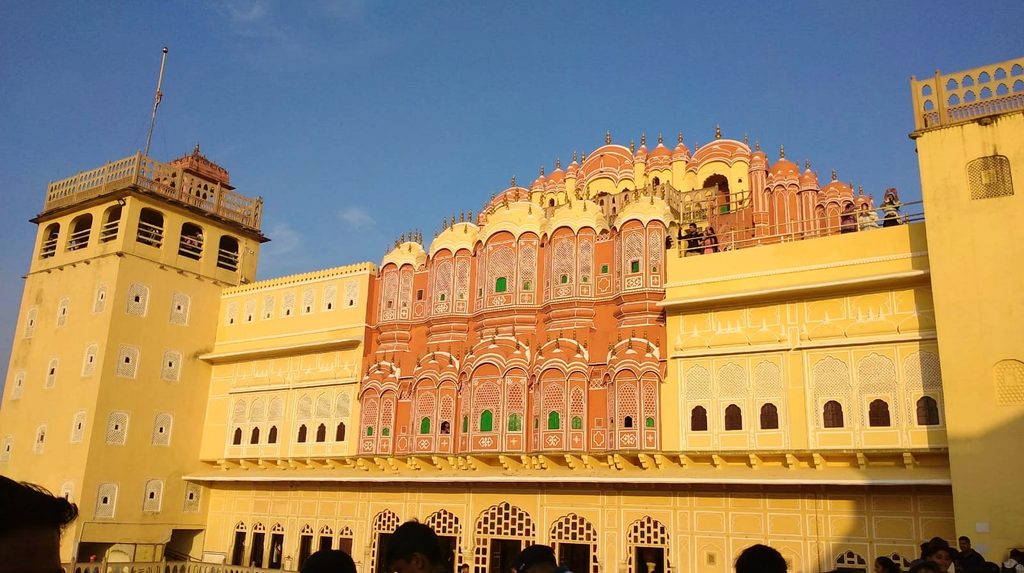
Include Hawa Mahal as a brief exterior stop when it fits the route. If entering the building is a priority, allocate additional time and reduce another visit. The famous facade and an interior visit are different experiences, with different time requirements. Rajasthan Tourism’s Hawa Mahal page describes the building and its history.
Do not turn the final photo stop into a long wait for a perfect picture. Stay together around crossings, agree where the driver will collect you and keep the meeting point easy to identify.
For parents with toddlers: Choose City Palace or Jantar Mantar as the main visit. Add the Hawa Mahal exterior only if it remains convenient. A quiet afternoon is a reasonable use of the first day after travelling.
If arrival is delayed: Move the old-city visit to day three only if departure allows it, replacing Albert Hall. If it does not, choose the attraction that matters most and drop the rest. Trying to recover every missed stop usually makes the remaining day harder.
Day 2: Visit Amer Fort and pause at Jal Mahal
Make Amer Fort, also called Amber Fort, the main event of your second day. Plan an early visit within confirmed opening hours, allowing roughly two to three hours for your selected route, pauses and photographs.
Before leaving, discuss the approach with your driver. Ask where you will be dropped, what walking remains and where pickup happens afterwards. Being driven towards a monument does not necessarily mean being delivered to every area you hope to see.
For children, turn the visit into a few simple observations: find a repeating pattern, look for a decorated doorway, and notice how courtyards connect. For grandparents, agree on a shorter route and a meeting point before anyone becomes tired.
Carry what you will need during the visit rather than leaving essentials in the vehicle. A small bag with drinking water, a hat, wipes and necessary personal items is easier to manage than several loose bags.
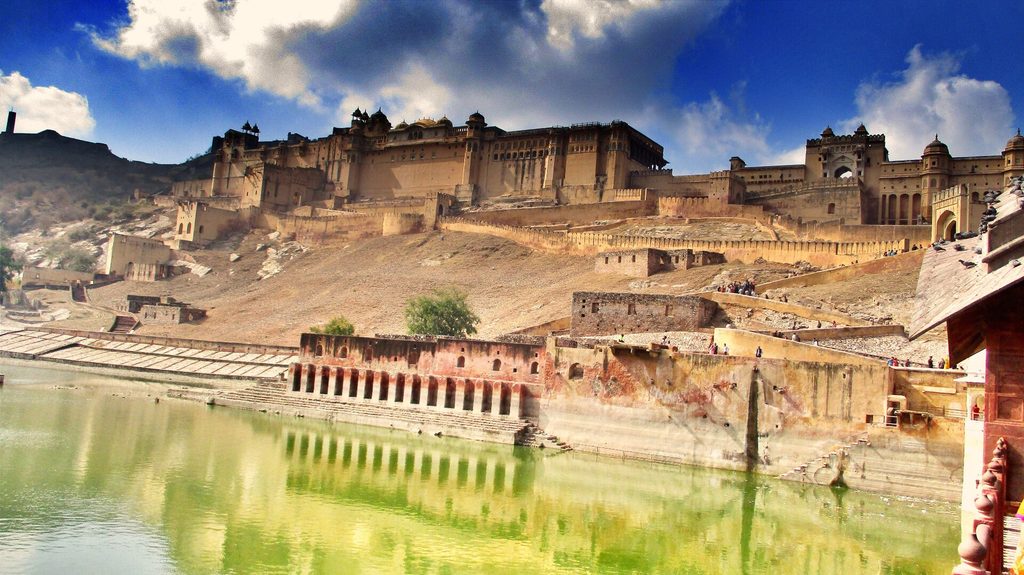
On the way back towards central Jaipur, include a short Jal Mahal viewpoint stop if traffic and energy allow. Plan this as a view of the palace from the lakeside. Do not treat a generic “Jal Mahal visit” in a package as a promise of palace entry or a boat ride.
After lunch, protect a proper rest break. If your accommodation is far from the planned afternoon activity, discuss the extra driving before committing to both.
Families who want something more can choose a prearranged craft session or a short park visit. Ask about the activity’s location, duration, age suitability, supervision and total price. A demonstration with a sales pitch is different from a workshop where children make something themselves.
Should you add Jaigarh and Nahargarh too? Only if visiting forts is a shared priority and your family is comfortable with the extra walking and driving. For a relaxed first trip, Amer can be enough. Older children who strongly prefer another fort can swap it for the optional afternoon activity.
Treat a sunset outing as a separate decision. Confirm entry arrangements and the return journey, and check how it affects dinner and bedtime. An attractive photograph is not a useful reason to finish every day exhausted.
Day 3: Keep one short visit before departure
Albert Hall Museum is a possible final-morning choice if your children enjoy objects, collections and decorative details. Allow around 60–90 minutes for a selective visit, subject to opening arrangements. Give each child permission to choose a few displays rather than following an exhaustive route.
If museums do not appeal, use the time for an attraction you deliberately saved, a relaxed walk or a short shopping stop. Choose one. The last morning should remain easy to end when it is time to collect luggage.
Agree on the day’s order before checkout: breakfast, packing, luggage storage or loading, the outing and the departure transfer. Confirm whether leaving bags after checkout is possible and whether you will still have access to any facilities you need.
Calculate the transfer backwards from your train or flight. Include the carrier’s reporting requirements, the journey from your final stop, traffic allowance and time to retrieve luggage. A cab estimate alone is not your complete departure buffer.
For an early departure: Skip sightseeing and keep breakfast, packing and the transfer unhurried. A two-night family break does not need an attraction on every calendar day to be worthwhile.
Which Jaipur attractions suit children, teenagers and grandparents?
The best places to visit in Jaipur with family depend on interests and stamina. A child fascinated by astronomy may enjoy Jantar Mantar more than a third fort. Someone with limited mobility may prefer a shorter, carefully selected visit over a package labelled “complete sightseeing.”
Match the attraction to the family
These are planning suggestions, not age restrictions or accessibility certifications.
| Place or activity | Why it may appeal | Parent-specific planning point |
|---|---|---|
| Amer Fort | Large spaces, patterns and a strong sense of discovery | Plan for walking, gradients and steps; verify the route for mobility needs |
| City Palace | Courtyards, architecture and selected collections | Confirm ticket coverage and choose a manageable sequence |
| Jantar Mantar | Practical questions about time, shadows and the sky | A clear explanation matters; allow for outdoor exposure |
| Hawa Mahal exterior | A distinctive building children can recognise | Keep the stop brief and manage roadside pickup carefully |
| Albert Hall Museum | Objects and details for curious children | Pick a handful of displays and finish before interest fades |
| Jal Mahal viewpoint | A short scenic pause | Treat it as a lakeside stop and supervise near the waterfront |
| A supervised craft session | Participation and a small finished project | Confirm genuine hands-on time, materials and supervision |
How should parents adapt the trip for younger children?
With babies or toddlers, make the daily rest period the fixed point. Build sightseeing around it. One parent carrying a sleeping child through a long monument route may not be the break anyone expected.
A stroller can help on suitable surfaces, but do not assume that an entire historic attraction is smoothly accessible. Ask about steps, narrow sections, storage and whether you must carry the folded stroller. Bring a carrier only if it is already comfortable for both the child and the adult using it.
For preschool children, explain the next two steps rather than the entire day: “We will see the courtyard, then have a drink.” A predictable sequence is easier to follow than a promise that the tour will finish “soon.”
What keeps school-age children and teenagers interested?
Give each child one choice in the itinerary. That might be a science-focused explanation, extra photography time or a craft activity. Keep it within a realistic time and cost allowance.
Try a small observation challenge at a monument: find three shapes, sketch a doorway or ask the guide one question. Avoid making every outing feel like homework. Sometimes children want to enjoy a place without producing a lesson from it.
Teenagers may appreciate a longer independent look within an agreed area, subject to the setting and their maturity. Set a meeting point and time, and keep phones charged. If photography is the main interest, protect a short photo session without making the whole family wait at every corner.
What if your child finds crowds or noise difficult?
Tell the planner which situations are difficult: queues, crowded entrances, sudden sounds or unpredictable changes. Ask for shorter visits and an easy exit plan. An early start may help with some crowds, but it cannot guarantee a quiet attraction.
Show your child a few photographs beforehand and explain the basic sequence of the visit. Keep a familiar comfort item handy if that helps your family. Agree that leaving early is an available choice, even after buying a ticket.
Parents can also take turns during a visit, provided there is a suitable place to wait and clear arrangements for meeting again. Check re-entry rules before separating. A paid attraction does not have to become a test of endurance.
What if grandparents or a wheelchair user are travelling?
Describe the practical need when booking: distance someone can comfortably walk, ability to manage steps, transfer into a vehicle, and whether a wheelchair must remain unfolded. “Senior friendly” alone tells the planner very little.
Ask for the exact visitor route, entrance, accessible toilet information and arrangements for sections that cannot be reached. Heritage buildings can have uneven access. Confirm current details with the attraction or operator rather than relying on a general city accessibility claim.
A split visit can work well: one adult accompanies those taking the shorter route while others continue, then everyone meets at a specific point. Agree that plan beforehand so nobody feels obliged to keep walking.
How much does a Jaipur tour package for family for 3 days cost?
There is no single meaningful family price without dates, children’s ages, room occupancy and inclusions. Compare the total for your household, then add expenses outside the package. An advertised per-person starting price is only useful when you know the conditions behind it.
A worked Jaipur trip cost for a family of four
The following examples show how to build a budget. They are illustrative planning models, not market averages, live offers or verified supplier rates. Replace each assumption with a quotation for your dates.
Both examples assume two adults and two children aged six and ten, two nights in one room explicitly approved for all four guests, breakfast included for everyone, and three days of local vehicle service covering the agreed transfers and sightseeing. Room and vehicle figures are assumed to include applicable taxes and agreed operating charges.
| Expense for the whole family | Lower-spend example | More-comfort example |
|---|---|---|
| Room with confirmed family occupancy, 2 nights | ₹3,500 × 2 = ₹7,000 | ₹6,000 × 2 = ₹12,000 |
| Local vehicle and agreed transfers, 3 days | ₹2,800 × 3 = ₹8,400 | ₹4,000 × 3 = ₹12,000 |
| Meals other than included breakfast, drinks and snacks | ₹1,800 × 3 = ₹5,400 | ₹2,500 × 3 = ₹7,500 |
| Allowance for entries, guiding and chosen activities | ₹4,500 | ₹6,000 |
| Subtotal | ₹25,300 | ₹37,500 |
| Suggested 10% contingency | ₹2,530 | ₹3,750 |
| Illustrative total for four | ₹27,830 | ₹41,250 |
These totals exclude travel to and from Jaipur, shopping, a second room, unquoted early check-in or late checkout, and premium activities. They are useful for testing affordability, not for predicting what an operator must charge.
The activity allowance is deliberately a budget line rather than an entry-fee list. Your total changes with the sites visited, nationality-based ticket categories where applicable, children’s eligibility, guide arrangements and special-access choices. Check current charges before turning the allowance into a final budget.
Why multiplying the adult price by four can mislead
Children may be charged differently depending on age, bedding, meals and the provider’s terms. “Child without extra bed” explains only one part of the arrangement. It does not establish that breakfast, entry tickets or other services are free.
Ask for a quote listing each traveller’s age on the travel date. If a child will have a birthday before the trip, quote that age. For room planning, ask whether the fourth guest is permitted and what sleeping space is actually supplied.
Two adults and two teenagers may need a different room arrangement from two adults and two small children. The vehicle may also need more luggage space. Those practical differences matter more than the generic label “family of four.”
How can you compare budget and luxury packages fairly?
Budget Jaipur family tour packages can work well when the savings come from a simple room category, selective sightseeing and fewer paid extras. Check that the lower price still covers the occupancy and transport your family needs.
For a luxury Jaipur family tour package, ask what improves the holiday: more space, better bedding arrangements, a suitable vehicle, flexible guiding or useful arrival-day access. A higher category should correspond to benefits you value.
Compare quotations line by line. One might include parking, breakfast for both children and a guide; another may list those separately. Add the extras before deciding which is cheaper.
For example, imagine quotation A totals ₹22,000, with ₹3,000 of agreed transport extras and ₹2,000 in child breakfast charges still payable. Its comparable cost is ₹27,000. Quotation B at ₹25,500 would be cheaper if it includes those same services and all other terms match. These are comparison examples, not supplier offers.
Keep optional spending separate from required costs. A workshop you can decline belongs in a different part of the budget from a mandatory charge needed to complete the advertised route. Ask the operator to identify both clearly, then decide how much discretionary spending your family wants.
If the total exceeds your budget, remove an optional activity or compare different dates first. Keep enough space in the budget for ordinary needs such as meals and comfortable transfers. Those are used every day.
When is the best time to visit Jaipur with family?
For outdoor sightseeing, the cooler part of the year is usually the easier starting point. Rajasthan Tourism identifies winter as the most comfortable general season and highlights the effect of summer heat on sightseeing. Consult its seasonal travel guidance alongside the forecast for your actual dates.
Choose a season that suits your sightseeing pace
| Travel period | Planning implication | Useful adjustment |
|---|---|---|
| October to March | Generally the more comfortable broad sightseeing window; conditions vary within it | Pack layers and check the forecast rather than assuming every day is mild |
| April to June | Heat can limit outdoor touring | Shorten outdoor visits, protect rest time and reconsider a packed fort itinerary |
| July to September | Rain and humidity can interrupt plans | Keep the order flexible and allow an indoor alternative |
November to February is a sensible first window to investigate if your dates are flexible and walking outdoors is the main priority. This is a planning recommendation, not a promise about weather or the lowest price.
For school-holiday travel, compare your actual date options. A lower headline room rate does not necessarily make a hotter or less convenient weekend better value for a family that wants to spend most of its time outdoors.
What changes during festivals, busy weekends or rain?
Ask whether your dates coincide with a major event, procession or local disruption affecting the planned route. Confirm the pickup point and allow flexibility for traffic. Avoid attaching a tight transfer deadline to the end of an old-city outing.
In rain, a museum may be an alternative to an exposed visit, provided it is open and the journey is practical. Indoor sightseeing still involves moving between vehicles, entrances and buildings. Keep a simpler backup plan if conditions make travelling around the city unpleasant.
Before departure, check IMD Jaipur’s weather information for current forecasts and warnings. A seasonal guide helps choose the month; a current forecast helps choose tomorrow’s plan.
What should parents check before booking a Jaipur family trip?
The most useful booking questions turn broad promises into details you can rely on. Ask them once, keep the answers with your confirmation, and share the final plan with every adult travelling.
Confirm the room, meals and daily routine
Request the room’s occupancy limit and bedding configuration in writing. “Family room,” “extra bed” and “child sharing” can describe different arrangements. Ask whether an extra bed means a full bed, rollaway or mattress, and whether it leaves enough usable space.
If naps matter, consider the accommodation’s position relative to sightseeing. A midday return is less attractive when it creates a long additional journey. Ask the planner to show the approximate route from your actual accommodation, rather than promising that every landmark is “nearby.”
For meals, confirm breakfast timing, child charges and any dietary requirements before arrival. If you have a serious food allergy, communicate the requirement directly with whoever will prepare the food; a general package note is not a detailed ingredient discussion.
Carry familiar snacks where permitted and plan meals before children become overtired. Tell the driver about your preferred meal time at the start of the day so that an optional stop does not quietly replace it.
Check the cab beyond its passenger count
For a Jaipur tour package with hotel and cab, check the actual seating and luggage arrangement. A nominal passenger capacity does not show how well the vehicle accommodates several suitcases, a folded stroller or a mobility aid.
If you require a child restraint, request the suitable type in advance and confirm how it will be supplied and fitted. Do not assume it comes with every private vehicle. Every passenger needs an appropriate seat; carrying a child on an adult’s lap is not a substitute.
Ask whether the cab remains available during your agreed sightseeing hours or only performs scheduled drops. Confirm charges for an evening outing, additional kilometres and waiting beyond the allowance. These details determine how flexible the package really is.
Separate travel to Jaipur from travel within Jaipur
A Jaipur family tour package from Delhi can mean a Delhi pickup with road travel included, or a land package that begins after you reach Jaipur. Ask which applies. If the round trip by road falls within the same three days, account for it before accepting the sightseeing schedule.
For a Jaipur family tour package from Mumbai or another distant city, establish whether flights or train tickets are included. Compare usable time on arrival and departure days as well as the fare. An inexpensive late arrival may leave you paying for a night while losing most of the first day’s activities.
Confirm the exact station or terminal on the transfer voucher. Share service numbers and arrival details so the pickup is tied to your actual journey. Ask what happens if that journey is delayed.
Check cancellation terms and attraction access
Read the cancellation schedule before paying a deposit. Ask which components are refundable, whether changing dates costs extra and how a supplier cancellation is handled. For a family booking, changing one traveller can affect room occupancy as well as transport.
Confirm whether an attraction is an interior visit, an exterior stop or an optional extra. Ask separately about ticket availability and guiding. A monument’s name in a highlights list is not enough detail to establish what happens there.
If buying a combined admission product, check its current list of included sites, validity and visitor categories. Do not assume that every palace, museum or special experience on your route is covered.
Send a clear brief before requesting the final quote
Use this message as a starting point:
We are two adults travelling with children aged six and ten for two nights in Jaipur. We arrive on [date and time] and depart on [date and time]. Please quote the total for all four travellers, with permitted room occupancy, bedding, breakfasts, a suitable vehicle, transfers, daily cab limits, taxes and exclusions. We prefer the old city on one day, Amer on another, a rest break after lunch and a light departure day. Please confirm tickets, guiding, cancellation terms and charges for any extra hours.
Adjust the ages, party size and routine to match your household. Add mobility or dietary requirements that materially affect the arrangements. Keep the final accepted version so the itinerary, quotation and booking confirmation describe the same trip.
For your day bag, prioritise booking details, identification, water, suitable sun or rain protection, comfortable footwear, wipes, required personal medication and a charged phone. Keep the bag light enough to carry through the longest planned visit.
What else do families ask about a three-day Jaipur tour?
Is 3 days enough to visit Jaipur with family?
Yes, three days can cover selected highlights if arrival and departure leave enough usable time. Keep one base, group the old-city sights and give Amer a separate morning. Families arriving late and leaving early should reduce the route or add a night.
What is the cost of a 3-day Jaipur trip for a family of four?
The worked examples in this guide total ₹27,830 and ₹41,250 for four people, including a contingency but excluding travel to Jaipur. They are budgeting examples, not advertised rates. Your actual total depends on dates, room occupancy, children’s ages, transport and activities.
Is Jaipur suitable for toddlers and grandparents?
It can be, with shorter visits, planned rest and transport suited to the group. Check walking distances, steps, toilet access and the exact route at each attraction. For toddlers, preserve naps; for grandparents, plan around individual mobility rather than age alone.
Does a Jaipur family package include monument tickets?
Only if the quotation says so. Some packages cover transport to attractions while entry fees and guides remain extra. Request a named list of included tickets, the access category and any child charges before comparing the overall price.
Can we add Ajmer, Pushkar or Ranthambore to the same trip?
An additional destination changes the balance of a short Jaipur holiday. It adds travel and reduces city sightseeing or rest time. If that excursion matters most, build the trip around it; otherwise, add days rather than attaching it to an already full family itinerary.
Plan your next step: Choose your dates, note your children’s ages and usable travel hours, and agree on three or four family priorities. Then request a written quotation against this itinerary. A well-matched Jaipur family break gives you time to enjoy the places you chose and enough flexibility to finish each day comfortably.


