
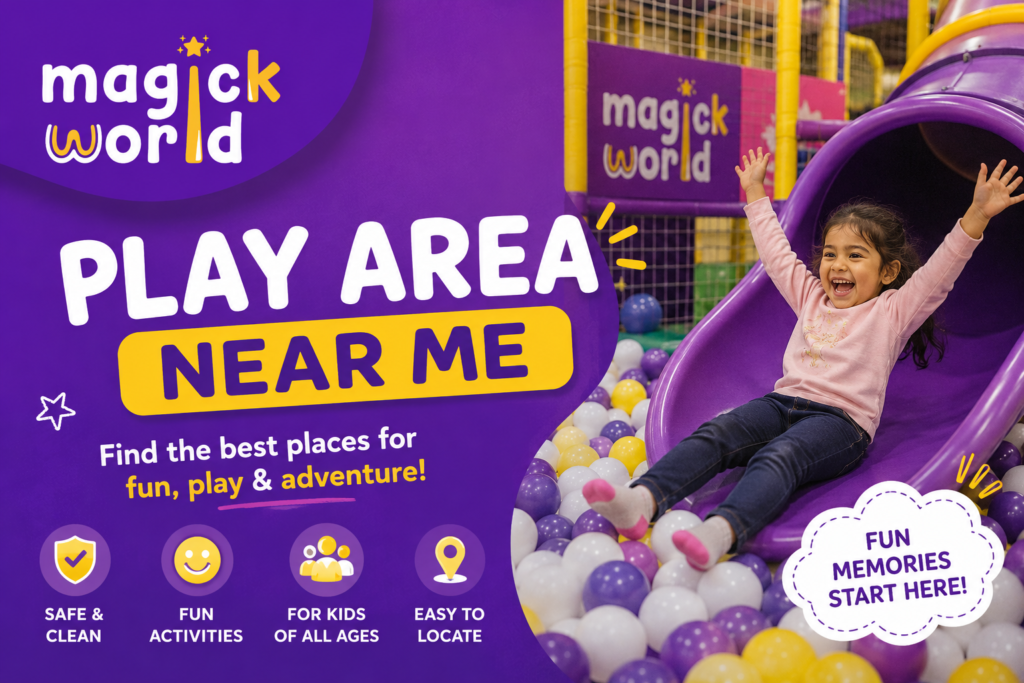
How to Find the Best Indoor & Outdoor Play Area for Kids
Searching for a “play area near me” is about much more than finding a place where children can have fun. Parents today want safe, clean, engaging, and age-appropriate spaces where kids can stay active, learn new skills, make friends, and create unforgettable memories.
Whether you’re planning a weekend outing, a birthday celebration, or simply looking for a fun way to reduce your child’s screen time, this guide will help you choose the perfect play area.
Why Play Areas Are Important for Children
Play is a vital part of childhood. It supports physical, emotional, cognitive, and social development while helping children build confidence, creativity, and problem-solving skills. Pediatric experts emphasize that active play contributes to healthy brain development, emotional regulation, and stronger family relationships.
A quality play area provides children with opportunities to:
- Stay physically active
- Improve motor skills
- Build confidence
- Develop creativity
- Make new friends
- Learn teamwork
- Reduce screen time
Benefits of Visiting a Play Area
1. Encourages Physical Activity
Modern children often spend long hours on mobile phones, tablets, and televisions.
Indoor and outdoor play areas encourage activities like:
- Climbing
- Sliding
- Crawling
- Running
- Jumping
- Balancing
These activities strengthen muscles, improve coordination, and enhance overall fitness.
2. Improves Social Skills
Play areas allow children to interact with kids from different backgrounds.
They naturally learn:
- Sharing
- Communication
- Cooperation
- Leadership
- Patience
- Teamwork
These social experiences contribute to emotional growth and better relationships.
3. Boosts Creativity
Many modern play centers include:
- Role-play zones
- Art and craft areas
- Building blocks
- Pretend supermarkets
- Mini kitchens
- STEM activity corners
Creative play encourages imagination, storytelling, and independent thinking.
4. Builds Confidence
Children gain confidence by trying new challenges like:
- Rope climbing
- Obstacle courses
- Trampolines
- Adventure play
- Soft play structures
Every achievement, big or small, helps build self-esteem.
5. Supports Healthy Development
Research shows that active play helps children develop:
- Gross motor skills
- Fine motor skills
- Problem-solving abilities
- Emotional resilience
- Language and communication skills
- Self-regulation and focus
Types of Play Areas
Indoor Play Areas
Perfect for all seasons, indoor play zones usually include:
- Soft play equipment
- Ball pools
- Slides
- Climbing structures
- Trampolines
- Interactive games
- Sensory activities
Indoor play centers are especially useful during extreme heat, rain, or poor weather.
Outdoor Play Areas
Outdoor playgrounds offer:
- Swings
- Slides
- Monkey bars
- Sand pits
- Cycling tracks
- Open green spaces
They also allow children to enjoy fresh air and nature.
Adventure Play Zones
Older children often enjoy:
- Rock climbing
- Zip lines
- Ninja courses
- Rope bridges
- Obstacle challenges
These activities improve confidence and physical endurance.
Educational Play Centers
Some play areas combine learning with fun through:
- Science activities
- STEM games
- Puzzle zones
- Robotics
- Reading corners
- Creative workshops
What to Look for in a Play Area Near You
Before choosing a play center, consider the following:
Safety Standards
A good play area should have:
- Soft flooring
- Secure equipment
- Trained staff
- Emergency procedures
- Age-appropriate zones
- Regular equipment maintenance
Safety and supervision are key features of well-designed children’s play spaces.
Cleanliness
Look for facilities that maintain:
- Sanitized equipment
- Clean washrooms
- Hygienic seating areas
- Regular cleaning schedules
A clean environment helps reduce the spread of germs.
Age-Specific Zones
The best play centers usually separate activities for:
- Toddlers (1–3 years)
- Preschoolers (3–5 years)
- Young children (5–8 years)
- Older kids (8+ years)
This ensures safer and more enjoyable play.
Parent-Friendly Facilities
Many modern play centers provide:
- Comfortable seating
- Cafés
- Wi-Fi
- Baby changing rooms
- Parking
- Air conditioning
These features make visits more enjoyable for families.
Play Areas for Birthday Parties
Many indoor play centers offer birthday packages that include:
- Private party rooms
- Decorations
- Games
- Food and beverages
- Party hosts
- Return gifts
- Photography options
This makes party planning simple while giving children an exciting experience.
Indoor Play vs Outdoor Play
| Indoor Play Area | Outdoor Play Area |
| Weather-proof | Fresh air and sunshine |
| Air-conditioned | Natural environment |
| Soft play equipment | Open playgrounds |
| Safe padded flooring | Larger play space |
| Suitable year-round | Best in pleasant weather |
Both offer valuable developmental benefits, and a balance between the two is ideal.
Tips for Parents
Before visiting a play area:
- Check age restrictions.
- Visit during non-peak hours for a quieter experience.
- Dress children in comfortable clothing.
- Carry water and grip socks if required.
- Supervise younger children at all times.
- Follow the facility’s safety rules.
Signs of a Great Play Area
Choose a play center that offers:
- Well-maintained equipment
- Friendly staff
- Safe play environment
- Positive customer reviews
- Multiple activity options
- Clean surroundings
- Comfortable waiting area for parents
Frequently Asked Questions (FAQs)
What is the ideal age for indoor play areas?
Most indoor play centers cater to children between 1 and 12 years, with separate zones based on age.
Are indoor play areas safe?
Yes. Reputable facilities use padded flooring, soft play equipment, trained staff, and safety guidelines to minimize the risk of injuries.
How long should children play?
Experts generally recommend at least 60 minutes of active physical activity daily, which can include time at a play area.
Are play areas good for toddlers?
Yes. Many centers have dedicated toddler zones with age-appropriate soft play equipment and sensory activities.
What should children wear?
Comfortable clothes, grip socks (if required), and closed-toe shoes for outdoor play are usually the best options.
Final Thoughts
Searching for the best play area near me is an investment in your child’s happiness, health, and development. A well-designed play center offers much more than entertainment—it helps children build confidence, stay active, improve social skills, and develop creativity in a safe and engaging environment.
Whether you choose an indoor soft play zone, an outdoor playground, or an adventure park, prioritize safety, cleanliness, age-appropriate activities, and a welcoming atmosphere. With regular visits, play areas can become a place where children not only have fun but also learn valuable life skills that support their growth and well-being.