
Pottery Classes in Jaipur (2026): Best Workshops, Fees, Timings & How to Choose
Pottery looks simple until you try to centre a wobbling lump of clay on a moving wheel. That first minute is usually equal parts mess, concentration and laughter—and it is exactly why a good workshop is worth choosing carefully.
Jaipur has several very different pottery experiences. You can book a one-hour wheel session, learn hand-building without a wheel, enrol in a multi-session ceramic course, join a child-focused class, or spend a few hours discovering Jaipur’s traditional blue pottery. These are not interchangeable. A visitor who wants a handmade souvenir needs a different workshop from a teenager building a portfolio or a parent planning a relaxed Sunday activity.
This guide compares the main types of pottery classes in Jaipur, gives dated examples of fees and timings, and explains what actually happens after you make a pot. It also covers the questions most booking pages leave unanswered: Is firing included? Can you take the piece home? Which format suits a five-year-old? Is blue pottery made on a wheel? And how far ahead should you book?
Quick answer: For a first attempt at the wheel, choose a 60- to 90-minute beginner session. For children under about eight, hand-building or a dedicated kids batch is often easier than a wheel-only class. For real skill development, choose at least six to nine sessions. For Jaipur-specific heritage, book a blue pottery workshop—but expect moulding and painting rather than conventional wheel throwing.
Price and schedule note: The specific fees below were checked online on 25 August 2026. Treat them as comparison points, not permanent rates. Confirm the final fee, tax, firing, glazing, courier charge, age rule and available slot directly with the provider before paying.
Which pottery experience should you choose?
The easiest way to find the right class is to start with the outcome, not the studio name. Do you want ninety minutes of fun, a finished ceramic object, a regular hobby, or a cultural experience? Once that is clear, the options become much easier to compare.
Wheel pottery classes
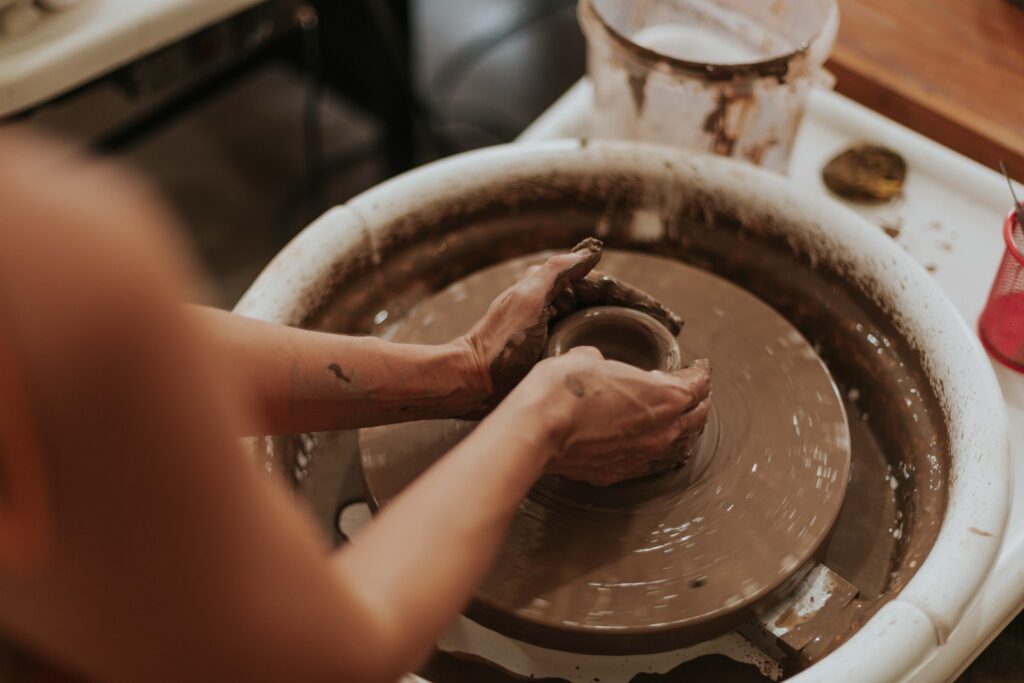
Wheel pottery is the familiar experience of shaping a rotating mound of wet clay into a cup, bowl or small vase. A beginner workshop normally includes a short demonstration, help with centring, and time to make two or three simple forms. The instructor may steady your hands or rescue a collapsing pot; that is normal, not cheating.
Choose a wheel session if the physical experience of making a pot is the main attraction. It works well for adults, teenagers, couples and older children who can sit, focus and follow hand-position instructions. A one-day workshop is a taste of the process. It will not make you independent at the wheel because centring and pulling walls consistently take repetition.
Hand-building and clay modelling classes
Hand-building uses fingers and simple tools instead of a spinning wheel. Pinch pots, coils and slabs can become bowls, planters, animals, name plates or sculptural pieces. “Clay modelling classes in Jaipur” may also refer to non-ceramic school-style modelling with air-dry clay, so ask whether the work will be kiln-fired.
This format is often the least frustrating entry point for young children, families and anyone who prefers slower, more controlled making. It also allows a group to work together rather than wait for turns on a limited number of wheels.
Ceramic classes and pottery courses
A proper ceramic course goes beyond the exciting first shape. It may cover clay preparation, wheel throwing, hand-building, trimming leather-hard pieces, surface decoration, bisque firing, glaze application and a final glaze firing. Some studios also offer practice hours for students who already know how to use the equipment.
Choose a course if you want a repeatable skill rather than a single experience. Before enrolling, ask how many hours are genuinely hands-on, how many students share each wheel, which firings are included, and whether missed sessions can be made up.
Jaipur blue pottery workshops
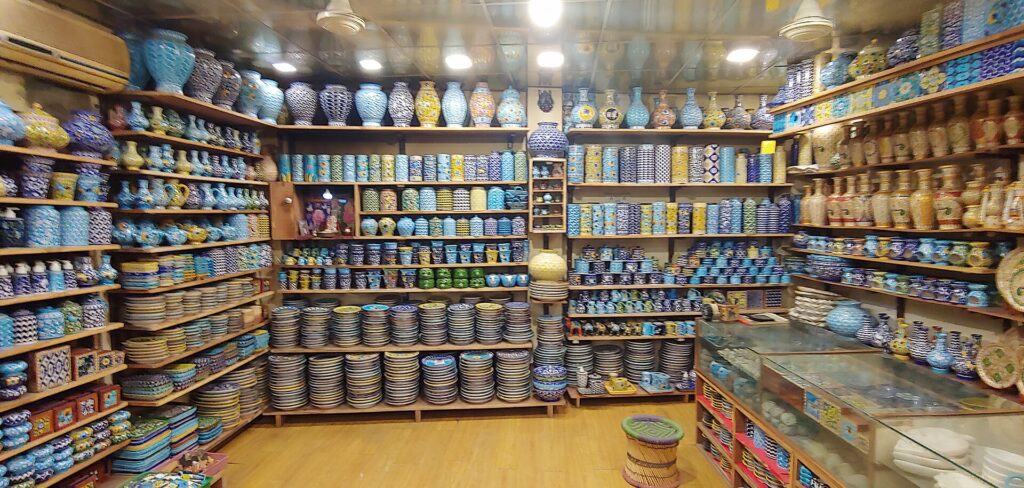
Despite its name, traditional Jaipur blue pottery is not ordinary clay pottery. The registered craft uses a quartz-based body and is typically shaped with moulds, then refined, painted, glazed and fired. A short workshop may let you handle the material, watch a shaping demonstration, draw motifs, and paint a plate or coaster. It usually does not involve throwing a clay pot on a wheel.
Choose this format if Jaipur’s craft heritage matters more than learning conventional ceramics. It is especially suitable for travellers, design students, families with older children, and people who enjoy detailed drawing and painting.
| Your main goal | Best format | Sensible first booking |
| Try pottery once | Beginner wheel workshop | 60–90 minutes |
| Make without wheel pressure | Hand-building or clay modelling | 60–120 minutes |
| Plan an activity for a young child | Dedicated kids batch, hand-building or pot painting | About 45–60 minutes |
| Learn usable ceramic skills | Structured beginner pottery course | 6–10+ sessions |
| Explore Jaipur’s living craft heritage | Artisan-led blue pottery workshop | 2–3 hours |
| Spend creative time as a family | Mixed wheel + hand-building session | 90 minutes or a private group slot |
Best pottery classes and workshops in Jaipur by type
There is no honest universal ranking because “best” depends on age, location, budget and goal. The shortlist below is organised by fit. It favours providers with a current first-party page describing the actual experience. Inclusion is not an endorsement, and availability should still be reconfirmed.
Clay Botik, JLN Marg: widest choice for wheel, hand-building, kids and courses
Clay Botik is the clearest all-round option for people comparing several formats in one studio. Its official pages currently list short wheel workshops, hand pottery, pot painting, a four-session kids programme, beginner and advanced courses, and independent studio practice.
For a first-timer, the studio listed a 60-minute wheel workshop at ₹1,200 per person for ages six and above, with supervision for children. The page says participants make roughly two to three pots, with one selected piece fired at no additional charge; extra firing was listed at ₹300 per pot. A 90-minute wheel workshop was ₹1,500 per person and recommended for ages eleven and above. Both pages say firing takes around two weeks and courier is extra for outstation participants. See the studio’s one-hour wheel workshop and 90-minute wheel workshop pages for current terms.
For children, Clay Botik’s dedicated programme was listed at ₹5,000 for four one-hour sessions, designed for ages five to twelve. It combines wheel work, hand-building and painting, with selected pieces fired. Its kids pottery session page is unusually specific about what happens each day.
For longer learning, the beginner pottery course was listed at ₹11,000 for nine sessions, generally 1.5 to 2 hours each, for ages fourteen and above. The syllabus includes wheel fundamentals, shapes and a glaze introduction, with four works glazed and fired. Weekday and weekend batches are mentioned, but exact slots require registration.
Best for: First-time wheel users, residents comparing a workshop with a course, kids needing a structured programme, and learners who may later want practice hours.
Location: Panchsheel Enclave, JLN Marg—practical for Malviya Nagar, Tonk Road, Jawahar Kala Kendra and nearby south-central areas.
Check before booking: Current batch time, wheel-to-student ratio, firing allowance, pickup date and whether the child’s chosen short session matches the studio’s age policy.
Studio Berõ, C-Scheme: a polished blue pottery experience
Studio Berõ offers a two-hour introduction to Jaipur blue pottery in C-Scheme. Its official booking page describes the materials and history, a mould-making and shaping demonstration, drawing and painting with oxide colours, and one plate plus one coaster as the participant’s canvases.
The page displayed ₹5,000 when checked, but it also instructed visitors to enquire for price and pre-booking. Confirm whether the amount applies per participant, per booking or to a particular package. Glazing and firing are described as included; the finished pieces take approximately 20–25 days, with courier charged separately. Visitors may alternatively take the painted but unglazed work the same day. Read the current inclusions on the Studio Berõ blue pottery workshop page.
Best for: Travellers staying centrally, design-conscious visitors, couples and families interested in drawing and painting a Jaipur craft.
Location: Chittaranjan Marg, C-Scheme, convenient from central hotels and the old city compared with workshops on the outskirts.
Check before booking: Per-person versus group price, minimum age, delivery destination, breakage responsibility and whether the chosen piece will be suitable only for display or also for food use.
Ram Gopal Blue Pottery, Sanganer: artisan-led heritage learning
Ram Gopal Blue Pottery’s hands-on session is led within a family craft practice associated with Gopal Saini and Garima. The official page says participants are introduced to the origins and making journey, handle the distinctive blue pottery dough, and paint a plate that is later glazed and sent to them.
The published duration is two to three hours. Prior booking is appreciated, sessions are offered in English and Hindi, and the studio states that it rests on Sundays. A public fee was not shown on the page checked, so ask for a written quote and inclusions. Details and the booking form are on the Ram Gopal Blue Pottery hands-on page.
Best for: Heritage-focused travellers, craft and design students, and anyone who wants direct interaction with practising blue pottery artisans.
Location: Vishnu Garden, Tonk Road, opposite Sanganer Airport—more convenient for south Jaipur and airport-side stays than for a tightly scheduled old-city day.
Check before booking: Fee, group size, exactly which stages are hands-on, firing and courier timeline, Sunday closure and transport time.
Savista Retreat, Ajmer Road: village-potter context and a slower outing
Savista describes a roughly three-hour pottery workshop with a hereditary village potter. Unlike a central studio appointment, the appeal is the setting and contact with everyday Rajasthani earthenware traditions. The workshop page covers kneading, wheel work and making an object, says beginners are welcome, and notes that advance booking is needed.
The page also presents the activity as suitable for children, but parents should still ask about minimum age, wheel height, direct supervision and whether a shorter hand-building option is possible. Fee and exact slot are enquiry-based. See Savista’s pottery workshop page for current contact details.
Best for: Families wanting a half-day outing, travellers who value rural context, and people interested in traditional earthenware rather than a modern air-conditioned studio.
Location: Sanjharia on Ajmer Road. Treat it as a planned excursion and check the drive from your starting point before confirming.
Check before booking: Whether the workshop is available to non-staying guests, the final fee, transport, child participation, what can be taken home and whether firing is part of the experience.
Online activity marketplaces: convenient for tourists, but compare the underlying provider
Viator, Tripadvisor, Pelago and similar marketplaces often surface wheel pottery and private blue pottery experiences. Their advantages are card payment, traveller reviews, cancellation interfaces and easy comparison. The trade-off is that prices are dynamic, the meeting point may not be obvious until checkout, and two platforms may sell the same underlying activity at different prices.
On the date checked, Viator’s Jaipur pottery category displayed examples ranging from a two-hour wheel session at roughly ₹3,000 to private or combined craft experiences costing much more. These figures can change with date, group size, currency and commission. Compare the host name, duration, inclusions and cancellation rules—not just the card price.
Best for: Short-stay visitors who need instant online confirmation or a protected marketplace booking.
Check before booking: Actual host, exact address, private versus shared format, pickup, taxes, firing, shipping, review recency and whether the activity is wheel pottery or blue pottery painting.
Social-first studios and pop-up events
Search results also show names such as Studio Mudlife, Kunal Pottery Studio and Jaipur Blue Pottery Art Centre, often through Instagram posts, reels or older event listings. These can be worthwhile leads, particularly for weekend pottery classes in Jaipur, but a post announcing one Sunday event is not evidence of a permanent timetable.
Use the date filter carefully. Message the organiser for the next confirmed batch, then ask for the full address, instructor name, duration, refund terms and firing policy in writing. Do not travel based only on an old reel, a reposted poster or an aggregator’s “open now” label.
Pottery class fees, timings and Jaipur location planning
What do pottery classes in Jaipur cost?
Based on current first-party examples checked in August 2026, a short wheel session can start around ₹1,200–₹1,500 per person, while a structured kids programme or premium blue pottery experience may be around ₹5,000. A nine-session beginner course was listed at ₹11,000. Tourist marketplaces may show higher prices for private hosts, hotel pickup, several crafts in one tour, or small-group convenience.
That range is too wide to be useful unless you compare what is included. Two “90-minute workshops” can have very different real value. One may include a dedicated wheel, apron, clay, instruction, firing and one finished pot. Another may be demonstration-heavy, exclude firing, or charge separately for every piece.
| Cost item | What to ask |
| Materials | Is clay or blue pottery material included, and is there a quantity limit? |
| Wheel access | Does each person get a wheel, share one, or rotate in short turns? |
| Firing | How many pieces are bisque-fired, and is glaze firing also included? |
| Glazing or painting | Do you apply glaze yourself, choose a studio glaze, or only paint the surface? |
| Finished-piece delivery | When can locals collect, and what does courier cost? |
| Breakage | What happens if a piece cracks in drying, firing or transit? |
| Tax and booking fee | Is the displayed price the final payable amount? |
| Cancellation | Is the booking refundable or transferable, and by what deadline? |
Do not judge a pottery course only by price per session. A slightly more expensive course with small batches, adequate wheel time, glazing instruction and included firings may be better value than a crowded class with repeated add-on charges.
Typical workshop timings
One-day pottery workshops in Jaipur commonly run for 60 minutes to three hours, depending on the format. A short wheel taster may take an hour; a deeper wheel or hand-building session often takes ninety minutes; an artisan-led blue pottery or village experience can take two to three hours. Multi-session courses may schedule one-and-a-half to two-hour classes on weekdays or weekends.
Many Jaipur workshops are appointment-based rather than true drop-ins. Ram Gopal asks for prior booking and is closed on Sundays; Studio Berõ requires pre-booking; Savista asks guests to reserve well in advance; Clay Botik asks learners to select from available slots. “Open” on a map listing does not mean an instructor and wheel are waiting for walk-ins.
For weekend pottery classes, book earlier than you think—especially for two people who want adjacent wheels, a family group, or a school-holiday date. Arrive about ten minutes early. A late arrival can reduce actual wheel time when the studio has another batch immediately after yours.
Finding pottery classes near you in Jaipur
“Pottery classes near me” should be answered from your starting area, not from Jaipur as a whole. A central class may be convenient during a sightseeing day but inconvenient for a family coming from the far west of the city.
C-Scheme: Central and practical for visitors staying around MI Road, Civil Lines or the old-city side. Studio Berõ is in this zone.
JLN Marg / Panchsheel Enclave: Useful for Malviya Nagar, Tonk Road, Jawahar Kala Kendra, Gandhi Nagar and nearby south-central neighbourhoods. Clay Botik lists this address.
Sanganer / airport side: Ram Gopal Blue Pottery is on Tonk Road opposite the airport, making it logical for south Jaipur or an arrival/departure-day plan with enough buffer.
Ajmer Road / Sanjharia: Savista is better treated as an outing than a quick central-city appointment.
Use live navigation on the booking day because Jaipur traffic, roadworks and weather can change the drive substantially. Ask about parking, the nearest landmark, stairs, washroom access and whether the activity space is air-conditioned—details that matter more in May than they do in January.
Pottery classes for kids, adults and families
Pottery classes for kids in Jaipur
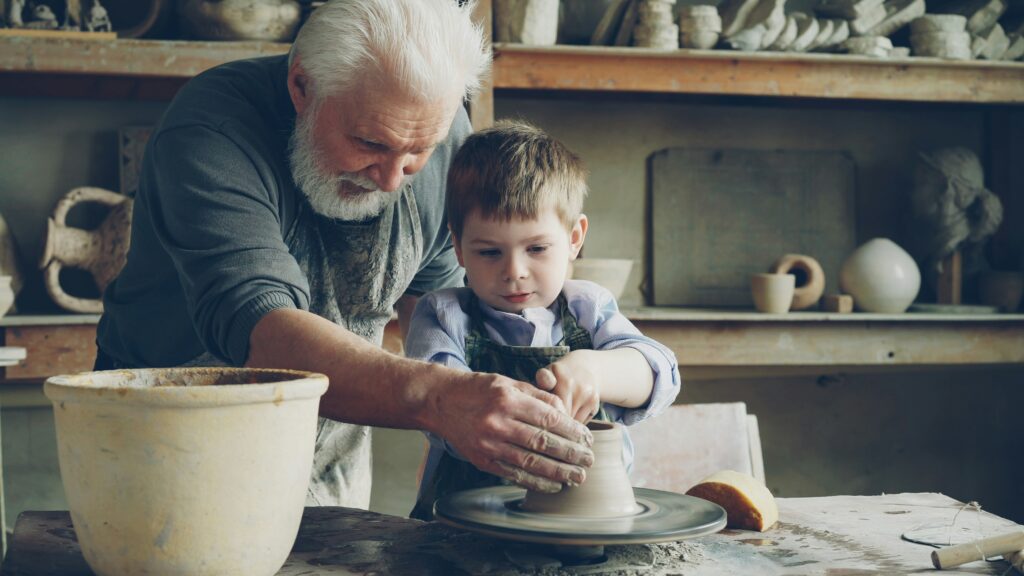
A child-friendly pottery class is not simply an adult workshop with a smaller apron. The instructor needs to adjust the pace, tool choice, seating, expectations and amount of direct help. The most photogenic wheel moment may last only a few minutes; the rest of a good session keeps children engaged through squeezing, rolling, stamping, joining and decorating.
Use these age bands as planning guidance, not fixed rules:
Ages 3–5: Look for hand-building, clay play or pot painting in a 45- to 60-minute session. Ask whether a parent stays beside the child. A fast wheel can be overwhelming and may require the instructor to do most of the shaping.
Ages 5–8: A dedicated kids pottery workshop can combine a short assisted wheel turn with pinch or coil work. Clay Botik, for example, publishes a kids programme for ages five to twelve and a shorter supervised wheel option from age six.
Ages 9–12: Many children can manage a longer session, follow centring instructions and work more independently, but wheel availability and class size still matter.
Teenagers: Serious teens may prefer a beginner course. Check the provider’s threshold; Clay Botik lists its nine-session beginner course for age fourteen and above.
Before booking a kids pottery workshop in Jaipur, ask how many children one instructor supervises, whether parents participate, what tools are used, and how photos or videos of children are handled. Tell the studio about sensory sensitivities in advance. Some children love wet clay but dislike the wheel’s vibration or the splash; hand-building can offer the same creative satisfaction with more control.
Pottery classes for adults in Jaipur
Adults usually fall into three groups. The first wants a relaxed one-day activity. The second wants a recurring hobby and the satisfaction of improving. The third is exploring ceramics professionally.
For a casual session, prioritise a clear instructor, enough wheel time and a convenient location. For a hobby, look for a progressive syllabus plus practice access between lessons. For serious learning, ask whether the course covers trimming, handles, surface design, glaze chemistry, kiln loading and studio safety—not just repeated throwing.
If you are booking as a couple, ask whether the “couple workshop” price is for two people and whether you work simultaneously or share a wheel. For a corporate or birthday group, confirm the maximum group size, number of active workstations, private-space charge, food policy and how finished pieces will be labelled. Twenty people watching two wheels is a demonstration, not a hands-on workshop.
Family pottery workshops
A successful family session gives everyone a task at the same time. Mixed wheel and hand-building works better than a wheel-only format when ages vary. One adult can try centring while a younger child makes a coil bowl and an older child decorates a tile or pot.
Ask the provider to suggest one shared duration and age-appropriate outputs before you pay. For a family visiting Jaipur briefly, also decide whether you are willing to wait for courier delivery. If not, choose a blue pottery painting option that allows an unglazed same-day takeaway, or make the process—not the finished object—the main memory.
What happens in a pottery workshop—and what to ask before booking
A realistic first wheel session
A beginner wheel workshop usually starts with an apron, a quick studio briefing and a demonstration. You may learn to wedge the clay to remove air pockets, place it firmly on the wheel head, wet your hands, centre the spinning mound, open the middle, and pull the walls upward. The language sounds technical; the movement becomes understandable only when your hands feel it.
Expect at least one collapse. Clay can wobble, fold or become too wet. A good instructor explains what happened and helps you start again rather than quietly replacing your work with a perfect pot. After shaping, you may use a wire to remove the piece, add simple marks, and choose which item the studio should keep for drying and firing.
The piece normally stays at the studio. Wet clay is fragile, and ceramic work needs controlled drying before a first bisque firing. It may then be glazed and fired again. Current Jaipur studio examples quote roughly two to three weeks for finished ceramic collection, while Studio Berõ quotes 20–25 days for glazed blue pottery delivery. Kiln schedules, weather and breakage can affect the date.
Why your pot may look different after firing
The finished object can shrink, change colour or warp slightly. Glaze may look dull before firing and glossy afterwards. Occasionally a piece cracks or a glaze result differs from the sample. These are normal material risks, but the provider should be clear about its remake, refund or replacement policy.
Do not assume a glazed piece is safe for food, a microwave or a dishwasher. Ask what clay and glaze were used, the firing temperature, and the studio’s intended use for the finished object. If the answer is uncertain, use it decoratively.
What to wear and bring
Wear comfortable clothes that can tolerate splashes. Tie back long hair, trim or accept the limitations of long nails, remove dangling jewellery, and choose shoes that are easy to clean. Most established studios provide clay, tools and an apron, but confirm rather than assume.
Bring a water bottle and the booking confirmation. If you are travelling, bring the exact hotel and phone details needed for courier delivery. For blue pottery painting, carrying one or two simple motif references can be useful, though artisan guidance is part of the experience.
The 12-question booking checklist
- Is this wheel pottery, hand-building, pot painting or traditional blue pottery?
- What is the minimum age, and must a parent participate?
- How many participants and functioning wheels are in the batch?
- How much individual wheel time will each person receive?
- Are clay, tools, apron, colours and glaze included?
- How many pieces can I make, and how many will be fired?
- Is both bisque and glaze firing included?
- When will the finished piece be ready?
- What are collection and courier charges?
- What happens if the piece cracks during firing or transit?
- What is the cancellation, transfer and late-arrival policy?
- Are parking, washrooms, step-free access and suitable seating available?
This checklist is more useful than asking only, “What is the fee?” A quick written reply on WhatsApp also gives both sides a clear record of the booking.
Jaipur blue pottery: what makes the workshop different
Blue pottery deserves its own section because many search results blur it with ceramic wheel classes. The Government of India’s Geographical Indications registry lists “Blue Pottery of Jaipur” as registered under application number 66, certificate number 74, for handicrafts from Rajasthan. That regional link is part of the craft’s identity, not merely a colour label.
The body is traditionally prepared from materials such as quartz powder, powdered glass, fuller’s earth and gums rather than conventional potter’s clay. It is rolled, shaped in moulds, dried, refined, decorated with characteristic motifs and oxide colours, glazed and low-fired. Recipes and contemporary practices can vary by workshop, so a short class should be presented as an introduction, not as mastery of the complete production cycle.
The Rajasthan government eBazaar offers additional background on the craft, while the CBSE blue pottery learning resource is useful for readers who want a step-by-step educational overview. For wider context on genuine handmade processes, Craftmark includes blue pottery among certified ceramic and stone craft processes.
What a two-hour blue pottery workshop can realistically teach
In two hours, you can understand the material, see moulding or shaping, learn how motifs are planned, and paint a prepared object. You cannot responsibly complete every drying, glazing and firing stage during the same appointment. When a provider promises a “complete process,” read that as a guided overview with selected hands-on stages unless the schedule explicitly spans several days.
A strong workshop should introduce the artisan or teacher, explain why the body differs from clay, show genuine tools and in-progress work, and be honest about which steps happen off-site. Studio Berõ, for example, states that its glazing and kiln firing are completed at a partner artisan facility because those steps cannot be shown safely in the studio. Ram Gopal’s page explains that the painted plate is glazed and sent later.
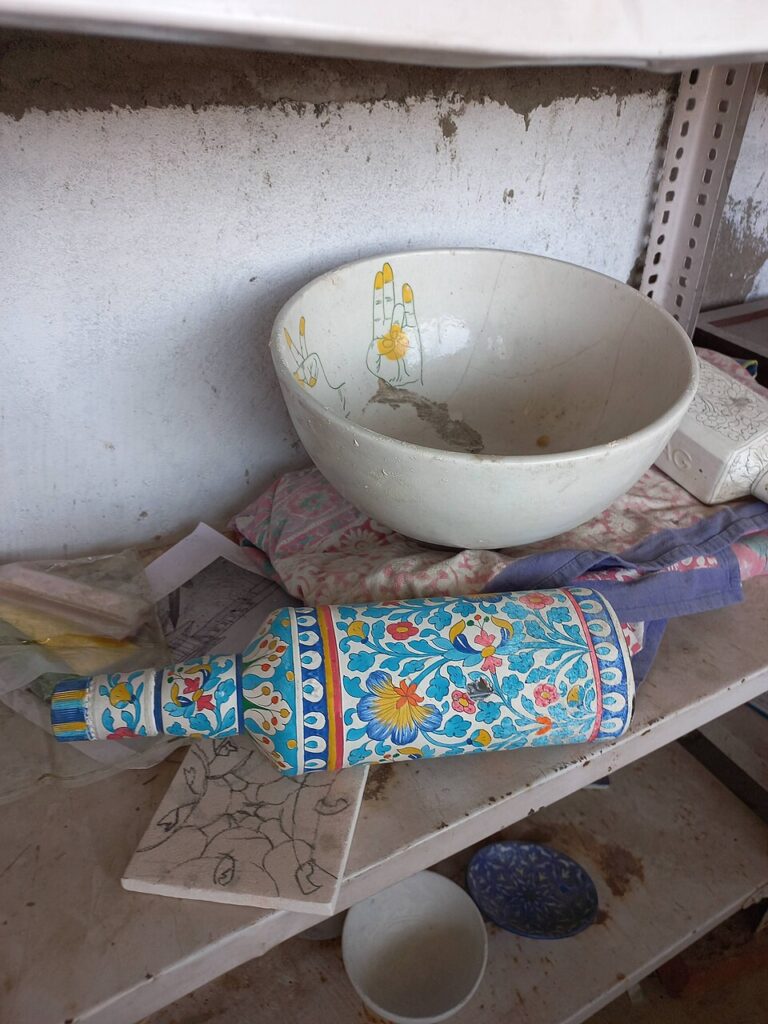
How to choose an authentic heritage workshop
Ask who teaches the session and how the studio is connected to practising artisans. Look for process transparency rather than grand claims. A meaningful class pays for skilled time, not just a painted souvenir, so the cheapest listing is not automatically the most responsible choice.
Also ask whether your payment goes directly to the studio or through several intermediaries. Marketplaces can be useful, but booking directly may give you clearer answers about the artisan, group size and delivery. Whichever route you use, keep the confirmation and agreed inclusions.
Frequently asked questions
How much do pottery classes cost in Jaipur?
Current online examples checked in August 2026 start around ₹1,200 for a one-hour beginner wheel session and ₹1,500 for ninety minutes. A four-session kids programme and one premium blue pottery workshop were listed around ₹5,000, while a nine-session beginner course was ₹11,000. Private tourist experiences can cost more. Always confirm firing, glazing, tax and courier charges before comparing prices.
Which pottery class in Jaipur is best for beginners?
For a complete beginner who wants to try the wheel, a 60- to 90-minute instructor-led session is the easiest start. Choose a studio that states the age rule, batch size, wheel access and firing policy. If your goal is to make pots independently, move to a structured multi-session course after the trial.
Are there pottery classes for kids in Jaipur?
Yes. Jaipur studios offer dedicated kids programmes, supervised wheel sessions, hand-building and pot painting. Clay Botik currently publishes a four-session course for ages five to twelve and a supervised one-hour wheel option from age six. Age policies vary, so confirm the child’s age, parent-participation rule and instructor-to-child ratio.
Can I take my pot home on the same day?
Usually not if it is wet clay and you want a durable ceramic piece. It needs to dry and be fired, and glazing may require a second firing. Jaipur providers commonly quote around two to three weeks. Some blue pottery workshops allow you to take a painted but unglazed item immediately, while a glazed finished piece is delivered later.
Is Jaipur blue pottery made from clay?
Traditional Jaipur blue pottery is known for a quartz-based body rather than ordinary potter’s clay. It is commonly shaped in moulds, refined, painted, glazed and low-fired. A blue pottery workshop is therefore different from a wheel pottery class using ceramic clay.
Choose the class that matches the memory—or skill—you want
The best pottery classes in Jaipur are not necessarily the longest or most expensive. They are the ones that match your real goal. Book a short wheel session if you want the delight of making something for the first time. Choose hand-building for a younger child or a mixed-age family. Commit to a course if you want technique. Pick an artisan-led blue pottery workshop if you want to understand a craft that belongs specifically to Jaipur.
Before paying, confirm the format, age rule, group size, firing, delivery and cancellation terms. That five-minute check prevents most disappointments. Then wear clothes you can get muddy, arrive a little early and let the first pot wobble—it is part of learning.
For more local ideas, explore our related guide to kids activities in Jaipur or use MagickGuide’s Jaipur creative classes category to compare age, area and workshop format when those pages are live.