Choosing the best time to visit Leh Ladakh is not simply a matter of finding the warmest month. A pleasant afternoon in Leh does not guarantee that the Manali–Leh Highway is open, that a night beside Pangong Lake will feel comfortable, or that a newly arrived traveller is ready to cross a 5,000-metre pass.
The right month depends on three things: how you plan to reach Leh, what you want to experience, and who is travelling with you. A biker starting from Delhi needs a later and more reliable road window than a couple flying into Leh. A family with children needs more acclimatisation time than a rushed weekend itinerary usually allows. And someone hoping to see snow on a mountain pass does not necessarily need to face Ladakh in deep winter.
This Leh Ladakh travel guide compares weather, highway access, snowfall, crowds and family comfort month by month. It also explains the best time to visit Pangong Lake and Nubra Valley, how many days to keep, and what to verify before leaving home.
Quick answer: For most first-time travellers, mid-June to late September is the best time to visit Leh Ladakh. June offers a good balance of open routes, long days and snow remaining on higher passes. September is better for thinner crowds, crisp views and calmer sightseeing, although nights are colder. For a family trip, late June to early September is the most forgiving window. For a road trip or bike ride, late June to mid-September gives a better safety margin than planning around an estimated highway-opening day.
The best month for Leh Ladakh depends on your trip
There is no honest one-month answer that works for everyone. Use this decision table before looking at flight prices or tour packages.
Your priority
Best practical window
Why it works
What to watch
Best overall first trip
Mid-June to September
Main sights and tourist services are usually operating
Peak crowds in July–August; cold nights everywhere
Best month for most first-timers
June
Long days, improving road access and snow at high passes
Do not assume both highways will open on the same date
Best for fewer crowds and photography
September
Clearer-looking skies, harvest colours and quieter roads
Shorter days and colder evenings
Best time for a family trip
Late June to early September
More dependable access and relatively milder nights
Keep 48 hours in Leh before higher excursions
Best time for a Leh Ladakh road trip
Late June to mid-September
Both approach highways are more likely to be operational
Landslides, water crossings and temporary closures remain possible
Best time to visit Leh Ladakh by bike
Late June to mid-September
Better chance of cleared passes and functioning roadside services
Avoid building the plan around the first opening announcement
Best for visible snow without deep-winter travel
Late May to June
Snow walls or snow patches often remain near high passes
Road access can still be uncertain in May
Best time for active snowfall
December to February
Strongest chance of wintry landscapes and fresh snow
Fly in; expect severe cold, delays and limited services
Best time for Pangong Lake and Nubra Valley
June to September
Best balance of road access, stays and manageable conditions
Pangong nights can be near freezing even in the main season
If your dates are flexible, choose the experience first and the month second. Booking early June because a blog promises that a highway “opens every year” on a particular date is a fragile plan. Snow clearance, avalanches and fresh weather systems can move that date by days or weeks.
Leh Ladakh weather month by month
Leh is a high-altitude cold desert at roughly 3,500 metres. It can feel warm in direct sun and cold as soon as the light fades. Nubra’s lower settlements may be warmer than Leh during the day, while Pangong Lake, Chang La and exposed passes can be much colder and windier.
The table below gives rounded planning ranges for Leh town, not a forecast or a promise. Different weather datasets use different stations and averaging periods, which is why exact figures vary across travel websites. Check the IMD Met Centre Leh shortly before departure and treat the forecast for Leh as only one part of the picture.
Month
Typical Leh daytime
Typical Leh night
Access picture
Best suited to
January
-3°C to 2°C
-15°C to -10°C
Leh generally reached by air; highways closed
Experienced winter travellers, snow landscapes
February
0°C to 5°C
-12°C to -7°C
Air access; weather delays possible
Winter photography and specialist trips
March
5°C to 10°C
-7°C to -2°C
Approach highways normally closed
Quiet Leh stay, late-winter scenery
April
10°C to 15°C
-2°C to 3°C
Fly-in season; internal access can change
Apricot blossom areas, fewer visitors
May
15°C to 20°C
2°C to 7°C
Srinagar route may begin opening; Manali route often uncertain
Fly-in trips, snow near passes
June
20°C to 25°C
7°C to 12°C
Main road season develops
First trips, families, road journeys after verification
July
22°C to 27°C
10°C to 15°C
Broadest access, busiest period
Families, trekking, rafting and biking
August
21°C to 26°C
9°C to 14°C
Main routes usually active
Complete circuits, festivals and longer trips
September
18°C to 23°C
5°C to 10°C
Good road window in a normal year
Photography, quieter trips and bike rides
October
10°C to 16°C
-1°C to 5°C
Services thin out; closures become more likely
Autumn colour and cold-tolerant travellers
November
5°C to 10°C
-8°C to -2°C
Land routes close or become unreliable
Quiet fly-in visits with flexible plans
December
-1°C to 5°C
-13°C to -7°C
Air is the practical entry; winter disruptions
Snow seekers prepared for severe cold
April and May: beautiful, quiet and still transitional
April can be rewarding for travellers who are happy to stay flexible. Leh is waking from winter, visitor numbers are low, and lower valleys may show spring and apricot blossom. However, this is not the month to assume that a full Manali–Leh–Pangong–Nubra circuit will work exactly as planned. Many seasonal camps and roadside facilities may still be closed.
May is warmer in Leh, but “Leh is accessible” and “every Ladakh route is open” are not the same statement. Flying into Leh can work well. Road travellers should wait for official confirmation and recent on-ground reports rather than relying on the previous year’s opening date.
June to September: the main Leh Ladakh trip season
This is the best season for Leh Ladakh for the largest number of travellers. Days are longer, accommodation outside Leh is easier to find, and the major tourist circuits are generally at their most accessible.
June is the strongest all-round choice if you want some snow on high passes without accepting winter conditions. July and August bring the warmest nights and the widest range of services, but they also bring school-holiday crowds. Ladakh lies in a rain-shadow region, yet that does not remove weather risk: intense local rain can cause mudslides, and the approach roads through Himachal Pradesh and Kashmir can be affected by the wider Indian monsoon.
September is the quiet favourite. The light is often sharp, tourist traffic drops, and most summer services are still available in the first part of the month. Pack for much colder mornings and nights, especially at Pangong and on exposed routes.
October and November: autumn colour with shrinking margins
Early October can be striking around Leh and the Indus Valley, where poplar and willow trees turn gold. It can also be a good value period. The trade-off is less operational certainty: guesthouses and camps begin closing, water can freeze overnight, and early snow may temporarily block passes.
November is not a conventional sightseeing month. Leh can still be reached by air when flights operate, but a tightly scheduled circuit is a poor fit. Choose it only if you are comfortable with sub-zero nights and last-minute changes.
December to March: Leh Ladakh in winter
Winter is a different journey, not a cheaper version of summer. The two land highways are normally unavailable, many seasonal businesses close, and internal passes may shut temporarily after snow. Flights can also be delayed or cancelled.
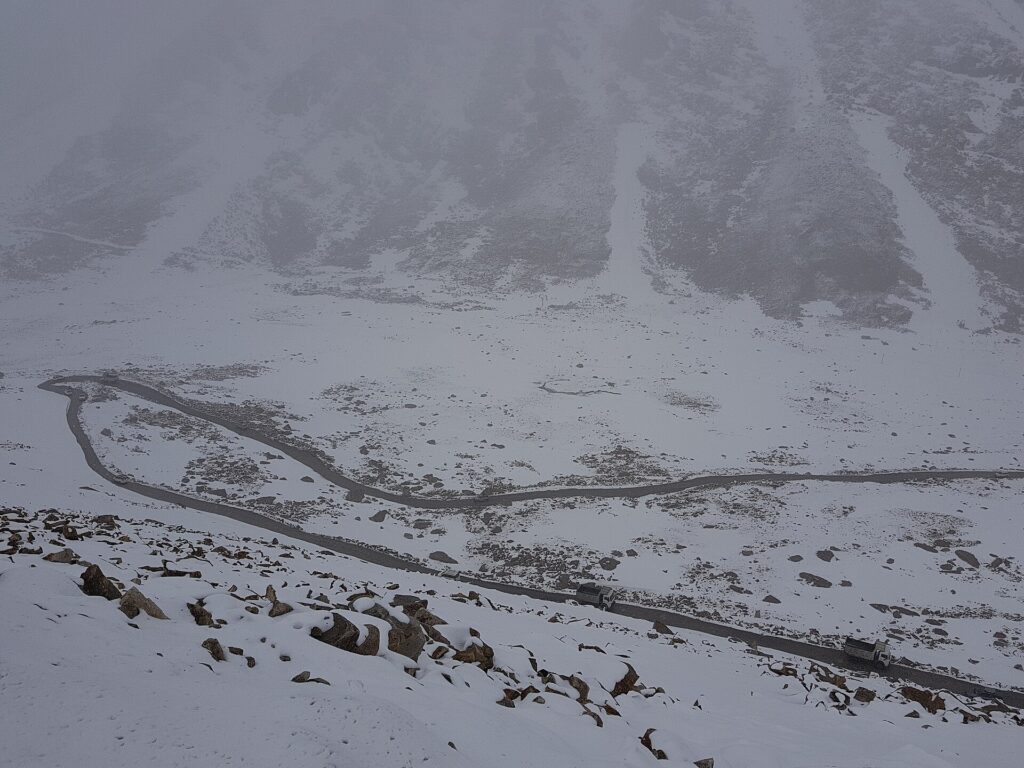
The Leh Ladakh snowfall season broadly runs from late autumn into early spring, but snowfall is an event, not an appointment. December to February offers the strongest chance of a snow-covered trip; no date guarantees that snow will fall while you are there. If you simply want to see snow, late May or June at a cleared high pass is usually easier than a deep-winter holiday.
Best time for a Leh Ladakh road trip, bike trip or journey from Delhi
Road access is the part most often oversimplified online. The District Leh “How to Reach” page gives broad annual operating windows: the Srinagar–Leh Highway generally runs from May towards November or December, while the Manali–Leh route generally runs from May or June to September or October. These are seasonal ranges, not guaranteed opening and closing dates.
Manali–Leh Highway opening time
The Manali approach crosses several high sections where snow clearance and fresh weather dictate access. Even after the road is declared open, early-season travel can involve snowmelt, water crossings, rough patches and limited facilities.
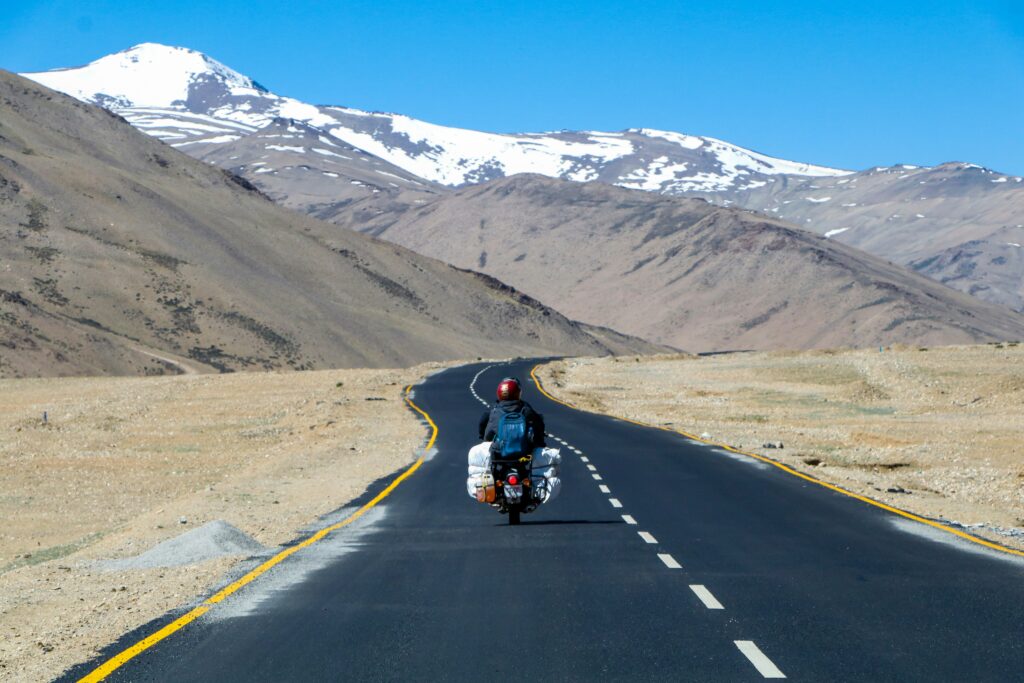
For most holidaymakers, late June to mid-September is a more dependable Manali–Leh window than late May or the first opening week. Build at least one buffer day into the road portion. On a bike, use a well-maintained machine, carry puncture and basic repair support, start early, and do not let a pre-paid booking pressure you into riding through unsafe weather.
Srinagar–Leh Highway opening time
The Srinagar–Kargil–Leh route often becomes usable earlier and stays operational later than the Manali route, but Zoji La remains weather-sensitive. The route also gains altitude more gradually than a direct flight from Delhi. That may make the journey feel less abrupt, but it does not make anyone immune to altitude illness.
An overnight stop around Kargil is far more sensible than trying to turn the route into one exhausting push. Always check the latest local traffic controls, weather and road status before starting.
Best time to visit Leh Ladakh from Delhi
From Delhi, your best window changes with the transport:
By flight: June to September is easiest for a classic first trip. Flights serve Leh outside summer too, subject to weather, but winter needs a flexible schedule.
By road via Manali: Aim for late June to mid-September and verify the current status. Allow at least two days from Manali to Leh rather than racing across high passes.
By road via Srinagar: June to September is the simplest shared window for a full circuit. Travel via Kargil and keep a disruption buffer.
For a Delhi–Srinagar–Leh–Manali loop: Keep 12 to 14 days if possible. A shorter plan tends to sacrifice acclimatisation, rest or weather flexibility.
Best time to visit Pangong Lake, Nubra Valley and Ladakh with family
Pangong Lake
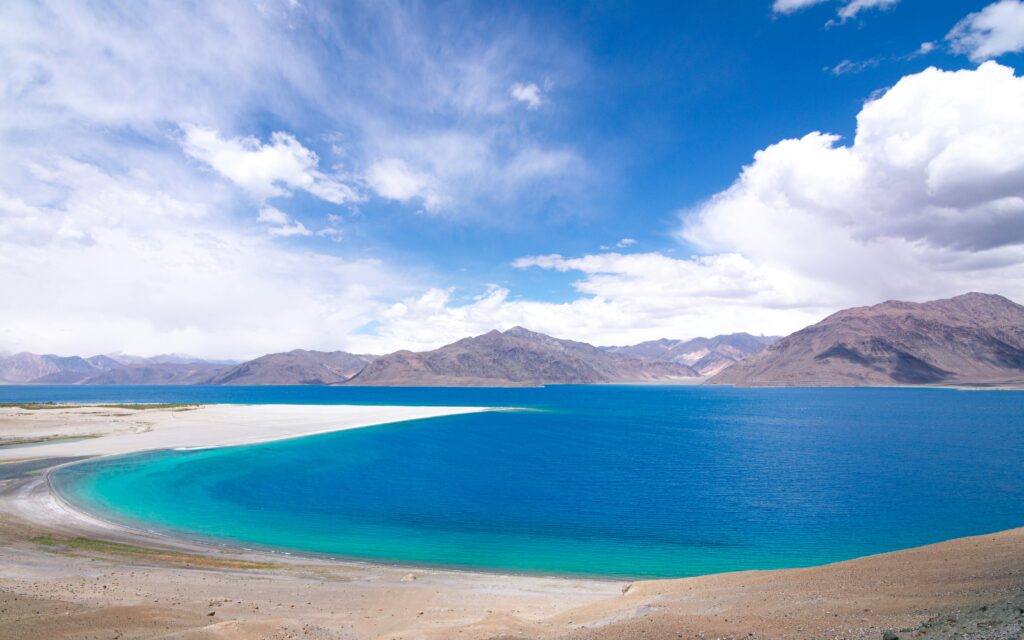
The best time to visit Pangong Lake is June to September for the most practical balance of access, open accommodation and manageable weather. May and October can work, but nights are much colder and services are less predictable. Winter visits are specialist trips; Chang La can close temporarily after snowfall.
Pangong is above 4,200 metres, noticeably higher than Leh. A first-time visitor should not land in Leh and rush there the following morning. The cold, wind, long drive and higher sleeping altitude make that a poor start even when the road is open.
Nubra Valley
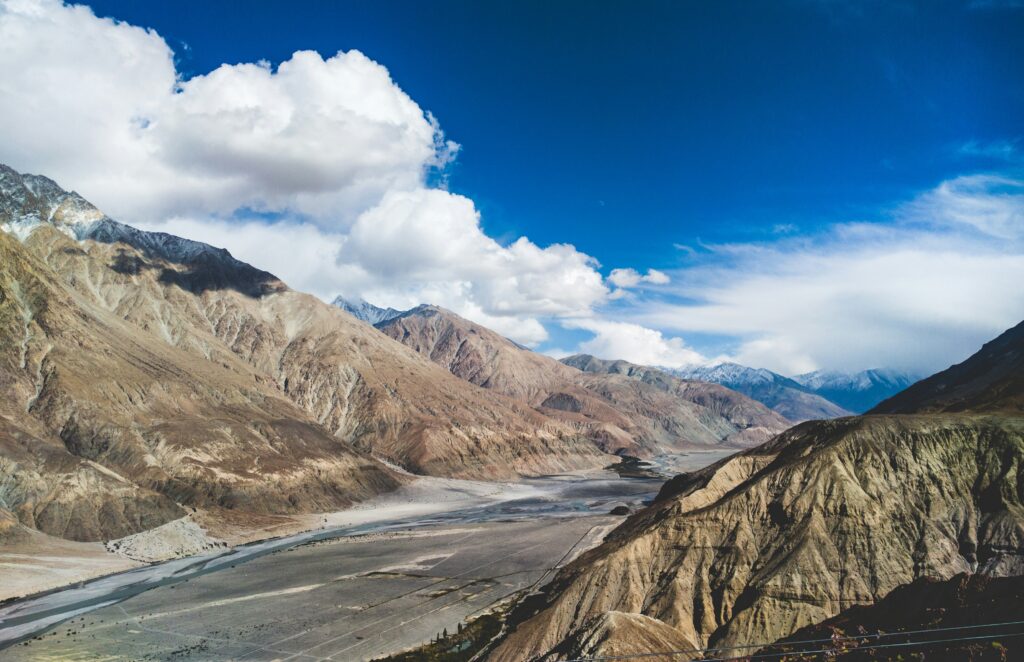
The best time to visit Nubra Valley is also June to September. Some lower villages can feel surprisingly warm in summer, while Khardung La or other approach roads remain cold and exposed. May is possible after route verification, and September is excellent for quieter stays.
For a first trip, Nubra generally fits before Pangong because many inhabited parts of the valley sit lower than Leh and Pangong. That does not remove the need to acclimatise before crossing a high pass.
Best time for a family trip to Leh Ladakh
For most families, late June to early September is the safest planning window—not because altitude disappears, but because weather, accommodation and transport are usually easier to manage. July and August give comparatively milder nights but heavier crowds. Late June and early September offer a useful compromise.
The official Leh tourist management portal advises at least 48 hours of acclimatisation in Leh before travelling to higher-altitude areas. The CDC’s high-altitude guidance also stresses gradual ascent and notes that fitness does not protect a person from acute mountain sickness. Children are susceptible too and may struggle to describe headache, nausea or unusual fatigue.
For children, older adults, pregnant travellers, or anyone with heart, lung or significant medical conditions, discuss the itinerary with a doctor who understands high-altitude travel. Do not start acetazolamide or any other medicine on the strength of a blog post. If anyone develops symptoms, do not travel higher; worsening breathlessness at rest, confusion, poor coordination or severe weakness needs urgent medical attention and descent.
A family-friendly sequence looks like this:
Arrive in Leh and rest.
Spend a second night in Leh with only gentle local activity.
Use day three for an easy Indus Valley outing if everyone is symptom-free.
Visit Nubra for one or two nights.
Add Pangong only if every traveller is coping well; consider skipping the overnight stay for a child or adult who is not comfortable.
Return to Leh with a spare day before the flight.
How many days are enough for Leh Ladakh?
Eight to nine days are enough for a sensible first fly-in trip covering Leh, Nubra Valley and Pangong Lake without making every day a race. Seven nights can work as a minimum, but a weather or health delay leaves little room. A Delhi road journey usually needs 10 to 14 days, depending on whether it is one-way, a loop, or includes rest days.
Here is a balanced nine-day outline:
Day
Plan
Why it is paced this way
1
Fly to Leh; complete rest
Abrupt arrival at about 3,500 m
2
Gentle Leh day; no higher excursion
Completes the core 48-hour acclimatisation period
3
Easy Indus Valley sights; sleep in Leh
Tests how everyone feels without a high sleeping altitude
4
Leh to Nubra
First major high-pass drive after acclimatisation
5
Nubra Valley
Breaks up long driving and supports local exploration
6
Nubra to Pangong, only if well
Long, remote day; keep an alternative plan
7
Pangong to Leh
Return to better services and lower sleeping altitude
8
Buffer/rest day in Leh
Absorbs weather, road or fatigue delays
9
Fly out
Avoids connecting an inflexible major event too tightly
Checks to make before booking and again before departure
Ladakh changes too quickly for a single evergreen article to replace live checks. Use these authoritative resources:
Leh District Tourist Management System for the current fee, registration and protected-area workflow. Terminology and requirements can differ by nationality and route, so follow the portal rather than an old blog.
Border Roads Organisation and current district or police advisories for snow-clearance and road-related updates.
Confirm road status again 24 to 48 hours before each long sector through your accommodation, registered driver or local authority. “Open” can still mean regulated traffic, temporary stoppages or difficult surface conditions.
What to pack in every season
Even in July, pack in layers: a breathable base, warm mid-layer and windproof outer shell. Add UV-protective sunglasses, high-SPF sunscreen, lip balm, a hat, gloves, a reusable water bottle and any prescribed medicines. Keep identity documents, offline copies of bookings, cash for remote areas and a power bank. For May, September and October, upgrade the cold-weather layers rather than trusting Leh’s daytime forecast.
Frequently asked questions
Which month is best for Leh Ladakh?
June is the best all-round month for many first-time travellers because days are long, tourist services are returning and snow often remains at high passes. September is a better choice if you prefer fewer crowds and clearer-looking landscapes, but expect colder nights. Always confirm road access for the exact year.
Is Leh Ladakh open throughout the year?
Leh is generally reachable by air throughout the year when weather permits. The Manali–Leh and Srinagar–Leh highways are seasonal, and internal high passes can close temporarily after snow or landslides. So Leh may be accessible while your planned road circuit is not.
What is the best time to visit Leh Ladakh for snowfall?
December to February gives the strongest chance of a properly wintry, snow-covered Ladakh, but fresh snowfall cannot be guaranteed for specific dates. For an easier holiday with snow visible on high passes, choose late May or June after roads have officially opened.
What is the best time for a family trip to Leh Ladakh?
Late June to early September is the most practical family window. Roads and stays are more likely to operate, and nights are less severe than in the shoulder months. Keep at least 48 hours in Leh before going higher and add a buffer day.
How many days are enough for Leh Ladakh?
Keep eight to nine days for a first trip by air covering Leh, Nubra and Pangong. Allow 10 to 14 days for a road trip from Delhi. Anything shorter usually cuts acclimatisation or leaves no space for weather disruptions.
Final recommendation
For a first visit, choose mid-June to September, spend your first two nights in Leh, and keep one uncommitted day before the return journey. Pick June for the broadest mix of summer access and snow near the passes; pick September for quieter roads and sharper landscapes. Then verify the weather, highways and current tourist requirements shortly before you travel.
Your next useful step is to build an eight- or nine-day itinerary around that window, rather than trying to squeeze Ladakh into the shortest possible leave plan.