Travelling from Delhi to Kasauli: Distance Guide
Delhi to Kasauli is roughly a 300–325 km road journey, depending on your starting point, route and accommodation; allow around seven hours, with extra time for breaks or delays. Uber lists an average journey of 301 km and seven hours, while Himachal Pradesh Tourism Development Corporation gives a broader distance of 325 km. This guide explains the route, transport choices, last-mile connections and practical checks that make planning easier. (uber.com)
What is the Delhi to Kasauli distance by road?
The Delhi to Kasauli distance by road is approximately 300–325 km, rather than one fixed figure that applies to every traveller. Published estimates differ: Uber gives an average of 301 km, HPTDC lists 325 km, and FlixBus describes its service as approximately 326 km. Use these as planning references, then calculate the journey between your actual pickup address and your hotel. (uber.com)
That distinction matters when comparing the New Delhi to Kasauli distance with a quote starting elsewhere in the capital. Before accepting a distance or fare estimate, check whether its origin is your home, a railway station, a bus boarding point or simply a city-centre marker. For a useful comparison, enter the same starting and finishing addresses every time.
The distance from New Delhi to Kasauli should also end at the property you have booked, not automatically at the town centre. Ask your host for the vehicle entrance pin and any approach instructions before departure. This avoids planning around a destination marker that does not match where you need to unload your bags.
Treat driving time as a planning range
For the Delhi to Kasauli distance by car, around seven hours is a sensible starting allowance, consistent with Uber’s published route average. Do not treat that as a guaranteed arrival time: the operator explicitly notes that traffic and other conditions can change the duration. Build your meal stops and arrival arrangements around a flexible window rather than a deadline. (uber.com)
If an accommodation check-in, taxi connection or evening activity depends on your arrival, leave additional margin. A shorter journey is a pleasant bonus; a schedule that requires every stretch to run perfectly is harder to rescue. Keep the first afternoon lightly planned so that a delay does not undermine the whole break.
Reading the Delhi to Kasauli map and choosing a route
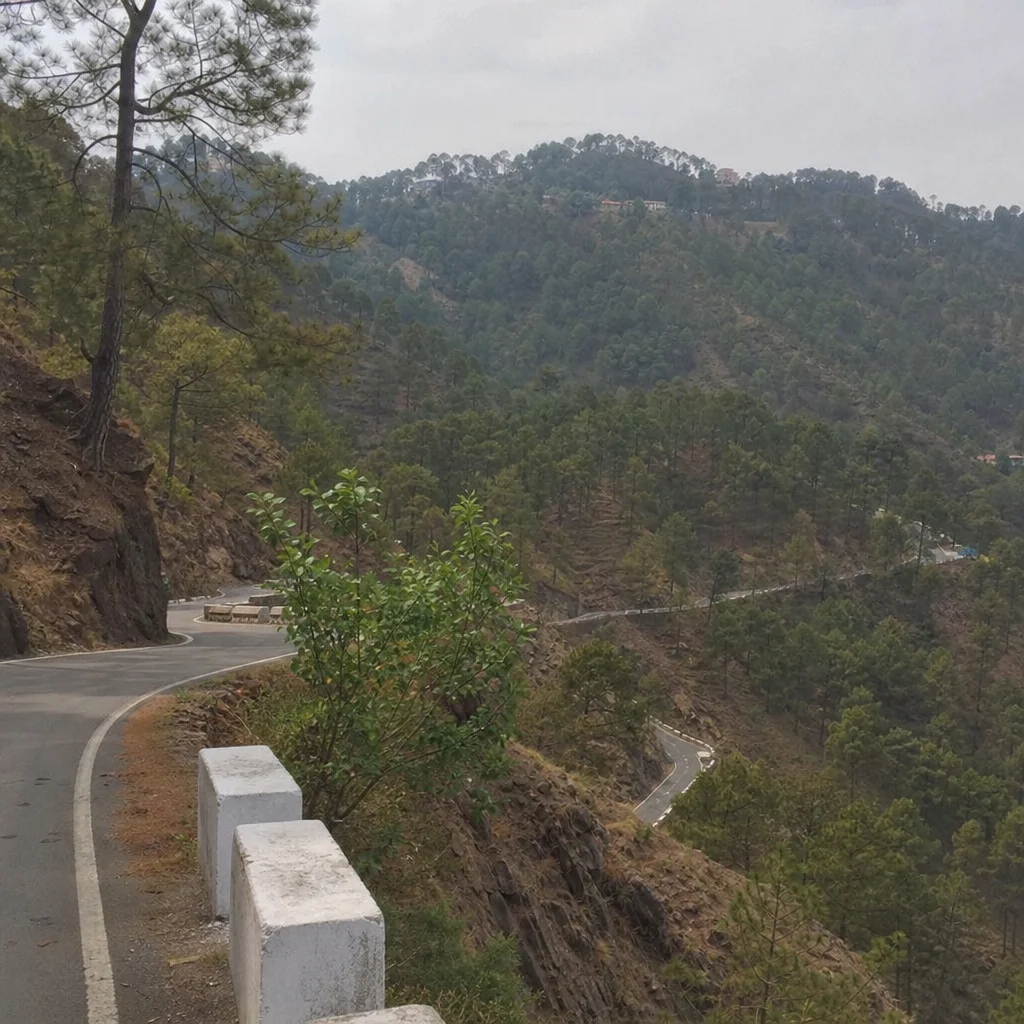
A commonly used road corridor runs north from Delhi through the Ambala and Zirakpur area, towards Kalka and Parwanoo, before the approach through Dharampur to Kasauli. A Kasauli accommodation provider describes the main route as Delhi–NH44–Zirakpur–Kalka–Dharampur–Kasauli. Delhi Tourism also confirms that Kasauli is reached by a branch road from the Kalka–Shimla route. (kasaulihillsresort.com)
Think of your Delhi to Kasauli map as a door-to-door planning tool, not just a line between two place names. Set your departure time, add the correct hotel entrance and review the final approach before you start. Ask your host whether the suggested road is suitable for your vehicle, especially if navigation offers several alternatives near the property.
A useful route overview is:
Delhi → Panipat → Karnal → Ambala → Zirakpur/Panchkula area → Kalka/Parwanoo corridor → Dharampur → Kasauli. This reflects the main highway approach described by accommodation and local travel providers; the precise alignment should follow current navigation and official traffic instructions. (trekgo.in)
The main approach through Ambala
For a straightforward journey, use the main corridor as your baseline when comparing navigation options. Save one possible refreshment stop and identify a second place where you could pause if the driver needs a break sooner. Avoid filling the route with compulsory stops: each should serve a purpose rather than turn the transfer into an overpacked itinerary.
Before leaving Delhi, check the whole journey rather than only the first section. If the route changes significantly while you are travelling, ask a passenger to review it or stop safely before checking your phone. Do not make a hurried turn simply because a recalculation promises a small saving.
For families, agree in advance whether the priority is fewer stops or a more relaxed pace. One substantial breakfast break may suit some groups, while others will prefer shorter pauses. Either approach works better when the driver is not expected to recover the time afterwards.
A Chandigarh stop should be intentional
Include Chandigarh if you genuinely want to visit, collect someone or break the journey there. Add the exact address as a waypoint and compare that itinerary with the direct hotel route. Do not assume that every journey labelled “via Chandigarh” includes the same roads or takes the same time.
If your only aim is reaching Kasauli, compare routes without adding a city-centre stop first. For a planned Chandigarh visit, allow separately for the visit itself, parking and getting back onto your onward route. Keep those hours distinct from your basic Delhi–Kasauli driving allowance.
Panchkula is not automatically a separate faster route
A route mentioning Panchkula can form part of the wider approach towards the Kalka–Shimla highway; a local accommodation provider lists Panchkula, Pinjore, Kalka and Dharampur in its directions. It is therefore more useful to compare actual road alignments than to rank route names alone. A label does not establish that one option will be faster on your departure date. (gayatrilodge.com)
Before choosing between alternatives, review:
- The complete journey: compare routes to your accommodation, not different destination markers.
- The final approach: send any unfamiliar alternative to your host for confirmation.
- Your reason for a detour: a collection or meal stop may justify it; a marginal predicted saving may not.
- Official instructions: follow closures, diversions and on-road directions rather than attempting to preserve the original route.
Planning your departure and breaks
Choose a departure that lets a rested driver complete the hill approach in daylight. An early start can be useful, but it should not come at the expense of sleep or require uncomfortable driving in poor visibility. Himachal Tourism specifically advises caution during monsoon driving because of slippery roads, landslides and rockfalls. (himachaltourism.gov.in)
Rather than treating one departure time as universally best, work backwards from a comfortable arrival window. Allow for loading, collecting passengers and the first break before deciding when everyone needs to be ready. If the plan only works by skipping rest or driving faster, revise the plan.
A practical outward journey has three parts: getting out of Delhi, covering the main intercity stretch and completing the final approach. Use the main stretch for a proper meal or comfort stop, then pause again before the hills if the driver needs to reset. Arriving relaxed is more useful than protecting an optimistic navigation estimate.
Keep frequently needed items in the passenger cabin rather than buried under luggage. Water, tissues, a light layer, charging cables and booking details should be reachable without unloading the boot. Ask passengers to mention discomfort early so you can find an appropriate stopping place rather than needing an abrupt halt.
For a weekend break, avoid committing to a tightly timed attraction immediately after arrival. Check in, eat and decide how everyone feels before heading out again. That gives you a workable first day even if the road journey takes longer than expected.
Comparing car, cab, bus and train
If you are deciding how to reach Kasauli from Delhi, compare the whole journey, including transfers, station access and hotel drop-off. The quickest intercity leg is not necessarily the simplest door-to-door option. Use the table as a shortlist, then obtain a date-specific quote or timetable.
| Option | Journey allowance or reference | Cost basis | Main decision point |
|---|---|---|---|
| Own car | Around seven hours as a road-planning reference, plus your stops | Fuel, tolls, parking and vehicle expenses | Maximum control, with driving responsibility |
| Intercity cab | Uber publishes an average of seven hours | Quote for your addresses and vehicle | Door-to-door travel without self-driving |
| Bus service | FlixBus lists a fastest journey of about 7 hours 20 minutes | Per-person ticket and any uncovered transfer | Check boarding and final drop arrangements |
| Train plus taxi | Roughly four hours on a Kalka Shatabdi, followed by road travel | Rail ticket, station access and onward taxi | Less intercity road travel, but a connection to manage |
The road, bus and rail references above come from Uber, FlixBus and Indian Railways respectively; they are not guaranteed door-to-door timings. Check the service details for your actual travel date. (uber.com)
For a group, compare the total payable amount before dividing it between travellers. For solo travel, calculate the public-transport ticket and final transfer together. This keeps the comparison fair without assuming that one mode is always cheapest.
How to reach Kasauli from Delhi by train?
To reach Kasauli from Delhi by train, book a service to Kalka, then arrange onward road transport to your accommodation. Incredible India identifies Kalka as Kasauli’s main railway access point, and Indian Railways lists New Delhi–Kalka Shatabdi services. There is no through rail journey into Kasauli town, so the final road connection belongs in your plan from the outset. (incredibleindia.gov.in)
Searching for the Delhi to Kasauli distance by train can therefore be misleading. You are comparing a rail leg to Kalka with a separate road leg, rather than choosing between two direct services to the same destination. Check the departure station, train duration, arrival time and onward pickup before deciding whether rail suits your trip.
Choose the arrival time as carefully as the train
Indian Railways’ published Shatabdi list shows New Delhi–Kalka journeys taking approximately four hours. Use that as an indication of the rail leg, then verify current timings and availability through the official booking or enquiry system. Do not build a transfer around an old timetable or assume that every Kalka-bound service has the same duration. (indianrail.gov.in)
When comparing departures, favour an arrival that leaves you comfortable time to find your driver and finish the road journey. Confirm which Delhi station appears on your ticket, and arrange your journey there separately. A convenient train is only useful if reaching its departure platform is manageable too.
Arrange the Kalka transfer before travelling
Send your driver or hotel the train number, scheduled arrival and property entrance pin. Ask where the driver will meet you, how a delay affects the booking and whether the quoted vehicle can carry all passengers and luggage. Keep the driver’s number somewhere accessible without relying solely on a booking app.
Treat short published Kalka-to-Kasauli transfer estimates cautiously. A local lodge gives approximately 25–30 km for the road connection, while another accommodation factsheet quotes around 40 km for its location. The practical lesson is to obtain a transfer estimate to your actual property rather than rely on one town-level distance. (gayatrilodge.com)
A straightforward rail plan is:
- Confirm the train: check the correct departure station, date, class and reservation status.
- Book the onward vehicle: provide passenger numbers and realistic luggage requirements.
- Agree the meeting arrangement: know where to go and whom to call after arrival.
- Allow for the connection: include getting off the train, reaching the vehicle and any delay.
- Plan the return independently: leave enough margin before the Kalka departure rather than assuming the outward transfer time will repeat.
Choose this option if you would rather spend the main intercity stretch on a train and are comfortable managing one planned transfer. If changing vehicles with luggage feels inconvenient, compare it against a direct cab before booking.
Taking a bus without overlooking the last mile
Bus travel deserves a close look at the ticket details, not just the destination name. FlixBus advertises Delhi–Kasauli services, a fastest journey of approximately seven hours and 20 minutes, and fares starting at ₹1,679 on its route page. These are published reference figures, not a promise for every date or departure. (flixbus.in)
An important detail is that its Kasauli stops are labelled “Drop by Cab” and “Pickup by Cab”. Before paying, establish how the bus and cab portions connect, what is included and where the final handover happens. A destination sold under one name should not be assumed to mean the same vehicle operates throughout. (flixbus.in)
Check these points for any operator:
- Boarding location: use the exact ticket address, not merely the neighbourhood name.
- Connection arrangements: establish who organises any onward vehicle and how passengers find it.
- Final drop: compare it with your accommodation entrance and arrange anything still missing.
- Luggage: check the allowance, especially when changing vehicles.
- Arrival arrangements: confirm whether your hotel can receive you at the expected hour.
For state-run alternatives, consult HRTC’s booking or enquiry service for your date and intended connection. Himachal Tourism identifies interstate buses as an access option from Delhi and neighbouring cities, but that does not establish a particular through service to your Kasauli accommodation. Verify the route and stopping point before purchasing. (himachaltourism.gov.in)
If considering a connection at Dharampur, confirm both legs rather than assuming an immediate onward departure. Ask what happens if the first bus is delayed and identify a fallback transfer. The cheaper ticket is only useful if the complete journey remains workable.
Booking a cab with a clear, comparable quote
A cab is worth considering when you want one planned pickup and drop-off without doing the driving yourself. Uber’s Delhi–Kasauli page publishes an average route price of approximately ₹4,247, while noting that prices vary. Treat that as an illustration, then request a quote using your actual addresses, travel date and preferred vehicle. (uber.com)
For any provider, ask for the complete payable amount rather than comparing headline prices alone. Clarify tolls, parking, waiting, additional stops and any other charges before confirming. If booking a return, establish whether the driver remains with you or whether it is a separate pickup.
Send the operator a practical brief: passenger count, luggage, collection time, accommodation pin and any accessibility needs. Ask for confirmation of the vehicle category rather than choosing solely by the number of advertised seats. Make sure the plan leaves room for bags as well as people.
Request the driver’s contact details before departure and share your hotel’s approach instructions. Agree where a break can fit without turning the journey into a rushed schedule. A clear booking reduces uncertainty; it does not remove the need to allow for weather and traffic.
Hill-road safety and seasonal checks
The final approach deserves more attention than its share of the total distance might suggest. Delhi Tourism describes Kasauli as a branch-road destination, while Himachal Tourism warns that monsoon travel can involve slippery conditions, landslides and rockfalls. Prepare for the hill section as a distinct part of the journey, not simply the last few kilometres to finish quickly. (delhitourism.gov.in)
Prepare the driver and vehicle
Before setting off, arrange appropriate checks for tyres, brakes, lights and wipers. Read the vehicle’s guidance for gradients and make sure the driver is comfortable with its controls. If hill driving is unfamiliar, consider booking an experienced driver rather than using the holiday transfer as a lesson.
Keep the driving plan conservative: leave room around other vehicles, avoid overtaking where you cannot see clearly and stop only where it is safe to do so. Ask passengers to handle navigation and calls. If tiredness or discomfort develops, pause rather than trying to preserve the arrival estimate. These precautions support Himachal Tourism’s advice to drive cautiously in challenging conditions. (himachaltourism.gov.in)
Check warnings, not just a weather symbol
Before departure, review India Meteorological Department warnings and updates from Himachal Pradesh’s disaster-management authorities. Check the relevant route and district information rather than relying only on a weather forecast for the hotel. Keep enough flexibility to delay the journey if official advice warrants it. (mausam.imd.gov.in)
Do not drive through floodwater or approach a landslide area to inspect it. Government disaster guidance advises against driving through flooded areas, and the Geological Survey of India advises staying away from slide areas. Follow instructions from the authorities managing the incident instead of attempting an improvised diversion. (sdma.maharashtra.gov.in)
Verify road status close to departure
A general distance guide cannot certify that the route will be open when you travel. Check official traffic advisories shortly before departure and review them again if conditions deteriorate. Your hotel can help clarify the immediate approach, but a local reassurance should not override an official closure or warning.
NHAI’s Himachal Pradesh advisory asks travellers to exercise caution during heavy rainfall and follow official traffic guidance. For emergencies on National Highways, it identifies 1033 as the National Highway Helpline. Save relevant contacts before leaving, alongside your accommodation and transport details. (pib.gov.in)
Building a realistic travel budget
Compare costs on the same basis: one-way, door-to-door, for everyone travelling. List the components of each option before deciding which offers better value. This prevents a low intercity fare from obscuring an expensive transfer or a convenient cab quote from being compared with rail tickets alone.
For your own car, budget for fuel, tolls, parking and any journey-specific vehicle costs. For public transport, include travel to the station or boarding point, the ticket and the final connection. For a cab, confirm what the quoted total covers and what remains payable separately.
Use this simple comparison:
Complete one-way cost ÷ number of travellers = comparable cost per person.
Add a small contingency appropriate to your budget for delays, an extra meal or a changed transfer. Keep that separate from money reserved for accommodation and the return journey. You do not need to spend it; its purpose is to give you options when plans change.
Consider convenience alongside the total. A modest saving may not be worthwhile if it creates several unconfirmed connections with heavy luggage. Equally, a well-arranged train-and-taxi journey may fit your preferences better than spending the entire transfer in a car.
Arrival, parking and the return to Delhi
Kasauli rewards a slower pace once you arrive. Delhi Tourism notes traffic restrictions around the Mall roads, while Incredible India highlights the town’s walking opportunities. Confirm parking and unloading arrangements with your accommodation rather than assuming you can drive directly to every place you intend to visit. (delhitourism.gov.in)
Ask your host how far the room is from the unloading point, whether there are steps and whether help with luggage is available. Mention mobility requirements before booking, not on arrival. For any later taxi journeys, agree collection arrangements in advance instead of assuming an on-demand car will be immediately available.
The Kasauli to Delhi distance is broadly comparable with the outward road journey, but plan the return as a fresh trip. Recheck your route, departure time and final Delhi address. If travelling via Kalka, preserve a comfortable margin before the train rather than using the shortest possible road-transfer estimate.
Before leaving the hotel, complete a final check:
- Save the return ticket or cab confirmation and verify the date.
- Confirm the pickup location with the driver, especially if parking is elsewhere.
- Check official warnings and any approach-road instructions.
- Keep water, charging cables, identification and booking details accessible.
- Tell anyone meeting you in Delhi that the arrival time remains an estimate.
FAQ: fitting the journey into a short break
Can you visit Kasauli from Delhi and return the same day?
It is possible to plan, but an overnight stay is the more comfortable choice for most leisure trips. With a published average of around seven hours each way by cab, a same-day return could involve approximately fourteen hours on the road before breaks or sightseeing. That leaves little room to enjoy the destination or absorb delays. (uber.com)
For a short break, prioritise one easy activity after arrival and leave the following morning unhurried. Avoid combining an ambitious sightseeing list with a fixed, early return commitment. If one day is all you have, consider whether the journey itself leaves enough time for the experience you want.
Plan the complete journey, not just the kilometres
The most useful answer to how to go to Kasauli from Delhi is the option that fits your group, budget and comfort with driving or transfers. Use the published distances as a starting point, then confirm the actual route, final approach and total cost. Leave room for breaks and changing conditions, and make the journey part of a relaxed break rather than a race to check in.