
Places to Visit in Jibhi: 12 Beautiful Stops and a Practical 1–3 Day Plan
Jibhi looks small on a map, which is exactly why it is easy to plan badly. A waterfall may be a short village walk, while a lake mentioned in the same list involves a mountain drive and a roughly 10 km return hike.
This guide sorts the places to visit in Jibhi by the effort they actually require. Start with the waterfall and streamside walks in the village. Add Chehni Kothi or Shoja if you have half a day. Reserve a clear, unhurried day for Jalori Pass and either the Serolsar Lake trek or the Raghupur Fort trek. With a third day, explore the neighbouring Tirthan side.
You will find realistic 1, 2 and 3 day plans, family alternatives and a weather backup. Trail lengths and driving times are estimates; confirm current access locally.
Start here: which Jibhi sights fit your time and energy?
The best places to visit in Jibhi for a first trip are Jibhi Waterfall, the village stream and Mini Thailand. If you have a second day and the road is open, add Jalori Pass, then choose one walk from the pass. Chehni Kothi is the strongest heritage detour; Tirthan Valley makes most sense as a separate outing.
Jibhi sits on the Banjar–Jalori road in Kullu district. Travellers often use “Jibhi” as shorthand for a much wider area, but the waterfall, the pass and the Tirthan River are not a single walking circuit. This matters when you are travelling with a child, an older parent or someone who does not want a full-day hike. The Himachal Tourism Kullu guide also identifies Shoja as a base for Jalori Pass and Serolsar Lake.
| Place | Where it fits | Effort from a Jibhi base | Allow in your schedule |
|---|---|---|---|
| Jibhi Waterfall | In or immediately beside the village | Short walk; steps and wet ground | About 45–90 minutes |
| Mini Thailand / Kulhi Katandi | Close to Jibhi | Short walk down to a stream; slippery rocks | About 45–90 minutes |
| Village stream and lanes | In Jibhi | Flexible, mostly easy walking | One relaxed hour or an evening |
| Shoja | On the road above Jibhi | Drive with short optional walks | A couple of hours or a café stop |
| Jalori Pass | Above Shoja | Steep mountain drive; walking optional | Half a day without a trek |
| Serolsar Lake | From Jalori Pass | Around 5 km each way on foot | Most of a day including the drive |
| Raghupur Fort viewpoint | From Jalori Pass | Roughly 2–3.5 km each way, route dependent | Half to most of a day with the drive |
| Shringa Rishi Temple and Chehni Kothi | Side road near Banjar | Drive, then an uphill village walk | About half a day |
| Tirthan River and Gushaini | Neighbouring Tirthan side | Separate valley drive and easy riverside stops | Half a day or more |
| Chhoie Waterfall | Tirthan side | Separate trail; conditions vary | Add only with time and suitable weather |
| GHNP visit via the Tirthan side | Beyond a casual Jibhi outing | Plan with park staff; permits for entry | Dedicated day or longer |
| Bahu village area | Offbeat detour above Banjar | Winding road and quiet village walking | Unhurried half day |
These are planning estimates, not official timings. The Raghupur route is reported at different lengths depending on the endpoint; follow signs and local advice.
If you have only one day: stay around Jibhi and choose one nearby detour. If you have two: spend one day in the village and one around Jalori Pass. If you have three: add the Chehni Kothi heritage walk or Tirthan Valley, depending on your interests. The detailed plans below make those choices easier.
Easy places to see in Jibhi itself
These are the Jibhi attractions that still work when someone in your group wants a slow day. You can usually combine two or three without needing to negotiate a long mountain transfer. They also make useful backups when cloud, rain or snow rules out a higher walk. “Easy” describes the time commitment, though; short trails can still have steps, uneven surfaces and slick stones.
1. Jibhi Waterfall: the simplest first stop
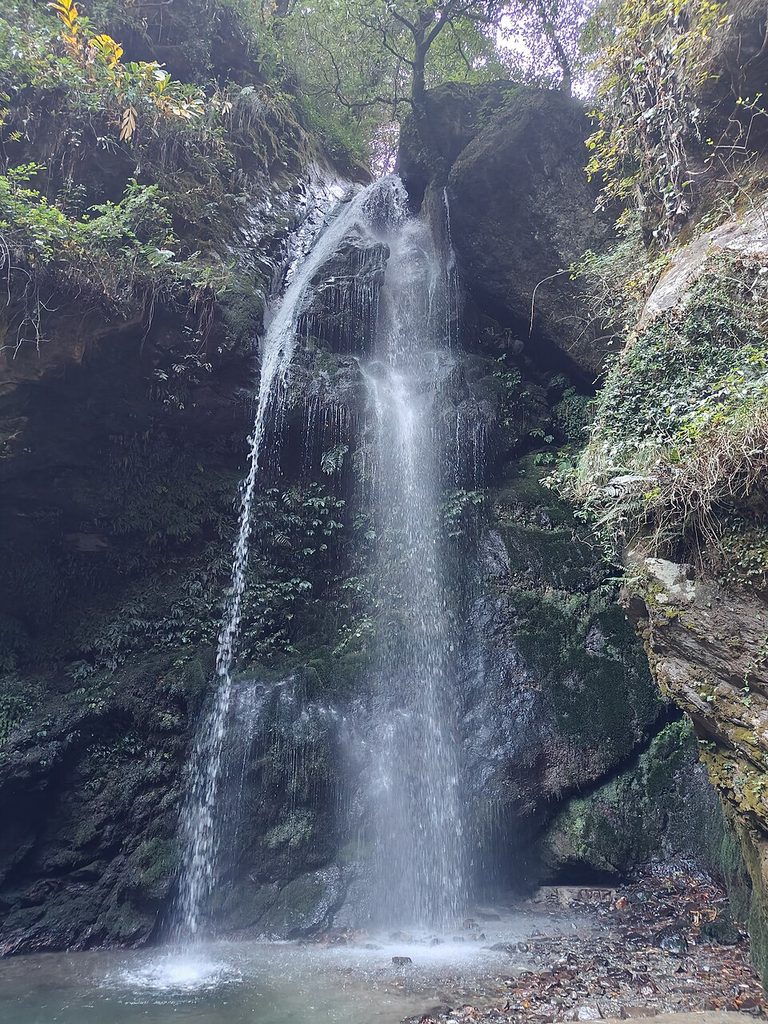
If you have arrived after a long journey, begin here. The wooded approach gives you a better sense of Jibhi than a photo from the road. Ask your host for the current entry point; there may be steps, bridges and damp patches close to the falls.
Go in daylight, wear shoes with grip and give yourself room to turn back if the path is crowded or muddy. The water volume varies greatly by season. A powerful waterfall after rain may look dramatic, but that is when wet rock and rising streams call for more caution. Keep children close and treat any barriers as the end of the visitor route. Do not assume there is safe swimming simply because you can see a pool.
Go early on busy weekends. If someone in your group dislikes steep steps, ask about the path before committing. Pair the waterfall with a café break and a village walk.
2. Mini Thailand, or Kulhi Katandi: a stream stop, not a swimming guarantee
The name “Mini Thailand” appears on many Jibhi sightseeing lists. It refers to a small stream and boulder setting often called Kulhi Katandi, rather than a developed attraction with controlled pools and lifeguards. The approach can involve a downhill forest path, and the rocks at the water’s edge may be slippery. Some descriptions call the walk short, but exact access changes with the entry point and weather.
Go to enjoy the shaded gorge and the sound of water. Keep your visit on firm ground, especially in the monsoon or after rain upstream. Children may want to jump between boulders; this is a good place to say no, even if other people are doing it. A short stop here plus Jibhi Waterfall makes a satisfying low-pressure first afternoon.
If the approach is muddy or there has been heavy rain, skip this stop. A river can look peaceful when the current is strong; see Himachal Tourism’s safety guidance.
3. Jibhi village, its bridges and the streamside lanes
Some of the best things to do in Jibhi do not need a named viewpoint. Walk a short stretch of the village, notice the wooden homes, find a place to sit near the stream and have a meal without rushing to the next stop. Choose a bank with a clear path back to the road, not a rock in the riverbed. After dark, carry a torch; small lanes and steps can be poorly lit.
Ask your accommodation whether the road to Jalori Pass is open and where to arrange a vehicle. Carry some cash; opening hours and digital payment availability change.
If you are choosing accommodation, ask two questions before you book: Can a vehicle reach the entrance? and How many steps are there from parking to the room? “Near Jibhi” can still mean an uphill walk with luggage. A beautiful treehouse is only a good family stay when everyone in your group can reach it comfortably.
Places to visit near Jibhi: passes, heritage and the Tirthan side
The most rewarding nearby places are not all on the same route. Jalori Pass, Shoja, Serolsar Lake and Raghupur Fort belong together geographically. Shringa Rishi Temple and Chehni Kothi fit a separate heritage outing near Banjar. Gushaini, Chhoie Waterfall and the Great Himalayan National Park approach belong on the Tirthan side. Grouping stops this way avoids repeated drives over winding roads.
4. Shoja: a quieter pause on the way up
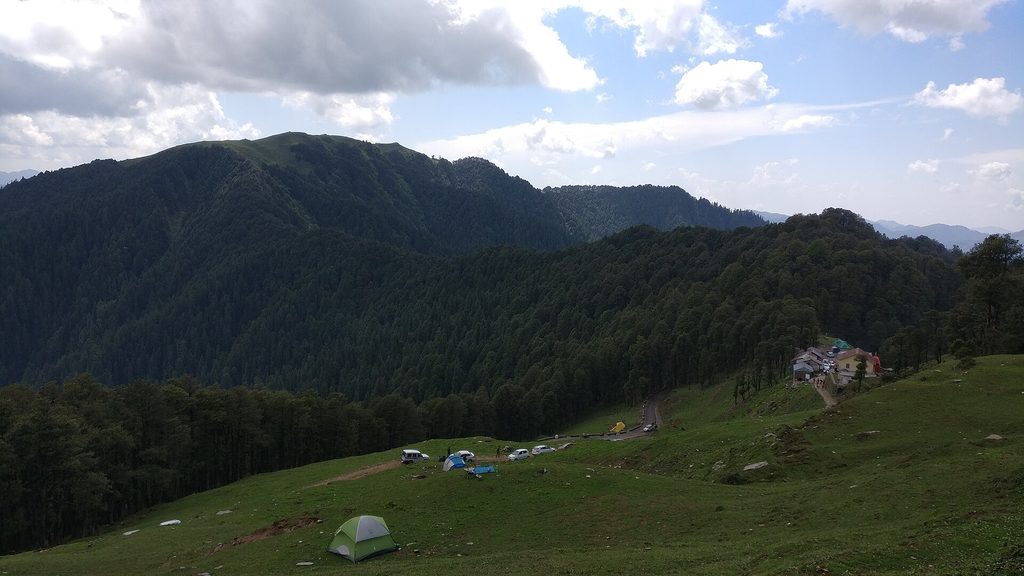
Shoja is a small mountain village above Jibhi on the road towards the pass. It works as a stop for a tea, a slow look across the valley or a stay if your main goal is to start early for Jalori. There is no need to invent a long list of “must-see” monuments here. The draw is the setting, the slower pace and easier access to the higher route when it is open.
The air can feel much colder than in Jibhi, so carry a layer even if you left in sunshine. If the pass road is uncertain, Shoja may be as high as you should plan to go that day; check conditions with a local driver instead of assuming the last section is clear. A short stroll around the village can be pleasant, but avoid entering private paths or orchards without permission.
Stay in Jibhi or Shoja? Pick Jibhi for village cafés and the waterfall; Shoja for quiet and an early pass-side walk. In winter, confirm access to the exact property.
5. Jalori Pass: views without committing to a trek
Jalori Pass is the gateway to two of the area’s best-known walks. Even travellers who cannot hike to a lake can enjoy the change in scenery at the pass, a short safe walk and a warm drink when local stalls are operating. The road climbs sharply from the Jibhi–Shoja side. Its condition can change after snow, ice or heavy rainfall; “open this season” does not mean “open today.”
Arrive with daylight to spare and treat the pass as a destination in its own right. Do not assume that every car or inexperienced driver will be comfortable on the steeper bends. If you have motion-sensitive passengers, allow stops rather than cramming the drive between long hikes. Carry water and an extra layer. Exposure to sun, wind and cold can change quickly even on a clear day.
The most useful decision at Jalori is which direction to walk. Serolsar Lake is the longer forest walk; Raghupur Fort is generally the shorter viewpoint option, though it can be steeper or more exposed. Both require a return to the pass. Trying to complete both after driving up from Jibhi can turn an enjoyable day into a race against daylight. Choose one unless your group is fit, starts early and knows the current trail conditions.
6. Serolsar Lake: the long forest walk from Jalori Pass
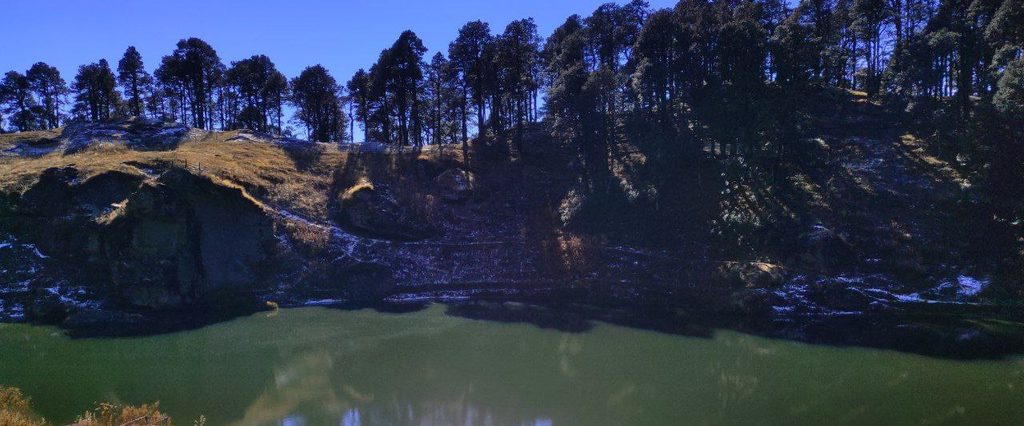
Serolsar Lake, also written Sareolsar or Seruvalsar, is not a lakeside stop reached directly by car from Jibhi. Drive to Jalori Pass, then walk approximately 5 km each way through forest. Plan for a roughly 10 km return walk, with breaks and changing conditions. A sensible first-timer’s allowance is several hours on the trail plus the road journey; walking speeds quoted online vary substantially. Indiahikes’ route guide is useful for checking the nature of the trail before you go.
The forest, rather than a spectacularly large lake, is the reason many people love this outing. The lake is associated with the Budhi Nagin temple and local worship. Respect the site: keep noise down, take litter back to Jibhi, and do not enter the water. Small food stalls may operate in busier periods, but carry enough water and snacks to walk back even if nothing is open.
Can beginners do the Serolsar Lake trek? Fit beginners often can in good, dry conditions, but “beginner-friendly” should not be read as “effortless.” The distance still adds up; muddy ground, snow, a late start or altitude discomfort can make it unsuitable. For a child, assess the return distance, not just whether they can walk 5 km out. If your group prefers a short walk, enjoy Jalori Pass and save the lake for another trip.
Start early enough to return in daylight and check the forecast. If visibility is poor, get local guidance. The ordinary lake walk from Jalori is distinct from a trek into the core zone of Great Himalayan National Park, which has its own permit rules.
7. Raghupur Fort: a viewpoint walk in the other direction
Raghupur Fort, often called Raghupur Garh, offers a ridge and meadow viewpoint with fort remains rather than a polished monument visit. Its trail starts from the Jalori Pass area and runs in the opposite direction from Serolsar Lake. Sources describe the length differently, often around 2–3.5 km one way, depending on where the walk begins and what counts as the endpoint. Ask at the pass for the current route and allow time for the uphill return.
Choose Raghupur if you want a shorter outing than Serolsar and are comfortable with an exposed path. Views depend on visibility; if cloud has swallowed the ridge, the reward can be a quiet walk rather than a panoramic photograph. On a windy day the open slopes may feel far colder than the sheltered village. Avoid going near drops or unstable walls for a better picture.
The word “fort” can mislead first-time visitors. Do not expect ticketing, extensive interpretation or a reconstructed complex. Go for the walk and the landscape, and treat the remaining structure respectfully. This is a good choice for active families with older children who enjoy a climb. For toddlers, anyone with limited balance or a group caught in changing weather, a short stay at Jalori Pass is a better plan.
8. Shringa Rishi Temple: a working shrine near the heritage walk
The Shringa Rishi Temple near Bagi is a place of worship in the Banjar area, not a quick stroll from Jibhi’s café strip. Many visitors combine it with Chehni Kothi because the road and paths connect the two. Have your driver confirm the current approach and parking point; how far you walk depends on the state of the local road and where you are dropped.
Wear clothes appropriate for an active temple, follow posted instructions and ask before photographing people or rituals. If an area is closed to visitors, accept the boundary. A morning visit often makes it easier to walk onward while you still have energy and daylight. It is worth allowing time to sit, see the wooden architecture and understand that this is a community space, not a film set.
Visitors searching for Shringa Rishi Temple Jibhi should note the geography. It is a nearby Banjar-side outing, and combining it with the fort from Jalori Pass would involve backtracking. Pair it with Chehni Kothi or a quiet Banjar lunch instead.
9. Chehni Kothi: stone and wood above the village road
Chehni Kothi is a tall traditional stone-and-wood tower in Chehni village, reached by a side road and an uphill walk. Its age and number of storeys are reported inconsistently, so avoid relying on an exact figure.
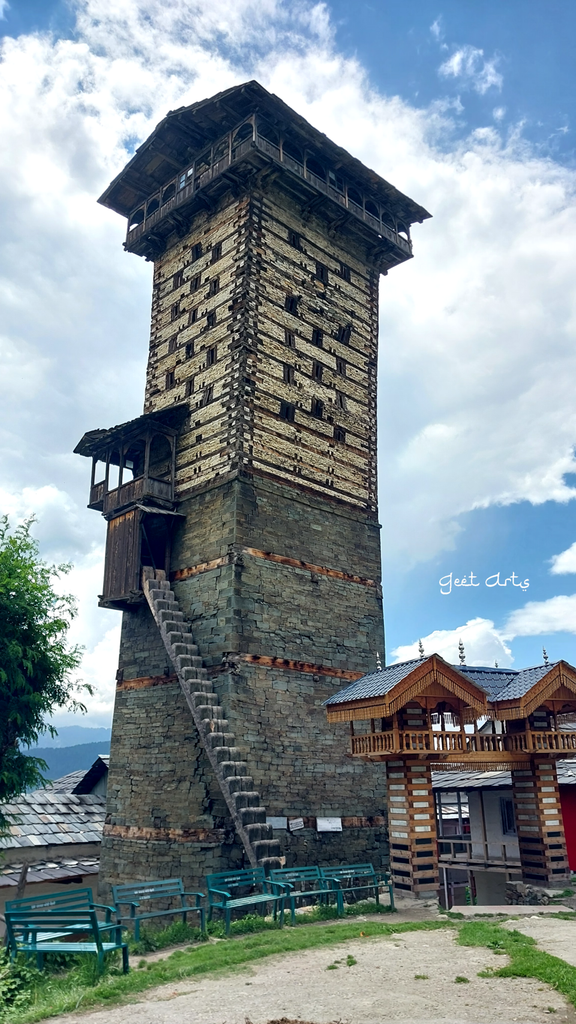
Treat this as a half-day heritage outing. Ask your driver or host which approach is usable, how far the vehicle can go, and whether the path is dry. Some routes approach from around Shringa Rishi Temple; a shorter last section may still be steep and uneven. Wear walking shoes, carry water and do not assume that a pushchair can be taken right up to the tower.
Observe the structure from areas visitors are allowed to use; do not climb fragile sections without clear local permission. Ask before photographing residents or private homes.
10. Tirthan River and Gushaini: give the neighbouring valley its own time
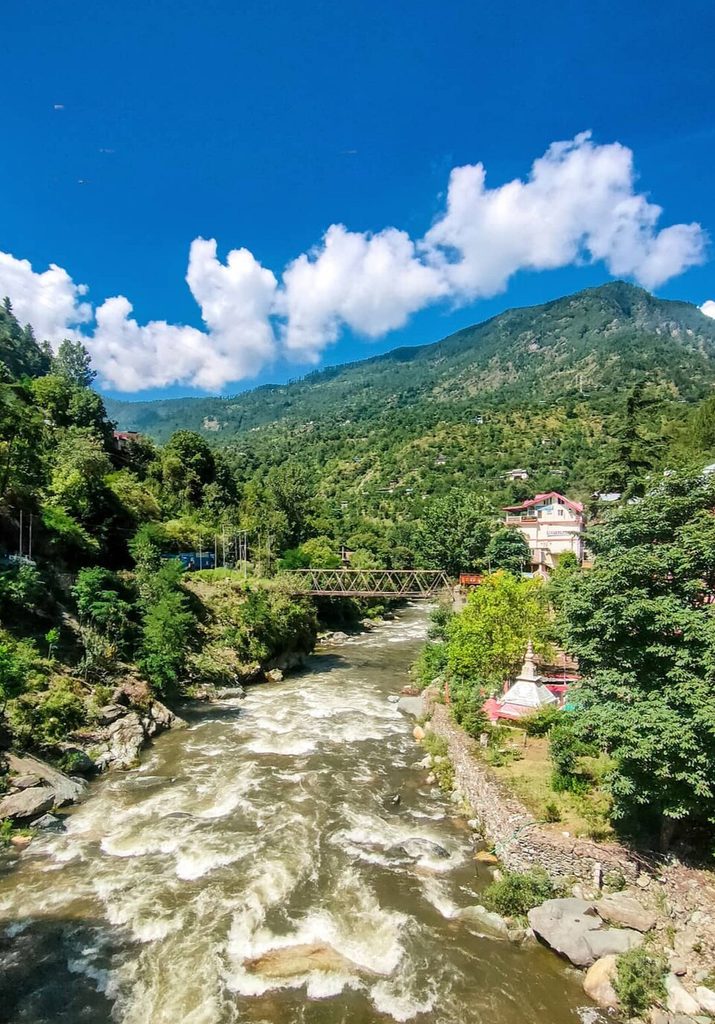
The Tirthan side is often swept into lists of “Jibhi tourist places,” although it is a separate outing by road. Gushaini and nearby riverside settlements are good for a slower half-day: lunch, a safe riverside walk, a homestay night or a properly arranged park-side excursion. Jibhi is a convenient base, but you do not step out of your room straight onto every Tirthan trail.
What should you do there? Find a publicly accessible path well away from the water’s edge, take time for a meal, and ask about local guiding if you want to explore beyond an easy walk. The Tirthan River can be cold and fast, and rain upstream may change conditions without warning where you are standing. Avoid stream crossings and improvised swims. If trout angling is part of your plan, check current rules and licence requirements with the appropriate local authority before carrying a rod.
With three days, you can make a Tirthan excursion from Jibhi or spend a night by the river. On a short visit, choose between a Jalori hike and a leisurely river day.
11. Chhoie Waterfall: an extra walk on the Tirthan side
Chhoie, sometimes written Choi or Chhoi, is a separate waterfall excursion on the Tirthan side. Put it on a three-day itinerary only if you have enough daylight and current trail advice. Some people add it on the way to or from Gushaini, but the hiking approach and its condition matter more than a pin on a route map. Ask a local host where the trail begins and whether any section is slippery after rain.
Go with shoes you would use on a natural path, not sandals chosen for a café. A waterfall excursion is easy to abandon if conditions are poor; there is no reason to force it simply because it appears on a package itinerary. Families who already enjoyed Jibhi Waterfall may prefer to spend the extra time by the river instead.
12. Bahu village area: an offbeat detour for a slower trip
Bahu and surrounding Banjar-side villages suit travellers who have already allowed time for Jibhi’s main sights and would like a quieter drive through the hills. The appeal is village scenery, local architecture and walking at your own pace, rather than a guaranteed attraction with a set opening time. Ask your host for a sensible route and whether the road is suitable for your vehicle. Do not plan it as a hurried add-on after a long Jalori hike.
Treat paths through farms and orchards as someone’s workplace. Ask before entering, keep noise down and take your rubbish back with you. If you are travelling with a family that needs a low-effort day, a short village walk and lunch can be more satisfying than one more steep trail.
A separate note on Great Himalayan National Park: Its core-zone treks are not the same as a village walk or a casual photograph by the Tirthan River. The park’s official fees and rules page says entrance is by permit and directs visitors to its Shamshi and range offices for core-zone permits. If you want a guided park trek, plan it independently from the 12 stops above and verify the exact route, fees and guide arrangements with park staff. A distant view towards the park does not mean you have entered it.
A Jibhi itinerary for one, two or three days
Many online itineraries start “Day 1” when the bus leaves Delhi. Here, Day 1 means a usable day after you arrive, with enough daylight to enjoy the stops listed. If your vehicle reaches Jibhi at lunchtime or you need to recover from an overnight bus, treat the day as a half-day and move the rest to tomorrow.
Places to visit in Jibhi in 1 day
Morning: Take an easy walk to Jibhi Waterfall. Give the approach and surroundings time; an hour is more useful than a ten-minute photo stop. If conditions are wet, keep the walk short. Return to the village for breakfast or lunch.
Afternoon: Visit Mini Thailand only when the stream path is safe. Otherwise take a longer village walk, spend time in a café and ask your host about a short viewpoint on a safe, open road. Evening: Return to your accommodation before dark, especially if it is reached by steps or a forest path.
Could you substitute Jalori Pass? Yes, if that is the one thing you most want to see and the road is open. Then do the pass and one short walk, and save the waterfall for another visit. Trying to see Serolsar Lake as well makes a one-day Jibhi trip depend too heavily on speed and perfect conditions.
Places to visit in Jibhi in 2 days
Day 1: Village day. Arrive, visit Jibhi Waterfall, have a slow lunch and walk to Mini Thailand only if the approach is dry and your group has energy. Buy water and food for the next day. Ask the host or driver about road access to Jalori Pass and the return time in daylight.
Day 2: Pass day. Leave early for Shoja and Jalori Pass. Choose Serolsar Lake for a substantial forest walk, Raghupur Fort for a generally shorter viewpoint hike, or the pass itself for a scenic outing without a long trek. Come back before evening light fades. The pass and each trail are better enjoyed at a normal pace than squeezed into a three-stop race.
If the pass road is closed, swap Day 2 for Shringa Rishi Temple and Chehni Kothi, subject to the condition of their approach, or spend a half-day on the Tirthan side. Changing a plan is part of sensible mountain travel, not a failed trip.
Jibhi 3 day itinerary: add heritage or the river
Day 1: Settle in, see Jibhi Waterfall and enjoy the village. Day 2: Make your Jalori Pass outing, with one trek if conditions suit you. Day 3: Choose the Shringa Rishi Temple–Chehni Kothi combination for culture and architecture, or drive to the Tirthan side for Gushaini and a river walk. Add Chhoie Waterfall only when the trail and schedule leave room.
If you want both Chehni Kothi and Tirthan Valley, add another day or shorten your time at Jalori. The best version of a three-day trip is the one that fits your group. Families with young children can spend Day 2 at Shoja and Jalori without taking on a long trail. Keen walkers can use Day 3 for a second pass-side hike, but that means choosing hiking over the wider valley.
Simple decision rule: Select one major excursion per full day and leave an open slot for weather.
Best time, transport and practical safety
The best time to visit Jibhi depends on what you want to do. For village walks and higher trails, spring to early summer and the clearer post-monsoon months are useful starting points. Weather varies by year and by elevation, so check the actual forecast and local road advice close to departure. The Great Himalayan National Park’s seasonal guide identifies April–June and September–November as its better periods for core-zone trekking; that is a useful regional reference, not a guarantee that every Jibhi trail is open on a given date.
| Period | What usually works best | Main trade-off |
|---|---|---|
| March–June | Village walks, waterfall and pass-side outings when the road is open | Popular holiday weeks can bring traffic; heat in the plains does not predict pass weather |
| July–August and wet spells into September | Green valley views and unhurried village time | Rain, slippery paths, rockfall risk and sudden road delays |
| Late September–November | Cooler walks and often clearer views | Shorter daylight later in the season; cold at the pass |
| December–February | Quiet village stays when access is possible | Snow and ice can close or restrict the Jalori road and trails |
Places to visit in Jibhi in winter: prioritise the village, the waterfall approach only if safe, cafés and accessible Banjar-side outings. Do not sell a Serolsar Lake trek as a standard winter activity. Snow at Jalori is possible, but so is an inaccessible pass road. Confirm the conditions at your accommodation and with a local driver on the same day; do not follow a map app into a blocked road. Pack proper warm layers and shoes with grip.
During the monsoon, move the trip away from exposed slopes and river edges when rain is forecast. Himachal Tourism specifically warns about slippery roads and landslides or rockfall in the rainy months. Check an India Meteorological Department forecast for Kullu, then ask locally about the Banjar–Jibhi–Shoja road you will actually use. A Kullu town forecast is a starting point; conditions high on Jalori Pass can differ.
How to get to Jibhi without losing your first day
Most road itineraries approach the area through Aut, Banjar and Jibhi. If you arrive by a long-distance bus, confirm your actual drop-off before booking a stay: Aut is not Jibhi. Local buses, shared transport and taxis may connect sections of the route, but frequency and seat availability change. Check the HRTC official booking site for bookable services, then confirm the last leg and the current local timetable with the operator or accommodation. Do not present a remembered departure time as a live schedule.
If driving, allow a generous margin after Aut for traffic and mountain bends. Reaching Jibhi before dark gives you time to find your accommodation and settle in. Ask whether parking is available at the property or on the main road; the two can be quite different. For a Jalori outing, an experienced local driver can be a sensible choice if you are unfamiliar with steep mountain roads.
Keep cash, water, a light rain layer, warmer clothing for higher ground and footwear with tread. Download an offline map, but use local route signs and road advice for the final approach. Mobile signal and digital payments are not dependable enough to be the only plan. Avoid starting an unfamiliar trail late in the day; tell your host roughly where you are going and when you expect to return.
For urgent local help, the Kullu district disaster helpline is the official place to check current contact information; 112 is India’s general emergency number. A travel article cannot verify a road closure or rescue availability for your specific day, so use current official notices and on-the-ground advice before heading uphill.
Planning for children, older travellers and different budgets
For children, choose the waterfall and a short village walk before considering a longer hike. On pass day, a photo stop and lunch can be a complete outing. Older children who already enjoy day walks may manage Raghupur or Serolsar in suitable conditions, but let the slowest walker set the pace. If carrying a toddler, account for the full return distance and weather exposure; a short outing at Shoja may be more enjoyable for everyone.
For older travellers or anyone with limited mobility, ask your host about the stairs to your room, the approach to the waterfall and whether a car reaches the planned viewpoint. “Easy trek” is an imprecise label. Chehni Kothi’s uphill approach and the stream rocks at Mini Thailand may be harder than their travel photos suggest. A scenic drive, a stable viewpoint and a comfortable meal can make a better day than a trail selected for its popularity.
There is no honest single “Jibhi trip cost” that fits every visitor. Your biggest variables are travel to Aut or Banjar, the last-leg vehicle, accommodation type and how many private day trips you book. If keeping costs down, stay close to a usable bus stop, combine village stops on foot and book one pass outing instead of several short taxi rides. Confirm fares, parking and any locally collected entry charges just before travel; quoting an unverified 2026 price in a permanent guide would date it quickly.
Frequently asked questions about Jibhi sightseeing
How many days are enough for Jibhi?
Two full days let most first-time visitors enjoy the village and make one Jalori Pass outing. Three days give you room for Chehni Kothi or Tirthan Valley without rushing. If a day is mostly spent reaching Jibhi, do not count it as a full sightseeing day.
What can I see in Jibhi in one day?
Visit Jibhi Waterfall, walk through the village and add Mini Thailand if the streamside path is safe. That makes a relaxed day. If Jalori Pass is your priority, go there instead and keep the rest of the schedule light. A one-day visit cannot comfortably include every major hike.
Which places near Jibhi require a trek?
Serolsar Lake is reached by a roughly 5 km walk each way from Jalori Pass. Raghupur Fort requires a shorter but sometimes steeper walk from the pass. Chehni Kothi usually involves an uphill village approach from the usable roadhead. The length and condition of each walk should be checked locally.
Can I visit Jalori Pass and Serolsar Lake with children?
You can visit Jalori Pass with children when the road is open and conditions are suitable. Serolsar is a separate, roughly 10 km return walk. Decide based on each child’s previous hiking experience, the forecast, daylight and whether the adults can comfortably manage the return. There is no need to hike to make the pass trip worthwhile.
Do I need a permit to see Great Himalayan National Park?
Entry into the park requires a permit, according to the park’s official rules. A casual visit to Jibhi, a Jalori Pass viewpoint or the ordinary Serolsar trail should not be described as a GHNP core-zone trek. If you intend to enter the park, confirm your route, permit, fees and guide requirements with park staff in advance.
The simplest Jibhi plan: see the village properly, give Jalori one weather-dependent day, and use any extra day for heritage or the Tirthan River. Before booking, check the road and trail conditions for your dates. For the next planning step, read a dedicated Jalori Pass or Tirthan Valley guide and choose the excursion your group can enjoy at an unhurried pace


