
Chikmagalur Travel Guide: Places to Visit, Best Time, Stays & Itinerary
A Chikmagalur trip can look wonderfully simple on a map: a mountain viewpoint, a waterfall, a coffee estate and a lake. The difficulty is deciding which places belong on the same day. A waterfall reached by a forest jeep needs a different plan from a roadside viewpoint, and a stay advertised as “near Chikmagalur” can put you on the opposite side of the district from your sightseeing route.
For a first visit, give yourself three days and two nights, choose one main hill circuit, and leave room for a coffee plantation walk. Two days work for a shorter introduction. Add more time if Kudremukh trekking, a Bhadra safari or the temple towns farther west are central to your trip.
This Chikmagalur trip guide explains the places worth considering, when to visit, how to arrive, where to base yourself, what to budget and how to build a trip that works for your family or travel group.
Research checked: 25 September 2026. Journey times and budgets below are planning estimates. Forest access, road restrictions, visitor charges and transport schedules need checking for your travel date.
In this guide
- Plan your visit: seasons, duration and priorities
- Places to visit and things to do
- How to reach Chikmagalur and get around
- Stay areas, trip costs, food and shopping
- Two-day, three-day and longer itineraries
- Family travel and practical preparation
- Frequently asked questions
Plan your visit: seasons, duration and priorities
Where is Chikmagalur, and what is it famous for?
Chikmagalur, officially spelled Chikkamagaluru, is a town and the headquarters of a much larger district in Karnataka. Its travel appeal comes from the Western Ghats: coffee-growing hills, forest landscapes, waterfalls, religious sites and walking routes.
The town is a useful transport and services base. Many of the attractions associated with Chikmagalur tourism are outside it. When comparing distances, check whether a guide is describing the town, a village, a hilltop or the whole district.
Coffee is central to the region’s identity. The Coffee Board of India traces Indian coffee cultivation to the tradition of Baba Budan bringing seeds to the hills. Today, a plantation visit offers a practical way to understand the crop, the shade trees around it and the work between harvesting a coffee cherry and brewing a cup.
Is Chikmagalur worth visiting for your kind of holiday?
It is a strong choice if you enjoy hill scenery, coffee, short walks, photography and a slower break. You can also build a more active trip around a permitted trek or wildlife outing.
Choose your priorities before booking:
| Your main interest | A sensible trip focus | Time to allow |
|---|---|---|
| First visit | Mullayanagiri area, an estate walk and a lake | Two to three days |
| Family holiday | One hill outing, shorter activities and generous breaks | Three days or more |
| Waterfalls and scenery | A separate Kemmanagundi–Hebbe day | Three full local days, plus arrival/departure as needed |
| Trekking | A selected trail, the appropriate nearby base and permissions | A dedicated trek day, with travel on either side |
| Wildlife | A confirmed Bhadra safari gate and session | A separate outing with travel time built around the booking |
| Heritage | Belur, Halebidu and possibly Belavadi | Half a day for one major temple; a full day for a broader circuit |
A short holiday feels more rewarding when you choose two or three of these interests. Trying to include all six usually turns it into a driving itinerary.
Best time to visit Chikmagalur
October to February is a useful starting point for a first Chikmagalur trip, especially for sightseeing and walking. Monsoon months bring greener scenery and fuller waterfalls, but also more uncertainty around visibility, road conditions and forest access. Karnataka Tourism’s destination overview describes the same broad seasonal trade-off.
Use the following as a planning guide, rather than a forecast:
| Period | What to plan around | How to adapt your trip |
|---|---|---|
| January–February | Cooler mornings and a generally comfortable sightseeing season | Carry a layer for hilltops; book popular weekend stays ahead |
| March–April | Warmer days, with differences between town and higher hills | Walk early and leave a longer midday break |
| May | Summer conditions and possible showers | Check the forecast; avoid relying on strong waterfall flow |
| June–August | Heavy rain, slippery approaches and frequent cloud | Choose easy road access and flexible outdoor plans |
| September | A transition month that can still be wet | Check recent rainfall and access rather than assuming the monsoon has finished |
| October–December | A useful window for scenery, estate visits and walking | Keep a rain layer; allow for weekend and holiday traffic |
There is no single Chikmagalur weather reading that describes every outing. A comfortable afternoon in town can become a cold, wet visit on an exposed ridge. Check the India Meteorological Department’s forecasts and warnings before departure and again before a hill or forest day.
Visiting in summer or monsoon
Chikmagalur in summer: Plan around shaded estate walks, early sightseeing and a comfortable place to rest. Ask about room ventilation, fans and afternoon temperatures at your exact accommodation. A “hill stay” description does not tell you how warm the room becomes.
Chikmagalur in monsoon: It can suit travellers who enjoy rain and greenery and are willing to change plans. Choose a property reached by a dependable road, arrive in daylight and keep at least one activity close to your base. A temple visit, sheltered coffee session or quiet afternoon can replace an exposed viewpoint when conditions deteriorate.
If heavy rain or an official closure affects your route, change the outing. A booking does not make an unsafe approach usable.
For monthly weather and activity planning, read our best time to visit Chikmagalur guide.
When can you see coffee harvesting or blossoms?
The Coffee Board gives broad Indian harvest windows of November–January for Arabica and December–February for Robusta. The precise timing at an individual estate varies, so ask the host what will actually be happening during your visit.
Blossoming is a separate stage, influenced by rain and irrigation. If seeing flowers is your main reason for travelling, ask for a recent estate update before committing to dates. Do the same if you hope to watch picking, processing or roasting: these are different activities and may not all happen on one property.
How many days are enough?
Two days allow a first look at Chikmagalur. Three days give you more breathing room for the journey, a hill circuit and coffee. Four or five days let you add a separate waterfall, wildlife, heritage or trekking focus.
Count usable sightseeing time carefully. A two-day trip from Bengaluru usually includes substantial travel on both days. It is different from two full days in Chikmagalur after arriving the evening before.
Places to visit and things to do in Chikmagalur
Start by grouping attractions by route
These are useful planning areas, not fixed tours. Distances are approximate one-way road ranges from central Chikmagalur, rounded to avoid false precision. Traffic, the accommodation location and the actual parking or reporting point change the journey. Jeep transfers and walks need extra time.
| Area or attraction | Approximate distance from town | Useful planning allowance | How it fits |
|---|---|---|---|
| Mullayanagiri visitor approach | About 20–30 km | Half a day with the drive and summit visit | Main hill outing |
| Baba Budangiri / Datta Peeta | About 30–40 km | One to two hours on site, plus driving | Same broad hill circuit |
| Jhari Falls approach | About 25 km to the access area | Two to three hours including transfer and waiting | Optional addition to the hill day |
| Hirekolale Lake | About 10 km | 45–60 minutes, plus travel | Short outing near town |
| Ayyanakere Lake | About 20–25 km | 45–60 minutes, plus travel | Sakharayapatna side |
| Kemmanagundi | About 55–65 km | A separate day with selected nearby stops | Northern hill outing |
| Hebbe Falls | About 65 km overall, including the access sector | A substantial part of a Kemmanagundi day | Jeep/forest access needs checking |
| Muthodi side of Bhadra | Roughly 30–40 km | Build around the confirmed reporting time | Dedicated wildlife outing |
| Lakkavalli side of Bhadra | Roughly 80–90 km | Separate transfer planning | Different safari/reservoir area |
| Belur | About 25–30 km | Around two hours at the temple, plus travel | Heritage stop on an appropriate arrival/return route |
| Halebidu and Belavadi | Approximately 25–40 km, depending on the site | Half to full day as a heritage circuit | Separate from the hill circuit |
The district places-of-interest guide and the individual Karnataka Tourism attraction pages are useful for checking place names and locations. Use navigation for your actual start point.
Map starting points: Chikkamagaluru town, Mullayanagiri, Kemmanagundi, Muthodi and Belur Chennakeshava Temple. For a paid activity, use the reporting pin supplied with your booking.
Compare the hill, waterfall and town circuits in our guide to places to visit in Chikmagalur.
Mullayanagiri: the main hill outing
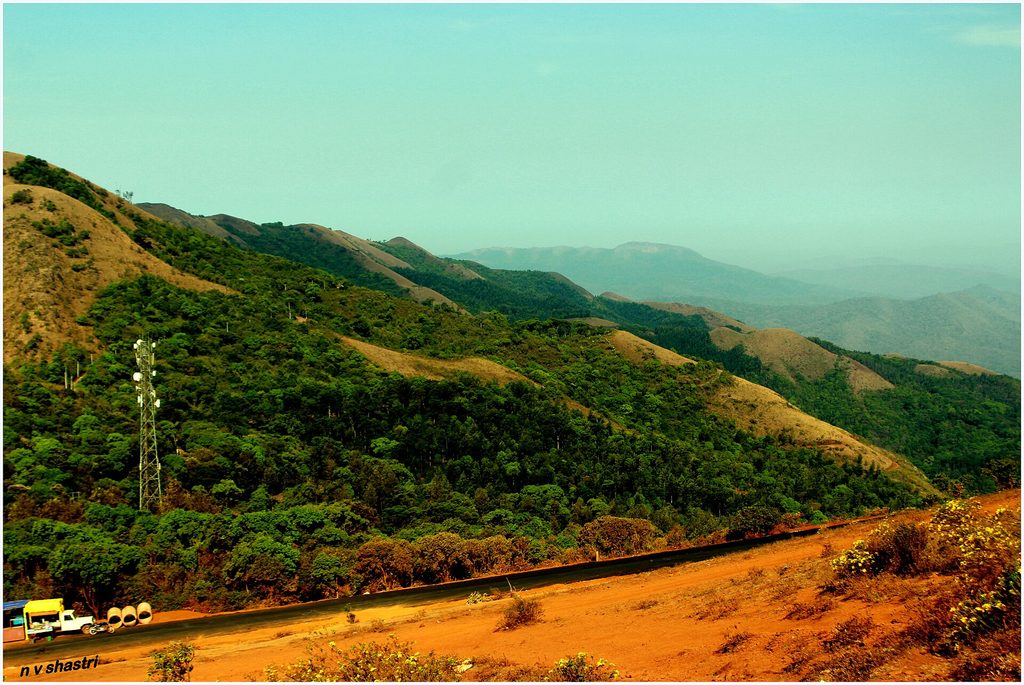
Mullayanagiri is Karnataka’s highest peak. The usual visitor experience combines a winding drive with a stepped climb from the permitted parking area. This is different from undertaking a longer trekking route up the mountain.
The steps can feel demanding because of the incline, wind, crowds or wet surfaces. Allow time to stop, and make the return descent part of your decision. Visitors who are uncomfortable with steps can enjoy the wider hill landscape without committing to the summit.
For the road-access visit, check the district administration’s Mullayanagiri and Inam Dattathreya Peeta toll-booking page. It links to the official booking service. Read the current vehicle, date and entry conditions there; save the confirmation offline if a booking is required for your visit.
Plan your arrival around the permitted opening or reporting time. Do not promise yourself a summit sunrise before checking access. A temple’s published opening hours and the hill road’s entry arrangements are separate matters.
The Karnataka Tourism Mullayanagiri page describes the stepped approach and nearby Seethalayyanagiri. Check locally whether Seethalayyanagiri is a suitable shorter stop for your group that day.
Baba Budangiri, Datta Peeta and Manikyadhara Falls
Baba Budangiri combines a mountain drive with a sacred site important to Hindu and Muslim communities. Allow time to understand the setting, follow the directions at the shrine and ask before photographing religious activity.
It belongs to the same broad sightseeing circuit as Mullayanagiri, but the connecting road still takes time. The practical question is how many substantial stops your group can enjoy after the first hill visit.
Manikyadhara Falls is an optional extension in this area. The official attraction guide provides location information. Check the approach, steps and access conditions before adding it for an older traveller or a child who is already tired.
For a relaxed day, choose the shrine and one waterfall, or the two main hill stops with a proper meal break. Visiting every named viewpoint is unnecessary.
Jhari Falls: include the transfer in your plan
Jhari Falls, also called Buttermilk Falls, is often paired with the Mullayanagiri–Baba Budangiri route. The official Jhari Falls page describes a final approach using paid local jeeps, with walking mentioned as another option. Confirm what is permitted and operating on your date.
Before paying, establish whether the charge is per person or per vehicle, whether the return ride is included, how long the wait is and where you will be collected. A sightseeing cab fare does not automatically include the last-mile jeep.
The rough approach matters as much as the waterfall itself. For someone uncomfortable with a bumpy ride, or a family travelling with a very young child, replacing it with an estate visit may make the day easier.
Treat the water as a natural hazard. Stay within the permitted viewing area and follow staff instructions about approaching the cascade or entering the water.
Coffee plantation tours: choose the experience, then the estate
A coffee plantation tour in Chikmagalur can be one of the most engaging activities of the trip, including for people who rarely drink coffee. It gives the landscape a purpose: the plants are a crop, the shade is managed and the harvest supports a working business.
The Coffee Board’s guide to Indian coffee regions explains the relationship between coffee and other crops. During a walk, ask which plants you are seeing and why they grow together.
Before booking, ask five practical questions:
- Is this a guided plantation walk, a processing demonstration, a tasting, or a combination?
- How much walking is involved, and are the paths steep or muddy?
- What crop activity will be visible during the visit?
- Are children welcome, and is there a shorter route?
- Does the price include transport, tasting and taxes?
Allow roughly one to two hours for a basic visit, with more time if there is a workshop. Obtain permission before entering an estate, picking fruit or photographing workers. A property that accepts overnight guests may still require separate arrangements for day visitors.
Hirekolale Lake and Ayyanakere Lake
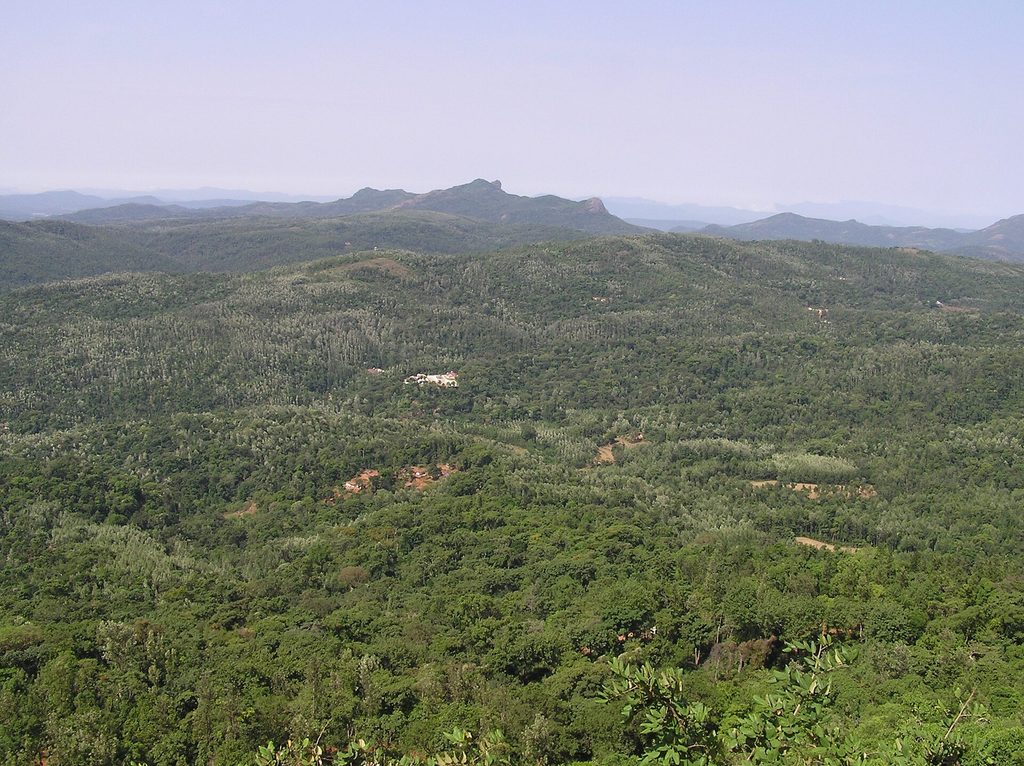
Hirekolale is useful when you want a shorter outing near town. Give yourself time to watch the changing light, take photographs and return comfortably. Clear sunset colours are a bonus rather than something a travel plan can guarantee.
Ayyanakere lies on a different side of town, near Sakharayapatna. Check whether it fits your journey before adding it simply because you have already visited Hirekolale.
At either lake, look at the actual surface and water edge before deciding how far to walk. “Easy outing” does not mean every path has railings, paving or wheelchair access. Keep children close and avoid assuming that swimming or boating is available or permitted.
For a short trip, one lake is usually enough. Choose the one that fits your accommodation, route and available daylight.
Coffee Museum and Hiremagalur: shorter visits around town
The district’s places-of-interest page lists the Coffee Museum behind the Zilla Panchayat office and the Kodandarama Swamy Temple in Hiremagalur. These are worth considering when you want a shorter cultural outing rather than another long hill drive.
For the museum, confirm current public opening, demonstrations and the time needed before making a special journey. A museum visit and an estate walk offer different perspectives: one can introduce the subject through displays, while the other shows a working agricultural setting. Choose according to your interest and what is operating.
At Hiremagalur, follow the temple’s visiting arrangements and worship practices. Keep the stop unhurried, especially if travelling with someone who needs time between the vehicle and the entrance.
These town-side options can help fill a short arrival afternoon or a departure morning. During rain, assess the entire journey and access, not just whether the attraction has an indoor component.
Kemmanagundi, Z Point and Kalhatti Falls
Kemmanagundi, also written Kemmangundi, is a separate hill outing north of Chikmagalur. Its gardens and viewpoints appeal to travellers who want time outdoors without making every stop a major trek.
Z Point is associated with the Kemmanagundi area. The approach requires walking; judge it by the path, weather and your group’s fitness. Exposed sections in rain or poor visibility are a different proposition from a dry-weather walk.
Kalhatti Falls, also called Kallathigiri Falls, is another nearby option. The Karnataka Tourism Kemmanagundi guide places it about 10 km from Kemmanagundi and notes the temple setting.
Choose a focus for the day: gardens and shorter stops, Z Point, or Hebbe Falls. Combining all of them depends on access, waiting time and stamina. Do not add this whole area to an already full Mullayanagiri day.
Hebbe Falls: give the forest outing enough time
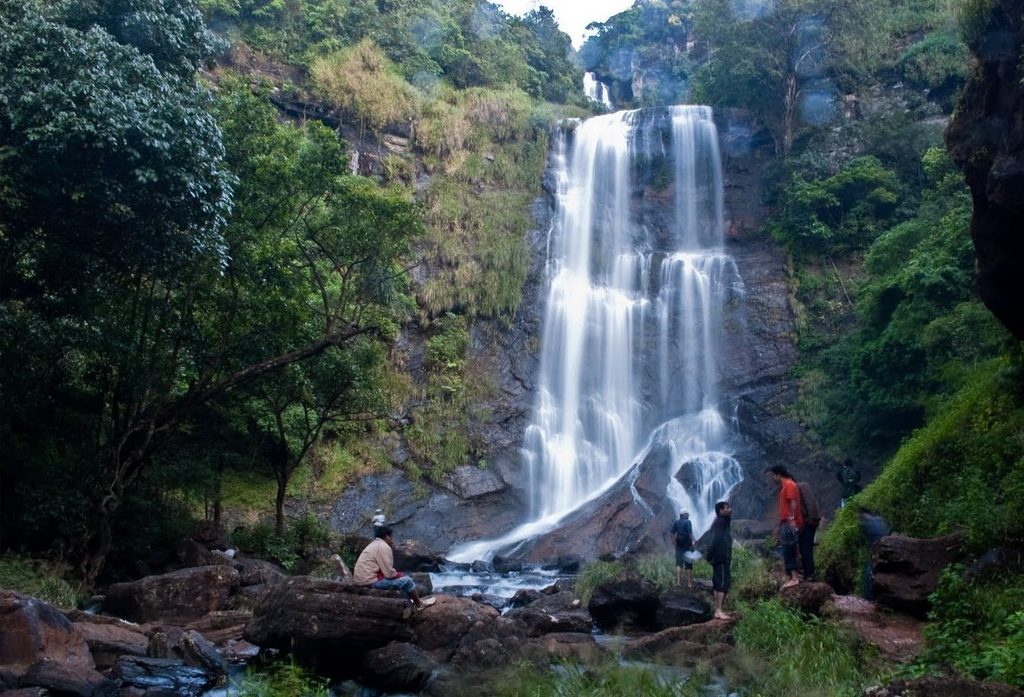
Hebbe Falls is a two-stage waterfall reached through the Kemmanagundi side. Karnataka Tourism describes the final access sector as roughly seven kilometres, covered on foot or by local 4×4 jeep. The permitted arrangement on the day should determine your plan.
Read the official Hebbe Falls guide, then confirm the operating entry point, transfer availability, current charges, final admission time and walking involved after the drop-off.
Allow for a queue, a rough ride and an uneven or wet approach. For families, ask specifically about the child’s ability to travel securely in the available vehicle. For travellers with back, knee or mobility concerns, the transfer can be the deciding factor.
There is no need to enter the pool to appreciate the falls. Avoid climbing wet rocks or treating photographs of other people bathing as evidence that entering the water is permitted or safe during your visit.
Bhadra wildlife outings: confirm which side you are booking
Bhadra spans a large forest landscape. Muthodi and Lakkavalli are different planning locations. A generic “Bhadra Wildlife Sanctuary” map pin can send you towards the wrong side for your activity.
The Karnataka Tourism Bhadra guide distinguishes the southern Muthodi area from the reservoir side near Lakkavalli. Ask for the exact gate or reporting point before confirming transport.
For a safari, establish the session, reporting time, seat availability, identification requirements, child rules and cancellation conditions. Wildlife sightings cannot be guaranteed, and a reservoir boat activity is not interchangeable with a forest jeep safari.
Build the rest of the day around the booking. Carry binoculars if you have them, keep voices low and enjoy the forest even if the larger animals remain out of sight.
Belur, Halebidu and Belavadi: a heritage alternative
Belur and Halebidu make a useful contrast to the hills. Their major temple complexes are components of the UNESCO-listed Sacred Ensembles of the Hoysalas. The third component, Somanathapura, is near Mysuru and belongs in a different travel plan.
At Belur, allow time for the Chennakeshava Temple’s carvings and architectural details. At Halebidu, slow down around the Hoysaleswara complex rather than treating it as another photograph stop. A local guide can help explain what you are looking at; agree on the fee and duration first.
Belavadi’s Veera Narayana Temple can be added if heritage is your main interest and time allows. It is a separate temple visit and should not be described as another component of the same UNESCO listing.
A single temple stop can fit an appropriate arrival or return route. Covering several sites deserves a longer block of time, particularly with children or anyone who needs frequent breaks.
Kudremukh and other trekking extensions
Kudremukh needs a dedicated plan. Karnataka Tourism describes the Kudremukh trek as approximately 20 km return, starting from the Mullodi area and requiring forest permission. Published trail lengths vary with the start point; confirm the current route rather than relying on one distance alone.
Stay close enough to reach the reporting point comfortably. Set aside the full day, understand the turnaround deadline and arrange the return transfer. This is not a casual stop to fit between a waterfall visit and the drive back to Bengaluru.
For regulated trekking, begin with the Karnataka Forest Department’s Aranya Vihaara portal. Check the actual trail listing, available date, identification rules, guide arrangements and any closure notice. A hill-road toll booking does not replace a trek permission.
Netravati, Ballalarayana Durga–Bandaje and other longer walks are also reasons to extend a trip and choose a closer base. Confirm the specific trailhead and current permission process before paying an organiser.
| Type of outing | What to check before choosing it |
|---|---|
| Guided estate walk | Gradient, path surface, shade, duration and permission |
| Mullayanagiri summit visit | Parking arrangement, stepped climb, wind and visibility |
| Z Point walk | Current trail access, exposed sections and return timing |
| Full-day forest trek | Permit, guide, fitness, route length, reporting time and turnaround rules |
How to reach Chikmagalur and get around
Bangalore to Chikmagalur by road
From central Bengaluru, allow roughly 250–280 km and five to seven hours, depending on where you start, the route, traffic and breaks. These are rounded planning estimates, not a promise of driving time.
A common route runs through Nelamangala, Hassan and Belur before Chikmagalur. The district transport guide also lists the alternative via Arsikere and Kadur.
Choose between routes using current road information and the location of your stay. If you are adding Belur, budget the temple visit separately. An airport pickup is also a different journey from leaving central Bengaluru.
On the return, leave enough time to drive without rushing. A long hill outing followed by a late drive home can be more tiring than the distance suggests.
Compare driving routes, buses and trains in our Bangalore to Chikmagalur guide.
Arriving from Mysuru or Mangaluru
The district’s route guide lists Mysuru–Hassan–Belur–Chikmagalur and Mangaluru–Ujire–Mudigere–Chikmagalur as access routes.
Allow a substantial half-day travel block, including breaks and the transfer to your actual accommodation. For coastal approaches, check ghat conditions before departure. A closure or diversion can matter more than the shortest route shown on a map.
If you are arriving late, a straightforward town-based first night can make the journey easier. Ask your host to identify the final turn and send an arrival pin before you lose mobile coverage.
Nearest airport to Chikmagalur
Shivamogga Airport is the nearest commercial airport geographically to Chikmagalur town. It is roughly 90 km away by road, depending on the route. Mangaluru is a useful international gateway; Bengaluru offers a wider range of flight connections but a longer onward drive.
| Airport | How to evaluate it |
|---|---|
| Shivamogga, RQY | Compare the shorter road transfer with the flights actually available for your dates |
| Mangaluru, IXE | Useful for a coastal connection; allow for the ghat-road transfer |
| Bengaluru, BLR | Useful for flight choice or a wider Karnataka itinerary; factor in the longer onward journey |
The airline’s Shivamogga announcement establishes the airport’s commercial connection, while this airport-to-town route reference gives an indicative road distance. Check present-day flights directly with the airline.
Compare door-to-door cost and timing: flight, baggage, waiting, road transfer and arrival hour. The nearest airport is not automatically the easiest choice for every departure city.
Nearest railway station: Chikkamagaluru, Kadur or Birur?
Chikkamagaluru has its own railway station, code CMGR. South Western Railway’s station directory identifies it. Advice saying the town has no railway station is outdated.
Kadur and Birur remain useful alternatives when their trains suit your route better. Kadur is approximately 40 km from town and Birur around 45–50 km, followed by a road transfer.
Search all suitable arrival options in the official IRCTC booking service. Compare the complete journey, including the connecting bus or taxi, rather than choosing a station solely because an old guide calls it the nearest.
Do not assume that a station with a convenient incoming train also has a convenient return service. Check both directions before booking accommodation.
Reaching Chikmagalur by bus
Use the official Karnataka KSRTC website to check dates, boarding points, bus class and availability. Other operators also serve the region, but the timetable and fare should come from the service you actually book.
The bus is a practical option for a budget trip, particularly when staying in town. Arrange the transfer to an outlying estate in advance. Reaching Chikmagalur bus stand does not complete the journey to a remote property.
For an early-morning arrival, confirm luggage storage or early check-in. For an evening return, agree when the sightseeing vehicle must have you back at the bus stand.
A Chikmagalur trip without a car
You can visit without bringing or driving a car. A workable plan is to arrive by bus or train, stay in town and book a cab for the main hill day.
Use walking and short auto-rickshaw rides for suitable town journeys. Local buses can help between settlements, but do not assume they will take you to every attraction entrance or provide a convenient return after sightseeing.
A public-transport-only trip needs fewer stops and timetable flexibility. Before taking a bus out of town, establish the return service and how you will cover the last stretch to the attraction.
Hiring a sightseeing cab or renting a bike
For a Chikmagalur sightseeing cab, ask for a written quote containing:
- The exact route and pickup location.
- Included kilometres and working hours.
- Extra-kilometre and overtime charges.
- Parking, tolls, driver allowance and applicable taxes.
- Whether hill access bookings and waterfall jeeps are included.
- The arrangement if an attraction closes.
Compare quotes for the same route. A cheap “full-day sightseeing” package may include fewer places, shorter working hours or substantial extras.
Bike rental can suit experienced riders in suitable weather. Check the licence requirement, vehicle condition, brakes, tyres, helmets, fuel policy, deposit and rental terms. Take photographs of existing damage. Steep roads, rain and fog make this a poor place to learn to ride.
For families or travellers uncomfortable on hill roads, a driver can reduce the workload of the trip. Confirm the vehicle and seating arrangements before paying.
Stay areas, trip costs, food and shopping
Where to stay in Chikmagalur
Choose the area before comparing rooms. For a first visit, town or a well-connected nearby location usually makes the logistics easier. For a coffee-focused break, a plantation homestay can be appealing, provided its road access and meal arrangements suit your group.
| Base area | Who it can suit | Trade-off to understand |
|---|---|---|
| Chikmagalur town | Bus/train arrivals, short stays and travellers needing easy access to supplies | You travel out for the hill and plantation experiences |
| Kaimara–Attigundi side | Visitors prioritising the Mullayanagiri–Baba Budangiri area | Check the access road, traffic restrictions and distance to meals/services |
| Aldur side | A slower estate-based holiday | Add travel time when visiting the northern hill circuit |
| Mudigere side | Travellers exploring this part of the district or arriving on a compatible coastal route | It is a different base from central Chikmagalur |
| Kemmanagundi side | A trip centred on the northern hills and Hebbe access | Confirm food, transport and evening arrangements before arrival |
| Kalasa–Mullodi side | A Kudremukh-focused trip | Better for the trek’s logistics than repeatedly driving from town |
| Near your confirmed Bhadra gate | A safari-focused visit | Muthodi and Lakkavalli bookings require different location checks |
For two nights, moving accommodation usually adds more work than value. For four or five nights with a trek or distant circuit, splitting the stay can make sense.
What to ask a homestay before booking
Ask for the actual map pin, not just the district name. Then check the final few kilometres: surface, gradient, whether your vehicle can reach the property and how access behaves after rain.
Clarify whether the price is per person or per room, and whether it includes meals, extra bedding and taxes. Ask about check-in time, hot water, power backup, mobile coverage and Wi-Fi if these matter to your stay.
For families, confirm the permitted occupancy, stair access, room layout, balcony barriers and availability of simple meals. Request a recent photograph or short video when the answer depends on the physical layout.
A coffee estate stay does not automatically include a guided tour. Establish that separately, along with the cancellation policy if travel or outdoor access is disrupted.
Chikmagalur trip cost: how to build a useful budget
The following amounts are illustrative planning allowances in Indian rupees, not live tariffs or package offers. They make the assumptions visible so you can replace them with actual quotes. Holiday weekends, room occupancy, vehicle type and activity choices can move the total considerably.
Two days and one night: two adults sharing one room
This model includes one main sightseeing-cab day, shorter local transfers, food and a modest activity allowance. It excludes travel from your home city to Chikmagalur and back.
| Item | Allowance for both adults |
|---|---|
| One room for one night | ₹1,500–₹3,000 |
| One sightseeing-cab day plus shorter local transfers | ₹3,500–₹5,500 |
| Food for two adults over two days | ₹1,600–₹2,400 |
| Entry, plantation visit or other activity allowance | ₹1,000–₹2,000 |
| Subtotal | ₹7,600–₹12,900 |
| Contingency at 10% | ₹760–₹1,290 |
| Total for two adults | ₹8,360–₹14,190 |
| Approximate cost per adult | ₹4,180–₹7,095 |
Add the actual bus/train tickets, private intercity cab, or self-drive costs. If an expensive jeep excursion is essential, replace the activity allowance with the quoted amount.
Three days and two nights: two adults and two school-age children
This example assumes one room legally accommodating all four, with bedding included, and local transport allowing up to two sightseeing days plus short transfers. It excludes intercity travel, flights, a dedicated safari and a full-day organised trek.
| Item | Allowance for the family |
|---|---|
| Accommodation for two nights | ₹6,000–₹10,000 |
| Local sightseeing vehicle and transfers | ₹7,500–₹11,500 |
| Meals and refreshments over three days | ₹4,000–₹6,500 |
| Entry charges and selected modest activities | ₹2,000–₹4,000 |
| Subtotal | ₹19,500–₹32,000 |
| Contingency at 10% | ₹1,950–₹3,200 |
| Total family allowance | ₹21,450–₹35,200 |
If you need two rooms, price those directly. Child discounts, meal charges and extra-bed policies differ. Ask for the total payable for the children’s actual ages rather than assuming they stay or travel free.
For a self-drive trip, replace the cab allowance with fuel, tolls, parking and any separately required local jeep. Avoid adding both full transport models to the same total.
Keeping a budget trip comfortable
The biggest useful savings often come from choosing a convenient base and limiting distant outings. A cheaper room far from your route can create another vehicle charge each day.
Travel on weekdays when possible, compare meal-inclusive and room-only totals, and decide which paid experience you most want. A shared cab only saves money if it has appropriate seating, an agreed route and reliable arrangements.
Keep a small cash reserve for places where payment connectivity is weak. Record deposits and inclusions so you can see the remaining amount due without relying on several message threads.
Local food in Chikmagalur
Look for familiar South Indian breakfasts and Malnad cooking: akki rotti, kadubu, rice-based meals, coconut chutneys, vegetable preparations and filter coffee. Neer dosa is also common in the wider region. Seasonal ingredients and household recipes mean that menus vary.
For a remote stay, ask when meals are served and whether you need to order in advance. If travelling with children, discuss spice levels, simple options and early meal times before the outing begins.
Tell the host about dietary requirements clearly. For a food allergy, ask about ingredients and shared preparation; a vegetarian label alone does not answer the question.
What to buy, and where to buy coffee
Coffee is the most relevant purchase, but the useful question is which coffee will work with your brewing method. Buy from an estate that sells its produce or a town coffee retailer that can explain the pack.
Check the roast or packing date, whether it is beans or ground coffee, the grind size, the Arabica–Robusta blend and whether chicory is included. Ask about origin if you specifically want estate-grown coffee rather than a blend packed locally.
Start with a small packet if you are unfamiliar with the roast. Keep it sealed during travel. For pepper, honey or other packaged products, check the producer details and labelling instead of assuming everything sold in town was produced nearby.
Chikmagalur itineraries for two days, three days and longer
Two-day itinerary from Bengaluru: one night away
This plan counts the return journey within the two days. It suits travellers who want a first visit without filling every hour.
| Day | Morning | Afternoon | Evening |
|---|---|---|---|
| Day 1 | Travel to Chikmagalur with a proper break | Check in, eat and take a pre-arranged coffee estate walk if arrival allows | Hirekolale Lake if convenient, or rest at your stay |
| Day 2 | Visit Mullayanagiri after confirming access; add one nearby stop if time and energy allow | Have lunch and begin the return journey | Continue home with driving breaks |
Keep Day 1 flexible if the road journey takes longer. On Day 2, choose between an additional hill stop and a waterfall transfer based on the time you must leave. Hebbe Falls does not fit comfortably into this short version.
If your group prefers heritage to steps, substitute Belur on the appropriate journey for part of the hill sightseeing. That makes a different, equally valid weekend.
Two full days after arriving the previous evening
With arrival already completed, use the first full day for the Mullayanagiri–Baba Budangiri area. Keep one waterfall optional.
Use the second day for a coffee experience and a lake, or a heritage outing. If Hebbe Falls is the priority, make the second day a dedicated Kemmanagundi outing and arrange a suitable overnight stay or unhurried onward departure.
This version requires more time away than the one-night weekend above, even though both may be described online as a “two-day Chikmagalur itinerary.”
Three-day itinerary: two nights and a balanced first visit
| Day | Main plan | How to keep it manageable |
|---|---|---|
| Day 1: Arrive and settle in | Travel, check-in and a coffee estate visit | Keep the evening close to your stay |
| Day 2: Main hill circuit | Mullayanagiri, followed by Baba Budangiri or Jhari according to conditions | Add the remaining stop only if the day is running comfortably |
| Day 3: Short outing and departure | A lake or one heritage stop on a suitable return route | Set a departure time before you start sightseeing |
This is a good starting point for a Chikmagalur trip with family. It gives coffee and the hills proper time while recognising that arrival and departure consume much of two days.
If you have three full sightseeing days, with arrival and departure outside them, add Kemmanagundi–Hebbe or a Bhadra session as the third day’s focus. Those extra travel arrangements change the trip length and budget.
Three-day itinerary with Hebbe Falls as the priority
Use Day 1 for travel and a short activity near your stay. Make Day 2 the Kemmanagundi–Hebbe outing, subject to access and transfer availability. Reserve Day 3 for a brief estate experience, a nearby viewpoint or your return journey.
If you also want a full Mullayanagiri circuit, add another day. With young children, the most useful change is often more time rather than an earlier alarm.
Four or five days: add one larger interest
A fourth day can accommodate a separate waterfall or heritage outing. A fifth day can make a change of base worthwhile if you want Kudremukh, the Kalasa area or a wildlife focus.
For example, use two nights near Chikmagalur for the town and hill circuit, then move closer to your chosen trek or safari reporting point. Leave a recovery or flexible block after a demanding activity.
For a trek-centred holiday, reverse the priorities: organise permissions and the trailhead stay first, then add Chikmagalur town if the route and remaining time suit it.
Places near Chikmagalur: which extensions make sense?
| Extension | Why consider it? | Planning implication |
|---|---|---|
| Belur and Halebidu | Hoysala architecture and detailed temple visits | Good on a suitable road journey or as a heritage day |
| Sakleshpur | More plantation scenery and a different hill base | Use it when it fits your onward route, rather than as a hurried extra drive |
| Sringeri | Sharada Peetham and the Tunga riverside setting | Roughly 100 km from Chikmagalur in the district guide; give the journey adequate time |
| Kalasa and Horanadu | Temple visits and access to another part of the Ghats | Better with a base nearby when combined with trekking |
| Coorg | A second coffee-growing region with its own attractions | A multi-day extension with a dedicated transfer block |
Check current visiting arrangements with the destination or temple authority. A temple visit, an estate visit and a national-park trek each have different access requirements.
Chikmagalur and Coorg itinerary
Allow around six or seven days from Bengaluru if you want both areas without treating them as brief stops. Choose one base in each region and build the transfer into the itinerary.
A workable outline is two nights in Chikmagalur, a transfer day to your chosen Coorg base, and two or three nights there before returning. Leave room for the final journey rather than adding a full sightseeing programme to every travel day.
The transfer distance changes with the two properties you choose. Compare the actual map pins before booking. With only three or four days available, spending the whole trip in one region usually gives you more time to enjoy it.
Chikmagalur with kids and practical trip preparation
Family-friendly places: choose by the actual activity
For many families, the easiest combination is a guided estate walk, a shorter lake visit, a temple stop and time at the accommodation. A hilltop can fit too, provided the climb, weather and journey suit the child.
The district guide identifies Mahatma Gandhi Park at Ratnagiri Bore as a town option for children. Confirm opening and the operation of individual facilities before promising a toy-train ride or a particular attraction.
| Traveller or need | A useful starting choice | What to check |
|---|---|---|
| Toddler or preschooler | Short estate visit, town outing and generous rest time | Secure paths, vehicle seating, meal timing and toilets |
| School-age child | A manageable hill visit and an engaging coffee tour | Step tolerance, weather protection and the length of the day |
| Older parent | Scenic drive, selected heritage stop and shorter walks | Distance from parking, steps, seating and toilet access |
| Traveller using a wheelchair or mobility aid | Individually confirmed accessible venues and accommodation | Gradients, thresholds, door widths and accessible toilets |
A place described as suitable for families may still have exposed water edges, steep stairs or a rough transfer. Ask about the part that matters to your group instead of relying on a broad label.
Travelling with a baby or an older parent
Stay within reasonable reach of supplies and help. Ask about room access, heating or ventilation, hot water and food before arrival. Keep one substantial outing per day and leave space for rest.
Carry the medicines and essentials you normally need. If a long walk or bumpy ride is a concern because of a health condition, seek personal advice before booking that activity. For children, confirm suitable vehicle restraints rather than assuming every hired jeep or taxi provides them.
Break hill journeys before anyone becomes exhausted. A shortened outing is often a better family memory than completing the route with everyone uncomfortable.
Rain, fog and road-access decisions
Check both the forecast and local access information. A clear morning at your stay does not tell you whether an upstream catchment has had heavy rain or a forest approach has closed.
Before a hill or waterfall day, ask your host or driver about the specific road you intend to use. Consult the district administration website for current notices, alongside official weather warnings.
Avoid stopping on blind bends, entering closed tracks or following an unfamiliar shortcut through a private estate. If visibility becomes poor, reduce the plan and follow local traffic directions. Leave forest and hill visits with enough daylight for the return.
Connectivity, payments and everyday logistics
Download your route, booking confirmations and the property’s contact details before leaving town. Keep screenshots of the entry pass, reporting pin and payment receipt where relevant.
Mobile coverage depends on the provider and location. A host saying there is Wi-Fi does not establish that it is reliable enough for a work call. If you need to work, ask about connection quality and power backup before booking.
Carry some cash, a power bank and drinking water. Use toilets when a reliable option is available rather than assuming every viewpoint has facilities. Agree on meeting points with your group in places where signals may disappear.
What to pack for Chikmagalur
- Comfortable shoes with grip, plus spare socks.
- A light warm layer for early starts and exposed hills.
- A rain jacket and a waterproof cover for your bag when showers are likely.
- Sun protection, insect repellent and your usual personal medicines.
- Reusable water bottles and snacks for longer drives.
- Identification, saved bookings, a power bank and offline maps.
- Spare clothes for children and a bag for wet items.
- A small rubbish bag so you can carry waste back.
For a full trek, follow the operator’s or forest authority’s trail-specific equipment guidance. A casual sightseeing bag may not be enough for a full day on foot.
A practical booking sequence
- Decide your usable days and the one experience you most want.
- Check seasonal suitability and any booking-dependent activity.
- Choose accommodation in the right area.
- Arrange arrival and local transport, including last-mile transfers.
- Confirm charges, child policies and cancellation terms in writing.
- Recheck weather, access and the reporting point shortly before departure.
This order helps prevent a common problem: booking a distant stay first, then discovering it makes the main outing difficult.
Useful external resources
| Resource | What to use it for |
|---|---|
| Chikkamagaluru district administration | District notices and official local information |
| Mullayanagiri and Datta Peeta booking gateway | The district-linked hill-route booking service and current conditions |
| Aranya Vihaara | Regulated trek availability and booking instructions |
| Karnataka Tourism | Destination and attraction background |
| Karnataka KSRTC | Bus availability, boarding points and fares |
| IRCTC | Train schedules and reservations for your travel date |
| India Meteorological Department | Forecasts and weather warnings |
| Coffee Board of India | Coffee-growing and harvest background |
| UNESCO: Sacred Ensembles of the Hoysalas | The heritage significance of Belur and Halebidu |
Chikmagalur travel FAQs
Is two days enough for Chikmagalur?
Two days are enough for an introduction: a coffee experience, one main hill outing and perhaps a lake. If the journey from Bengaluru is included, keep the sightseeing limited. Choose three days or more for a gentler pace, and extra time for Hebbe Falls, a safari or a full trek.
Can we visit Chikmagalur in monsoon?
Yes, when roads and attractions are open and conditions are suitable. Expect rain, cloud and changes to outdoor plans. Choose easy accommodation access, check official warnings and avoid exposed trails or waterfall approaches when authorities advise against visiting.
Can I visit Chikmagalur without a car?
Yes. Arrive by bus or train, choose a convenient town base and arrange a cab for your main hill outing. A trip relying entirely on public transport is possible with fewer stops, but check return buses and the final transfer to each attraction before setting out.
Is Chikmagalur suitable for children and older travellers?
Yes, with an itinerary matched to their needs. Short estate walks, selected temple visits, lake viewpoints and scenic drives can work well. Check the actual steps, paths, toilets and vehicle arrangements. Full-day treks and rough waterfall transfers need a separate suitability decision.
Do I need a permit to visit Chikmagalur?
An ordinary visit to the town does not require a general tourist permit. Specific hill roads and regulated forest activities have their own arrangements. Check the district-linked Mullayanagiri booking service and the relevant forest trail or safari process. One booking should not be assumed to cover a different activity.
Plan a trip around the time you actually have
For your first Chikmagalur holiday, choose a convenient base, one main hill circuit and an estate experience. Give distant waterfalls, wildlife and trekking their own time, and keep the weather part of the decision.
Next, pick the two-day or three-day itinerary above, check the relevant access requirements and compare transport and accommodation totals for your actual dates. Once those pieces fit, the smaller sightseeing choices become much easier.


