Jaipur to Ranthambore: Distance, Best Route, Costs & Safari Plan (2026)
The journey from Jaipur to Ranthambore looks simple on a map. The difficult part is not covering the distance; it is making the road, train or bus timing work with a safari permit that has a fixed reporting window.
That distinction matters. Ranthambore is not a single point: Sawai Madhopur railway station, the town, park-side hotels, Ranthambore Fort and the different safari boarding areas are several kilometres apart. That is why online guides quote anything from about 155 km to 200 km for the same trip.
For practical planning, allow 165–190 km and 3.5–4.5 hours by road from Jaipur to a Ranthambore-area hotel. A direct train from Jaipur Junction to Sawai Madhopur usually takes 1 hour 50 minutes to 3 hours, followed by a local transfer. This guide covers the door-to-door journey, current transport choices, costs, safari booking and workable itineraries.
Jaipur to Ranthambore at a glance
The short answer: Jaipur to Ranthambore is normally a 3.5–4.5-hour road journey. A car is easiest for families and a train to Sawai Madhopur usually offers the best value for solo travellers and couples. Two days and one night is preferable to a same-day return.
| Travel question | Practical answer |
|---|---|
| Jaipur to Ranthambore distance by road | Usually 165–190 km to a park-side hotel; the exact total depends on the starting point, route and hotel or gate |
| Jaipur to Sawai Madhopur distance by rail | About 132 km |
| Jaipur to Ranthambore travel time by car | Allow 3.5–4.5 hours, plus a meal or comfort stop |
| Jaipur to Ranthambore by train | Roughly 1 hour 50 minutes to 3 hours to Sawai Madhopur, then 20–40 minutes by local taxi in normal conditions |
| Jaipur to Ranthambore bus | Usually around 4–6 hours to Sawai Madhopur, then a local transfer |
| Best way to travel from Jaipur to Ranthambore | Cab/car for door-to-door convenience; train for speed and value |
| Best trip length | 2 days/1 night for one or two safaris; 3 days/2 nights for a calmer wildlife trip |
| Is a Jaipur to Ranthambore one-day trip possible? | Yes, with a confirmed afternoon safari and a very early start; it is a long 12–15-hour day |
| Nearest railway station | Sawai Madhopur Junction (SWM), not a station called “Ranthambore” |
| Nearest major airport | Jaipur International Airport (JAI) |
Rajasthan Tourism describes Ranthambore as being 14 km from Sawai Madhopur and advises advance reservations because of the park’s popularity. The current Ranthambore booking portal lists Jaipur at approximately 166 km from the reserve, while travel platforms calculate different totals according to their map endpoints. Treat a route app’s number as an estimate until you enter your exact Jaipur pickup and Ranthambore hotel.
Jaipur to Ranthambore distance and best road route
Why the published distance varies
There is no single universally correct Jaipur to Ranthambore distance because searches use different origins and destinations.
- “Jaipur” may mean Jaipur Junction, the old city, a hotel in Amer, a home in Vaishali Nagar or Jaipur Airport near Sanganer.
- “Ranthambore” may mean Sawai Madhopur town, a hotel on Ranthambore Road, a fort access point, a safari reporting office or the geographic boundary of the reserve.
- The chosen corridor changes the total. A route suitable from south Jaipur may not be the shortest from east Jaipur.
- Map platforms update differently. Roadworks, diversions and the exact pin selected can change both distance and predicted time.
This explains the apparent contradiction between pages quoting about 155 km and tour operators quoting 180–200 km. For a holiday itinerary, the safer working number is around 180 km, while the safer time allowance is four hours rather than the most optimistic map prediction.
The two useful road corridors
Drivers commonly use one of two broad approaches:
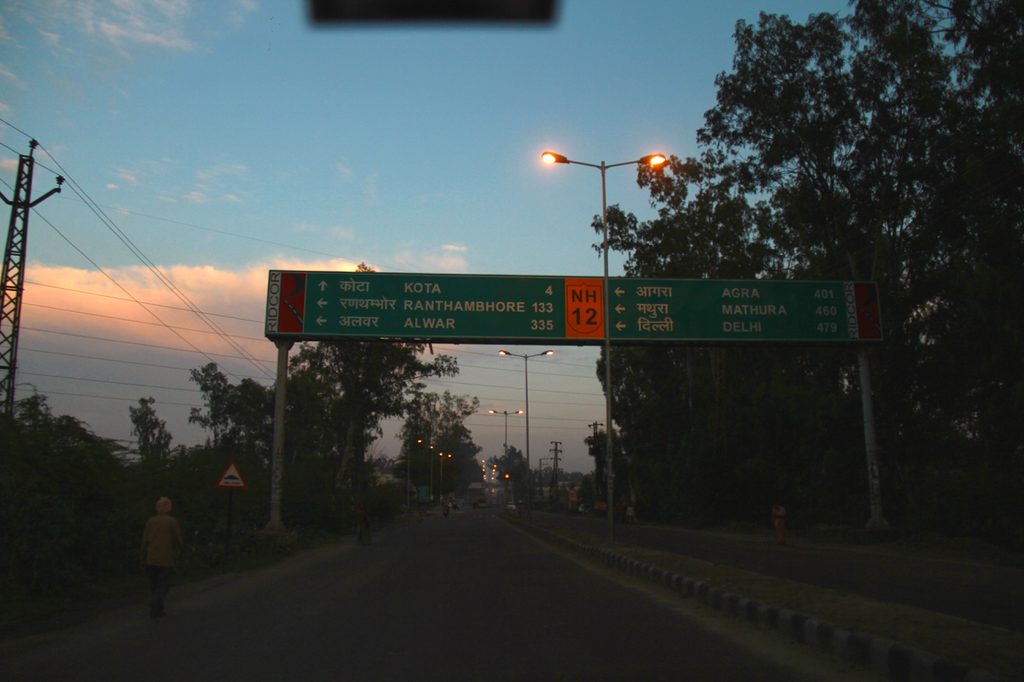
- Tonk corridor: Jaipur → Chaksu → Niwai → Tonk → Uniara → Sawai Madhopur → Ranthambore. This can suit travellers leaving from Jaipur Airport, Sanganer or the southern side of the city. Parts of the journey use the NH 52/NH 552 direction.
- Dausa–Lalsot corridor: Jaipur → Bassi/Dausa side → Lalsot → Sawai Madhopur → Ranthambore. This may make sense from eastern or northern Jaipur and may appear shorter for some exact pins.
Neither should be called the “best route” for every date and every starting point. Roadwork, village traffic, rain and temporary diversions can reverse the time advantage. Enter the hotel name, not only “Ranthambore National Park”, in live navigation on the morning of travel. If using a hired cab, ask the driver which corridor is operating better that day.
Open a live Jaipur-to-Ranthambore driving search in Google Maps.
What the Jaipur to Ranthambore road trip is actually like
The drive moves from Jaipur traffic into smaller towns, farmland and mixed two- and four-lane sections. Tractors, animals, speed breakers and short rough patches can make the fastest map estimate unrealistic.
For a smoother journey:
- Leave before city traffic builds and keep a 45–60-minute buffer before safari reporting.
- Refuel in Jaipur, download the route offline and save the hotel and safari contacts.
- Use a clean, busy fuel station or restaurant for a toilet stop.
- In July–September, check rainfall and local road conditions. In December–January, avoid an aggressive schedule because early-morning fog can slow the journey.
- Do not add Chand Baori, Mehandipur Balaji or another substantial detour to a safari day without checking the extra distance first. Attractions described as “on the way” on cab pages may require a different corridor and several additional hours.
How to reach Ranthambore from Jaipur
The right mode depends less on raw journey time and more on group size, luggage, safari shift and what happens after arrival.
| Option | Door-to-door planning time | Indicative 2026 cost | Best suited to | Main drawback |
|---|---|---|---|---|
| Private car or Jaipur to Ranthambore cab | 3.5–4.5 hours | Sedan roughly ₹2,500–₹4,500 one way; SUV roughly ₹3,500–₹6,000 | Families, groups, airport arrivals, afternoon safari | Higher cost; tiring same-day return |
| Train to Sawai Madhopur | 2.5–4 hours including local transfer | Rail ticket roughly ₹160–₹1,000 per person, plus taxi/auto | Solo travellers, couples, value seekers | Must coordinate station transfer and safari reporting |
| Bus to Sawai Madhopur | 4.5–6.5 hours including local transfer | Commonly ₹214–₹700 per person, plus taxi/auto | Flexible budget travellers | Fewer practical departures and greater timing uncertainty |
| Self-drive car | 3.5–4.5 hours | Fuel, tolls, parking and rental if applicable | Confident drivers who want flexibility | Driver fatigue after an evening safari |
| Flight | Not applicable | — | — | Ranthambore has no useful commercial airport connection from Jaipur |
All fares are planning ranges, not quotes. Prices change with date, demand, vehicle, class and pickup point. Check the final inclusions before paying.
Jaipur to Ranthambore by car or taxi
A car removes the station transfer, carries luggage comfortably and gives families control over breaks. It is the most workable option for a one-day trip built around an afternoon safari.
Current cab marketplaces display very different starting fares: approximately ₹1,944 on Savaari, ₹2,261 on MakeMyTrip and ₹3,844 on EaseMyTrip when checked for this research. Those headline prices may refer to different dates, pins, vehicle types and inclusions. A sensible planning allowance is ₹2,500–₹4,500 for a one-way sedan and ₹3,500–₹6,000 for a one-way SUV before any peak-date premium.
Before booking a Jaipur to Ranthambore taxi, ask for one written total covering:
- one-way or round-trip service;
- exact pickup and hotel drop;
- included kilometres and any garage-to-garage charging;
- tolls, parking, state tax and GST;
- driver allowance and night charge;
- waiting or sightseeing charge;
- vehicle model, legal passenger capacity and luggage space;
- cancellation terms and what happens if the return safari runs late.
For four adults with full-size luggage, a nominal four-seat sedan can feel cramped. An SUV is usually worth the difference. Ask for a child seat in advance if required; do not assume one will be available.
One crucial distinction: your Jaipur transfer cab does not automatically become your safari jeep. Entry into the tiger reserve requires a valid permit, approved vehicle and authorised guide. A package must state the safari arrangement separately.
Jaipur to Ranthambore by train
The train is often the best overall choice when the timetable fits. Search from Jaipur Junction (JP) to Sawai Madhopur Junction (SWM). The rail distance is about 132 km, and current timetable platforms show several direct services taking approximately 1 hour 50 minutes to 3 hours.
The daily Jaipur–Mumbai Central Superfast Express (12956) is one example shown at about 1 hour 50 minutes; the Ranthambore Express (12466) and other services also use the corridor. Check the train number, boarding station, running day, availability and live status on IRCTC or Indian Railways Passenger Enquiry before planning around it.
After reaching SWM, allow around 20–40 minutes for the onward trip to many Ranthambore Road hotels, depending on the property, traffic and pickup arrangement. Confirm whether the hotel offers a station transfer. An auto may work for a light day bag; a pre-arranged taxi is easier with children or several suitcases.
For a morning safari, arrive in Sawai Madhopur the previous evening. For an afternoon safari, a morning train can work, but leave a generous buffer for late running, station exit, hotel check-in and the separate safari reporting process. A non-refundable permit is a poor place to test a tight connection.
Jaipur to Ranthambore by bus
Buses run to Sawai Madhopur, not directly into a safari zone. Services may leave from Sindhi Camp or other Jaipur boarding points and terminate at the town bus stand, after which a local taxi or auto is required.
Bus aggregators showed fares from roughly ₹214–₹700 and journeys of about four hours for some direct services during the September 2026 check, but the displayed first and last departures were inconsistent across platforms. This makes the bus reasonable for a flexible overnight trip but a weak choice for a fixed safari on the same day.
Use the RSRTC booking portal as the starting point for government-bus availability, then confirm the boarding point and journey date. Do not rely on an undated timetable copied into a blog post.
Jaipur Airport to Ranthambore
Jaipur International Airport is the nearest major airport, but Ranthambore has no practical flight from Jaipur. From JAI, plan a road transfer of roughly 3.5–4.5 hours to a park-side hotel. Published distances vary from about 160 km to 180 km or more because hotels and reserve pins differ.
A direct airport cab is simplest. The cheaper alternative is a taxi from the airport to Durgapura or Jaipur Junction followed by a train to Sawai Madhopur, but it only makes sense when the connection is comfortable. Allow for baggage collection, Jaipur traffic and possible flight delay; never connect a flight to a safari with a narrow margin.
Plan the Ranthambore safari before the journey
The most important planning rule is simple: secure the safari first, then book transport and accommodation around the confirmed date and shift. A hotel room or Jaipur cab does not guarantee park entry.
The Rajasthan Forest Department provides an official safari-booking gateway, and the current reserve portal directs visitors to booking.forestrajasthan.com for live inventory. The portal warns users to book only through the official system and prohibits bots, automation and unauthorised booking tools.
Current booking windows
As displayed on the reserve portal on 9 September 2026:
| Booking type | Eligible visit | Opening time shown |
|---|---|---|
| Current safari | Today’s afternoon or tomorrow’s morning safari | Daily at 10:00 AM |
| Tatkal safari | T + 7 days | Daily at 11:00 AM |
| Premium Tatkal | T + 3 days, subject to cancelled inventory | Daily at 10:00 AM and 6:00 PM where applicable |
| Advance safari | 1 October–31 December | From 1 August at noon |
| Advance safari | 1 January–31 March | From 1 November at noon |
| Advance safari | 1 April–30 June | From 1 February at noon |
Availability remains subject to government rules and park capacity. Popular dates can disappear very quickly: reports said around 40,000 registrations were received in two hours when October–December 2026 bookings opened. Check the live portal rather than assuming a hotel or agent can produce a sold-out seat.
Gypsy or canter?
- A Gypsy/jeep carries up to six visitors and offers a smaller-group experience. It is usually preferred by photographers and families willing to pay more.
- A canter carries up to 20 visitors. It costs less per person and is practical for groups, but boarding and wildlife viewing can feel busier.
Both follow an allotted zone and use an authorised guide. A more expensive vehicle does not buy a tiger sighting. The official information portal correctly notes that sightings depend on natural animal movement, not a guaranteed zone.
Seasonal safari timings
Ranthambore normally runs one morning and one afternoon shift. The widely published timetable is below, but the time printed on the final permit or current booking screen controls because weather and official orders can change operations.
| Dates | Morning safari | Afternoon safari |
|---|---|---|
| 1–31 October | 6:30–10:00 AM | 2:30–6:00 PM |
| 1 November–31 January | 7:00–10:30 AM | 2:00–5:30 PM |
| 1 February–31 March | 6:30–10:00 AM | 2:30–6:00 PM |
| 1 April–15 May | 6:00–9:30 AM | 3:00–6:30 PM |
| 16 May–30 June | 6:00–9:30 AM | 3:30–7:00 PM |
Confirm the pickup and reporting time separately; it may be earlier than the drive’s official start. Some vehicles collect guests from approved pickup points or hotels, while other arrangements require travellers to report elsewhere.
2026 safari prices and ID rules
Following a reported 10% increase effective 1 April 2026, published per-person charges were approximately:
| Visitor | Canter | Gypsy/jeep |
|---|---|---|
| Indian national | ₹986.63 | ₹1,611.80 |
| Foreign national | ₹2,399.63 | ₹3,024.80 |
These figures were reported from the revised Forest Department tariff. Taxes, booking components, selected inventory or later government revisions can affect the checkout total, so use them as a reference and treat the official payment screen as final.
Enter every traveller’s name and identification details carefully. Carry the same original photo ID used for the booking; foreign visitors should use the passport details required by the portal. A mismatch can jeopardise entry. Save an offline copy of the permit and payment confirmation as well.
How many safaris should you book?
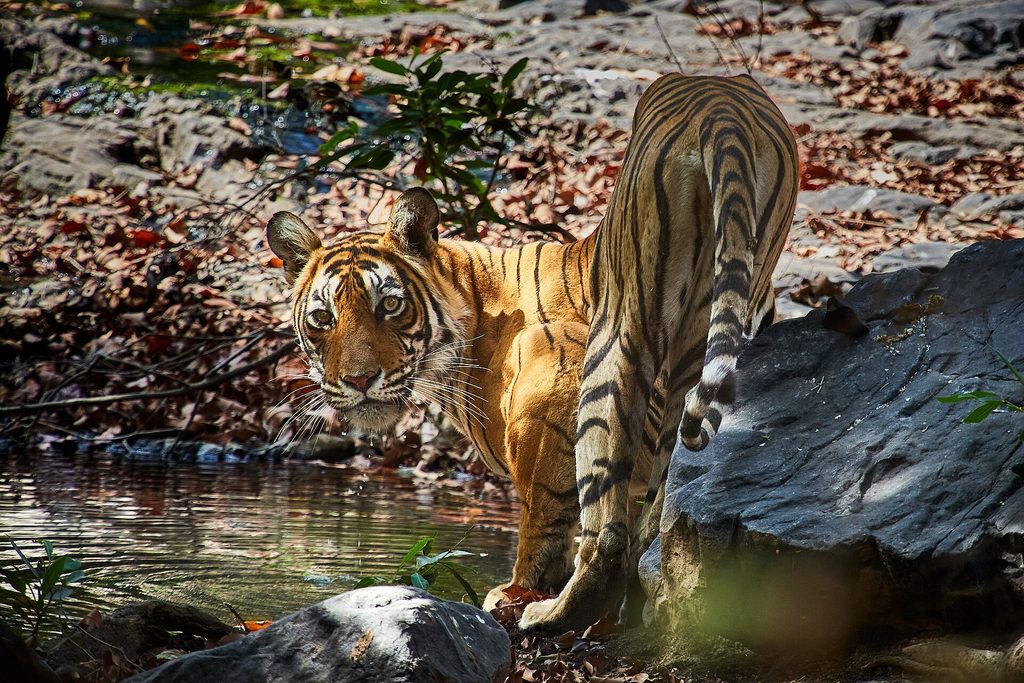
One safari can be rewarding even without a tiger: Ranthambore also supports leopards, sloth bears, sambar, chital, nilgai, crocodiles and many bird species. If seeing a tiger is the main reason for travelling, two or three drives provide more independent opportunities than chasing a supposedly “guaranteed” zone.
Avoid anyone promising a certain tiger, demanding an unofficial cash payment for a better sighting or encouraging the driver to crowd wildlife. Remain seated, keep voices low, do not feed animals or litter, and follow the guide’s instructions. The quality of a safari is partly measured by how little disturbance visitors create.
Jaipur to Ranthambore itinerary: one day or two days
Jaipur to Ranthambore one-day trip
Yes, a same-day trip is possible—but it should be built around a confirmed afternoon safari. Trying to leave Jaipur at dawn for a Ranthambore morning safari is not realistic: the safari may begin at 6:00, 6:30 or 7:00 AM, and reporting can be earlier.
A workable one-day schedule is:
- 6:30–7:00 AM: Leave Jaipur by private car with breakfast packed or stop briefly after clearing the city.
- 10:30–11:30 AM: Reach the hotel/pickup area. Use the restroom, eat an early lunch and reconfirm the vehicle.
- About 60 minutes before the permit time: Report as instructed. Do not substitute a generic online schedule for the time on the booking.
- 2:00–7:00 PM: Afternoon safari window, varying by season; the actual drive is normally about 3–3.5 hours.
- After the safari: Start for Jaipur after a quick refreshment stop.
- 9:30–11:30 PM: Reach Jaipur in ordinary conditions.
This is a 12–15-hour outing and can be demanding for children, older travellers or anyone travelling onward that night. Do not add Ranthambore Fort; it needs its own two- to three-hour window and involves an uphill walk and uneven steps.
Jaipur–Ranthambore 2-day trip: wildlife-first plan
This itinerary fits two safaris without relying on an unsafe connection.
Day 1: Jaipur to Ranthambore and afternoon safari
- Leave Jaipur around 6:30–7:00 AM.
- Reach the hotel by late morning, keeping enough time for check-in and lunch.
- Take the pre-booked afternoon safari.
- Return to the hotel, dine early and prepare clothes, ID and camera for the morning.
Day 2: Morning safari, fort and return
- Take the morning safari.
- Return for breakfast and check out.
- If the group has the energy and the fort is open, visit Ranthambore Fort and Trinetra Ganesh Temple. Keep two to three hours and wear shoes suitable for steps.
- Eat lunch, then leave for Jaipur around 2:00–3:00 PM.
- Expect to arrive in Jaipur during the evening.
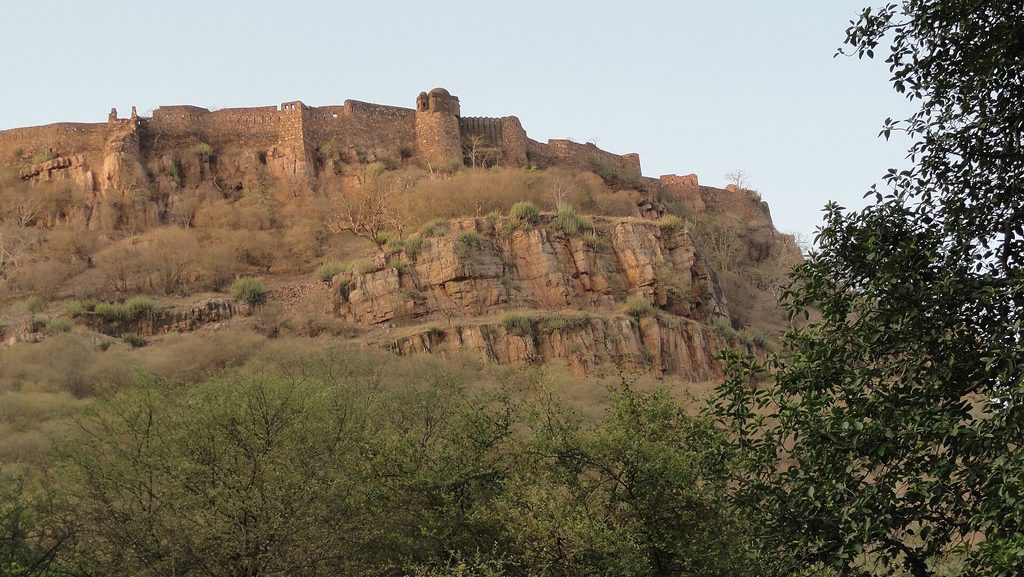
The fort forms part of UNESCO’s serial Hill Forts of Rajasthan World Heritage property. UNESCO describes Ranthambore as an established forest hill fort and notes that the remains of Hammir’s palace are among India’s oldest surviving palace structures.
A gentler two-day itinerary for families
If two safaris plus the fort feel excessive, make Day 1 a transfer and heritage day. Leave Jaipur after breakfast, have lunch after arrival and visit the fort in the cooler part of the afternoon, subject to current access. Take one morning safari on Day 2, return for breakfast and drive back to Jaipur after a rest.
This version protects children’s sleep, reduces rushing and leaves room for delays.
What a Jaipur to Ranthambore tour package should specify
A package can be convenient, especially for a first visit, but compare the inclusions line by line. Ask for:
- The confirmed safari date, shift, vehicle and number of seats—not merely “safari assistance”.
- The permit or booking reference and the official channel used.
- Whether the safari is shared or exclusive, and whether the quoted “jeep” is a reserve-approved safari vehicle.
- Hotel name, room category, meal plan and distance from the pickup area.
- Jaipur pickup/drop pins and private or shared transfer.
- Tolls, parking, driver allowance, taxes and night charges.
- Cancellation rules for the room, road transfer and safari separately.
- The policy if the park closes because of weather or an official order.
A low package price is not a saving if the safari permit is extra, the vehicle is a 20-seat canter rather than a Gypsy, or the return cab charges a second day’s minimum kilometres.
Jaipur to Ranthambore cost: a realistic 2026 budget
The total Jaipur to Ranthambore cost has five moving parts: intercity transport, local transfers, safari seats, accommodation and meals. Quoting only a taxi fare or park entry fee understates the trip.
| Cost item | Useful planning range |
|---|---|
| One-way sedan from Jaipur | ₹2,500–₹4,500 per car |
| One-way SUV from Jaipur | ₹3,500–₹6,000 per car |
| Two-day round-trip sedan with driver | ₹5,500–₹8,500, depending on minimum kilometres and allowance |
| Two-day round-trip SUV with driver | ₹7,500–₹12,000 |
| Jaipur–Sawai Madhopur train | Roughly ₹160–₹1,000 per person each way by class/service |
| Jaipur–Sawai Madhopur bus | Roughly ₹214–₹700 per person each way |
| Sawai Madhopur station/local transfer | About ₹300–₹800 per vehicle each way; confirm the hotel pin |
| 2026 Indian canter safari | About ₹987 per person per drive, subject to live checkout |
| 2026 Indian Gypsy safari | About ₹1,612 per person per drive, subject to live checkout |
| Basic to comfortable room | Roughly ₹2,000–₹7,000 per night outside extreme peak pricing |
| Higher-end resort | Often ₹8,000–₹25,000+ per night; luxury wildlife stays can cost much more |
| Meals | Roughly ₹800–₹2,000 per person per day, depending on hotel plan |
Sample budgets
Solo budget trip, 2 days/1 night: A return train, local transfers, one canter safari, a basic room and ordinary meals may total approximately ₹4,500–₹9,000.
Couple, 2 days/1 night: Return trains, local transfers, a comfortable room, two canter safaris each and meals may total roughly ₹11,000–₹20,000. A private road transfer or Gypsy seats increase the figure.
Family of four, 2 days/1 night: A return cab, one or two rooms, two canter safaris per person and meals may require roughly ₹27,000–₹45,000. Premium dates, Gypsy safaris and a higher-end resort can take the total well above this range.
Same-day trip for two: A return sedan, one Gypsy safari each and meals commonly produce a planning total of approximately ₹9,000–₹14,000.
These examples are budgeting tools, not package quotes. Safari fees can be revised, hotel rates surge on long weekends, and a cab’s cheapest displayed fare may exclude a condition that matters to your itinerary. Reprice all components for the same date before comparing DIY travel with a Jaipur to Ranthambore tour package.
Best time to visit and practical travel advice
Rajasthan Tourism lists Ranthambore’s principal open season as October to June. The right month depends on whether comfort, wildlife photography or family ease matters most.
| Period | What it is like | Planning advice |
|---|---|---|
| October–February | Cooler days, cold open-vehicle mornings and highest visitor demand | Best for families and first visits; carry layers and reserve early |
| March–April | Warmer, generally easier early starts and thinning vegetation | Good balance for wildlife watchers; sun protection is essential |
| May–June | Severe afternoon heat; wildlife may gather near remaining water | Consider health and heat tolerance, especially for children and older adults |
| July–September | Monsoon; core-zone operations are commonly closed or restricted | Never assume availability; some outer-zone operations may run only under current official orders |
No month guarantees a tiger. Summer can improve visibility around water, while winter is more comfortable; animal movement, weather, zone and chance still determine each drive.
Final booking and packing checklist
Two or three days before departure:
- Recheck the official permit, visitor names and ID numbers.
- Confirm the reporting/pickup point and time with the safari contact.
- Check the train or bus live status, or reconfirm the cab and driver.
- Enter the exact hotel into live navigation and review weather or road alerts.
- Ask the hotel about early breakfast or packed food around the safari shift.
Carry on safari:
- The original photo ID used to book.
- Permit saved offline and a charged phone/power bank.
- Neutral, comfortable clothes; a warm layer in winter.
- Hat, sunscreen and reusable water bottle in warmer months.
- Binoculars and a camera with a secured strap.
- Dust protection if sensitive, and essential personal medicines.
Use the restroom before boarding; safari vehicles cannot stop wherever a passenger wishes. Keep valuables and food secured at the fort because monkeys are common. A relaxed arrival matters more than squeezing in another attraction.
Frequently asked questions
What is the exact Jaipur to Ranthambore distance?
There is no single exact figure for every traveller. Jaipur to a Ranthambore-area hotel is generally about 165–190 km by road, while Jaipur Junction to Sawai Madhopur is about 132 km by rail. Your pickup neighbourhood, chosen road and hotel or safari pin determine the final distance.
What is the best way to travel from Jaipur to Ranthambore?
A private car or cab is best for a family, group, airport arrival or one-day afternoon safari because it is door to door. A direct Jaipur-to-Sawai Madhopur train is usually best for a solo traveller or couple seeking speed and value. Arrive the previous evening if you have a morning safari.
Can I complete Jaipur to Ranthambore and return in one day?
Yes. Leave Jaipur around 6:30–7:00 AM, take a pre-booked afternoon safari and return late at night. Expect a 12–15-hour day. A morning safari is not a sensible same-day target from Jaipur because the drive begins before or around sunrise.
Which station should I select for a Jaipur to Ranthambore train?
Search Jaipur Junction (JP) to Sawai Madhopur Junction (SWM). Sawai Madhopur is the main rail gateway for Ranthambore. Arrange another 20–40 minutes for a taxi or hotel transfer after leaving the station.
How much is a Jaipur to Ranthambore taxi fare?
For 2026 planning, allow roughly ₹2,500–₹4,500 for a one-way sedan and ₹3,500–₹6,000 for a one-way SUV. Date, pickup, hotel, demand and inclusions can change the price. Confirm tolls, parking, taxes, driver allowance, night charges and minimum kilometres in writing.
The sensible way to plan Jaipur to Ranthambore
Start with the safari permit, not the cab. Once the shift is confirmed, choose a train for value or a car for door-to-door ease, allow about four hours by road, and stay overnight if your schedule permits. A two-day trip gives you a realistic chance to enjoy the forest, the journey and Ranthambore Fort without turning the holiday into a race.
Next, compare a detailed Ranthambore safari guide and a carefully sourced Ranthambore stay guide before paying for a package. If travelling on a peak weekend, verify the permit, room and transport together so one confirmed booking is not stranded without the other two.