
Guna Caves Kodaikanal: Updated Timings, Entry Fee, History & Safe Travel Guide (2026)
If Manjummel Boys or Kamal Haasan’s Gunaa put Guna Caves on your Kodaikanal list, know one thing before you go: tourists cannot enter the actual cave system. The attraction that is open today is a controlled forest trail and viewing area, separated from the deep fissures by safety barriers.
That does not automatically make the stop disappointing. The walk passes through a damp, cinematic landscape of tall trees, exposed roots and mist-darkened rock. But it is a much better experience when you arrive expecting atmosphere, film history and a short nature stop—not caving or an adventure trek.
This guide explains the current timings and combined entry fee, where to book tickets, what families should expect, the verified history, and how to combine the visit with nearby stops.
Quick answer: Guna Caves is open to tourists as a viewing attraction, generally from 9:00 AM to 4:00 PM daily. Entry into the inner caves is prohibited. The current official Indian tariff for the combined 12-Mile Road circuit is ₹30 per adult and ₹20 per child aged 5–12, plus applicable vehicle or camera charges. Timings, access and fees can change because of rain, fire risk, wildlife activity, maintenance or crowd-control measures, so check the official portal on the day of travel.
1. Guna Caves Kodaikanal at a glance
Here is the practical information most visitors need before leaving town. The official source is the Kodaikanal Wildlife Sanctuary’s 12-Mile Road page, which is also linked by the Dindigul District administration.
| Visitor detail | Current practical information |
|---|---|
| Location | Moir Point Road/Pillar Rocks Road, Kodaikanal, Dindigul district, Tamil Nadu |
| Distance from Kodaikanal | About 8.5–10 km from the bus stand or central area, depending on the starting point and route |
| Normal opening time | 9:00 AM |
| Normal closing time | 4:00 PM |
| Open days | All days under normal conditions |
| Access status | Visitor trail and designated viewing area open; inner caves and deep ravines closed |
| Indian entry fee | ₹30 adult; ₹20 child aged 5–12 |
| Indian vehicle fee | ₹50 car/van; ₹20 two-wheeler |
| Indian camera fee | ₹50 still camera; ₹300 video camera, as listed on the official tariff page |
| Foreign visitor tariff | ₹300 adult; ₹200 child aged 5–12; separate vehicle and camera tariffs apply |
| Ticket coverage | Combined access to Guna Caves, Pillar Rocks, Pine Forest and Moir Point on the 12-Mile Road circuit |
| Ticketing | Online/QR-based booking is available; save the ticket offline before entering the low-signal hill route |
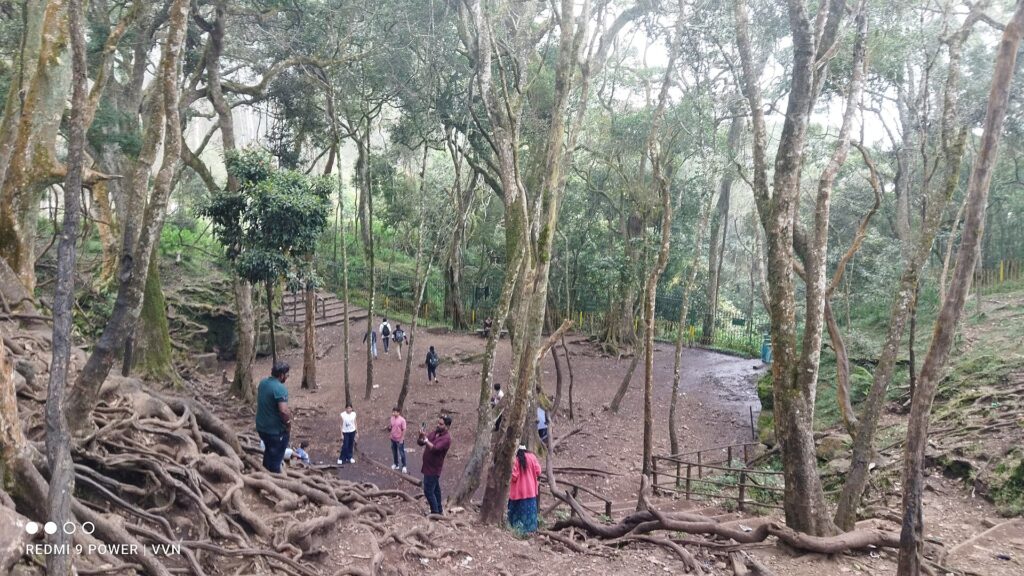
| Walking involved | A short but uneven forest walk; allow roughly 10–15 minutes each way for an unhurried pace |
| Time at the attraction | About 30–60 minutes; longer when crowded |
| Best visit window | A weekday morning, ideally near opening time, for lighter crowds; clear views are never guaranteed |
Is Guna Caves open for tourists?
Yes, the Guna Caves visitor area is open under normal conditions. The forest department describes the 12-Mile Road ecotourism circuit as operating throughout the year, from 9:00 AM to 4:00 PM. However, temporary closures are possible during heavy rain, forest fires, wildlife threats, maintenance work or other safety situations.
The important distinction is this: the tourist attraction is open, but the inner cave is not. You may walk through the permitted forest section and see parts of the cave formation from designated areas. You may not cross the barricades, climb into openings or attempt the route shown in films.
Is there a separate Guna Caves ticket price?
Under the current system, the ticket is for the larger 12-Mile Road circuit rather than a ₹5 or ₹10 standalone Guna Caves entry. Many pages still display those older prices. The official tariff page lists ₹30 for an Indian adult and ₹20 for a child aged 5–12, with separate vehicle and camera charges.
The official table does not state a tariff for children below five. Families should confirm that detail during booking instead of assuming a charge or exemption. Keep a screenshot or downloaded copy of the QR ticket because mobile reception can be patchy on this side of Kodaikanal.
2. What are Guna Caves, and what will you actually see?
Guna Caves—historically called Devil’s Kitchen—are deep, narrow chambers and fissures associated with the enormous rock formations around Pillar Rocks. The site lies at roughly 2,200 metres above sea level in the upper Palani Hills. The drama comes as much from the landscape around the openings as from the inaccessible cavities themselves.
The modern visitor experience has three main parts:
- The approach through the forest. From the vehicle area, a shaded trail leads through a cool, often damp landscape. It feels very different from the open lawns and lakefront in central Kodaikanal.
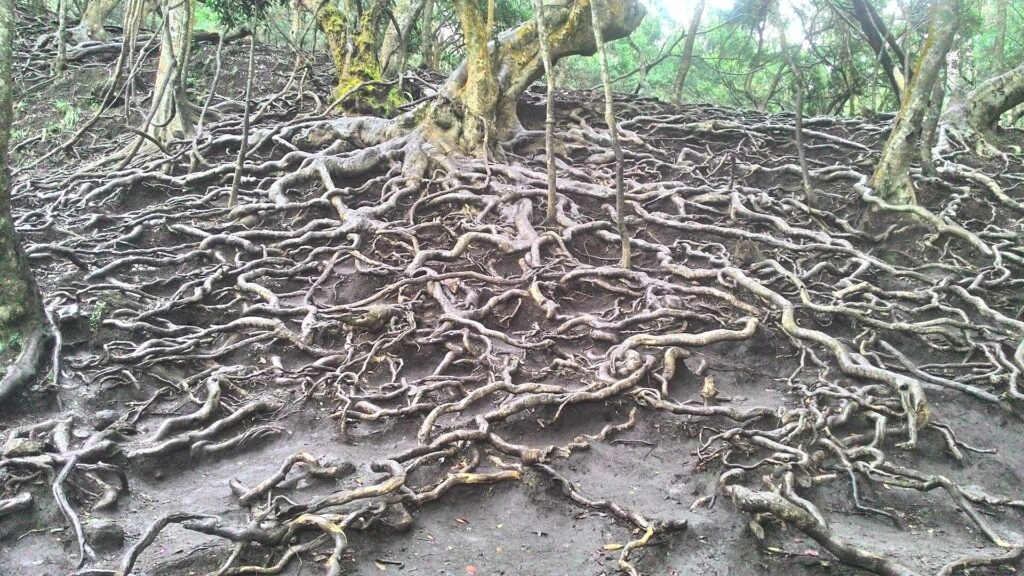
- The exposed root formations. Tangled roots spread across the ground and rock, creating the location’s familiar moody look. The forest department identifies roots of Syzygium species and related evergreen shola trees in this area. Although many travel pages loosely describe every root as a pine root, the nearby pine plantation and the shola vegetation should not be treated as the same thing.
- The fenced cave viewpoint. Iron barriers keep visitors away from the steep openings and hidden drops. Vegetation, mist and the viewing angle may limit how much of the cave you can actually see.
Can tourists enter Guna Caves?
No. Tourists cannot enter the deep chambers or ravines. The official forest tourism page says that entry into the caves is restricted and that visitors may view sections only from designated areas.
This is not a technical cave tour, a legal trekking route or a place to recreate scenes from Manjummel Boys. A guide cannot override the restriction. Anyone offering to take visitors beyond a barrier is proposing an unsafe and unauthorised activity.
Is Guna Caves worth visiting?
It is worth visiting if you enjoy film locations, unusual forests, atmospheric photography or short nature walks. It also fits efficiently into the same sightseeing circuit as Pillar Rocks and Pine Forest.
It may not be worth a dedicated trip if your only aim is to enter a cave or obtain a wide, unobstructed valley view. Traveller feedback is divided for precisely this reason. Positive Guna Caves reviews tend to praise the roots, forest mood and movie connection. Critical reviews commonly mention crowds, limited visibility and disappointment that the caves are seen only through or beyond fencing.
A realistic visit is often 30–45 minutes at the site itself. Add time for the walk, ticket checks, traffic and photographs. On a busy holiday weekend, the queue and road congestion may take longer than the attraction.
3. Guna Caves history, Devil’s Kitchen and the real story behind the films
The history of Guna Caves is often told as one seamless mystery story. In reality, it helps to separate documented events, local legend and cinema.
The 1821 account
Tourism sources commonly associate the site with B. S. Ward and the year 1821. They conflict on whether Ward was American, English or British, and rarely link to a primary record. “Recorded in 1821” is therefore safer than embellishing his identity or claiming local people did not know the terrain earlier.
Why were Guna Caves called Devil’s Kitchen?
There is no single well-documented origin story for the name Devil’s Kitchen. One local tradition connects the chambers with the Pandavas and says they cooked there during exile. Other retellings describe vapour or smoke rising from the fissures, inspiring supernatural ideas about a devil’s kitchen.
These are stories, not established geology or verified history. They are worth sharing because they form part of the site’s identity, but a trustworthy guide should label them as folklore. The darkness, concealed drops, mist and unusual soundscape offer a more straightforward explanation for why the landscape accumulated ominous stories.
How Gunaa changed the name
The location became nationally recognisable after appearing in the 1991 Tamil film Gunaa, starring Kamal Haasan. The cave setting and the song sequence associated with “Kanmani Anbodu Kadhalan” became part of Tamil cinema memory. As visitors increasingly connected the place with the film, “Guna Caves” overtook Devil’s Kitchen as the everyday name.
You may see both spellings online: Gunaa is the film title commonly written with two “a”s, while the attraction is usually written as Guna Caves.
Guna Caves and Manjummel Boys: what really happened?
The 2024 Malayalam film Manjummel Boys was inspired by a real incident involving friends from Manjummel, near Kochi. During their 2006 Kodaikanal trip, one member of the group fell into a dangerous pit in the restricted cave area. His friend Siju David descended during the rescue effort and helped bring him out alive.
The broad event is real, but the film is a dramatised work rather than an instruction manual or an exact visual record of today’s attraction. The Press Information Bureau’s report on the film at IFFI confirms the real-life inspiration and notes that filming inside the actual cave was not possible. A large cave replica was built in a warehouse for much of the production.
So, where is the Manjummel Boys cave location? The real incident took place at Guna Caves in Kodaikanal, but much of the cave interior seen on screen is a constructed set. Visitors should not expect the public trail to match every frame of the film.
Guna Caves deaths and accident history
The danger is not a marketing legend. The cave system has concealed vertical fissures, poor light, slippery surfaces and spaces that are exceptionally difficult for rescuers to access. A 2012 New Indian Express report described an unsuccessful search after a visitor entered the restricted cave. In 2016, Deccan Chronicle quoted forest officials saying that 16 people who had gone missing in the cave had not been recovered.
Those reports explain why the barriers are non-negotiable, but they do not establish a final lifetime toll. Articles variously state 12, 13, 16 or more deaths, often without dates. Exact 600- or 900-foot depth claims also conflict. Without a current official register or survey, the accurate takeaway is that the hidden drops are potentially fatal—not that one dramatic number is proven.
Why the public area reopened but the caves did not
The site was closed to visitors for roughly a decade before forest authorities developed a safer, fenced viewing arrangement in 2016. Reopening meant restoring controlled access to the surrounding attraction—not allowing the public back into the inner cave system. That distinction remains in place in 2026.
4. Guna Caves timings, entry fee and online ticket booking in 2026
The most reliable current source lists the 12-Mile Road circuit timing as 9:00 AM to 4:00 PM on all days. Google Maps also showed 9:00 AM–4:00 PM when this guide was checked. Older ranking pages quote 8:00 AM, 4:30 PM or 5:30 PM; those figures should not override the forest department’s current information.
Arrive well before closing; staff may stop admission earlier to clear the forest route safely in poor weather or heavy traffic.
Current official tariff
The following prices were displayed by the Kodaikanal Wildlife Sanctuary on 3 September 2026. They cover the 12-Mile Road ecotourism circuit, including Guna Caves, Pillar Rocks, Pine Forest and Moir Point.
| Category | Indian visitor tariff | Foreign visitor tariff |
|---|---|---|
| Adult | ₹30 | ₹300 |
| Child aged 5–12 | ₹20 | ₹200 |
| Car/van | ₹50 | ₹500 |
| Two-wheeler | ₹20 | ₹200 |
| Still camera | ₹50 | ₹500 |
| Video camera | ₹300 | ₹3,000 |
Fees may be revised, and special arrangements have changed more than once during periods of severe congestion. In May 2026, for example, the district temporarily waived fees to ease summer traffic; that was a time-limited measure, not a permanent free-entry policy. Use the live official tariff rather than old snippets or reviews.
How to book a Guna Caves ticket online
- Open the official Kodaikanal Wildlife Sanctuary ticket portal and choose the 12-Mile Road option and date.
- Add the visitor, vehicle and camera details requested by the live form.
- Pay using an available method, then download the ticket and save it offline before leaving reliable Wi-Fi.
The online system was introduced to reduce queues and payment delays caused by weak mobile signals on the circuit. If the portal is unavailable, follow the current instructions at the official checkpoint; do not assume that cash, a particular wallet or an old ticket counter will be accepted.
Reasons Guna Caves may be closed
The forest authority may restrict the circuit because of:
- heavy rain or unsafe trail conditions;
- forest fire risk;
- wild animal movement;
- a natural calamity;
- maintenance or security work; or
- exceptional traffic and crowd-control requirements.
For a same-day status check, use the official booking page or contact the Kodaikanal Wildlife Sanctuary reception at +91 88386 69358. Travellers driving into Kodaikanal during a peak-season traffic-control period should also check the Dindigul District website for any separate vehicle-pass or road advisory. An entry ticket for the attraction does not automatically replace a district traffic requirement.
5. Guna Caves location, route, parking and how to reach
Guna Caves is on the forest sightseeing corridor commonly called the 12-Mile Road circuit, near Pillar Rocks and Pine Forest. Map listings place it on Pillar Rocks Road, Kodaikanal. Distances vary because one page measures from the bus stand, another from the lake and another from a broader town reference point.
For planning, use these ranges:
| Starting point | Approximate distance or route |
|---|---|
| Kodaikanal Bus Stand/town centre | About 8.5–10 km |
| Kodaikanal Lake area | Roughly 7–9 km, depending on the side of the lake |
| Pillar Rocks | In the same immediate sightseeing zone; commonly listed within about 0.5–1 km |
| Pine Forest | Nearby on the same circuit, commonly listed around 0.5 km away |
| Moir Point | On the same circuit, roughly 1.5–2 km away |
| Kodai Road railway station | About 80 km to Kodaikanal town, then the local sightseeing drive |
| Madurai Airport | About 120 km to Kodaikanal town, then the local sightseeing drive |
For navigation, use the live Guna Caves map listing rather than copying coordinates into an unfamiliar offline map. Download the Kodaikanal area in advance because data coverage can weaken on the forest road.
From Kodaikanal town by taxi
A local sightseeing taxi is the simplest option for most families. Ask for the 12-Mile Road or Pillar Rocks circuit and confirm whether waiting time, parking and the return to your hotel are included. The drive usually takes around 20–35 minutes from the central area without severe congestion, but a holiday traffic jam can make it much longer.
By private car or two-wheeler
Self-driving is possible when the route is open, but the road can be narrow, crowded and misty. Drive slowly, avoid risky overtaking and follow temporary traffic plans. Two-wheeler riders need rain protection and should never stop on a blind bend for photographs.
Guna Caves parking
Vehicle access and parking are managed as part of the circuit. In practice, the final stopping point can vary with crowds and traffic control, and visitors may still need to walk several minutes to the trail entrance. Do not promise a door-to-viewpoint drop for an older traveller.
What is the walk like?
The commonly reported approach is roughly 400–500 metres from the visitor entrance, usually around 10–15 minutes each way. Treat that as a travel estimate rather than an official measured distance. The surface includes roots, steps, damp soil and uneven sections. Rain can make it slick.
Wear closed shoes with tread. Flip-flops, smooth fashion shoes and wheeled luggage are poor choices. The route is not reliably wheelchair- or stroller-friendly, and there may not be a continuous handrail. Anyone with knee, balance, breathing or mobility concerns should assess the path at the entrance and be comfortable turning back.
Reaching Kodaikanal first
Kodaikanal has no airport or mainline railway station. The Kodaikanal Municipality identifies Madurai as the nearest airport, about 120 km away. Kodai Road is the commonly used railway station, about 80 km from the hill station. Buses connect Kodaikanal with Madurai, Dindigul, Batlagundu, Palani and other regional centres, but schedules should be checked directly for the travel date.
6. Best time to visit Guna Caves, weather and safety for families
For the easiest walking conditions, choose a relatively dry day between January and March. April to June is also popular because school holidays and pleasant hill temperatures make family travel convenient, but it is Kodaikanal’s busiest period and afternoon showers are possible.
The landscape is greener in the monsoon and post-monsoon months, yet that beauty comes with more slippery ground, fog, rain and possible access changes. Historical climate data from the India Meteorological Department shows October and November among Kodaikanal’s wettest months, while January and February are much drier on average.
| Period | What to expect | Practical verdict |
|---|---|---|
| January–February | Chilly mornings, lower average rainfall, possible mist | Strong choice for walking; carry a warm layer |
| March–June | Pleasant days, holiday crowds, increasing chance of showers | Good weather but busiest; book and leave early |
| July–August | Frequent rain, damp forest, slippery roots | Visit only in suitable weather and with good footwear |
| September–November | Lush scenery but historically high rainfall, fog and disruption risk | Atmospheric, but keep a flexible plan |
| December | Cool conditions with some residual rain | Enjoyable on a dry day; check the forecast |
No month guarantees a clear view. Mist can arrive in minutes in the Palani Hills. A weekday near opening time is usually best for crowd avoidance, while visibility sometimes improves later in the morning as mist shifts. Check the forecast, but trust on-site conditions and forest staff over a weather app.
Guna Caves with children
Families can visit the permitted area, but “family-friendly” should not be confused with “effortless for every age.” Use this quick test:
- Babies and toddlers: A body carrier is more practical than a stroller; one adult should focus on the child.
- Children aged 5–12: Suitable if they follow instructions and stay beside an adult on uneven ground.
- Teenagers: Explain that barriers are absolute and movie-inspired dares or climbing are unacceptable.
- Older adults: Roots, steps and damp surfaces can make the short distance tiring; let the slowest person set the pace.
- Wheelchair users: Do not assume step-free access. Confirm current conditions with the forest office before travelling.
If a child is tired, frightened by the story or unable to remain close in a crowd, skip the final viewpoint. Pine Forest or Pillar Rocks may still make the circuit worthwhile.
Essential Guna Caves safety rules
- Stay behind every barrier. A fence is not a photography prop or a challenge.
- Do not enter side openings. There is no safe public cave route beyond the controlled viewing area.
- Keep children within arm’s reach. Crowds, roots and uneven ground demand active supervision.
- Watch the surface, not only the scenery. Stop walking before looking through a camera or phone.
- Do not feed or tease monkeys. Keep food sealed and bags close; never pull an item back from an animal.
- Use shoes with grip. Slow down on wet roots and wooden or stone steps.
- Respect closure instructions. Heavy rain or wildlife activity can make a previously open path unsafe.
- Carry little and carry it securely. Water, a light rain layer, a warm layer and a downloaded ticket are enough for most visits.
- Leave no waste. The surrounding shola ecosystem is more important than a single visitor’s photograph.
For an emergency, alert forest staff immediately. India’s emergency response number is 112, and the Dindigul District administration lists 108 for ambulance assistance.
7. Places to visit near Guna Caves and a practical half-day itinerary
The best way to plan a Guna Caves trip is as part of the forest circuit rather than as an isolated return drive. Your combined ticket already covers four attractions, subject to current access.
Pillar Rocks
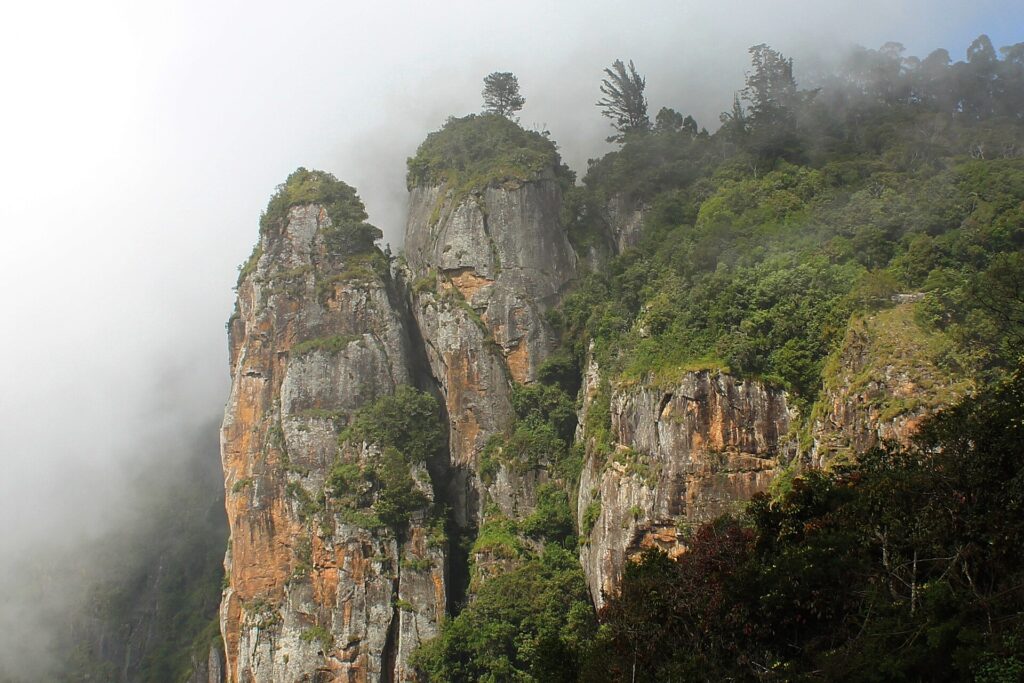
Pillar Rocks is the natural companion to Guna Caves. Three towering formations rise above the valley, although cloud can hide them completely. Its maintained viewpoint is often easier for families to appreciate at a glance.
Pine Forest
The pine plantation offers tall trunks, photographs and short walks. Loose needles can be slippery, and horse activity may be present, so supervise children.
Moir Point
Moir Point is a quick viewpoint towards the plains and layered hills. It is also associated with circuit entry, so follow the live route order rather than insisting on a fixed itinerary.
Green Valley View
Green Valley View is in the wider corridor but is not one of the four attractions listed on the current circuit ticket. Its open valley view contrasts with Guna Caves; expect shops, monkeys and crowds.
Kodaikanal Lake and Coaker’s Walk
Back in town, Kodaikanal Lake suits a relaxed afternoon, while Coaker’s Walk offers a promenade-style viewpoint. Their charges and hours are separate.
A realistic Guna Caves Kodaikanal itinerary
The order below is flexible. Forest staff may operate a different traffic flow, and clear weather may justify visiting Pillar Rocks earlier.
8:30 AM — Leave central Kodaikanal. Eat breakfast first and download tickets, maps and the driver’s contact details.
9:00 AM — Enter the 12-Mile Road circuit. Complete the ticket check and follow the route announced at the checkpoint.
9:15–10:00 AM — Moir Point or Pine Forest. Take an easy walk and judge the weather.
10:00–11:00 AM — Guna Caves. Walk slowly, photograph the roots and use only the permitted viewing area. Turn back if rain intensifies.
11:00 AM–12:00 PM — Pillar Rocks. Visibility can change quickly, so allow time for moving cloud.
12:00–1:00 PM — Return towards town. Add Green Valley View only if traffic, weather and the family’s energy allow it.
Afternoon — Lunch, lake or rest. One unhurried town activity usually works better than another packed loop.
For a two-day Kodaikanal plan, place this forest circuit on the driest morning and keep lake-area attractions for the other day. That flexibility is more valuable than assigning Guna Caves to a fixed date before seeing the forecast.
Frequently asked questions about Guna Caves
What are the Guna Caves timings today?
The official 12-Mile Road ecotourism timing is 9:00 AM to 4:00 PM daily under normal conditions. Weather, maintenance, wildlife or crowd control can cause a temporary change, so check the official ticket portal before leaving.
What is the Guna Caves entry fee in 2026?
The current official Indian tariff is ₹30 per adult and ₹20 per child aged 5–12. This is a combined 12-Mile Road circuit ticket covering Guna Caves, Pillar Rocks, Pine Forest and Moir Point. Vehicle and camera fees are extra.
Can tourists go inside Guna Caves?
No. Tourists can use the permitted forest trail and designated viewing areas, but the inner caves and deep ravines are closed. Do not cross fences or follow anyone offering unauthorised cave entry.
How far is Guna Caves from Kodaikanal?
Guna Caves is about 8.5–10 km from Kodaikanal’s bus stand or central area, depending on where you start. In light traffic, allow around 20–35 minutes by road, plus the walk from the vehicle area.
Is Guna Caves safe for a family trip?
The authorised visitor area can be visited safely when families remain on the marked path, stay behind barriers and supervise children closely. The uneven, sometimes slippery walk is not ideal for every toddler, stroller, wheelchair user or person with limited mobility.
Conclusion: plan for the forest, not a cave expedition
Guna Caves is open, but its dangerous interior is not. Visit for the shadowy shola landscape, remarkable roots, cinema history and the feeling of standing near one of Kodaikanal’s most storied natural formations. Plan on a short, uneven walk, book the combined forest-circuit ticket, reach well before 4:00 PM and keep every family member behind the barriers.
The stop works best alongside Pine Forest, Moir Point and Pillar Rocks on a dry morning. Before setting out, check the official portal for the current fee and access status, then build the rest of your day around the weather rather than trying to outrun it.
Next, read a complete Kodaikanal family itinerary or a guide to the best places to visit in Kodaikanal so you can group nearby attractions without wasting time in hill traffic.