Jaipur to Khatu Shyam Distance: Best Route, Fares, Timings & One-Day Trip Plan (2026)
The Jaipur to Khatu Shyam distance is short enough for a same-day pilgrimage, but the number shown online can be confusing. One page says 77 km, another says 80 km, and a cab operator may quote 90 or even 95 km. All of them can be plausible because Jaipur is a large city and the final distance changes with your pickup point, the road selected and temporary traffic diversions.
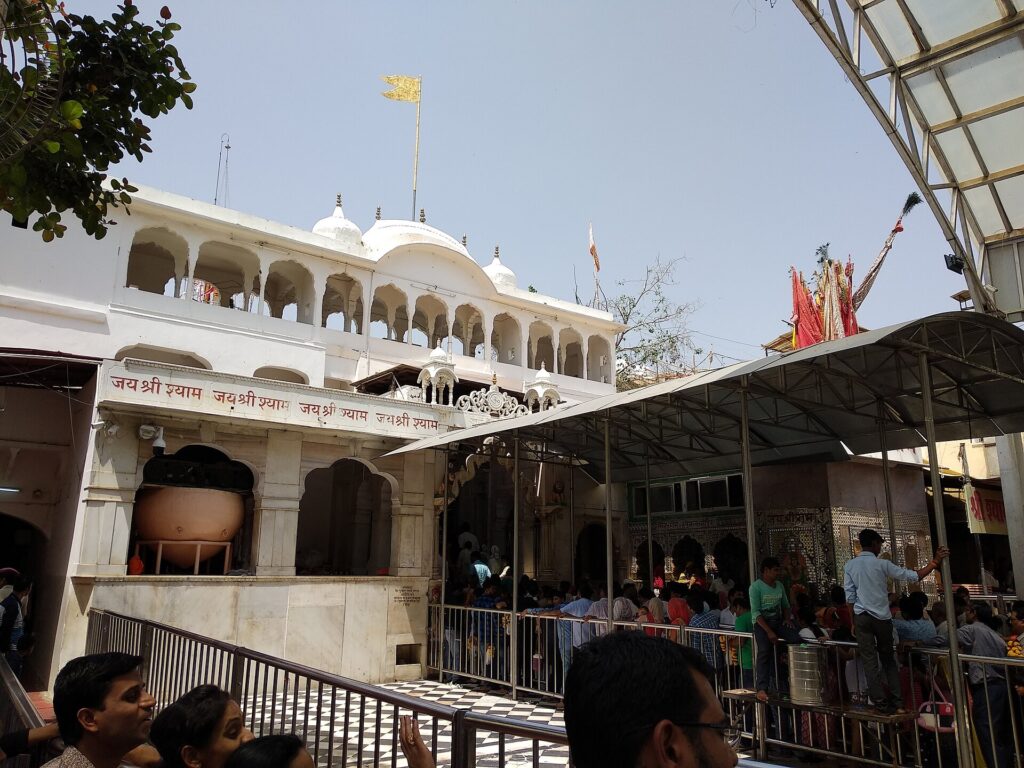
For most travellers leaving central Jaipur, Khatu Shyam Ji is about 80–90 km away by road. A car or taxi usually takes 1 hour 45 minutes to 2 hours 15 minutes in normal traffic. The most practical route is Jaipur → Chomu → Ringas (Reengus) → Khatu Shyam Ji, using NH 52 for the main Jaipur–Ringas stretch.
The drive is straightforward, but weekend traffic, Ekadashi crowds, parking diversions or the Phalgun Mela can add far more time than the distance suggests. This guide covers the route, fares, train and bus options, seasonal temple hours, tolls and practical one-day plans—including what to confirm before leaving.
Quick answer: Jaipur to Khatu Shyam Ji is roughly 80–90 km by road from central Jaipur. Allow about two hours each way on an ordinary day, and keep a generous buffer on weekends, Ekadashi, public holidays and mela dates.
Jaipur to Khatu Shyam distance by road and travel time at a glance
| Trip detail | Practical planning figure |
|---|---|
| Distance from central Jaipur | About 80–90 km by road |
| Jaipur Railway Station to Khatu Shyam distance | Roughly 78–85 km, depending on the route and exact pickup gate |
| Jaipur Airport to Khatu Shyam distance | About 89–95 km by road because the airport is south of the city |
| Jaipur to Ringas distance | About 61 km by road or rail from Jaipur Junction |
| Ringas to Khatu Shyam distance | About 17 km |
| Normal car or taxi time | Around 1 hour 45 minutes to 2 hours 15 minutes one way |
| Bus travel time | Usually about 2.5–3.5 hours, depending on stops or a change at Ringas |
| Train route | Jaipur Junction to Ringas Junction, then 17 km by shared jeep, auto or taxi |
| Best road route | Jaipur → Chomu → Ringas → Khatu Shyam Ji via NH 52 |
| Same-day return possible? | Yes on an ordinary day; risky without a large buffer on peak pilgrimage dates |
The Rajasthan Tourism guide to Khatu Shyam Mandir identifies Ringas Junction as the nearest railway station, about 17 km from the temple, and confirms that Jaipur is the nearest major airport. Live route planners commonly place the road journey from central Jaipur in the high-70s to mid-80s kilometres, while an airport pickup is closer to 90 km.
Why does the distance change from one website to another?
“Jaipur” is not a single starting pin. Harmada is closer to Sikar Road, while the airport, Sitapura and Jagatpura lie south of the city. Ring Road use and temporary crowd-control approaches also change the total. That is why 80–90 km is more honest than one over-precise number. Enter your actual pickup point before leaving and treat the map time as driving time, not full door-to-darshan time.
How long should you really allow?
| Travel situation | Sensible one-way allowance |
|---|---|
| Early weekday, normal conditions | 1 hour 45 minutes–2 hours 15 minutes |
| Weekend or Jaipur peak-hour departure | 2–3 hours |
| Ekadashi, major holiday or special event | 3 hours or more, depending on restrictions |
| Phalgun Mela period | Do not rely on a normal road estimate; plan around official traffic and temple advisories |
The last 17 km from Ringas is the most variable section. Temple traffic, local vehicles and walking pilgrims can slow it sharply. Parking, security and walking time remain after you reach the town.
Best route from Jaipur to Khatu Shyam Ji by road
For most travellers, the best route is:
Jaipur → Harmada/Sikar Road → Chomu → Ringas (Reengus) → Khatu Shyam Ji
The main Jaipur–Ringas section follows NH 52. This is the route most local cabs, buses and private vehicles use because navigation is simple and fuel stations, tyre shops and food stops are available along the way. After Ringas, take the signed road towards Khatu. The final section is shorter and narrower than the highway, so progress can slow when the temple is busy.
Editor image placement: Add a clean route map here showing Jaipur → Chomu → Ringas → Khatu Shyam Ji. Suggested alt text: “Jaipur to Khatu Shyam route via Chomu and Ringas on NH 52.” Use a custom map graphic rather than copying a commercial map screenshot.
Route for travellers starting in central or north Jaipur
If you are near Jaipur Junction, Sindhi Camp, Bani Park, Vidhyadhar Nagar, Jhotwara or Harmada, join Sikar Road and continue towards Chomu and Ringas. This is usually the simplest option and avoids unnecessary movement towards eastern or southern Jaipur.
Route from Jaipur Airport, Tonk Road or south Jaipur
From Jaipur International Airport, Sitapura or Tonk Road, the map may suggest a Ring Road connector before joining the Sikar-bound route. This can add kilometres but save time by avoiding central-city traffic. Do not choose the shortest-looking local road merely to reduce the number on the screen; the wider route is normally easier for a family car, taxi or tempo traveller.
Is the Sikar route better?
Going all the way towards Sikar before turning for Khatu is normally longer if the temple is your only destination. It makes sense only when your itinerary includes Sikar or a separate attraction in the region. For a direct Jaipur to Khatu Shyam one-day trip, the Chomu–Ringas approach is the usual choice.
Jaipur to Khatu Shyam road conditions
Road conditions are generally good on the main highway. Traffic and visibility are the main concerns.
- Expect a broad, busy highway for much of the Jaipur–Ringas journey.
- Watch for slow trucks, tractors, motorcycles, animals and vehicles entering from side roads.
- The Ringas–Khatu section is narrower and can become congested near religious events.
- Early winter mornings may bring fog; summer afternoons bring heat and glare.
- Heavy monsoon rain can create temporary waterlogging or slow-moving patches.
- The final approach has less consistent lighting than Jaipur city roads.
With children or senior citizens, prefer an early daylight departure and one planned washroom stop.
Jaipur to Khatu Shyam toll charges
The usual NH 52 route passes the Tatiyawas fee plaza on the Jaipur–Ringas stretch. Budget roughly ₹75–₹100 per car for one crossing, then verify the live rate: tolls are revised and a different approach may change the charge. Check the NHAI toll information system or Rajmarg Yatra before travel.
When hiring a cab, ask whether the quote includes:
- both toll crossings on a return trip;
- parking near Khatu;
- driver allowance and waiting time;
- GST;
- pickup outside the operator’s normal Jaipur zone; and
- any night or festival surcharge.
A cheap base quote can become expensive when these items are added later.
Driving your own car or two-wheeler
A self-drive car gives you control over breaks and return time. Keep FASTag active, refuel before Ringas and save the route offline. A two-wheeler is possible but less comfortable in heat, fog or pilgrimage traffic; wear proper helmets and avoid the unfamiliar final stretch after dark.
How to reach Khatu Shyam from Jaipur: car, taxi, bus or train?
The best mode depends on group size and how much control you need over the day. A solo traveller may save money with a train to Ringas. A family with young children or older members will usually value a private vehicle more than the small fare saving from multiple transfers.
| Mode | Typical total time one way | Indicative cost | Best for | Main drawback |
|---|---|---|---|---|
| Own car | About 2 hours, plus parking | Fuel + toll + parking | Families who are comfortable driving | Driver fatigue and peak-day parking |
| Private taxi | About 2 hours, door to door | ₹1,500–₹2,200 one way; roughly ₹2,500–₹3,500 same-day return for a small car | Families, older travellers and groups | Quote inclusions vary |
| Direct bus, when operating | About 2.5–3 hours | Roughly ₹100–₹200 one way for ordinary/express services | Budget travellers | Timings and seat availability change |
| Bus via Ringas | About 3–4 hours including transfer | Bus fare plus last-mile vehicle | Flexible solo travellers | Extra transfer and waiting |
| Train to Ringas + road | About 2–3.5 hours overall | Train fare + ₹30–₹150 shared ride or ₹300–₹600 private vehicle | Solo travellers and rail users | No railway station at Khatu itself |
These are planning ranges, not guaranteed prices. Holiday demand, vehicle type, pickup area and booking time can change the final amount.
Jaipur to Khatu Shyam by car
For a family trip, a private car is usually the easiest option. You can leave before Jaipur traffic builds, stop for breakfast, keep water and medicines in the vehicle and return when everyone is ready. A same-day round trip is approximately 160–190 km depending on your Jaipur address and any detours.
Keep the evening flexible: the queue, parking exit or Ringas road can delay your return.
Jaipur to Khatu Shyam taxi fare and cab price
A reasonable 2026 planning range is:
| Vehicle | One-way planning range | Same-day return planning range |
|---|---|---|
| Hatchback or sedan | ₹1,500–₹2,200 | ₹2,500–₹3,500 |
| Ertiga or similar MPV | ₹2,000–₹3,000 | ₹3,000–₹4,000 |
| Innova or larger SUV | ₹2,700–₹4,000 | ₹3,800–₹5,500 |
| 12-seat tempo traveller | Usually quoted by day/package | Often ₹5,000–₹7,500 or more |
Festival dates, long waits and multiple pickups can raise the price. Before paying, get the vehicle, pickup time, waiting limit, kilometres and inclusions in writing. Confirm whether the driver waits in Khatu or only drops you. A sedan can suit four adults; train or bus is much cheaper for one.
Jaipur to Khatu Shyam bus timings and fare
Government and private buses connect Jaipur with Khatu or with Ringas, depending on the service and date. This is one area where online pages frequently contradict each other: some say there is no direct bus, while current route listings sometimes show direct RSRTC services.
The safest advice is simple: search your exact date on the official RSRTC booking and timetable portal. Use “Jaipur” or the relevant Jaipur stop as the origin and try both “Khatushyamji” and “Ringas/Reengus” as the destination. If no convenient direct service appears, take a bus to Ringas and complete the final 17 km by shared jeep, auto, e-rickshaw or taxi.
Third-party timetable snapshots published in August 2026 showed some direct Jaipur departures in the morning and evening, with ordinary or express fares broadly around ₹100–₹200. Treat those times as examples, not a permanent Jaipur to Khatu Shyam bus timetable. Services may be added, cancelled or diverted around fairs and traffic plans.
Confirm the actual boarding point, reach early, ask where the bus terminates and check the last practical return before beginning darshan. On peak dates, do not assume the first arriving bus will have space.
The RSRTC portal currently advertises a concession for female passengers on eligible intrastate services. Check whether it applies to your selected bus and carry the required identification rather than assuming every operator offers it.
Jaipur to Khatu Shyam by train: nearest railway station
There is no railway station at the temple. Ringas Junction (RGS) is around 17 km away. Jaipur Junction to Ringas is about 61 km and commonly takes roughly one to two hours, depending on the train.
Use Indian Railways Passenger Reservation Enquiry or IRCTC for the date-specific list, running days, class, fare and live status. Do not copy a train number from an old blog without checking it: passenger services and special trains can change, particularly around the mela.
From Ringas Junction, typical last-mile choices are:
- shared jeep: often about ₹30–₹100 per person;
- shared e-rickshaw or auto: often about ₹100–₹150 per person, depending on demand;
- full auto/e-rickshaw: roughly ₹400–₹600;
- private taxi: roughly ₹300–₹600 in normal conditions.
Confirm whether the fare is per seat or for the vehicle. Mela restrictions may move the usual drop point. Train plus shared transport suits one or two budget travellers but is less convenient with luggage, a stroller or an older passenger.
From Jaipur Airport or Jaipur Railway Station
From Jaipur International Airport, allow around 89–95 km and approximately two to two-and-a-half hours in ordinary conditions. Going into central Jaipur merely to board a bus or train can consume the time saved, so a direct taxi is usually the simplest choice for a family arriving by flight.
From Jaipur Railway Station, the road distance is commonly around 78–85 km. You can take a direct cab, travel to Sindhi Camp for a bus or board a suitable train from Jaipur Junction to Ringas. If your incoming train already stops at Ringas, compare timings before continuing to Jaipur and then travelling back north.
Khatu Shyam temple timings and the best time to visit
Temple hours change with the season and may be extended, shortened or reorganised on Ekadashi, festival dates and special occasions. The Rajasthan Tourism temple page, updated in 2026, gives these general darshan windows:
| Season | Morning darshan | Evening darshan |
|---|---|---|
| Winter | 5:30 am–1:00 pm | 5:00 pm–9:00 pm |
| Summer | 4:30 am–12:30 pm | 4:00 pm–10:00 pm |
The temple normally closes between the two sessions. Do not arrive just before the afternoon break unless the official update for your date confirms continuous darshan.
The Shri Shyam Mandir Committee website lists five daily aartis. Its published schedule currently shows broad windows around:
- Mangala Aarti: approximately 4:45–5:45 am;
- Shringar Aarti: approximately 7:00–8:00 am;
- Bhog Aarti: approximately 12:15–12:30 pm;
- Sandhya Aarti: around sunset, commonly within the 6:00–7:15 pm window; and
- Shayan Aarti: later in the evening, within the published 9:00–10:30 pm window.
Treat these Khatu Shyam Ji darshan timings as planning guidance, not a promise that the queue will move normally at that minute. Check the official committee’s latest notice the evening before travel and again before leaving Jaipur. The committee website also publishes current darshan posts and contact details.
Best time to visit Khatu Shyam Ji temple
For pleasant weather: October to March is most comfortable. Winter mornings can be cold or foggy, so carry a light layer and drive patiently.
For a relatively calmer visit: Choose a non-Ekadashi weekday and arrive in the first part of the morning session. No period is guaranteed to be empty.
For small children: A weekday morning can be better than forcing a 3:00 am wake-up. Keep the child rested and leave a buffer before the afternoon closure.
For older travellers: Use a door-to-door vehicle, minimise bags and avoid extreme heat. Ask where the day’s traffic plan allows passengers to be dropped.
For the Phalgun Mela: Go only if you want the large pilgrimage atmosphere. Transport, queues, walking routes and parking operate differently, so it is not an ordinary same-day trip.
Ekadashi, weekends and festival days
Ekadashi is especially important to devotees and therefore much busier. If your priority is peaceful darshan rather than a specific religious date, choose another weekday. If the date itself matters, keep the full day free, carry essentials, arrange the return journey in advance and follow district administration or temple committee notices.
Avoid paying an unofficial agent who promises guaranteed “VIP darshan” or a secret fast-entry route. Use only arrangements formally announced by the temple committee or administration. Proposed systems and media reports are not the same as an active official booking facility.
Jaipur to Khatu Shyam one-day trip itinerary
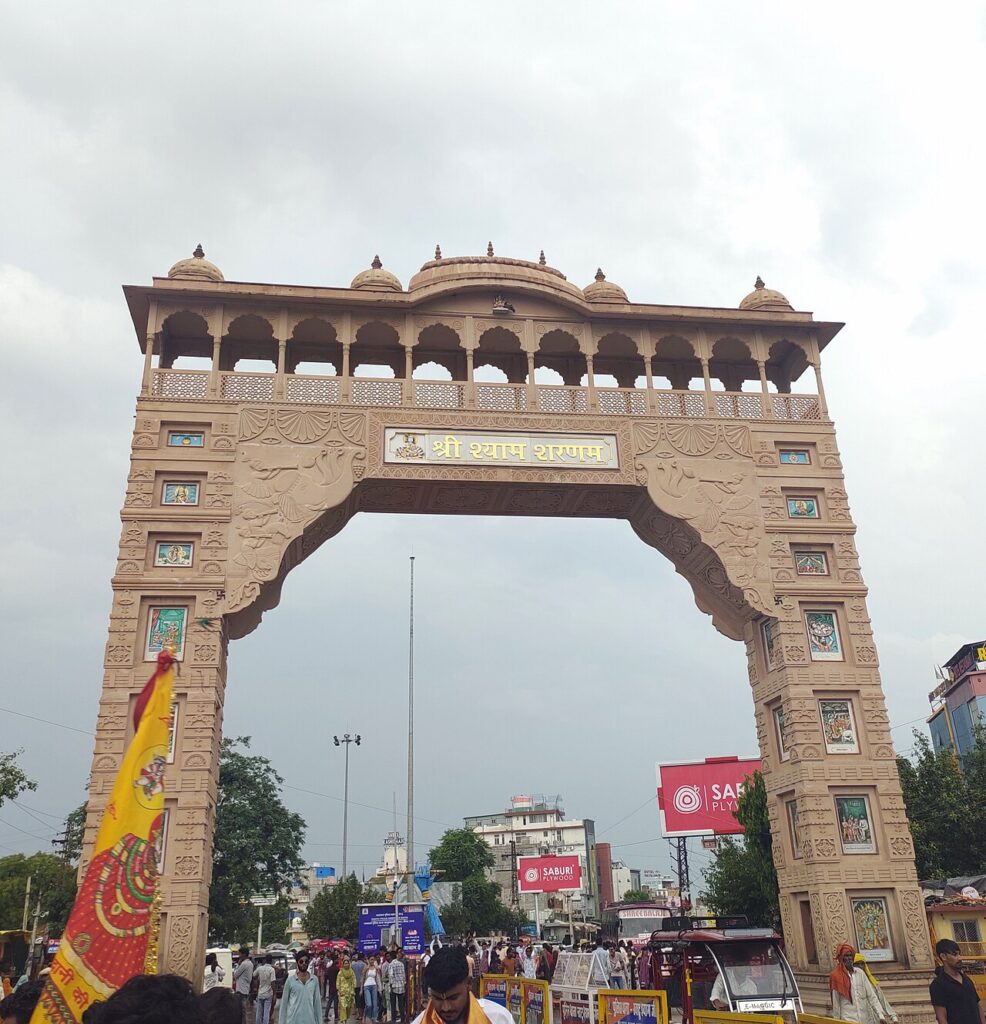
A same-day return works well when you start early, visit on an ordinary day and resist adding too many detours. The itinerary below builds in more breathing room than many online plans.
Jaipur to Khatu Shyam itinerary for a comfortable family weekday
5:30 am — Leave Jaipur
Start before city traffic builds. If travelling in winter fog, delay slightly rather than driving fast in poor visibility. Carry water, a light snack and any essential medicines in an easy-to-reach bag.
6:30–6:50 am — Short breakfast and washroom stop
Stop around Chomu or at a clean highway restaurant. Keep the break short; the purpose is to arrive rested, not to turn the drive into a long food trail.
7:30–8:00 am — Reach the designated Khatu parking or drop area
The exact point depends on the day’s traffic plan. Note the parking name or pin it on your phone before leaving the vehicle. Photograph the driver’s number plate if using a hired cab.
8:00–11:00 am — Darshan buffer
This is deliberately a three-hour window. On a quiet day, you may finish much sooner. On a busy morning, the extra time prevents the rest of the day from collapsing. Follow the official queue and security instructions, and carry as little as possible.
11:00–11:45 am — Shyam Kund or local market
Shyam Kund is close to the temple and is traditionally associated with the discovery of the sacred head of Barbarika. Visit respectfully and follow local rules. If the family is tired or the queue took longer, skip this stop without feeling that the trip is incomplete.
12:00–1:00 pm — Early vegetarian lunch
Choose a busy, clean restaurant, order simple food and drink sealed or reliably filtered water. An early lunch helps you leave before the afternoon heat and later traffic.
1:00–1:30 pm — Start for Jaipur
Leaving at this time gives you a comfortable return buffer. You should ordinarily reach Jaipur between 3:00 and 4:30 pm, depending on the city drop point and traffic.
Option 2: Early darshan and quicker return
This version suits adults who can manage a very early start.
- 4:00–4:30 am: leave Jaipur;
- 6:00–6:30 am: arrive near Khatu;
- 6:30–9:30 am: darshan buffer;
- 9:30–10:30 am: breakfast and optional Shyam Kund visit;
- 10:30–11:00 am: begin return;
- approximately 1:00 pm: reach Jaipur under normal conditions.
Do not use this schedule if the driver has not rested, dense fog is forecast or your family will be exhausted before reaching the temple.
Peak-day itinerary: change the expectation, not just the departure time
On Ekadashi, a long weekend or a major festival, keep the entire day open. Arrange return transport and confirm access instructions. If anyone cannot comfortably handle a long wait, choose a quieter date rather than depending on an unverified shortcut.
During the Phalgun Mela, an overnight stay in Khatu, Ringas or Sikar may be more sensible than forcing a same-day drive. Book only after checking the official event dates and traffic arrangements.
Jaipur to Khatu Shyam family trip: what to carry
- photo ID, tickets and cab confirmation;
- water and light snacks for the road;
- prescribed medicines and a basic first-aid pouch;
- cap, sunscreen and breathable clothing in warm weather;
- a light jacket for winter mornings;
- comfortable, easy-to-remove footwear;
- a small amount of cash in addition to UPI;
- power bank and the driver’s number written on paper;
- one small bag rather than several loose items; and
- a simple meeting point in case family members become separated.
Check the latest rules for phones, cameras, bags and lockers before joining the queue. Facilities and security restrictions can change on crowded days.
Approximate one-day trip budget
| Traveller type | Transport and day-cost estimate | What changes the total |
|---|---|---|
| Solo by bus/shared transport | About ₹500–₹1,000 | Bus type, last-mile fare, meals and return timing |
| Solo by train via Ringas | About ₹500–₹1,200 | Train class, shared/private last-mile ride and food |
| Couple using public transport | About ₹1,000–₹2,200 | Chosen train/bus, transfers and meals |
| Family of four in a sedan | About ₹3,500–₹5,500 total | Cab inclusions, toll, parking, meals and waiting |
| Group in an SUV/MPV | About ₹4,500–₹7,000 total | Vehicle size, pickup points and extra waiting |
Temple entry itself is generally free. Be cautious when a third party bundles ordinary darshan with a vague “special fee.” Donations are a personal choice and should be made only through authorised channels.
Places to visit between Jaipur and Khatu Shyam, plus practical stops
The direct trip can fill the day, so add a stop only if the queue and the group’s energy allow it.
Chomu: the most practical breakfast stop
Chomu lies on the usual route and is the easiest place for fuel, breakfast or a washroom break without a detour.
Chomu Palace is a heritage property in the town, but it is not a guaranteed walk-in sightseeing attraction. If you want to stop for a meal or view the property, contact it in advance and confirm visitor access.
Samode: attractive, but not a quick roadside stop
Samode Palace and village require a real detour. Add them only with confirmed access, a private vehicle and a flexible return.
Shyam Kund: the easiest spiritual add-on
Shyam Kund is near the temple, so it is the most natural addition after darshan. Rajasthan Tourism describes it as the sacred pond traditionally associated with the discovery of Barbarika’s head. Allow time for local walking and follow the instructions at the site.
Jeen Mata Temple: an extension, not an en-route tea break
Jeen Mata Temple is not on the shortest route. Treat it as a separate extension for a private vehicle and early start, or save it for a dedicated temple circuit.
Five checks before leaving Jaipur
- Open the latest notice on the official temple committee website.
- Recheck the live route and any road closure or diversion.
- Verify RSRTC or Indian Railways timings for the exact date.
- Confirm return transport, fare inclusions and the latest pickup time.
- Keep a large queue and parking buffer; do not calculate the day from driving time alone.
Useful external resources
- Shri Shyam Mandir Committee — latest temple notices, darshan posts and official contact details.
- Rajasthan Tourism: Khatu Shyam Mandir — seasonal hours, temple background and official travel overview.
- RSRTC online booking and timetable — date-specific Rajasthan Roadways services and fares.
- Indian Railways Passenger Reservation Enquiry — trains between Jaipur and Ringas, schedules and fare enquiry.
- NHAI toll information — Tatiyawas fee-plaza details; verify the current effective rate.
- Wikimedia Commons: Khatushyam Temple — reusable temple images; check and follow each file’s individual licence.
Frequently asked questions
What is the exact Jaipur to Khatu Shyam Ji distance?
The Jaipur to Khatu Shyam Ji distance is usually about 80–90 km by road from central Jaipur. It can be closer to the high-70s from some central or northern points and around 89–95 km from Jaipur Airport. Your exact pickup location and route determine the final figure.
How much time does Jaipur to Khatu Shyam take by car?
Allow about 1 hour 45 minutes to 2 hours 15 minutes one way in normal traffic. Weekends, Ekadashi, holidays, parking diversions and the Phalgun Mela can add one or several hours. Driving time does not include parking, walking, security or the darshan queue.
Is there a direct bus from Jaipur to Khatu Shyam Ji?
Direct RSRTC or private services may operate on some dates, but schedules change. Search Jaipur to “Khatushyamji” on the official RSRTC portal. If a suitable direct bus is unavailable, travel to Ringas and take a shared jeep, auto, e-rickshaw or taxi for the final 17 km.
Which railway station is nearest to Khatu Shyam Ji?
Ringas Junction (RGS) is the nearest railway station, around 17 km from the temple. From the station, shared jeeps, autos, e-rickshaws and taxis usually cover the last leg in about 30–45 minutes, depending on traffic.
Can I visit Khatu Shyam from Jaipur and return the same day?
Yes. A Jaipur to Khatu Shyam same-day return trip is comfortable on an ordinary weekday if you leave early and keep a generous darshan buffer. On Ekadashi, festival dates or during the Phalgun Mela, keep the whole day free or consider staying overnight.
Conclusion: plan around the queue, not only the kilometres
The most useful answer to the Jaipur to Khatu Shyam distance is about 80–90 km by road and roughly two hours each way in normal conditions. Take NH 52 through Chomu and Ringas, choose train plus local transport if you are travelling solo on a budget, and use a private car or cab when convenience matters more than the lowest fare.
The detail that makes or breaks the trip is not the last five kilometres on the map. It is the combination of temple hours, crowd level, parking plan and return transport. Check official updates the day before, leave Jaipur early and keep the itinerary light. That approach gives your family enough time for darshan without turning a short pilgrimage into a rushed day.
Next step: Before fixing the date, check the latest temple notice and live transport schedule. Then read a related Jaipur one-day trip or family itinerary guide to plan the rest of your stay.