Jaipur’s headline sights sit in three clusters: the forts around Amer, the Walled City, and the temples and gardens east and south of the centre. Cross between all three in one day and traffic replaces sightseeing.
This Jaipur 3-day itinerary groups nearby places into a realistic first-time route. It includes current opening times, 2026 entry fees, transport estimates, family adjustments and enough time for lunch and a midday break.
Three days are enough for Jaipur’s essential forts, palaces, markets and temples. Spend Day 1 on the Amer fort circuit, Day 2 in the Walled City, and Day 3 around Galtaji, Jaipur’s gardens and south-city attractions.
Price note: Rajasthan revised many state-monument fees from 1 January 2026. Older articles still show the previous ₹50–₹100 rates. Prices and temporary closures can change, so check the official Rajasthan OBMS booking portal and the attraction’s own website shortly before visiting.
Jaipur 3-Day Itinerary at a Glance
Day
Best route
Main places
Suggested hours
Best way to travel
Day 1
Amer and the hill forts
Panna Meena ka Kund, Amber Fort, Jaigarh Fort, Nahargarh Fort, Jal Mahal
7:30 am–6:00 pm
Full-day cab
Day 2
Walled City and Ram Niwas Garden
Hawa Mahal, Jantar Mantar, City Palace, Johari/Bapu Bazaar, Albert Hall Museum
This plan assumes that you have two full nights in Jaipur and can begin sightseeing early on Day 1. If your train or flight arrives after noon, use the arrival-day variation later in this guide rather than forcing the full fort circuit.
Do you need every stop? No. Amber Fort, City Palace, Jantar Mantar and Hawa Mahal are the four strongest choices for a first visit. Jaigarh, Nahargarh, Albert Hall and the Day 3 stops add depth. Families with small children or travellers with limited mobility should remove one hill fort from Day 1.
Day 1: Amber Fort, Jaigarh, Nahargarh and Jal Mahal
Day 1 is walking-intensive. Wear shoes with grip, carry water and use one waiting car; finding a new cab at each hill fort can waste time.
7:30 am: Leave central Jaipur for Amer
Leave by 7:30 am, or earlier from April to September. The drive from Bani Park, MI Road or C-Scheme to Amer often takes 30–45 minutes, but weekend and holiday traffic can lengthen it.
Start with Panna Meena ka Kund, a compact stepwell near Amber Fort. Allow 20–30 minutes. Entry is generally free, but access to the steps may be restricted for safety and conservation. Do not cross barriers simply for a photograph.
8:30 am–11:00 am: Explore Amber Fort properly
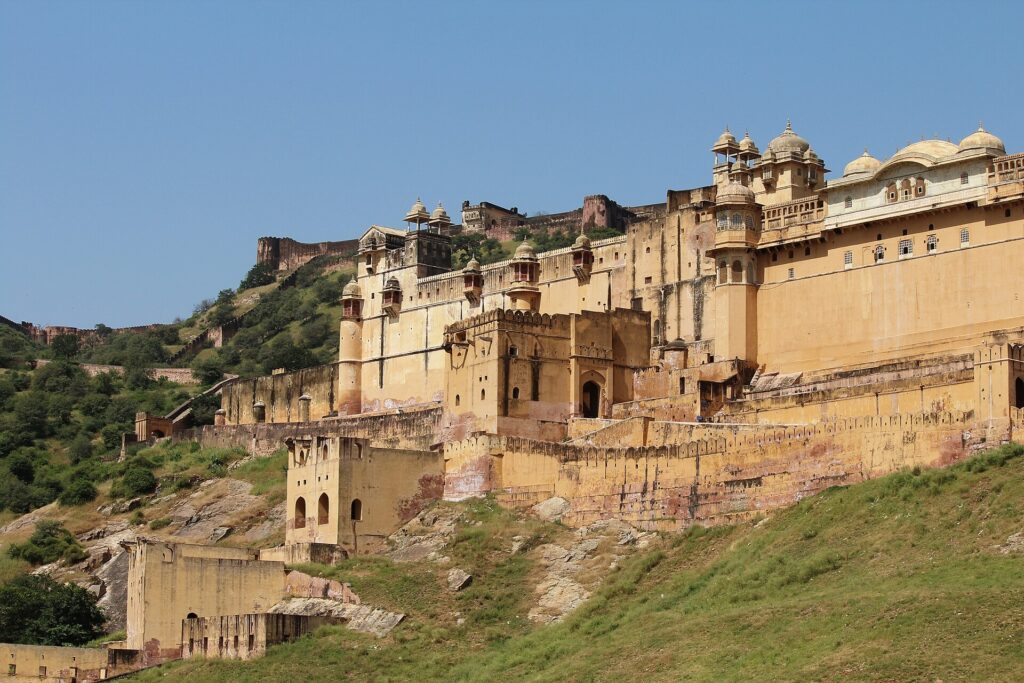
Amber Fort—also written as Amer Fort—is the anchor of a first Jaipur visit. Its courtyards and mirrored rooms rise above Maota Lake, and it forms part of UNESCO’s Hill Forts of Rajasthan. Follow the palace through Jaleb Chowk, Diwan-e-Aam, Ganesh Pol, Sheesh Mahal and Sukh Niwas. Allow 2.5–3 hours.
The official Amber Fort listing shows daily hours of 7:00 am–8:00 pm, except specified holidays such as Dhulandi. The revised 2026 entry fee is ₹200 for Indian adults and ₹1,000 for international adults. Student concessions require valid identification.
Practical choice: Walk up if everyone in your group is comfortable with the slope, or use the authorised jeep/car access. We recommend skipping elephant rides and choosing a vehicle or walking instead.
11:20 am–12:50 pm: Continue to Jaigarh Fort
Jaigarh is a defensive fort with ramparts, water systems, a cannon foundry, the Jaivana cannon and excellent views towards Amber. Allow 75–90 minutes. The Government of India’s Incredible India listing gives conservative hours of 9:30 am–5:00 pm; plan around that and confirm locally. Commonly listed entry is ₹150 for Indian adults and ₹200 for international adults.
If your group includes toddlers, grandparents or anyone already tired after Amber, skip Jaigarh. One fort enjoyed slowly is better than three forts remembered as staircases.
1:10 pm–2:00 pm: Take a real lunch break
Eat around Amer Road instead of driving back to the Walled City. In hot weather, choose indoor seating and take a full 45-minute break.
2:00 pm–3:00 pm: Drive to Nahargarh
Allow 45–60 minutes for the hilly drive from Jaigarh. Nahargarh’s main draws are Madhavendra Bhawan and the view over Jaipur.
The official OBMS listing for Nahargarh gives fort hours of 10:00 am–5:00 pm. Revised 2026 entry is ₹100 for Indian adults and ₹600 for international adults. Arrive by about 3:00 pm so you can explore without racing the gate closure.
“Sunset at Nahargarh” can be misleading because fort hours and private restaurant hours differ. Confirm access, charges and return transport the same day; otherwise, enjoy the late-afternoon view and leave before dark.
5:15 pm onwards: Finish at Jal Mahal
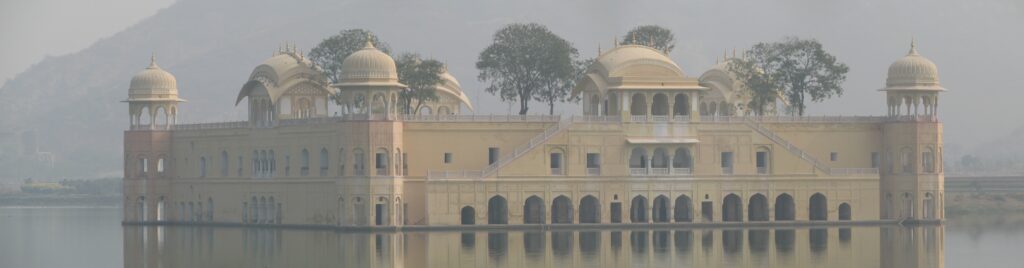
Stop at Man Sagar Lake on the way back. Jal Mahal is viewed from the public lakeside; the palace is not generally open. The free stop needs 20–40 minutes. Check Rajasthan Tourism’s official Jal Mahal page for access updates, and keep children away from the road edge.
Day 1 reality check: This route is achievable with a private cab, but it is a full day. For a gentler family plan, visit Panna Meena, Amber and Jal Mahal, then choose either Jaigarh orNahargarh.
Day 2: Hawa Mahal, City Palace, Jantar Mantar and the Bazaars
Day 2 covers Jaipur’s most walkable cluster. The historic Walled City is a UNESCO World Heritage property recognised for its planning, streets, crafts and monuments.
6:45 am: Photograph Hawa Mahal before the traffic builds
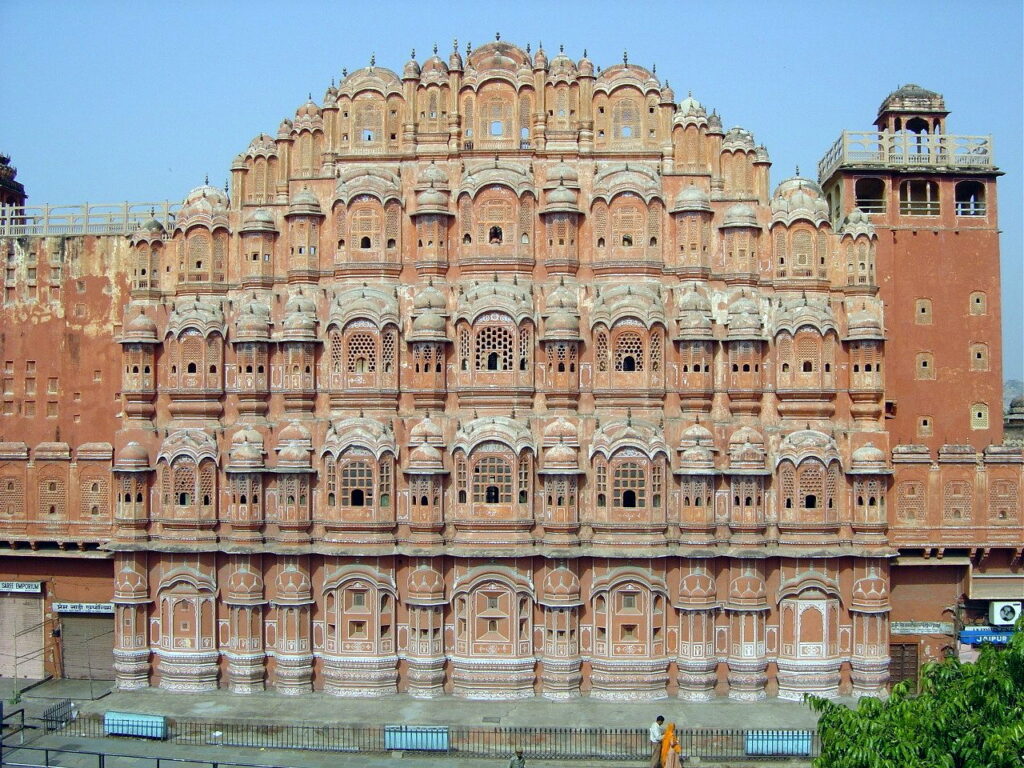
The honeycomb façade faces Hawa Mahal Road. Photograph it from a safe terrace or pavement position—not moving traffic—then have breakfast and return for opening. The exterior is free to view.
9:00 am–9:45 am: Go inside Hawa Mahal
Inside, the ramps, latticed windows and upper-level views explain how the building worked. Entry is from the rear, not the famous façade.
The official Hawa Mahal page lists hours of 9:00 am–7:00 pm. Following the January 2026 revision, entry is ₹100 for Indian adults and ₹600 for international adults.
10:00 am–11:15 am: Understand Jantar Mantar with a guide
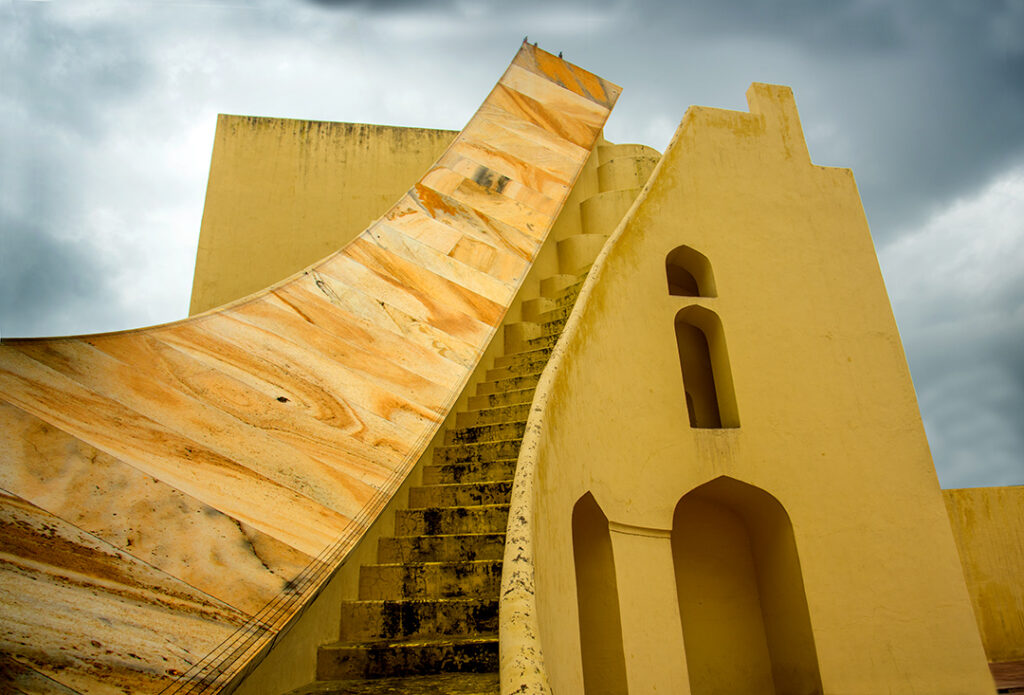
Jantar Mantar is beside City Palace, so walk. Its giant instruments make more sense with an authorised guide or audio guide explaining how they measure time and celestial positions. UNESCO describes it as India’s most significant and best-preserved historic fixed monumental observatory; science-minded families can read the UNESCO overview first.
Official hours are 9:00 am–7:00 pm, with the last ticket ordinarily issued at 6:30 pm. Revised 2026 entry is ₹100 for Indian adults and ₹600 for international adults. The site is almost entirely open to the sun, so a morning slot is far more comfortable than 2:00 pm.
11:30 am–1:45 pm: Visit City Palace
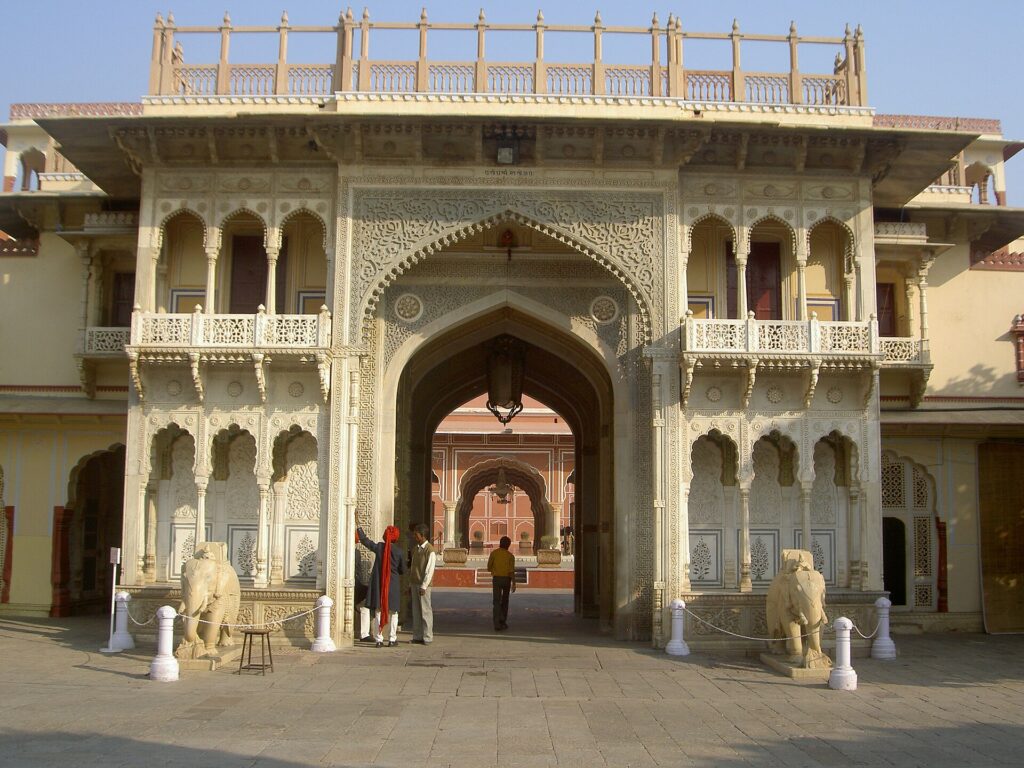
City Palace operates separately from the state-monument system. Its standard route covers public courtyards and galleries, including painted gates, armoury, ceremonial spaces and royal objects.
The official City Palace visitor page lists museum hours of 9:30 am–6:30 pm, with last tickets at 6:00 pm. Standard admission is ₹400 for Indian adults and ₹1,000 for international adults. The palace’s separate composite option is ₹500 for Indian adults and ₹1,250 for international adults and includes the public City Palace galleries, Jaigarh and Royal Cenotaphs. Premium Chandra Mahal tours cost much more and should not be confused with standard admission.
As of this fact-check, the Textile Gallery and “Museum at Night” are temporarily closed. The museum reports wheelchair access at major entrances, accessible toilets, wheelchairs where available and shared golf carts at ₹150 per person. Recheck before travelling.
2:00 pm–5:00 pm: Lunch, Isarlat and market time
After lunch, choose another monument or unhurried shopping:
Isarlat (Sargasuli): A slender historic tower with Walled City views. It is included in the official Jaipur two-day monument pass. The spiral climb is narrow, so it is not suitable for every visitor.
Johari Bazaar: Best known for jewellery and traditional market atmosphere.
Bapu Bazaar: Useful for textiles, juttis and souvenirs.
Tripolia and Chandpole areas: Better suited to travellers interested in utensils, lac work and craft streets.
Ask prices before accepting services, compare shops, and request certification plus an itemised invoice for expensive jewellery.
5:15 pm–6:45 pm: Albert Hall Museum
End at Albert Hall in Ram Niwas Garden. The building suits evening light, and its galleries provide a cooler finish after the markets.
The official Albert Hall booking page lists 9:00 am–8:00 pm. Revised 2026 entry is ₹100 for Indian adults and ₹600 for international adults. Allow 60–90 minutes; museum lovers may want longer.
Day 3: Galtaji, Sisodia Rani Garden, Patrika Gate and Birla Mandir
Day 3 is easy to customise. Keep the early and evening stops, but protect midday for lunch and rest, especially with children.
6:30 am–8:00 am: Visit Galtaji early
Galtaji is a hill-set pilgrimage complex with temples, water tanks and resident monkeys. Entry is generally free; donations or photography charges may apply. Dress modestly, secure food and phones, and never touch or feed monkeys. Published hours vary, so use early morning to early evening as the practical window and check festival-day schedules.
9:30 am–10:45 am: Slow down at Sisodia Rani Garden
Sisodia Rani ka Bagh lies on the Ghat Ki Guni route after Galtaji. Its terraces, pavilions and painted scenes offer a quieter contrast to the forts.
The official booking listing gives hours of 8:00 am–8:00 pm and commonly lists entry at ₹50 for Indian adults and ₹200 for international adults. It is also included in the official Jaipur two-day pass. Fountain operation and garden condition can vary seasonally, so come for the architecture and setting rather than expecting every water feature to run.
11:30 am–3:30 pm: Lunch and hotel break
This pause is intentional: Jaipur can exceed 40°C in late spring and early summer. Use it for lunch, packing or a nap.
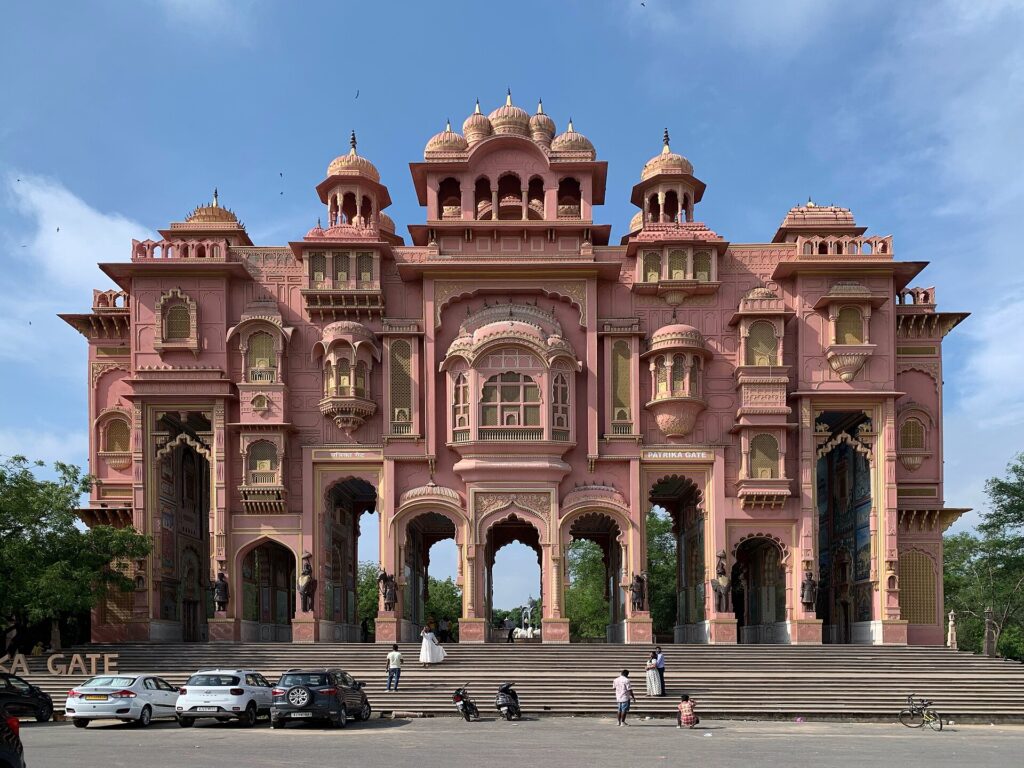
4:00 pm–4:45 pm: Patrika Gate
Patrika Gate’s painted corridors at Jawahar Circle are free. Visit on a weekday if possible and avoid blocking the arches with prolonged photo setups.
5:15 pm–6:00 pm: Birla Mandir
The white-marble Lakshmi Narayan Temple is a calm early-evening stop. Entry is free. Common visitor hours are 8:00 am–12:00 pm and 4:00 pm–9:00 pm, but worship schedules can change. Remove shoes, dress modestly and follow on-site photography rules.
6:30 pm onwards: Choose your final evening
For a cultural dinner, Chokhi Dhani generally opens 5:00 pm–11:00 pm. Its official guide lists a Rajasthani dinner at ₹1,100 per adult/₹650 per eligible child, or Royal Thali at ₹1,350/₹750. Child categories are height-based and extras may cost more; verify the official page.
If staged cultural entertainment is not your style, have dinner in C-Scheme or MI Road and take a relaxed evening walk. Families with an early departure will usually prefer this simpler option.
Jaipur Tourist Places: 2026 Timings and Entry Fees
The table below is a planning snapshot, not a substitute for the live ticket screen. “Indian” and “international” refer to adult standard admission; student and child rates require the applicable proof.
Place
Practical opening hours
Indian adult
International adult
Planning note
Panna Meena ka Kund
Daylight visit recommended
Free
Free
Steps may be off-limits
Amber Fort
7:00 am–8:00 pm
₹200
₹1,000
Allow 2.5–3 hours
Jaigarh Fort
Plan for 9:30 am–5:00 pm
₹150
₹200
Confirm closing time locally
Nahargarh Fort
10:00 am–5:00 pm
₹100
₹600
Private sunset venues differ
Jal Mahal promenade
Public lakeside view
Free
Free
Palace entry generally closed
Hawa Mahal
9:00 am–7:00 pm
₹100
₹600
Enter from the rear
Jantar Mantar
9:00 am–7:00 pm
₹100
₹600
Last ticket usually 6:30 pm
City Palace Museum
9:30 am–6:30 pm
₹400
₹1,000
Last ticket 6:00 pm
Albert Hall Museum
9:00 am–8:00 pm
₹100
₹600
Allow 60–90 minutes
Sisodia Rani Garden
8:00 am–8:00 pm
₹50
₹200
Conditions vary by season
Galtaji
Early morning–early evening
Free
Free
Festival hours vary
Patrika Gate
Open public landmark
Free
Free
Best in daylight
Birla Mandir
8:00 am–12:00 pm; 4:00–9:00 pm
Free
Free
Worship rules apply
Is the Jaipur composite ticket worth buying?
The official Jaipur Package is valid for two days. It currently costs ₹550 for Indian adults, ₹180 for Indian students, ₹1,700 for international adults and ₹800 for international students. It covers Amber Fort, Albert Hall, Hawa Mahal, Isarlat, Jantar Mantar, Nahargarh, Sisodia Rani Bagh and Jaipur Metro Kala Deergha.
Activating it on Day 1 covers five paid state sites in this route. Their individual Indian adult tickets total about ₹600, so the pass saves roughly ₹50; international visitors save more. It excludes City Palace and Jaigarh.
A separate Rajasthan-wide 10-day pass is listed at ₹1,300 for Indian adults and ₹5,500 for international adults. It suits a multi-city state trip, not Jaipur alone. Verify all live details before purchase.
Jaipur Sightseeing Cost for Three Days
The estimate below is per person for two adults sharing a room and a sedan. It excludes travel to Jaipur, shopping and premium experiences.
Expense
Budget range per person
What the estimate assumes
Monument tickets
₹1,150–₹1,300
Jaipur pass or individual tickets, City Palace, Jaigarh and Sisodia Rani
Local transport
₹2,400–₹4,800
Three full/partial cab days shared by two; parking and hill extras vary
Meals and water
₹2,400–₹5,400
₹800–₹1,800 per day
Two hotel nights
₹1,500–₹7,000
Half of a ₹1,500–₹7,000 double room per night
Optional Chokhi Dhani
₹1,100–₹1,350
Adult dinner package; extras excluded
Practical total: Expect roughly ₹7,500–₹18,500 per person for two nights and three sightseeing days, excluding arrival travel, shopping and Chokhi Dhani. A solo traveller using autos and the metro can reduce some journeys but will not share cab costs; a family of four often lowers the transport cost per person.
Current local-cab advertisements range from about ₹1,600 to ₹3,050 for an 8-hour/80-km sedan, before possible hill, parking, overtime and tax charges. Ask for the complete written total—not only the headline rate—and confirm whether Amber, Jaigarh and Nahargarh are included.
How to Plan Three Days in Jaipur Without Getting Exhausted
Choose the right season
October to March is easiest for sightseeing. Rajasthan Tourism’s weather guide places January–March around 10°C–27°C, while April–June can reach about 45°C. Winter mornings can be cold and hazy.
July–September brings greener hills but possible rain. From April–June, begin at opening, keep noon indoors and return outside after 4:00 pm.
Stay in a neighbourhood that matches your priorities
Bani Park: Convenient for the railway station and a broad range of heritage-style hotels.
C-Scheme or MI Road: Central for restaurants and balanced access to all three day routes.
Near Badi Chaupar/Walled City: Best for early Hawa Mahal photographs and market walks, but noisier and less convenient for cars.
JLN Marg or Tonk Road: Useful for the airport, Patrika Gate and Chokhi Dhani; farther from Amer.
For a first trip, C-Scheme, MI Road or Bani Park is simplest.
Build around your arrival and departure
For a true Jaipur 2 nights 3 days itinerary, arrival time matters.
Arriving before 8:00 am: Follow the itinerary as written after leaving bags at the hotel.
Arriving around noon: Do Patrika Gate, Birla Mandir and Albert Hall on the first evening; move the fort circuit to Day 2 and the Walled City to Day 3.
Departing before 4:00 pm on Day 3: Visit Galtaji and Sisodia Rani in the morning, then skip Patrika Gate or place it before an airport departure.
Save Ajmer, Pushkar and Chand Baori for a fourth day or a return visit.
Make the itinerary work for children and older adults
Amber’s slopes and the hill-fort ramparts make Day 1 demanding. Keep only two forts, use a waiting cab and carry water, hats and sunscreen. City Palace and Albert Hall are easier afternoon stops. Jantar Mantar works well for school-age children with a short guide explanation, but has little shade. At temples, follow photography rules and ask before photographing people closely.
Frequently Asked Questions
Are three days enough for Jaipur?
Yes. Three days are enough to see Amber Fort, Hawa Mahal, City Palace, Jantar Mantar, two or three supporting attractions and a market without turning the trip into a race. Four days are better if you want a craft workshop, leopard safari or day trip.
How much does a three-day Jaipur trip cost?
For two adults sharing a room and local cab, budget about ₹7,500–₹18,500 per person, excluding travel to Jaipur and shopping. Accommodation, food style and private-car rates create the biggest difference. Add ₹1,100–₹1,350 per adult if choosing a standard Chokhi Dhani dinner package.
Which places are a must on a first Jaipur visit?
Prioritise Amber Fort, City Palace, Jantar Mantar and Hawa Mahal. Add Jal Mahal because it sits on the Amer route. If time remains, choose Albert Hall for collections, Nahargarh for a city view or Galtaji for a temple landscape.
Which day are Jaipur monuments closed?
Most major Jaipur attractions open daily, but several government monuments and City Palace close on Dhulandi, the second day of Holi. Religious schedules, restoration work and official events can also cause temporary changes. Check the official attraction page shortly before visiting.
What is the best way to travel around Jaipur for three days?
Use a full-day cab for the hill forts and Day 3’s spread-out stops. In the Walled City, walking, the Jaipur Metro and short auto rides are often faster than repeatedly parking a car. Families and travellers with limited mobility may still prefer a waiting cab on all three days.
Conclusion: A Better Jaipur Trip Is About Clusters, Not Checklists
The best places to visit in Jaipur in 3 days fit naturally into three routes: Amer and the hill forts, the Walled City, then Jaipur’s temples and gardens. Start early, protect the hottest part of the afternoon, and remove a stop before you remove every break. That simple approach gives you time to notice Jaipur’s craft, science, food and living traditions—not only photograph its façades.
Before booking, recheck monument prices on the official OBMS portal, confirm City Palace access, and match Day 3 to your departure time. Then save this route offline and customise it for your family’s pace.