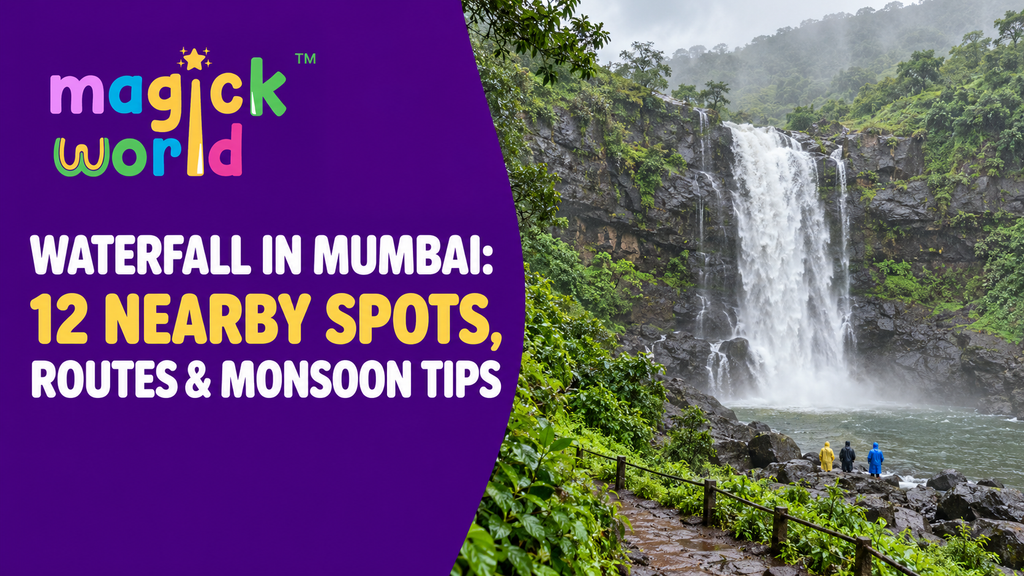
Waterfall in Mumbai: 12 Nearby Spots, Routes & Monsoon Tips
The waterfall looks wonderful in the video. What it does not show is the two-hour drive before the trek, the stream crossing halfway there, or the notice at the entrance saying visitors cannot go any further.
Finding a waterfall in Mumbai is easy online. Choosing one that fits your starting point, available time and travelling companions takes a little more thought. A family leaving Borivali with a young child needs a different plan from friends boarding an early Karjat local with trekking shoes and a full day free.
This guide compares 12 waterfall spots in Mumbai and the surrounding region. You will find useful railway stations, the kind of walking to expect, advice for shorter trips, and the access questions to settle before leaving home.
A key distinction: most famous waterfalls around Mumbai are outside the city itself. Navi Mumbai, Vasai, Karjat, Khopoli and the farther Sahyadri destinations should not be treated as interchangeable neighbourhood outings.
For 2026 planning: recent reporting describes restrictions at Pandavkada and a Devkund closure through 30 September. Neither belongs in an immediate-trip itinerary without confirmation from the responsible authorities. Their entries below explain why they still appear in searches. Pandavkada report, 5 July 2026; Devkund report, 15 July 2026.
1. Which waterfall in Mumbai suits your trip?
For a nature outing within Mumbai, investigate the permitted visitor routes around Sanjay Gandhi National Park and Kanheri. For a trip involving suburban rail and a walk, compare Bhivpuri, Chinchoti and Zenith after checking access. For a longer scenic break, consider Dabhosa or the Bhandardara area.
These are planning choices, not confirmations that every route is currently open. Local restrictions, weather and the exact approach determine whether a visit is possible.
Compare the best waterfalls near Mumbai
The table distinguishes the journey to the area from the walk at the destination. A nearby railway station does not mean a waterfall is beside the platform. Walking descriptions assume permission and suitable conditions; they are not safety ratings.
| Waterfall or seasonal cascade | Area | Useful transport hub | What the outing involves | Access question to resolve |
|---|---|---|---|---|
| Kanheri seasonal cascades | Sanjay Gandhi National Park, Mumbai | Borivali | Park travel, paths and cave steps | Which visitor routes and internal transport are operating? |
| Pandavkada | Kharghar, Navi Mumbai | Kharghar | Restricted waterfall area | Has the reported ban been officially lifted? |
| Chinchoti | Vasai side, Palghar | Naigaon | Forest trek with stream crossings | Is the forest route permitted and passable? |
| Kondeshwar | Badlapur, Thane | Badlapur | Temple approach and rocky surroundings | Are temple access and waterfall access both allowed? |
| Bhivpuri | Karjat area, Raigad | Bhivpuri Road | Village approach and uneven walking | Which waterfall and trail does the organiser mean? |
| Zenith | Khopoli, Raigad | Khopoli | Local transfer and an uneven approach | Are crossings and the final approach open? |
| Kune | Khandala–Lonavala | Khandala or Lonavala | Viewing subject to lawful access | Where can visitors legally view the falls? |
| Vihigaon, also called Ashoka | Kasara area | Kasara | Road transfer and a stepped approach | Have local restrictions been withdrawn? |
| Malshej cascades | Malshej Ghat | Kalyan, then a substantial road journey | Scenic drive and permitted viewpoints | Are the road and chosen stopping places open? |
| Dabhosa | Near Jawhar, Palghar | Jawhar by road | Longer journey and viewing access | What walking and facilities does the viewpoint involve? |
| Randha | Bhandardara area | Igatpuri, then a road transfer | Viewpoint visit on a longer trip | Is the viewing area open and is water flowing? |
| Devkund | Bhira, Raigad | Bhira by road | Forest trek when legally reopened | Has the reported closure ended or been extended? |
Waterfalls near Mumbai within 50 km
A 50 km search needs a starting point. The national park’s official approach guide lists approximately 23 km from Bandra and 41 km from Nariman Point to its Borivali main gate. Travel inside the park is additional. This makes the gate a realistic short-distance option from several neighbourhoods, while preventing confusion with the distance to Kanheri itself. SGNP approach distances.
Kharghar also falls within this broad range from some central and eastern starting points. For example, a route planner lists around 34 km between Mumbai Dadar and Kharghar, excluding any waterfall approach. Proximity does not override the Pandavkada restriction. Dadar–Kharghar road distance.
Waterfalls near Mumbai within 100 km
Bhivpuri, Chinchoti, Kondeshwar and Zenith are candidates to compare against your own departure address. They do not all fall within 100 road kilometres of every Mumbai neighbourhood.
As one reference, Dadar to Bhivpuri is listed at approximately 85 km by road. That is a useful starting estimate, not a promise about the final trailhead or monsoon driving time. Dadar–Bhivpuri route.
Before deciding, map your home to the confirmed parking point or village meeting place. Add walking, waiting for transport, lunch and the return journey. That gives a much more useful answer than distance alone.
2. Twelve waterfall places in and around Mumbai
1. Kanheri seasonal cascades: a nature outing within Mumbai
Sanjay Gandhi National Park is the most relevant starting point when you mean Mumbai itself. The national tourism portal identifies waterfalls among its natural features, while Kanheri adds caves, stonework and wooded surroundings to the visit. Incredible India: Sanjay Gandhi National Park.
Expect seasonal cascades and flowing channels during suitable rainy conditions, rather than a guaranteed large waterfall at a single named viewing platform. If the water is modest, the wider park and cave visit can still give the outing a purpose.
Use Borivali as your rail hub, then confirm the current way to reach Kanheri inside the park. Ask about internal transport, entry arrangements and permitted walking routes before taking children or older relatives.
Stay within designated visitor areas. A park admission ticket should not be treated as permission to follow an unmarked stream into the forest. Cave steps and wet stone also deserve more time than a normal pavement walk.
2. Pandavkada: a famous waterfall with a critical access caveat
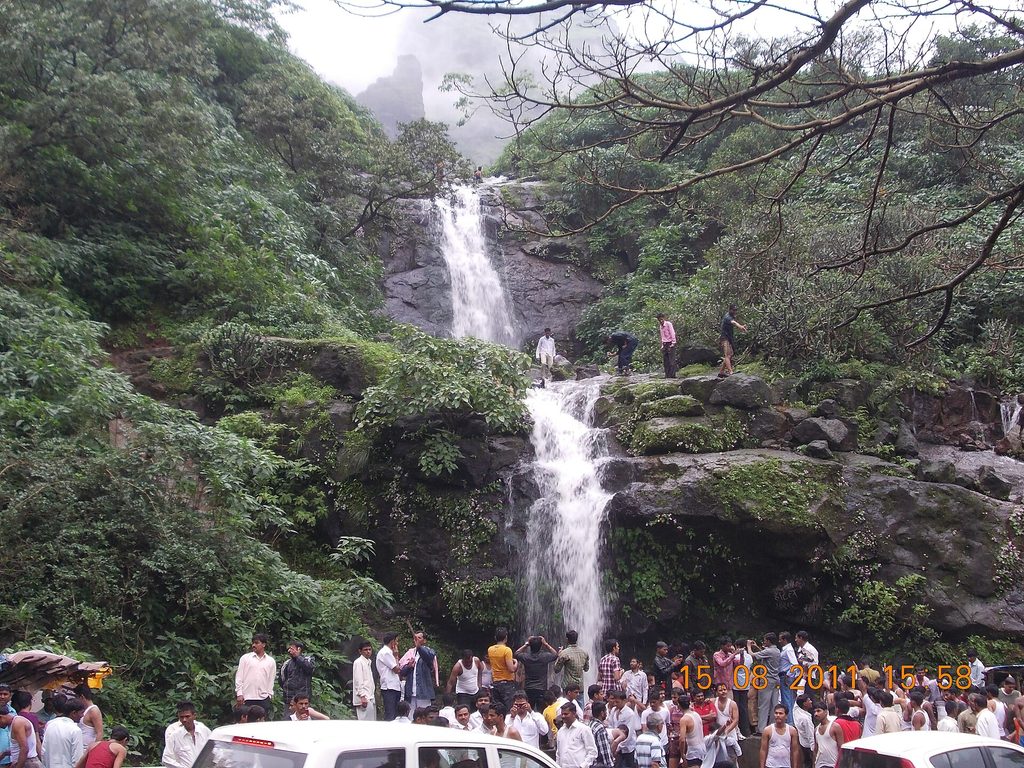
Pandavkada is in Kharghar, Navi Mumbai. Its tall drop and green cliff setting make it one of the most recognisable Mumbai waterfalls in travel searches, although it is outside Mumbai city.
The practical issue is permission. A July 2026 news report describes a police ban covering Pandavkada and several nearby hazardous locations. This guide has not verified a subsequent reopening notice. Treat the waterfall as unavailable until the authorities confirm otherwise. Pandavkada access report.
Do not build a family day around reaching its pool, follow a bypass trail, or assume a quoted entry fee proves access is legal. Kharghar station gets you to the neighbourhood; it does not establish permission to enter the waterfall area.
If you are already planning a Kharghar visit, choose an independently open attraction and a meal stop. Do not substitute a nearby dam or another restricted hillside simply because you have travelled there.
3. Chinchoti: for people who want a forest trek
Chinchoti is a stronger match for walkers than for visitors seeking a drive-up photo stop. The commonly described approach begins around Kaman village, reached from the Naigaon side.
A trek operator’s route notes describe narrow forest paths and several stream crossings, with roughly 90 minutes scheduled to reach the waterfall from the trek start. Treat that as a route-specific example; mud, water and group pace can change it. Chinchoti trek route.
Arrange the village transfer and return pickup before setting off. Carry food and drinking water, and check the current forest-entry position with the responsible staff or a knowledgeable local organiser.
For families, the question is whether everyone can manage the full return walk over uneven ground. The answer should include the youngest child and the least confident walker. Avoid choosing Chinchoti merely because a search result calls it an easy picnic spot.
4. Kondeshwar: temple surroundings near Badlapur
Kondeshwar combines a Shiva temple setting with rocky, rain-fed water features near Badlapur. It suits visitors who want the temple and surrounding landscape to be part of the outing, rather than making water entry the main activity.
Use Badlapur as the railway reference and arrange onward road transport. Be specific about the destination: Kondeshwar near Badlapur is not the same place as the better-known Ambarnath Shiva temple. Kondeshwar location information.
Ask separately whether the temple approach is open and whether visitors may enter the waterfall surroundings. Permission for one does not automatically cover the other. Thane district restrictions also need checking, as explained later in this guide.
For a mixed-age group, make this a short visit with a planned meal and a clear return time. Skip climbing beside the cascade or treating the rocky pools as a children’s paddling area. A quieter visit can be rewarding without approaching the drop.
5. Bhivpuri: a practical rail-based outing when access allows
Bhivpuri is worth comparing if you want to travel on the Central suburban network towards Karjat. The useful station is Bhivpuri Road, followed by a village approach and walking.
Check the exact waterfall before booking. Bhivpuri, Ashane and nearby activity sites can appear under overlapping names in listings. One operator’s Ashane–Bhivpuri itinerary allows approximately 90 minutes of trekking over rolling terrain, which is quite different from the quick stroll some summaries imply. Ashane–Bhivpuri route description.
Ask for the meeting point, walking distance, stream crossings and whether the outing includes an adventure activity. Rappelling should be a separate, informed booking decision, not something your group discovers on arrival.
The green countryside is part of the appeal. Keep enough time to enjoy it without rushing towards the falling water. If rain intensifies or the final approach is closed, turn back while the return route remains straightforward.
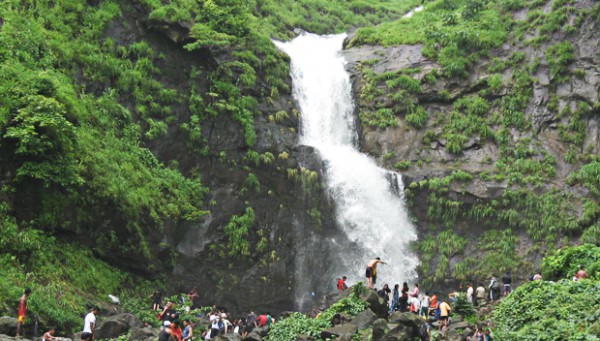
6. Zenith: a Khopoli option with an approach to check
Zenith belongs to Khopoli in Raigad, not Igatpuri. That distinction matters when choosing a train: a Kasara-side journey takes you towards a different part of the region. Visitor accounts place the approach on the Khopoli side. Zenith location and visitor reports.
Travel to Khopoli and arrange local transport to the currently permitted approach. Descriptions of the remaining walk vary, partly because visitors start from different drop-off points. Ask where the vehicle stops and what lies between that point and the viewing area.
Do not assume a short walk is a dry or level one. Water channels and slippery ground can make the final stretch unsuitable for your group even when the journey to Khopoli is easy.
For a one-day outing, choose Zenith as the main stop. Adding several nearby cascades can leave too little time for lunch, drying off and the train home.
7. Kune: confirm a lawful viewing point first
Kune Falls sits in the Khandala–Lonavala area and is known for its tiered appearance against the Sahyadri hills. The important planning detail is that reaching the falls is not straightforward public access.
Travel information specifically flags the approach as private property and says visitors cannot use it to reach the waterfall. A familiar landmark or old walking description does not cancel that restriction. Kune access information.
Consider Kune only as a viewing opportunity from a location where permission and parking are clear. Confirm the actual view before paying for a stay or tour advertised around it. Do not stop on the expressway shoulder to take photographs.
For families, a confirmed viewpoint paired with a comfortable Lonavala stay can work better than an uncertain descent. If no lawful viewing access can be established, choose another attraction rather than spending the afternoon searching for a way in.
8. Vihigaon or Ashoka Falls: plan the Kasara transfer
Vihigaon, also called Vihi or Ashoka Falls, is associated with the Kasara–Igatpuri corridor. Kasara is a useful railway hub, but a road transfer remains necessary.
An established route account places the village approximately 12 km from Kasara and describes access close to the parking area. Use that for orientation, not as proof of today’s transport, steps or entry arrangements. Vihigaon route background.
The stepped approach can be a more relevant consideration than the length of the walk. Ask about the descent, handrails, surface condition and the climb back before taking someone with limited mobility.
Check whether the Thane-area restrictions affecting your visit have been withdrawn. If access is permitted, arrange a return vehicle and decide on a viewing boundary in advance. Avoid relying on old descriptions of the pool’s depth: a past visitor’s observation cannot establish safe conditions on another day.
9. Malshej Ghat: choose the drive and viewpoints
Malshej is a landscape of cliffs, valleys and seasonal cascades. It is better understood as a scenic ghat outing than as one waterfall with a single entrance gate. Maharashtra Tourism identifies the pass’s waterfalls as a major attraction. Maharashtra Tourism: Malshej Ghat.
Plan the road journey through the Kalyan–Murbad side according to your starting point and current navigation. Allow a full day, and recognise that a longer journey may be more comfortable with an overnight stay.
Choose only permitted stopping places with parking away from moving traffic. A cascade falling beside the road is not an invitation to stand beneath it. Fog, rockfall risk and road restrictions can make even a viewing trip inappropriate.
Do not add a Kalu Waterfall trek as a casual extra. A valley route is a separate outing with its own access, walking and water-crossing requirements. Keep this plan focused on the drive and confirmed viewpoints.
10. Dabhosa: a longer escape near Jawhar
Dabhosa is near Jawhar in Palghar district. Its drop into a deep, enclosed basin gives it a different character from the smaller seasonal cascades around the suburban fringe.
Palghar district’s official tourism page describes Dabhosa as perennial. That does not promise the same volume throughout the year, but it makes the destination worth considering beyond peak monsoon too. Palghar district: Dabhosa Waterfall.
Treat this as a longer road trip. For a family starting far south in Mumbai, staying near Jawhar may be more enjoyable than completing the outward drive, visit and return in one day.
Confirm the viewing arrangement and facilities before booking: distance from parking, steps, toilets, food and shelter all matter. A hotel near the waterfall does not necessarily offer a waterfall view or step-free access.
Enjoy the scale from an authorised viewing area. Descending towards the basin is a different activity and should not be assumed to be included in an ordinary sightseeing visit.
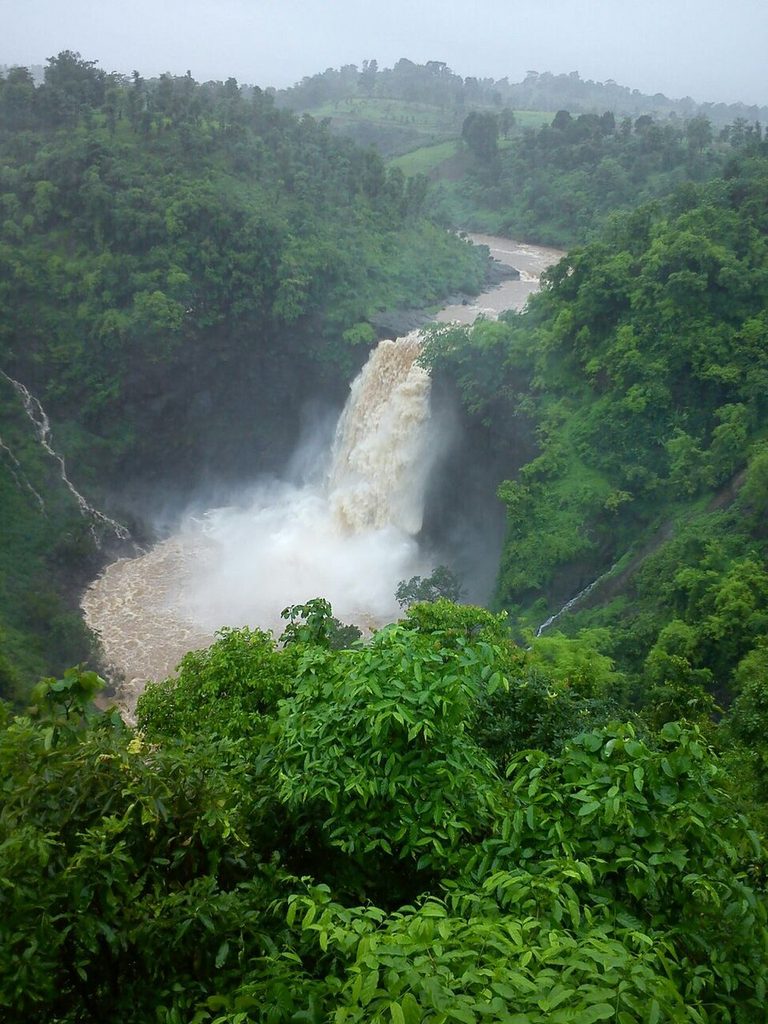
11. Randha Falls: build a Bhandardara trip around it
Randha is in the Bhandardara area on the Pravara River. The district tourism page places it about 10 km from Shendi and notes the effect of the hydropower project on when the waterfall flows. Check recent conditions instead of assuming a river-fed waterfall will look the same throughout the year. Ahilyanagar district: Bhandardara and Randha.
This destination deserves a longer outing. Igatpuri can serve as a rail connection, followed by a substantial road transfer; it is not a waterfall you reach by stepping off a Mumbai local.
If staying around Bhandardara, ask about the current viewing area and whether nearby Umbrella Falls is flowing. Umbrella is associated with Wilson Dam, so it should be treated as a conditional extra rather than a guaranteed second waterfall. Umbrella Falls background.
For children, a viewpoint visit with a relaxed meal stop is a more workable plan than combining it with a long trek.
12. Devkund: save the trek for confirmed reopening
Devkund near Bhira is famous for its forest setting and plunge pool. It also demonstrates why a beautiful photograph is not enough to plan a waterfall trek.
A report published in July 2026 states that entry was barred from 1 July to 30 September. Check the latest position after that period; a stated end date does not rule out an extension. Reported Devkund closure.
When authorities permit visits again, plan it as a dedicated trek. Maharashtra Tourism describes forest walking and stream crossings, and identifies the post-monsoon period as a suitable window. Maharashtra Tourism: adventure routes.
Before booking, obtain the route length, total walking time, crossing conditions, guide arrangements and weather-cancellation policy. Do not rely on the word “beginner” alone. The journey to Bhira and the return walk both belong in your schedule, making this a poor choice for a rushed afternoon departure from Mumbai.
3. Best time to visit and the access checks that matter
When do monsoon waterfalls near Mumbai flow?
June to September is the broad season for rain-fed waterfalls near Mumbai, once rainfall has established a flow. July and August often bring stronger cascades, while September may offer useful opportunities between rainy spells. Actual conditions vary by catchment and year.
Peak flow and a suitable visiting day are different things. Choose a date with manageable weather, an open approach and enough daylight. Do not use a fixed rule such as “two days after heavy rain is always safe.” Upstream rainfall and drainage conditions matter as well.
After the monsoon, some smaller falls reduce sharply or dry up. For an October visit, ask about that specific waterfall’s current flow. Dabhosa’s perennial character and Devkund’s post-monsoon trekking window illustrate why one seasonal rule does not fit every destination.
Check restrictions for the destination, not just Mumbai
The weather outside your home may differ from the weather in Raigad, Palghar or the hills beyond Thane. Read the IMD Mumbai district forecast and warnings for the destination and route, and check the bulletin’s issue date.
Thane district restrictions were reported on 6 July 2026 as remaining in place until further orders. This research did not establish a later withdrawal notice. For Kondeshwar, Vihigaon and relevant Malshej areas, obtain current confirmation before committing to travel. Thane restriction report.
Contact the responsible police, forest office, park authority or district administration through its official channel. A tour listing, map label or recent reel is useful background, but it does not establish permission. Ask for the notice date and the specific place it covers.
Know when to cancel or turn back
Postpone a waterfall outing during severe-weather warnings affecting the destination, or when the authority has closed the route. At the site, leave early if water rises or becomes visibly more forceful, provided the return route remains safe. If water has already cut off a crossing, do not attempt it; move away from the water to a safe position and seek help.
Stay out of plunge pools and fast-moving streams. Keep back from cliff edges and the landing zone beneath falling water. Good shoes and a guide improve preparation; neither removes the risk of changing water conditions.
Pack gripping footwear, rain protection, drinking water, snacks, a charged phone, a dry change of clothes and a bag for rubbish. Carry essentials yourself rather than assuming stalls or shops will be operating beside the trail.
4. Plan a one-day waterfall trip from Mumbai
Choose the route before choosing the photograph
For western-suburb departures, first compare the Borivali park option and the Naigaon–Chinchoti direction. From the Central line, Bhivpuri or Khopoli may fit your journey better. Navi Mumbai residents can assess the Panvel–Khopoli direction without first crossing the main city.
These are starting suggestions, not an itinerary to combine. Choose one principal destination and a nearby backup that is independently open. Confirm train stopping patterns and current disruption notices with the railway before travelling; old blog timetables can survive long after services change.
Public transport also needs a return plan. Save the driver’s number, agree on the pickup location and price, and avoid relying on an app cab appearing beside a remote trail. For a drive, map the parking point and leave room for monsoon delays.
A realistic day plan
This example suits a permitted short or moderate outing such as a confirmed Bhivpuri route. Adjust it around the actual train, park opening time and walking requirement.
| Time window | Plan |
|---|---|
| 6:30–8:30 am | Travel towards the destination; have breakfast en route |
| 8:30–9:30 am | Complete the local transfer, confirm access and assess conditions |
| 9:30 am–12:30 pm | Complete the agreed walk and viewing time, including the return |
| 12:30–2:00 pm | Lunch, change into dry clothes and return to the transport hub |
| Afternoon | Travel home with spare time for delays |
The table is a planning example, not a train timetable or an assumed gate-opening schedule. If your selected route needs longer, change the destination or allow an overnight stay. Do not squeeze the return walk into fading daylight.
Budget for the whole outing
“Free entry” is not the same as a free trip. Account for the return train or fuel, local transfers, parking, any official entry charge, guiding, meals and an emergency buffer.
For an illustrative budget only, suppose one person allocates ₹100 for return rail travel, ₹300 for shared local transport, ₹300 for food and ₹300 as contingency. That is ₹1,000 before any entry, guide or activity fee. These are planning assumptions, not quoted fares; replace each with the cost for your actual route.
For a car, calculate fuel from your mapped round-trip distance and normal mileage, then add tolls and parking. A cab quote should state included kilometres, waiting, tolls, driver charges and the return destination. An inexpensive outward ride can become costly if the return transfer was never arranged.
What makes a waterfall outing family-friendly?
Choose by facilities and terrain, not by popularity. Ask whether there is a toilet near the start, a place to eat, shelter, a manageable return walk and a viewing position away from water and drops.
For toddlers or anyone with limited balance, a forest trail with stream crossings is usually a poor fit. Prefer a confirmed viewpoint or a permitted park outing where you can shorten the day. Even then, check steps and internal transport rather than assuming accessibility.
Older children may enjoy walking, but the route should suit the least experienced person. A useful family plan still works if nobody enters the water. If the waterfall is the only thing keeping everyone interested, choose a destination with another open attraction nearby.
5. Frequently asked questions about waterfalls near Mumbai
Is there a natural waterfall in Mumbai city?
Sanjay Gandhi National Park has seasonal waterfalls and cascades, including around the Kanheri landscape during the rains. Visit through permitted park routes and check current arrangements. Most large waterfalls advertised as being “in Mumbai” are actually in Navi Mumbai or farther outside the city.
Which waterfall near Mumbai is best for a one-day trip?
Bhivpuri is worth comparing for travellers using the Central line, while permitted SGNP routes can suit a shorter city outing. Chinchoti involves more forest walking. The best choice depends on current access, your home-to-trail travel time and whether everyone can manage the return walk.
Which waterfalls near Mumbai are suitable for families?
Families should prioritise an open, authorised viewing area with manageable walking and verified facilities. A permitted park visit or confirmed viewpoint at a longer-trip destination may suit better than a forest trek. No waterfall pool should be assumed safe for children because other families are using it.
Can I visit Pandavkada or Devkund in September 2026?
Do not assume either is available. July 2026 reporting described a ban at Pandavkada and a Devkund closure through 30 September. This guide has not verified reopening. Check with the responsible authorities, and choose another outing unless lawful access is clearly confirmed.
Are hidden waterfalls near Mumbai less crowded and safer?
They may attract fewer visitors, but that does not make them safer. A little-known trail can have weak phone coverage, uncertain access and difficult crossings. Ask for the actual location and route details; avoid booking an outing described only as a “secret waterfall” without those basics.
6. Choose your waterfall, then check the day
The best waterfall in Mumbai for your outing is one you can legally reach, comfortably enjoy and leave with time to spare. Start with your neighbourhood and group: consider permitted SGNP routes for a shorter escape, Bhivpuri or Chinchoti for appropriate walking plans, and Jawhar or Bhandardara for a longer break.
Shortlist one destination, confirm access and transport, then check the latest weather before leaving. For your next planning step, read a related one-day family trips near Mumbai guide and choose a nearby backup so the day still works if conditions change.